
Understanding the Shift from Farm to Development
Agricultural land conversion is the process of permanently changing farmland, pastures, or other agricultural properties into non-agricultural uses such as residential neighborhoods, commercial centers, industrial parks, or infrastructure. This change affects local economies, food security, and the environment across the United States.
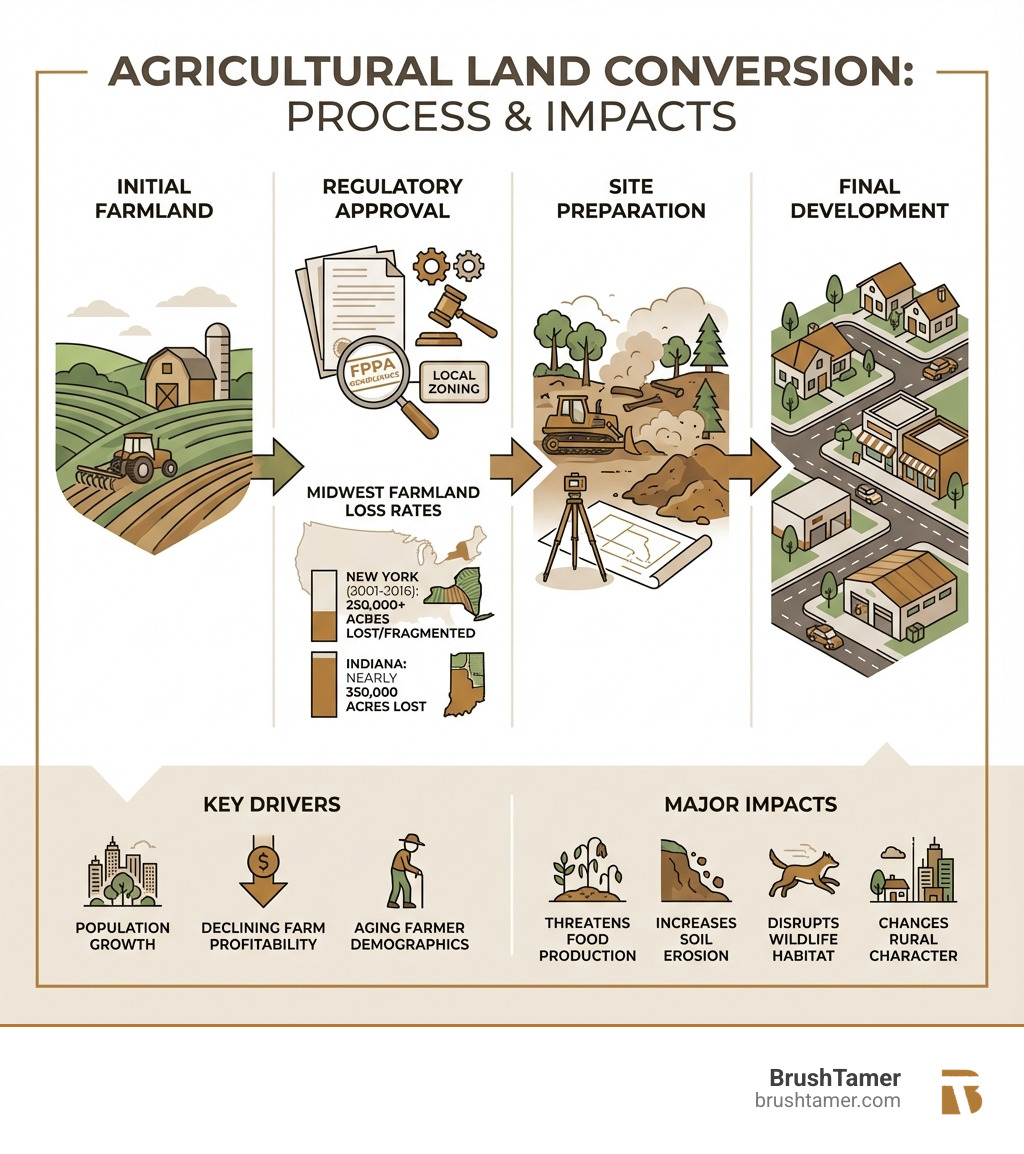
Agricultural land conversion happens for many reasons, including urban expansion, land-use policy shifts, and changes in farm operations. The process typically involves regulatory approval, zoning changes, and physical site preparation. Once farmland converts to developed use, the change is usually permanent and irreversible. That’s why understanding the drivers, impacts, and alternatives matters so much for communities in regions like Lower Michigan and Northern Indiana, where the landscape is visibly changing.
I’m Leon Miller, owner of BrushTamer, and I’ve worked extensively preparing sites for various land uses across Plymouth, Indiana and surrounding areas, including projects that involve clearing land transitioning from agricultural to other purposes. My experience with agricultural land conversion projects has shown me that proper planning and professional execution are essential for responsible land change.
The Driving Forces Behind Agricultural Land Conversion
The conversion of agricultural land stems from a complex interplay of demographic, economic, and societal demands. In Lower Michigan and Northern Indiana, we see these forces firsthand. The primary drivers include population growth, urban sprawl, demand for housing and commercial space, declining farm profitability, and the challenges of intergenerational farm transition.

Economic and Urbanization Pressures
The most visible driver of agricultural land conversion is the ever-present march of urbanization. As populations grow in cities like Indianapolis, Fort Wayne, Grand Rapids, and Kalamazoo, the demand for new housing, commercial establishments, and industrial zones intensifies. This demand increases development pressure, making non-agricultural uses more likely near growing cities. Farmers, often facing tight margins, may find selling their land to developers to be a financially appealing or even necessary option.
In Indiana and across the Midwest, agricultural land conversion has reduced farmland acreage over time, especially near expanding metro areas. This loss, which reduces farm output and jobs, is not a distant problem; it directly affects communities from the outskirts of South Bend to the growing suburbs of Carmel. Beyond direct development, infrastructure projects also contribute to this conversion. New highways, airport expansions (such as those around Valparaiso or Portage), electric cooperative lines, and railroad construction all require land, often converting agricultural properties irreversibly. These projects, while vital for economic growth, necessitate careful planning to minimize their impact on our precious farmlands.
The Challenge of Intergenerational Farmland Transition
Another major driver of agricultural land conversion is the aging producer population and the challenge of transferring farms to the next generation. With the average age of farmers rising—national statistics show 35% were over 65 in 2022—millions of acres become vulnerable when these experienced operators retire. The challenge lies in succession planning. Many senior farmers lack a clear path for transferring their farms to the next generation, with over 90% lacking young farmer involvement in ownership or management. This often leaves the land without a successor, making it ripe for conversion if a suitable buyer isn’t found within the agricultural community. Furthermore, new farmers, especially those from Black, Indigenous, and other Farmers of Color communities, face significant barriers to accessing affordable farmland, exacerbating the problem.
This demographic shift places immense pressure on agricultural lands in areas like Elkhart and Goshen. Without proactive strategies to support new farmers and facilitate farm transitions, we risk losing not just the land but also generations of agricultural heritage, which can profoundly alter the fabric of rural life.
The Multifaceted Impacts of Converting Agricultural Land
Agricultural land conversion has far-reaching consequences beyond the immediate change in land use. Losing this irreplaceable resource threatens our food security, local economies, and environmental health. It alters the character of rural communities and increases pressure on remaining farms. In these changing landscapes, professional Vegetation Management Solutions become crucial for maintaining ecological balance.
Environmental Consequences
The environmental impacts of agricultural land conversion are significant and often irreversible. When farmland is converted to residential, commercial, or industrial uses, we frequently see a direct loss of biodiversity and critical wildlife habitat. The removal of natural vegetation and the introduction of impervious surfaces disrupt ecosystems, displace species, and fragment remaining natural areas.
Agricultural land conversion can increase soil erosion and runoff when vegetation cover is removed, and drainage patterns change. Without the protective cover of crops, soil is easily washed or blown away, a concern in high-pressure areas like Valparaiso and Chesterton, Indiana. This runoff can pollute local waterways, impacting water quality. Our Erosion Control Services are designed to mitigate these problems and protect soil and water resources. Agricultural land conversion can disrupt soil carbon storage when soils are disturbed or sealed by new surfaces. Healthy soils act as carbon sinks, but when disturbed or paved over, they release carbon back into the atmosphere, contributing to greenhouse gas emissions. The subsequent energy consumption and transportation from new developments add to this effect. As noted in the Fifth National Climate Assessment on Land-Use Change, the link between land use and climate change is a critical factor for our environmental future.
Specific Socio-Economic Impacts of Agricultural Land Conversion
Beyond the environmental impacts, agricultural land conversion can reshape community conditions over time. A meta-analysis examining these effects globally revealed some striking findings.
| Impact Category | Specific Impact | Meta-analysis Finding |
|---|---|---|
| Social | Crime | Greatest impact at 2.17% |
| Demographic Change | Significant increase over time | |
| Migration | Significant increase over time | |
| Lifestyles & Traditions | Significant increase over time | |
| Economic | Households’ Revenue | Greatest impact at 2.98% |
| Food Security | Significant decrease over time | |
| Tourism | Significant increase over time | |
| Income Sources | Significant increase over time |
Table: Primary Social and Economic Impacts of Agricultural Land Conversion
This research shows that social impacts like crime and demographic shifts, along with the endangerment of traditions, increase over time. Economically, while selling farmers may see an initial income boost, the broader effects often include reduced overall household revenue and lower food security. The displacement of farmers can also lead to a loss of community identity. This shift changes the local economic base. New industries may bring jobs, but they don’t replace the unique contributions of agriculture, leading to new challenges in towns like Goshen, Indiana, or Paw Paw, Michigan. Understanding these complex dynamics is crucial for sustainable development, as detailed in this socio-economic impacts meta-analysis.
Navigating the Regulatory Landscape
The journey of agricultural land conversion is not merely a physical change; it’s also a bureaucratic maze governed by a complex web of federal, state, and local laws. For anyone considering such a project in Lower Michigan or Northern Indiana, understanding these regulations is paramount. We encounter these complexities daily, from navigating zoning ordinances in St. Joseph County, Indiana, to understanding permitting processes in Kalamazoo, Michigan. Due diligence is not just a recommendation; it’s a necessity to ensure compliance and avoid costly delays or penalties.
Federal Oversight: The Farmland Protection Policy Act (FPPA)
At the federal level, the Farmland Protection Policy Act (FPPA) stands as a crucial safeguard for agricultural lands. The primary purpose of the FPPA is to minimize the impact federal programs have on the unnecessary and irreversible conversion of farmland to non-agricultural uses. It ensures that, to the extent possible, federal programs are administered in a manner compatible with state, local, and private efforts to protect farmland.
Under the FPPA, “farmland” is broadly defined to include prime farmland, unique farmland, and land of statewide or local importance. This can encompass not just active cropland, but also forest land and pastureland, as long as it’s not already water or urban built-up land.
Federal agencies must assess the impact of their projects on farmland conversion. This is typically done using the Land Evaluation and Site Assessment (LESA) system, which helps determine a farmland conversion impact rating. A key tool in this process is Form AD-1006. Projects that are either completed by a federal agency or receive federal assistance (such as grants, loans, or permits) and have the potential to irreversibly convert farmland are subject to FPPA requirements. This includes a wide array of activities, from state highway construction to airport expansions and even some electric cooperative projects. For a more in-depth understanding, we recommend reviewing the FPPA Overview – Webinar.
State and Local Regulations for Agricultural Land Conversion
While the FPPA provides a federal framework, the specifics of agricultural land conversion are largely determined by state and local regulations. These can vary significantly from one municipality to another, even within the same county.
For example, in Indiana, local planning commissions and zoning boards in towns like Goshen, Indiana, or North Liberty, Indiana, play a pivotal role. Their zoning ordinances dictate what types of land use are permitted in specific areas, often designating agricultural zones to protect farmland. We’ve seen this in action with the ongoing discussions around solar farm development on agricultural land in places like St. Joseph County, where communities are actively amending ordinances to balance energy needs with farmland preservation.
Many state laws, like New York’s Agricultural Districts Law (which serves as a useful case study for general principles), include provisions for conversion payments and penalties. These typically apply when land that has received agricultural tax benefits is later converted to non-agricultural use. The idea is to recoup some of the tax savings and deter premature conversion. Such laws often define “conversion” as an “outward or affirmative act” changing the land’s use, rather than mere non-use, and specify notification requirements for landowners to avoid additional penalties.
Navigating these layers of regulations requires local expertise. Before starting on any project that involves changing land use, especially from agricultural to another purpose, consult with local planning departments and experts. For the physical preparation of the land, our team provides comprehensive Land Clearing Services custom to meet all regulatory requirements in your specific location, from Rochester, Indiana to Niles, Michigan.
Alternatives and Sustainable Pathways for Development
Recognizing the critical importance of preserving agricultural land, many communities in Lower Michigan and Northern Indiana are exploring alternatives to traditional outward expansion. The concept of “smart growth” advocates for focusing development within existing communities, making efficient use of already developed or underused land, rather than consuming prime farmland. This approach protects our agricultural resources as a strategic asset for food production and local economies.

Innovative Development and Conservation Strategies
One key strategy is brownfield site redevelopment. These are abandoned or underused industrial or commercial properties that may be contaminated but can be cleaned up and repurposed for new uses. By revitalizing brownfields in areas like Gary, Indiana, or Benton Harbor, Michigan, we can create new residential, commercial, or mixed-use developments without encroaching on productive farmlands.
Another approach is the densification of existing urban and suburban areas. Instead of sprawling outwards, communities can build upwards or redevelop existing structures to accommodate growth. This not only preserves farmland but also supports more walkable communities and efficient use of existing infrastructure. Implementing green infrastructure, such as permeable pavements, green roofs, and urban parks, further improves the sustainability and livability of these denser developments.
Conservation easements and Purchase of Development Rights (PDR) programs are also powerful tools. These programs allow landowners to voluntarily sell or donate their development rights, ensuring their land remains agricultural forever, even if the ownership changes. While the example of ‘Farmland for a New Generation New York’ highlights efforts to connect new farmers with land, similar initiatives and mechanisms are vital in our region to support intergenerational farm transfers and keep land in agricultural production.
Preparing Land for New Agricultural or Energy Uses
Sometimes, agricultural land conversion is about changing how a property is used, where farm ground clearing supports a new agricultural system or a mixed-use land plan. For instance, converting unproductive fields into high-value specialty crop areas, or even exploring agrivoltaics (combining solar power generation with agriculture), can be beneficial. These projects require careful site assessment and preparation to ensure long-term success.
The rise of renewable energy, particularly solar power, presents both opportunities and challenges for agricultural land. While some communities debate the use of farmland for solar farms, others see it as a way to generate income for farmers and contribute to clean energy goals. Preparing land for Solar Farm Preparation involves precise land clearing, grading, and sometimes Subsoiling Benefits for drainage, ensuring the site is optimized for panel installation and efficient energy production.
Whether it’s preparing land for new high-value crops in Nappanee, Indiana, or installing solar arrays near Angola, Indiana, utilizing professional services for Eco-Friendly Land Clearing is essential. Techniques like Forestry Mulching can efficiently clear land while retaining valuable topsoil and minimizing environmental disturbance, making the site ready for its next productive phase. We ensure that our land clearing methods align with sustainable practices, respecting the land’s potential for its future use.
Frequently Asked Questions about Agricultural Land Conversion
We often receive questions about the nuances of agricultural land conversion, especially from landowners and developers in our service areas of Lower Michigan and Northern Indiana. Let’s address some of the most common inquiries.
What is the difference between land conversion and land clearing?
This is a great question that often causes confusion!
Land conversion is primarily a legal and administrative process. It refers to the official change in a property’s designated use, as determined by zoning laws and local ordinances. For example, changing a parcel from “agricultural” zoning to “residential” or “commercial” zoning is a land conversion. This process involves permits, applications, and approvals from local governmental bodies in places like Crown Point, Indiana, or Three Rivers, Michigan.
In many agricultural land conversion projects, land clearing is the physical work—removing vegetation and obstacles, after approvals are in place. It’s the act of preparing the ground for its new purpose, whether that’s construction, new agricultural endeavors, or landscaping. While land clearing is often a necessary step after a land conversion has been approved, it is a distinct process. You might clear land for agricultural purposes without any conversion if it’s already zoned for farming, or you might clear land for a new housing development after it’s been converted from agricultural to residential use. Our team specializes in the physical aspect of land clearing, changing overgrown or undeveloped parcels into clean, buildable sites.
Does converting farmland always harm the environment?
Not necessarily. While converting productive farmland to impervious surfaces like parking lots generally has negative environmental consequences, the overall impact depends heavily on the new intended use and the management practices employed. For example, converting marginal or degraded farmland into a well-managed solar farm, a restored wetland, or a new forest can offer environmental benefits, such as clean energy production or enhanced biodiversity. The key is responsible planning and using sustainable development practices. Our professional Eco-Friendly Land Clearing services focus on minimizing environmental disruption, regardless of the land’s future purpose.
What factors determine the scope of site preparation after agricultural land conversion?
The cost to prepare converted land for development is highly variable and depends on many factors unique to each site. There is no single price, as costs are influenced by the density of vegetation, site topography, soil conditions, and ease of access for heavy equipment. Furthermore, the intended new use—whether for a commercial building or a simple solar array—and the need to comply with specific environmental regulations will significantly affect the final price. Because every site is different, a professional on-site assessment is the best way to determine the appropriate clearing approach, sequencing, and compliance steps. We encourage you to reach out so we can review your goals and recommend the right plan for farm ground clearing and site preparation.
Conclusion: Partnering for Responsible Land Change
The conversion of agricultural land is a complex issue that balances the need for community growth with the preservation of our vital natural resources. For communities in Lower Michigan and Northern Indiana, navigating this process requires careful planning, a deep understanding of the regulations, and a commitment to sustainable practices. Responsible land change respects the land’s heritage while preparing it for a productive future.
Whether your project involves repurposing a field for a new agricultural venture, preparing a site for renewable energy, or transitioning land for development, the physical preparation is a critical phase where expertise matters. Partnering with an experienced and environmentally conscious company like BrushTamer ensures your project adheres to regulations and is executed to the highest standard.
Planning an agricultural land conversion project or need farm ground clearing to prepare for the next use? BrushTamer can help you plan the clearing sequence, protect soil and drainage, and complete the work with professionalism and care. Contact us today to discuss your property and timeline.