
Habitat Restorations for Midwest Landowners: What You Need to Know
Habitat restorations return degraded land to healthier, functioning ecosystems that support native plants, wildlife, and natural ecological processes.
Here is a quick summary of what you need to know:
- What it is: Removing invasive species, repairing hydrology, and replanting native vegetation to rebuild natural ecosystems
- Who it’s for: Private landowners, conservation groups, government agencies, and tribal organizations
- Common techniques: Brush clearing, prescribed burns, hydrology repair, invasive species removal, and native seeding
- Key benefits: Improved biodiversity, flood resilience, water filtration, healthier soil, and stronger wildlife habitat.
- How long it takes: Early changes may appear during the first growing season, while establishment typically requires several seasons of monitoring and maintenance.
Across the country, ecosystems are under pressure. Wetlands have been drained for agriculture. Woodlands have been choked by invasive species like buckthorn and honeysuckle. Rivers and estuaries have been cut off by dikes and levees built over a century ago.
The damage is real — and so is the recovery.
Since 1996, NOAA’s Community-based Restoration Program has supported more than 2,800 coastal habitat restoration projects, restoring over 130,000 acres and reopening more than 6,100 stream miles for fish migration. On a smaller scale, private landowners across Indiana and Michigan are doing the same thing on their own properties — clearing overgrown brush, restoring wetland edges, and seeding native grasses to bring life back to degraded land.
The results can be dramatic. When invasive brush is removed, increased sunlight can create conditions for native woodland plants to return, although recovery timelines vary by property. Across various landscapes, simple interventions like removing barriers or clearing choked understories allow native ecosystems to bounce back rapidly.
Restoration is not about perfection. It is about giving land the conditions it needs to heal itself.
I’m Leon Miller, owner of BrushTamer, a land management and forestry mulching company based in Plymouth, Indiana. We help landowners across Northern Indiana and Lower Michigan reclaim overgrown properties and prepare them for effective habitat restorations. In this guide, I’ll walk you through the core principles, real-world case studies, and practical steps you need to move your land in the right direction.
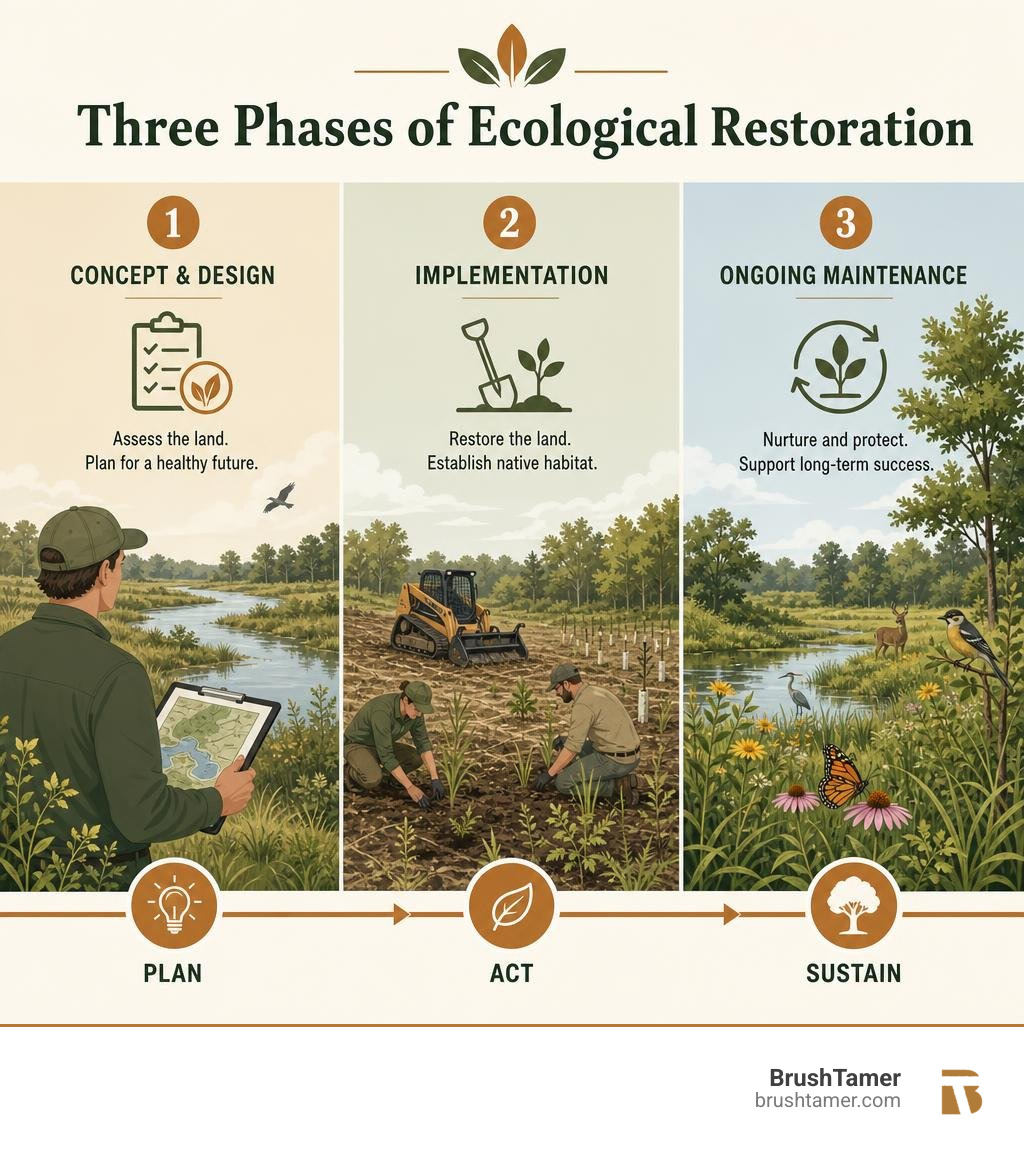
Understanding the Core Principles of Habitat Restorations
Successful habitat restorations help degraded ecosystems recover native biodiversity, ecological function, and resilience.
At its core, ecological restoration relies on understanding how native ecosystems function. Every property has an ecological history, whether it once supported an open oak savanna near Elkhart or a floodplain forest along the Kalamazoo River. When we work to restore these areas, we are not trying to freeze them in a historical time capsule. Instead, we are aiming to rebuild their ecological resilience so they can survive modern challenges like climate change, urban development, and aggressive biological invasions.
Biodiversity is the foundation of this resilience. Native plants have spent thousands of years adapting to local soils and weather patterns. They form complex underground networks, support local pollinator populations, and provide the exact nutritional profiles that local wildlife species need to survive. When invasive species disrupt these systems, the entire food web suffers.
By systematically removing stressors and reintroducing native species, we restore vital ecosystem services. These services include natural water filtration, soil stabilization, carbon sequestration, and natural flood mitigation. To get a complete look at how these principles apply to different landscapes, you can explore The Definitive Guide to Habitat Restoration.
Key Techniques and Case Studies in Modern Restoration
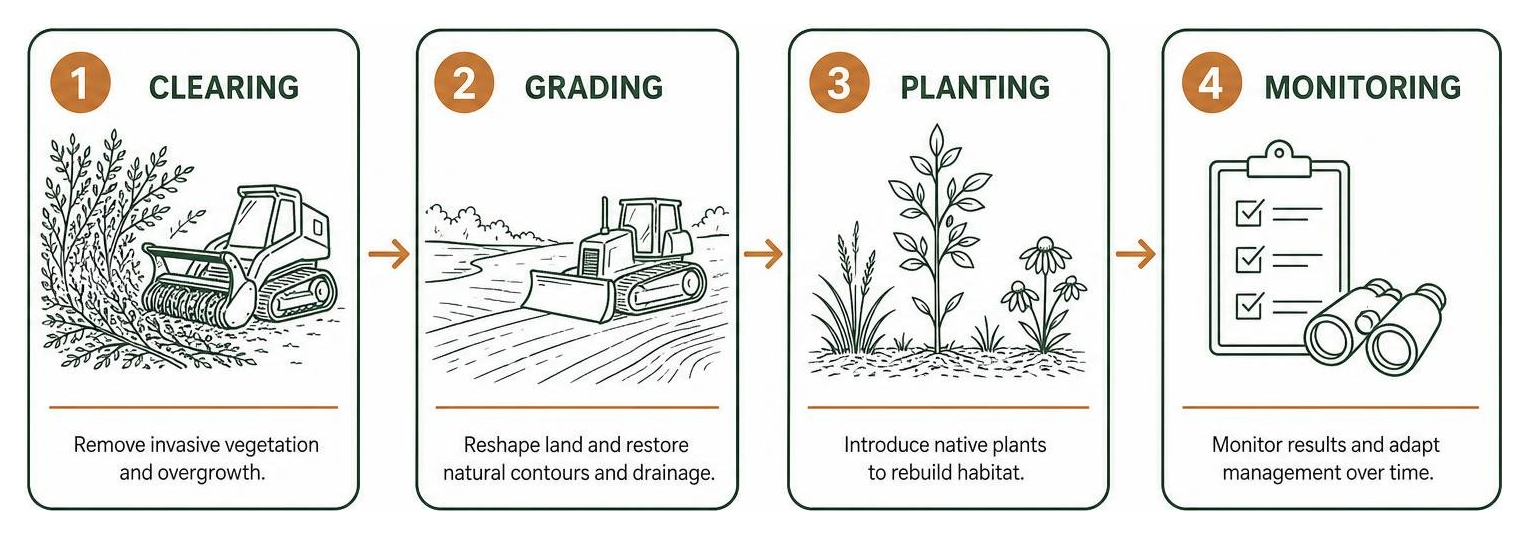
Modern ecological restoration relies on targeted interventions such as mechanical vegetation control, hydrological repair, and adaptive management to systematically reverse environmental degradation.
Every successful project requires a tailored combination of physical, chemical, and biological techniques. Because ecosystems are dynamic, restoration professionals use adaptive management — a structured process of robust monitoring and flexible decision-making — to adjust techniques as the land responds.
Invasive Species Removal and Hydrology Repair
Restoring degraded Midwestern woodlands and wetlands requires the systematic eradication of aggressive woody invasives like common buckthorn and Asian bush honeysuckle alongside the disabling of agricultural drain tiles to restore natural water flow.
Across our service area, invasive woody shrubs are among the most common threats to healthy woodland understories. Common buckthorn and Asian bush honeysuckle grow so rapidly and densely that they completely block sunlight from reaching the forest floor. This leaves the soil bare, highly vulnerable to erosion, and completely devoid of native wildflowers or young oak seedlings.
Professional forestry mulching can remove dense invasive undergrowth while leaving processed vegetation on site as protective ground cover. Managing cleared vegetation in place protects the soil structure and maintains natural ground cover, preventing erosion while returning organic matter to the earth. For a deeper understanding of how we tackle these choked-out understories, read our In-Depth Guide to Forest Understory Treatment and learn about managing fuel loads with A Practical Guide to Surface Fuel Reduction.
Once the physical brush is cleared, targeted herbicide applications are carefully applied to cut stumps to prevent aggressive root systems from resprouting. Long-term invasive-species control requires an integrated plan that addresses initial clearing, regrowth, and ongoing monitoring. For large-scale clearing, our specialized machinery makes quick work of dense infestations; explore our professional forestry mulching services to see how we handle these projects.
Alongside vegetation management, hydrology repair is crucial for wetland recovery. Historically, many Midwest fields were drained for agriculture using underground clay tiles. Where appropriate and legally permitted, modifying obsolete drainage systems can help restore more natural water movement and support wetland recovery.
Wetland habitat restorations often begin by correcting altered elevations, drainage patterns, or other physical conditions that prevent natural hydrology from functioning. Locally, we apply these same principles to low-lying areas in Indiana and Michigan to bring dried-out soils back to life.
Case Studies: Salmon, Oysters, and Wetland Recovery
Large restoration projects demonstrate a consistent principle: reconnecting water, vegetation, and wildlife corridors can help damaged ecosystems recover essential functions.
These major projects provide valuable lessons in patience, connectivity, and the power of biological recovery:
- Salmon Habitat in Oregon: At the Waite Ranch on the Oregon coast, conservationists undertook a massive effort to breach a century-old levee. This project reconnected 217 acres of historic estuary to the Siuslaw River, restoring six miles of critical feeding and rearing habitat where juvenile salmon can grow before entering the ocean. To read more about how this project combined engineering with natural tidal movements, visit the Waite Ranch Estuary Restoration.
- Native Oysters in California: In Elkhorn Slough, the native Olympia oyster population had collapsed to fewer than 1,000 individuals by 2018 due to agricultural runoff and altered tidal flows. Scientists used conservation aquaculture to raise young oysters in hatcheries and transplant them back into the wild on recycled shells. Today, they are on their way toward a long-term goal of 10 million oysters. Learn more about this species recovery at the Elkhorn Slough Oyster Restoration.
- Eelgrass in Florida: In East Lake Tohopekaliga, biologists planted 250,000 native eelgrass plants across 50 acres. Protected by temporary herbivory exclusion cages for 12 months, these plants established deep roots and now release up to 2.5 million liters of oxygen into the lake daily. Read the full story at the East Lake Toho Eelgrass Restoration.
- Wetlands in the Rocky Mountains: In the Kawuneeche Valley, intensive moose browsing and historical beaver trapping resulted in a 98% loss of tall willow habitat. By installing a nine-foot exclosure fence and placing 29 beaver dam analogs in the stream, researchers raised the local water table, reviving “zombie willows” that had been chewed down to the ground for decades. Read more about this project at the Kawuneeche Valley Wetland Restoration.
These diverse projects highlight a universal truth: when you restore the physical hydrology and protect young native plants, ecosystems recover with incredible speed.
The Role of Partnerships, Indigenous Knowledge, and Long-Term Stewardship
Successful habitat restorations often bring together scientific research, local knowledge, public agencies, landowners, and long-term cultural stewardship.
Tribal Stewardship and Traditional Ecological Knowledge
Indigenous land management practices, such as controlled burning and cultural plant stewardship, offer invaluable insights that guide modern restoration projects toward long-term resilience.
For thousands of years, Indigenous tribes managed landscapes through active stewardship. They recognized that humans are an active part of nature, not separate from it. Modern restoration science increasingly relies on this Traditional Ecological Knowledge (TEK) to design projects that work with natural cycles rather than trying to control them.
Whether thinning oak savannahs or managing delicate riparian zones, blending cultural wisdom with professional mechanical clearing ensures the land is treated with the highest level of respect. To explore how we approach professional, respectful land stewardship, visit Professional Land Management.
Community-Based Restoration Programs
Community-based restoration programs connect technical specialists, public agencies, conservation organizations, and landowners around shared ecological goals.
Large-scale habitat restorations require coordinated planning, technical expertise, and long-term monitoring. These projects can improve wildlife habitat, water quality, flood resilience, and community stewardship.
On private properties, similar conservation goals can be achieved by working with professional land clearing services that understand local regulations and ecological goals. To see how professional vegetation management supports long-term wildlife goals, check out our guide on Forestry and Wildlife Management.
Practical Steps for Private Landowners in the Midwest
For private landowners in Northern Indiana and Lower Michigan, successful habitat restorations begin with site assessment, selective vegetation management, and the establishment of appropriate native plant cover.
Planning Successful Private Land Habitat Restorations
Effective planning begins with a comprehensive site assessment of existing soil structure, canopy density, and invasive plant pressure to tailor a customized restoration roadmap.
Before work begins, a site assessment should identify existing native species, invasive-plant pressure, soil conditions, drainage patterns, and areas requiring protection. We look at soil health, identify existing native species that should be protected, and map out the dense pockets of invasive brush. For example, if your soil has been heavily compacted by historical agricultural use, understanding its physical structure is the first step toward unlocking its potential. Learn how to evaluate your soil in The Dirt on Healthy Soil: Simple Steps to Improve Structure.
Once a plan is in place, we use specialized, low-impact machinery to clear out the target invasive species while leaving desirable native trees completely untouched. To see how we selectively manage overgrown properties to prepare them for restoration, read more about our brush management services.
Long-Term Maintenance for Sustainable Habitat Restorations
Long-term ecological sustainability relies on ongoing vegetation management, including winter frost seeding and targeted follow-up clearing, to prevent the re-emergence of invasive species.
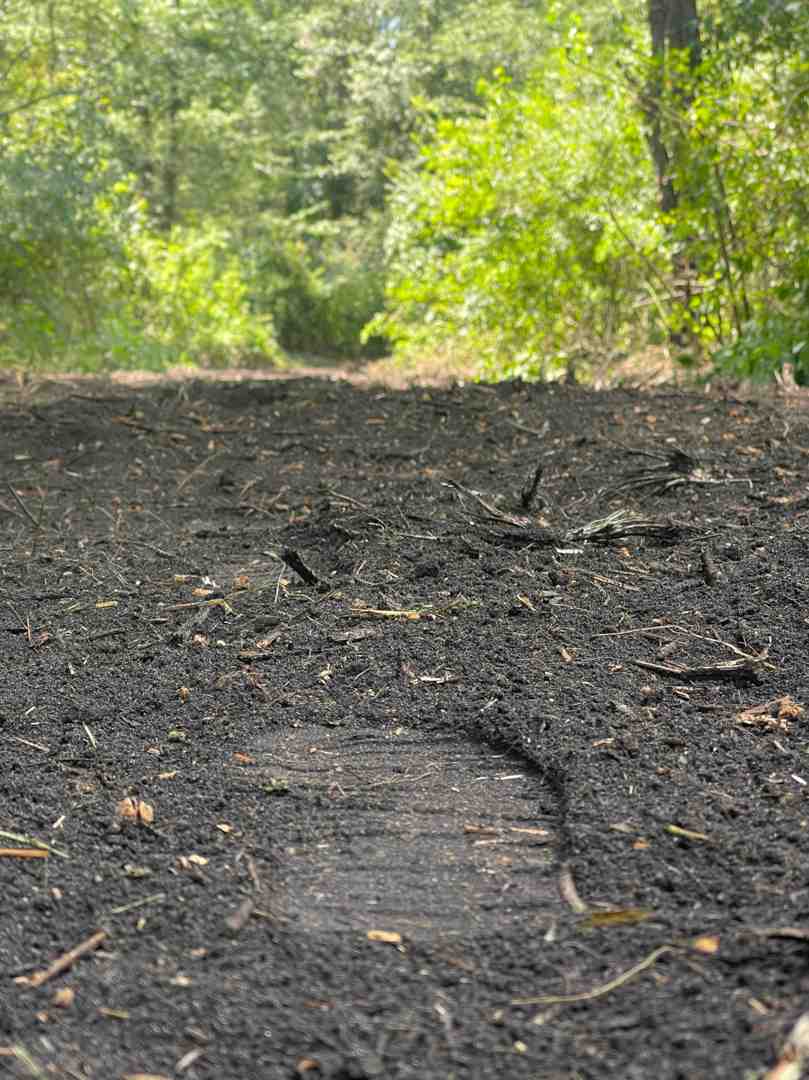
Restoration is a multi-year journey. Once we have cleared the dense canopy of invasive brush, sunlight will finally reach the forest floor. While this is fantastic for native seeds, it will also encourage dormant weed seeds to sprout.
When site conditions and the selected native seed mix are suitable, frost seeding may help improve seed-to-soil contact during late winter. By broadcasting a diverse mix of native seeds over the frozen ground, the natural freeze-thaw cycles of late winter pull the seeds directly into the soil. This allows them to germinate and establish root systems before spring weeds can take over.
Ongoing maintenance, such as selective mowing or spot treatments, ensures that invasive species like buckthorn do not reclaim the area. To learn about our full range of land restoration and maintenance capabilities, explore our Services page.
Frequently Asked Questions about Habitat Restoration
What is the difference between a food plot and habitat restoration?
While traditional food plots focus on short-term agricultural forage for specific game species, habitat restoration prioritizes long-term biodiversity, soil health, and ecosystem resilience.
Food plots are typically single-crop plantings (like clover or brassicas) designed to attract deer during hunting season. They require annual tilling, replanting, and chemical inputs.
In contrast, habitat restoration establishes a highly diverse, self-sustaining community of native perennial grasses, wildflowers, shrubs, and trees. This native mix supports hundreds of species of insects, birds, and mammals year-round, rebuilding the natural soil structure over time. For landowners looking to transition agricultural fields back into natural habitats, read our Detailed Guide to Agricultural Land Conversion.
| Feature | Traditional Food Plot | Ecological Habitat Restoration |
|---|---|---|
| Primary Goal | Short-term forage for specific game species | Long-term biodiversity and ecosystem resilience |
| Plant Diversity | Low (often monocultures or simple mixes) | High (dozens of native perennial species) |
| Lifespan | Annual or short-lived perennial (requires replanting) | Permanent, self-sustaining perennial community |
| Maintenance | High (annual tilling, fertilizing, and replanting) | Low (periodic mowing, burning, or spot clearing) |
| Soil Impact | Can deplete nutrients if tilled repeatedly | Improves soil structure, organic matter, and biology |
How long does it take to see results from a restoration project?
A typical restoration project shows initial green cover and early wildlife activity in the first year, developing into a strong, resilient perennial ecosystem by years two and three.
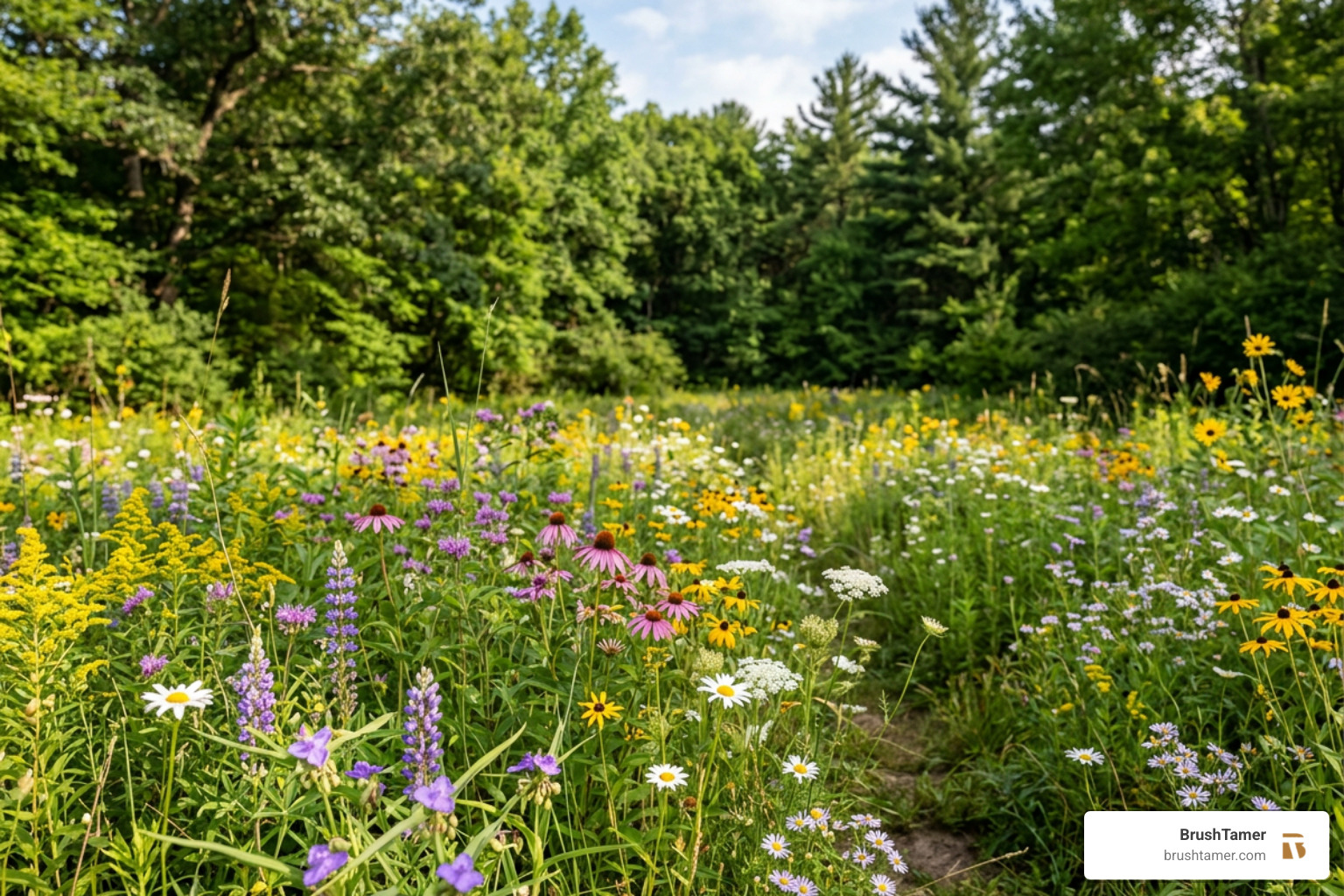
During the first year, native plantings focus most of their energy on growing deep root systems rather than top growth. You will see some green cover, but the real transformation happens in years two and three as the perennial wildflowers and grasses establish strong root networks and begin to bloom robustly, crowding out invasive weeds.
Why is professional land clearing preferred over DIY methods?
Professional land clearing may be preferable for dense or sensitive sites because trained operators can match equipment and techniques to the terrain, vegetation, and restoration goals.
Attempting to clear dense buckthorn or honeysuckle with light consumer equipment often results in incomplete root removal, leading to aggressive resprouting. Additionally, improper equipment usage can cause severe soil compaction, rutting, and erosion.
BrushTamer uses specialized equipment and site-specific clearing methods to remove targeted vegetation while preparing the property for its next restoration phase. Our specialized forestry mulchers grind invasive brush down into a fine mulch layer in a single pass, protecting the soil and laying a clean foundation for native seeding. Discover how we protect your property during the clearing process in our guide on Environmentally Friendly Land Clearing.
Conclusion
Reclaiming your property and restoring its natural beauty requires a dedicated, professional approach to land management. At BrushTamer, we bring the experience, local knowledge, and specialized equipment needed to transform overgrown, degraded acreage into thriving native habitats.
Whether you are looking to restore a wetland edge in Portage, clear out invasive buckthorn in South Bend, or establish a beautiful native savanna in Grand Rapids, we are here to help. We proudly serve landowners across Northern Indiana and Lower Michigan, including Goshen, Mishawaka, Elkhart, and Kalamazoo.
Ready to begin habitat restorations on your property? Contact BrushTamer today to discuss your land, ecological goals, and the vegetation-management work needed to create a healthier, more resilient habitat.