
Why Controlling Invasive Species Starts Early
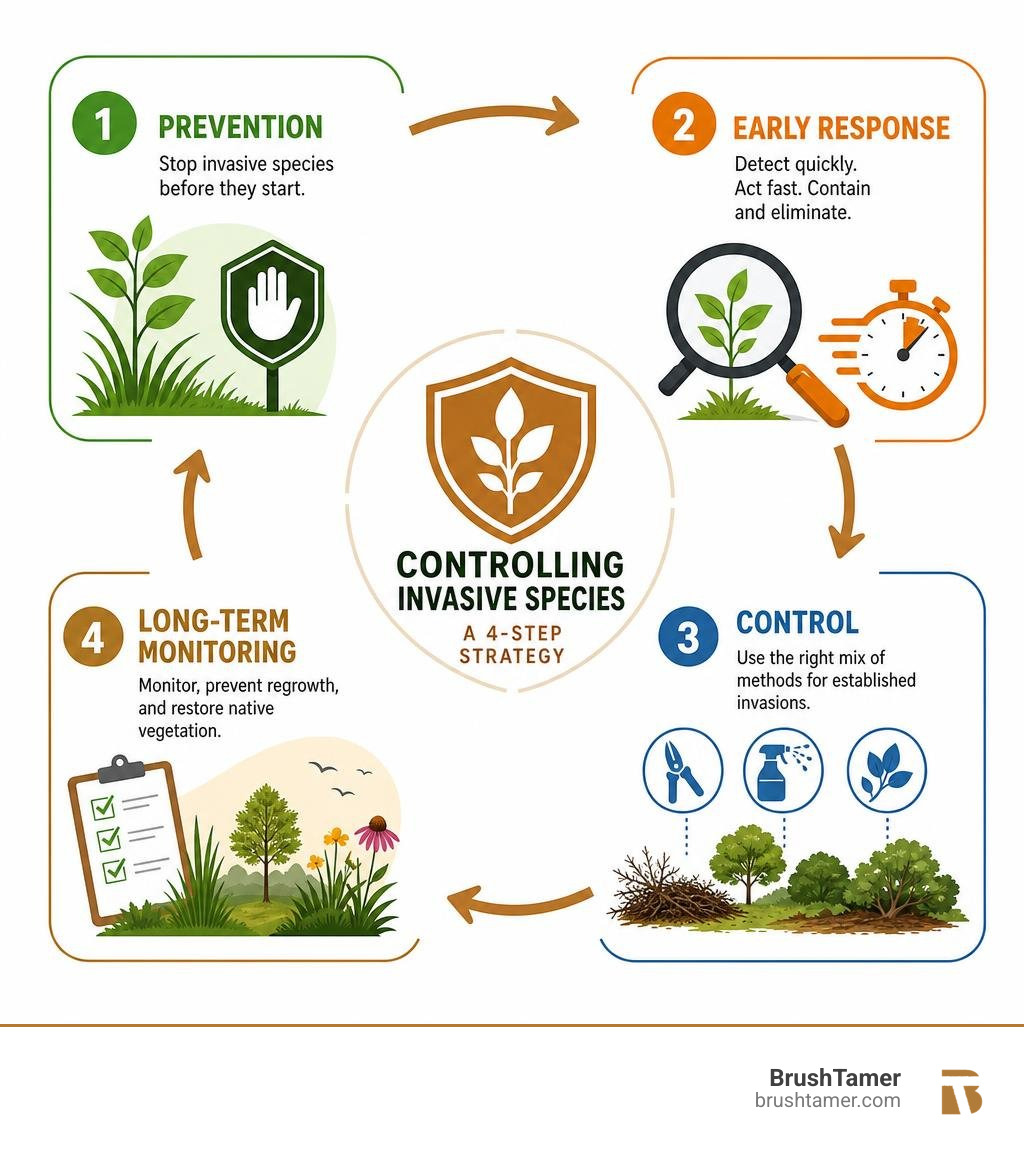
Controlling invasive species means preventing their spread, finding new infestations quickly, and using the right mix of removal and long-term management methods to protect native plants, wildlife, and usable land.
- Prevention is the lowest-risk, most cost-effective option.
- Early detection and rapid response can make eradication possible before an infestation spreads.
- Established invasions often need repeated mechanical, chemical, biological, or cultural treatments.
- Long-term success depends on monitoring, safe disposal, and restoring desirable native vegetation.
For property owners, controlling invasive species protects usable land, native growth, fence lines, woodlots, and future site plans. They can crowd out native growth, take over fence lines and woods, raise wildfire risk, and make a site harder to maintain or develop. The scale is significant: invasive plants and noxious weeds affect more than 100 million acres of U.S. Department of the Interior-managed public land, while cheatgrass alone occupies roughly 50 million acres and can fuel larger, more frequent fires.
The key to controlling invasive species is acting before a small patch spreads across the property. Effective management is not always about removing every plant in one visit. It is about identifying the species, understanding how it spreads, choosing a site-appropriate response, and staying ahead of regrowth.
I am Leon Miller, owner of BrushTamer, a Plymouth, Indiana land-management company founded in 2021. My work in brush clearing, forestry mulching, site preparation, and restoring overgrown properties gives me a practical view of controlling invasive species while respecting each property’s goals and long-term health.
Key controlling invasive species vocabulary:
Core Strategies and Categories for Controlling Invasive Species
The main categories of control methods for invasive species are prevention, mechanical control, chemical control, biological control, and cultural management. Each strategy works differently depending on the plant, property conditions, and long-term land goals. BrushTamer uses these strategies to help landowners restore usable, healthy property across Northern Indiana and Lower Michigan.
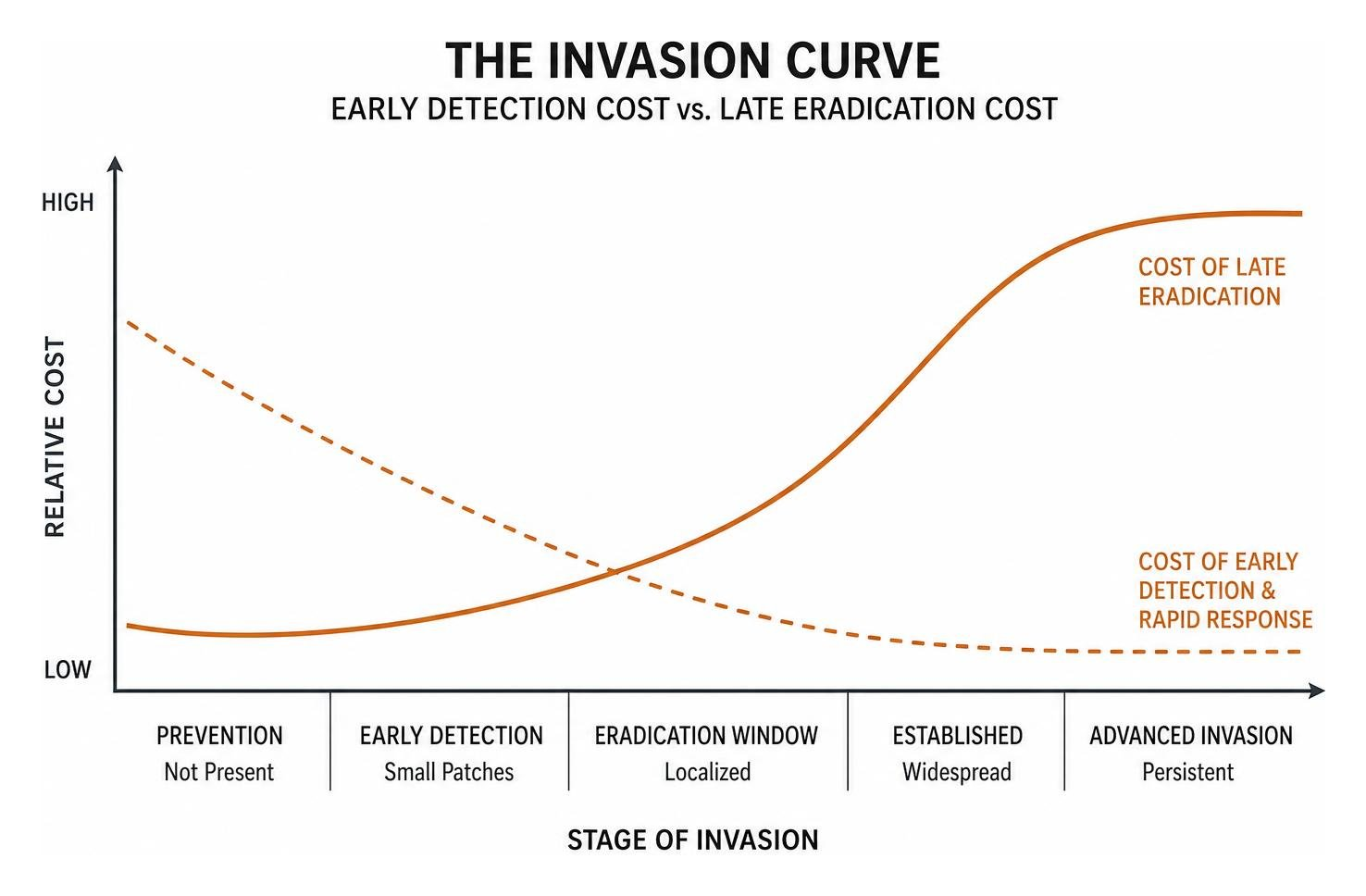
Understanding where an infestation falls on the invasion curve dictates the choice of management tactic. When caught early, eradication is more realistic because the plant population and seed bank are still limited. Once a non-native species establishes and spreads across private acreage, management shifts from eradication to long-term suppression. Explore the federal framework for these mechanisms through the official Overview of Control Mechanisms.
A – Z Guide to Identifying Common Invasive Species
Accurate field identification is the foundation of any invasive management program. In our regional work across South Bend, Elkhart, and Kalamazoo, we frequently identify aggressive invaders that dominate Midwest woodlots and open land:
- Autumn Olive (Elaeagnus umbellata): A deciduous shrub with silvery undersides on its leaves and heavy red berry crops that birds disperse across pasture edges.
- Bush Honeysuckle (Lonicera spp.): Dense upright shrubs that leaf out early in spring, shading out native spring ephemeral wildflowers.
- Common & Glossy Buckthorn (Rhamnus cathartica, Frangula alnus): Woody invaders forming impenetrable thickets in forest understories, altering soil chemistry and harboring crop pests.
- Garlic Mustard (Alliaria petiolata): A biennial herb that exudes allelopathic chemicals into the soil, suppressing beneficial mycorrhizal fungi required by native trees.
- Japanese Knotweed (Reynoutria japonica): A bamboo-like perennial with hollow stems and deep rhizomes capable of growing through asphalt and building foundations.
- Oriental Bittersweet (Celastrus orbiculatus): A woody vine that girdles adult trees and weighs down forest canopies, leading to severe storm damage.
- Tree-of-Heaven (Ailanthus altissima): A fast-growing tree that produces persistent root suckers and serves as the primary host for the destructive spotted lanternfly.
Prevention and Early Detection Protocols
Prevention and Early Detection and Rapid Response (EDRR) form the first line of defense against invasive establishment. With routine site surveys and equipment-cleaning practices, land managers can identify new invasive threats before they require large-scale remediation.
Intervening during the initial arrival phase keeps treatment footprints small and prevents seed bank accumulation. Public land agencies and private stewardship contractors rely on EDRR framework standards to coordinate quick containment actions. To learn how federal entities structure these early protocols, review the guidelines on Federal Solutions to Invasive Spread.
Fundamental Control Categories
Professional land stewardship relies on five distinct control categories:
- Mechanical Control: Using specialized equipment like forestry mulchers, brush cutters, and stump grinders to physically shred, harvest, or girdle invasive woody biomass.
- Chemical Control: Targeted applications of systemic or contact herbicides formulated to disrupt specific plant physiological pathways while safeguarding surrounding desirable vegetation.
- Biological Control: Introducing specialized, host-specific natural enemies—such as herbivorous insects or targeted pathogens—to suppress widespread invader densities.
- Cultural Control: Modifying environmental conditions through canopy density management, soil fertility adjustments, or native seed planting to outcompete opportunistic weeds.
- Physical Barriers: Installing root barriers, geotextile fabrics, or water level controls to block physical spread.
Integrated Pest Management and Maintenance Control Frameworks
Integrated Pest Management (IPM) is a science-based decision framework that combines biological, chemical, cultural, and mechanical tools to minimize economic, health, and environmental risks. Rather than relying on a single eradication attempt, IPM focuses on sustained ecosystem health by keeping pest populations below damaging ecological thresholds.
Principles of Integrated Pest Management
The core principles of IPM center on site evaluation, population monitoring, threshold selection, and multi-strategic implementation. Federal invasive species resources continue to support IPM as a coordinated approach that combines monitoring, prevention, and targeted treatment.
By combining mechanical clearing with precisely timed herbicide follow-ups, we reduce total chemical inputs while achieving superior control. Property owners can explore BrushTamer’s guide to professional invasive species control methods for more practical next steps.
Maintenance Control for Population Suppression
Maintenance control is a long-term management strategy that targets invasive species at low-density thresholds to prevent dense, catastrophic re-establishment. Rather than waiting for invasive thickets to fully close their canopy, maintenance control applies frequent, localized treatments that preserve ecological balance and keep long-term land management more predictable.
A landmark study on aquatic giant salvinia management published in Invasive Plant Science and Management demonstrated the power of this approach. Researchers found that lower intervention thresholds (5% and 25% plant cover) maintained average seasonal plant cover at 14.6% and 13.7%, compared to 27.6% and 32.8% cover when management was delayed until 50% or 100% infestation occurred. Crucially, intervening early at lower thresholds did not increase cumulative herbicide usage.
Furthermore, integrating the specialized biological control weevil (Cyrtobagous salviniae) reduced plant cover by an additional 7% and decreased overall herbicide use by 37%. Land managers can review the peer-reviewed research details via Maintenance Control Framework Research.
Comparing Mechanical, Chemical, Biological, and Cultural Methods
Selecting the correct control method requires balancing treatment timing, follow-up needs, site accessibility, and environmental impact.
| Control Method | Speed of Impact | Implementation Complexity | Environmental Impact Risk | Best Application Scenario |
|---|---|---|---|---|
| Mechanical (Forestry Mulching) | Immediate | Moderate | Low (Preserves topsoil) | Dense woody thickets, site clearing, buckthorn/autumn olive |
| Chemical (Targeted Herbicide) | Fast (Days to Weeks) | Low to Moderate | Moderate (Requires precise application) | Deep-rooted perennials, basal bark, cut-stump follow-ups |
| Biological (Biocontrol Agents) | Slow (Years) | Low (Long-term) | Very Low (When host-specific) | Widespread watershed-scale weed infestations |
| Cultural (Native Revegetation) | Moderate (Seasons) | Low to Moderate | None (Ecologically positive) | Post-clearing restoration, seed bank suppression |
Mechanical and Physical Land Management
Mechanical invasive species removal uses commercial-grade equipment to remove thick brush, saplings, and dense vines while limiting soil disturbance. At BrushTamer, our primary heavy-duty tool is high-flow forestry mulching. Equipment mounted on heavy track loaders shreds standing buckthorn, honeysuckle, and autumn olive into a fine mulch layer on-site.

This organic mulch layer serves a dual purpose: it instantly suppresses seed germination by blocking sunlight and prevents topsoil erosion on sloped terrain in areas like Valparaiso or Portage. Mechanical clearing also opens up overgrown understories so our technicians can spot-treat aggressive stumps. Discover how professional equipment transforms overgrown parcels by viewing our Forestry Mulching Solutions and reading about Eco-Friendly Land Clearing Methods.
Chemical Control vs. Biological Control Risks
Chemical control may involve targeted cut-stump, basal bark, or foliar applications selected for the species and site conditions. Targeted applications require careful timing, placement, and professional judgment to limit off-target impact. While highly effective for targeted cut-stump applications, improper broadcast spraying carries runoff risks to nearby wetlands.
Classical biological control uses host-specific natural enemies imported from an invader’s native range. Biological control can reduce pest pressure in some settings, but it must be carefully evaluated for each species and ecosystem. However, biocontrol carries historical risks if agents attack non-target native species.
Modern protocols mandate years of strict quarantine testing before release permits are granted. For an exhaustive analysis of biocontrol safety, refer to the international policy document on the Classical Biological Control Report. For hard-to-kill rhizomatous species, explore specialized approaches like our Japanese Knotweed Treatment Strategies.
Best Practices for Safe Material Disposal and Climate Adaptations
Removing invasive vegetation is only half the battle; improper handling of cut stems, roots, and seed-laden branches can inadvertently spread infestations to clean pastures and rights-of-way.
Climate Change Effects on Controlling Invasive Species
Changing climate patterns, warmer winter minimum temperatures, and shifting precipitation cycles directly affect the efficacy of invasive control protocols. Rising atmospheric carbon dioxide levels can increase root biomass in aggressive weeds, making them more resilient against standard systemic herbicide rates.
Furthermore, climate shifts disrupt host-agent synchrony in biological control programs. If seasonal warming causes biocontrol insects to emerge before target plants produce flower buds or leaf shoots, predator populations collapse from starvation.
In forest ecosystems, climate stress can make trees more vulnerable to invasive insects and disease pressure. A prime example is the emerald ash borer, which has already killed tens of millions of ash trees and threatens the majority of North America’s 8.7 billion ash trees. Warmer regional temperatures allow such timber pests to complete life cycles faster and expand northward into pristine forest stands.
Safe Disposal and Seed Bank Management
Proper disposal prevents viable seeds, fragments, and fungal pathogens from escaping into clean environments.
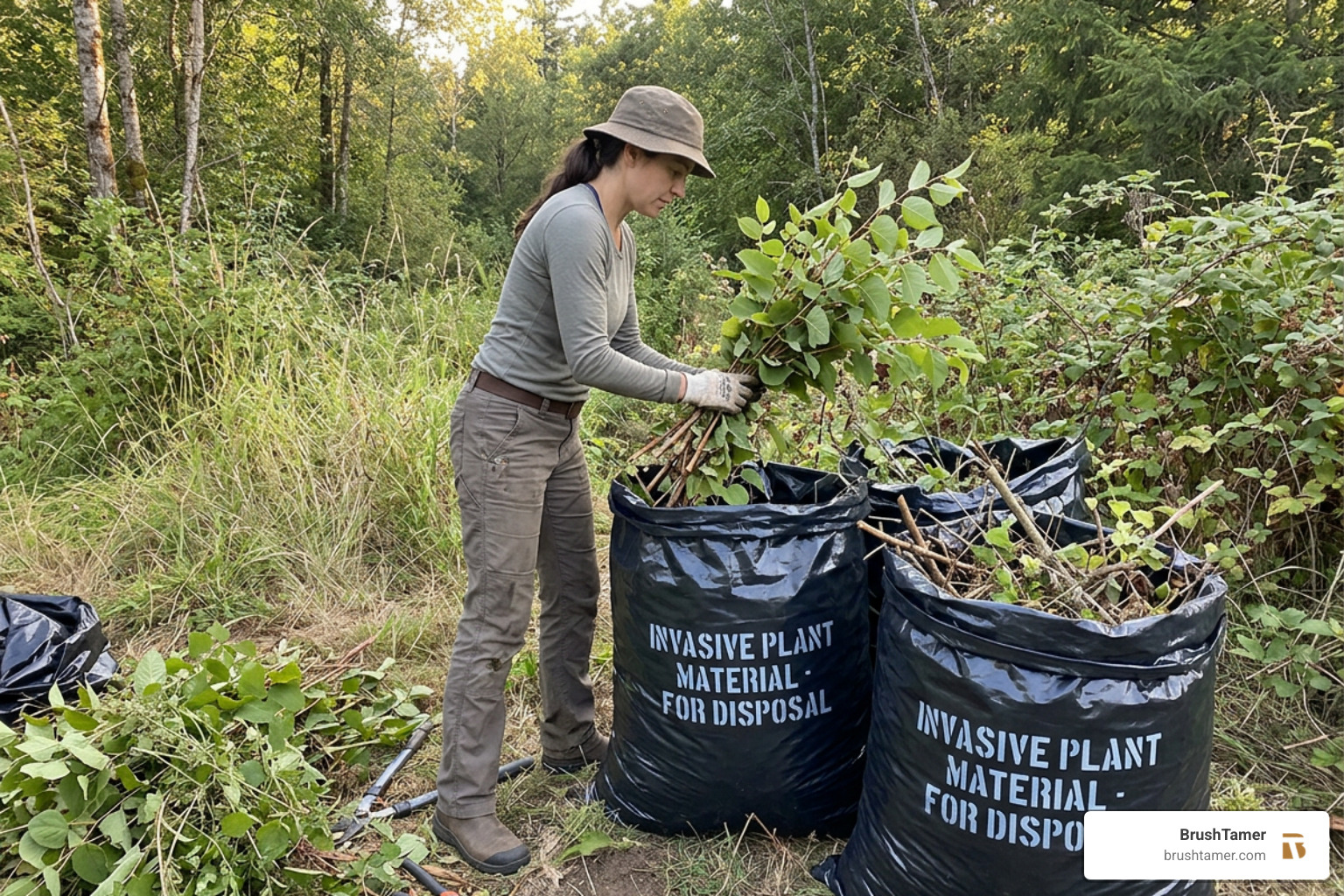
When our crews clear invasive biomass, we adhere to strict containment standards:
- On-Site Mechanical Chipping & Mulching: Shredding woody stems into fine chips desiccates invasive tissues and prevents root re-establishment.
- Landfill Disposal Rules: Flowering or seed-bearing herbaceous weeds (such as garlic mustard) must be sealed in heavy-duty clear plastic bags labeled specifically for municipal landfill disposal, as residential compost piles do not achieve the sustained internal temperatures required to destroy seeds.
- High-Temperature Composting Limits: Backyard compost heaps rarely maintain temperatures above 140°F for the multiple days necessary to kill viable weed seeds and fungal spores.
- Biosecurity Cleaning: All mulching heads, tracks, tires, and hand tools must be power-washed free of mud and debris before transport between client sites in Northern Indiana and Southern Michigan.
Real-World Case Studies in Ecosystem Restoration
Integrating multi-tiered control strategies delivers dramatic habitat improvements across degraded private and public land holdings.
Restoring natural balance requires looking beyond simple clearing to re-establishing native flora canopy systems. Review complete ecosystem renewal concepts in our Definitive Guide to Habitat Restoration.
Prescribed Fire and Targeted Grazing
Prescribed fire and targeted livestock grazing represent powerful cultural and physical tools for managing dense brush and invasive seed banks. Controlled burning clears thick leaf litter, destroys surface weed seeds, and stimulates dormant native prairie seeds. However, prescribed fire demands formal permits, strict weather parameters, and trained safety crews to mitigate runaway burn risks.
In smaller acreage or sensitive suburban settings, targeted grazing using goats or sheep provides an effective alternative. Goats readily consume prickly, tough vegetation like multiflora rose, common buckthorn, and poison ivy, stripping bark and defoliating shrubs until root reserves deplete.
In western rangelands, integrated grazing helps manage cheatgrass across millions of infested acres, reducing wildfire fuel loads. Property owners interested in wildfire risk reduction can consult our comprehensive guide on Fire Mitigation 101 Prevention Methods.
Professional Stewardship for Controlling Invasive Species
While invasive species spread rapidly across unmanaged parcels, uncoordinated or improper removal attempts often lead to root fragment spreading, unwanted seed dispersal, and ineffective control. To maintain healthy ecosystems and protect land values, property owners should rely on professional land management services like BrushTamer:
- Professional Property Surveys: Early inspection by trained land stewardship specialists ensures invasive thickets are identified and mapped before taking over acreage.
- Commercial Equipment Clearing: High-powered forestry mulching directly shreds standing invasive brush on-site, eliminating physical strain and stopping regrowth.
- Targeted Maintenance Programs: Scheduled follow-ups by experienced technicians keep aggressive rhizomatous root systems suppressed.
- Wildfire Fuel Reduction: Professional removal of dense underbrush removes hazardous fuel loads across parcels in Northern Indiana and Southern Michigan.
Frequently Asked Questions About Controlling Invasive Species
What is the best first step for controlling invasive species?
Prevention combined with Early Detection and Rapid Response (EDRR) is universally the most cost-effective strategy. Catching an invasive population while it is still isolated makes a focused response more realistic before mature thickets take over.
Why shouldn’t pulled invasive plants be composted in residential gardens?
Home garden compost piles rarely reach or maintain the internal temperatures (140°F to 160°F) necessary to sterilize tough invasive seeds, rhizomes, or root crowns. Composting invasive plants usually results in re-contaminating flowerbeds and vegetable gardens when the finished compost is spread.
How does climate change alter the effectiveness of biological control agents?
Climate change causes thermal shifts that can desynchronize the life cycles of biocontrol insects and their target host plants. Early spring warming may prompt insects to hatch before host plants produce necessary foliage, causing biocontrol populations to starve before suppressing the target weed.
Conclusion
Controlling invasive species is an ongoing commitment that preserves land value, improves woodland health, and restores native Midwest habitats. From early species identification and strategic IPM planning to heavy mechanical mulching and routine monitoring, a structured approach keeps aggressive invaders from taking over your acreage.
At BrushTamer, founded in 2021, we bring high-powered forestry mulching and vegetation management services to landowners across Plymouth, South Bend, Elkhart, Fort Wayne, Kalamazoo, and surrounding communities. We handle heavy brush clearing, land restoration, and site preparation with environmentally responsible equipment designed to protect topsoil while clearing invasive thickets.
When invasive brush threatens your woods, pastures, trails, or property plans, BrushTamer can help you choose the right plan for controlling invasive species and restoring usable land. Contact BrushTamer today to discuss your property goals with an experienced land-clearing team.