
Why Invasive Species Control Matters for Your Land and Budget
Invasive species control is the strategic management of non-native organisms to prevent ecological and economic damage, and it is most budget-friendly when implemented through professional early intervention. For landowners in Northern Indiana and Lower Michigan, managing these species is not just an environmental preference but a financial necessity to preserve property value and land utility.
Quick answer: What is invasive species control?
| Method | Best For |
|---|---|
| Mechanical (forestry mulching) | Large infestations, dense brush |
| Chemical (herbicide) | Resprouting roots, follow-up treatment |
| Biological | Specific species at scale |
| Cultural (native replanting) | Prevention, soil restoration |
| Integrated (IPM) | All stages, any size property |
If you own land in Elkhart, South Bend, or Mishawaka, you have likely encountered the aggressive spread of Buckthorn, Bush Honeysuckle, or Autumn Olive. These species are not merely aesthetic issues; they are biological invaders that outcompete native flora, disrupt local food webs, and create impenetrable thickets that render land unusable. According to the USDA Invasive Species Information Center, these non-native threats contribute to the decline of nearly half of all federally listed endangered species.
The most cost-effective way to manage these threats is to act before they establish a deep seed bank. Research indicates that a single invading species can reduce native species richness by over 16%. In states like California and throughout the Midwest, the rate of new species establishment is increasing, driven by global trade and climate shifts. Early professional intervention by BrushTamer ensures that these populations are eradicated before they require the most expensive, multi-year remediation efforts.
I am Leon Miller, owner of BrushTamer. Since founding this company in 2021, I have focused on providing high-efficiency invasive species control across Northern Indiana and Lower Michigan. Our approach combines industrial-grade machinery with scientific precision to protect your investment. This guide outlines how professional management saves you money while restoring the health of your property.
The Economic Impact and Necessity of Invasive Species Control
Invasive species control is a critical financial investment because non-native plants and animals cause billions of dollars in damage annually to infrastructure, agriculture, and private property values. When species like the Emerald Ash Borer or Bush Honeysuckle take over a property in Granger, Indiana, or Battle Creek, Michigan, they directly impact the bottom line. Dead trees become immediate liabilities, requiring expensive removal to prevent damage to structures or power lines. Furthermore, dense monocultures can limit access, reduce usable space, and restrict recreation, management, and development options.
The economic burden of invasive species is not limited to agricultural losses; it extends to the very integrity of our built environment. In urban and suburban areas of the Midwest, species like Japanese Knotweed can cause catastrophic damage to infrastructure. Its aggressive rhizomes are capable of exploiting small cracks in concrete, eventually splitting foundations, damaging septic systems, and heaving asphalt driveways. For commercial property owners, this creates risk and repair complications that are best avoided through early identification and professional invasive species control.
The environmental cost is equally staggering and has direct economic consequences. Non-native species are a primary driver of extinction, ranking second only to direct exploitation. By crowding out native flora, these invaders destroy the food web that supports local wildlife. For example, invasive plants reduce animal abundance in 56% of observed cases, which can negatively impact local hunting land values and eco-tourism. Multiple conservation and research organizations document large-scale national impacts from invasive species across ecosystems and infrastructure.
Urban environments in cities like Chicago, Fort Wayne, and Grand Rapids are particularly vulnerable. High densities of travel and disturbed soil create “hot spots” for invasion. Proactive Vegetation Management is the only reliable way to safeguard infrastructure—such as drainage systems and utility lines—from the aggressive root systems of plants that can penetrate asphalt and compromise foundations.
Strategic Management: Eradication vs. Long-Term Suppression
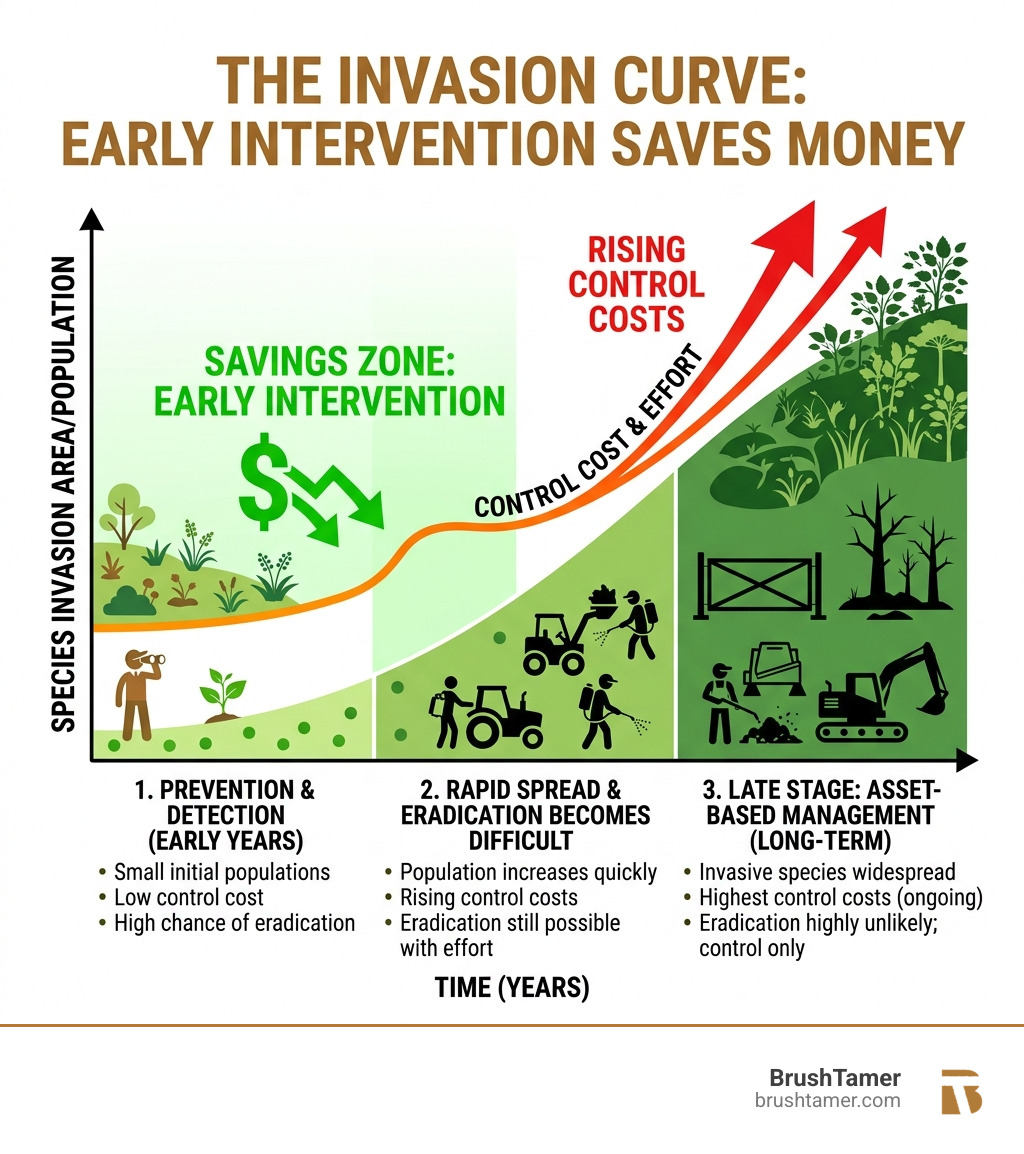
Effective invasive species control requires a tiered strategy where eradication is the primary goal for early-stage infestations, while suppression and density reduction are utilized for established populations. Professional management focuses on the “Invasion Curve,” where the cost of control increases exponentially as a species spreads, making early detection and rapid response (EDRR) the most budget-friendly approach for landowners in South Bend, Indiana, or Grand Rapids, Michigan.
The biological persistence of these invaders is another factor that necessitates a strategic approach. Many invasive plants, such as Common Buckthorn, produce seeds that can remain viable in the soil for up to six years. This “seed bank” means that even after the visible plants are removed, the threat remains dormant beneath the surface. A professional strategy accounts for this by planning follow-up suppression efforts that target new seedlings as they emerge, preventing them from reaching maturity and replenishing the seed bank.
When BrushTamer evaluates a site, we determine where the infestation sits on the timeline of arrival to maximize your ROI:
- Eradication: Eradication is the most straightforward phase when infestations are detected early and confined. When a species is detected early, and the population is small, we aim for total elimination. This prevents the species from establishing a seed bank that could plague the property for decades.
- Suppression and Density Reduction: Suppression and density reduction may require a multi-season plan with follow-up visits and monitoring. In these cases, we focus on reducing the density of the invasive to a level where native species can once again thrive, and the land becomes usable for its intended purpose.
Utilizing professional Brush Management services early is the key to avoiding the steep part of the invasion curve. According to the Indiana DNR, early intervention can reduce labor intensity, repeat disturbance, and the need for repeated treatments. Our team provides professional site evaluations to determine the most effective path forward, ensuring that we don’t just clear the brush, but manage the land for long-term health. For more intensive projects, our Heavy Brush Removal strategies ensure that even the most stubborn established populations are brought under control.
Professional Methods for Effective Invasive Species Control
Professional invasive species control utilizes a combination of mechanical, chemical, and cultural methods to ensure the complete removal of target plants while protecting the surrounding ecosystem. By employing specialized equipment like high-flow forestry mulchers, BrushTamer can clear large-scale infestations of buckthorn or autumn olive in a fraction of the time required for manual labor, providing a higher return on investment for commercial and industrial properties.
At BrushTamer, we leverage industrial-grade technology to achieve results that manual efforts simply cannot match. Our forestry mulching process grinds invasive trees and shrubs into a fine mulch on-site. This mulch serves as a protective layer for the soil, preventing erosion and suppressing the germination of the invasive seed bank left behind. This method is far superior to traditional clearing because it leaves the soil structure intact while removing the invasive canopy.
| Method | Description | Primary Advantage |
|---|---|---|
| Mechanical (Mulching) | Shredding vegetation with high-flow hydraulic heads. | Extremely fast; clears 6-inch diameter stems easily. |
| Chemical (Basal Bark) | Applying herbicide to the lower 12-24 inches of a stem. | Highly targeted; no need to cut the tree first. |
| Chemical (Cut-Stump) | Applying herbicide to the “ring” of a freshly cut stump. | Prevents resprouting from the root system. |
| Manual (Girdling) | Removing a 1-8 inch ring of bark around a tree. | Kills the tree while standing; best for sensitive areas. |
For specialized threats like Japanese Knotweed, a “one-and-done” approach rarely works. These plants require precise chemical applications combined with mechanical disruption. Whether it is Industrial Vegetation Management for utility right-of-ways or Commercial Vegetation Control for business parks, professional intervention ensures the job is done right the first time. We follow all EPA Pesticide Regulations to ensure environmental safety.

Integrated Pest Management for Invasive Species Control
Integrated Pest Management (IPM) is the gold standard for invasive species control, combining multiple tactical interventions to maintain pest populations below environmentally damaging levels. This multi-strategic approach ensures that if one method—such as mechanical cutting—fails to kill the root system, a secondary method like targeted herbicide application provides the necessary follow-through.
The IPM cycle begins with accurate identification and mapping. We analyze the life cycle of the plant to determine the most vulnerable stage. For instance, some species may be susceptible to biological control agents, while others require a “cut-and-treat” mechanical-chemical combo. The “cut-and-treat” method is particularly effective for larger woody stems. By applying a concentrated herbicide to the cambium layer—the outer ring of the stump—immediately after cutting, we ensure the chemical is drawn into the root system. This is critical for species that aggressively resprout from the roots.
Our Vegetation Management Solutions focus on habitat manipulation. By removing the invasive canopy, we allow sunlight to reach the forest floor, which is the first step in site restoration. Re-establishing native plant cover immediately after Land Clearing is vital, as native plants compete for light and nutrients, making it much harder for invasive seedlings to regain a foothold.
Timing and Precision in Invasive Species Control
The success of invasive species control depends heavily on seasonal timing. For many woody invasives in the Midwest, the “window of vulnerability” is often in the late summer or fall. During this time, plants are translocating sugars from their leaves down into their root systems for winter storage. Applying herbicides during this phase ensures the chemical is carried directly to the roots, resulting in a much higher kill rate.
Conversely, mechanical methods must be timed to disrupt the reproductive cycle. If clearing occurs too late in the season, it may inadvertently help the plant spread its seeds across the property. We monitor local climate conditions to execute treatments when they will be most effective. Professional Forestry Mulching can often be performed year-round, but we coordinate the follow-up treatments to match the biological clock of the specific invader we are targeting.
Regulatory Compliance and Safe Disposal Protocols
Compliance with invasive species control regulations involves adhering to state-specific DNR permits, EPA herbicide guidelines, and strict biomass disposal protocols to prevent legal liability and further spread. Professional management ensures that all activities in Shipshewana, Ligonier, and Syracuse meet the rigorous standards set by state and federal authorities.
In Indiana and Michigan, improper disposal can create legal exposure and increase the risk of further spread. For example, burning without a permit can result in significant penalties, and those responsible for a wildfire are liable for all suppression costs. We handle the complexities of burn permits and ensure that any prescribed fire is conducted under specific weather and fuel conditions to maintain safety. The Michigan Invasive Species Program provides clear guidelines on the legal transport and disposal of prohibited species, which BrushTamer follows strictly.
Safe disposal is a critical factor because many invasive plants can regrow from a small fragment of root or stem. Simply piling them on the edge of a property is dangerous. We follow strict protocols, which may include:
- Industrial Mulching: Rendering the plant material into fine chips that cannot regrow.
- Landfilling: Bagging material in clear bags labeled specifically for landfilling per DNR guidelines.
- Stump Grinding: Our Stump Grinding services ensure that the root crown of the plant is destroyed.
Whether we are performing a Blueberry Orchard Removal or clearing a residential lot in Goshen, we use proper Personal Protective Equipment (PPE) and spill containment to protect both our crew and your soil. Professional oversight is the only way to ensure that the removal process doesn’t accidentally become a dispersal event.
Regional Success and Localized Solutions in the Midwest
Regional invasive species control in the Midwest requires localized knowledge of soil types and specific threats like Buckthorn and Autumn Olive across Northern Indiana and Lower Michigan. Since our founding in 2021, BrushTamer has delivered high-quality, environmentally responsible results for landowners from Warsaw to Grand Rapids.
Our service footprint covers the heart of the Great Lakes region, spanning from the industrial corridors of Northwest Indiana to the agricultural hubs of Central Michigan. We provide specialized solutions for the diverse landscapes found in the Michiana area, including the sandy dunes of the lakeshore and the rich timberlands of the interior. Whether managing a small woodlot in the suburbs of South Bend or clearing hundreds of acres for a commercial development near Grand Rapids, our team brings the same level of ecological expertise and industrial power to every project.
By utilizing advanced Brush Management techniques, we help local landowners reclaim their property. Our success stories involve turning dense, unusable thickets back into functional, beautiful landscapes where native wildflowers and oaks can thrive once again. We are committed to the long-term health of the Midwest landscape, ensuring that our work today provides a foundation for a diverse and resilient ecosystem tomorrow.
Frequently Asked Questions about Invasive Species Control
When is the best time to start invasive species control?
The best time to start invasive species control is immediately after detection. Early professional action gives BrushTamer the best opportunity to eliminate isolated populations before they expand into dense, multi-season infestations. For property owners in the Midwest, that usually means lower total project cost, less disturbance to the site, and a faster path back to usable land.
Why is professional control better than delayed treatment?
Professional control is better because established infestations become more expensive and more disruptive to remove over time. BrushTamer uses commercial equipment, species-specific treatment timing, and follow-up planning to address both visible growth and regenerative root systems. That level of precision is especially important for properties where buckthorn, bush honeysuckle, and autumn olive can spread quickly along fence rows, woodlots, and drainage corridors.
What happens to the mulch left behind after forestry mulching?
The mulch produced during our process is a vital component of the restoration strategy. Rather than being a waste product that needs to be hauled away, the fine wood chips create a natural “blanket” over the soil. This layer helps to retain moisture for native seeds, prevents soil erosion on slopes, and suppresses the germination of invasive seeds by blocking sunlight. Over time, this mulch decomposes, returning organic matter to the soil and improving the overall health of the ecosystem.
Are the chemicals used in invasive control safe for the environment?
Yes, when applied by trained professionals, herbicides can be used safely and precisely as part of a professional management plan. BrushTamer prioritizes targeted application methods such as basal bark and cut-stump treatment to confine product to the intended plant. We use only EPA-approved products and follow all label instructions to help protect desirable vegetation, soil conditions, and nearby water resources.
Conclusion
Invasive species control is an essential practice for preserving the ecological integrity and economic value of land in the Midwest. Neglecting an infestation only leads to higher costs and more significant environmental damage down the road. By partnering with an experienced provider like BrushTamer, landowners in Michigan, Indiana, and Illinois can implement cost-effective, science-based strategies that ensure long-term protection.
From our home base in Northern Indiana to the shores of Lake Michigan, we are committed to environmental stewardship and professional reliability. Since 2021, we have helped hundreds of landowners reclaim their property from invasive threats. Let us help you restore your land to its natural beauty and ensure its health for generations to come.
Ready to reclaim your property? Explore our Land Clearing services, then contact BrushTamer to schedule a site evaluation for invasive species control. Contact BrushTamer today to schedule a professional site evaluation and take the first step toward a healthy, invasive-free landscape.