
Why Invasive Plant Control Is the First Step to Reclaiming Your Land
Invasive plant control is the process of identifying, removing, and managing non-native plant species that aggressively spread and damage native ecosystems — here’s what it involves at a glance:
- Detect early — identify invasive species before they establish large populations
- Assess the site — map infestation density and prioritize treatment areas
- Select the right method — mechanical removal, targeted herbicides, or a combination
- Remove and treat — use forestry mulching, cutting, or chemical application
- Manage debris — process or repurpose biomass responsibly when site conditions allow.
- Restore native cover — replant or allow native species to reestablish
- Monitor long-term — conduct follow-up treatments to prevent recolonization
If you own property in Northern Indiana or Lower Michigan, you’ve likely seen it firsthand. A field that used to be open. A treeline slowly consumed by shrubs and vines. A woodlot where almost nothing native survives anymore.
That’s what invasive plants do. They don’t just look messy — they outcompete native species, disrupt soil health, reduce biodiversity, and can dramatically lower the ecological and practical value of your land.
Invasive plants can spread quickly, disrupt native plant communities, and make properties harder to access or maintain. Across the United States, invasive species are recognized as a major ecological and land-management challenge. For landowners, the practical impact often shows up as spreading brush, reduced access, and declining native plant health.
What makes this especially frustrating for property owners is that doing nothing makes it worse. Invasive species spread fast. A small patch of bush honeysuckle or common buckthorn today can become a near-impenetrable thicket within a few seasons.
The good news? Many plant invasions can be reduced with a structured invasive plant control plan, the right timing, and consistent follow-through.
I’m Leon Miller, owner of BrushTamer and a hands-on land management professional based in Plymouth, Indiana. Through years of forestry mulching, brush clearing, and site restoration work across Northern Indiana and Lower Michigan, invasive plant control has become one of the most critical — and most requested — services I provide. In this guide, I’ll walk you through a proven 7-step framework to help you understand what effective control actually looks like.
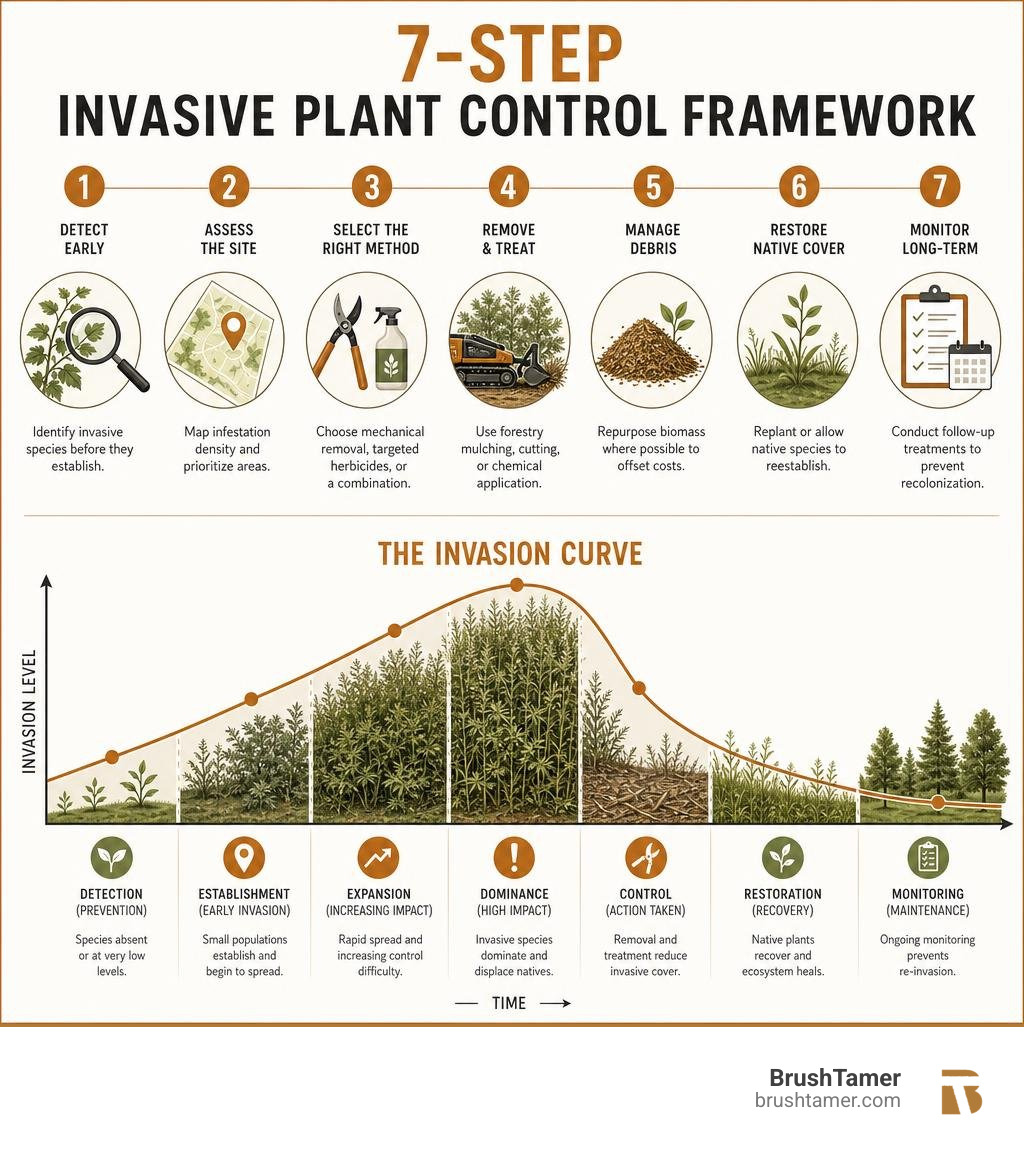
To help you get started, we have compiled resources on invasive species control and specialized Japanese knotweed treatment to guide your land reclamation efforts.
The 7-Step Framework for Invasive Plant Control
Effective invasive plant control starts with an adaptive 7-step framework built around early detection, mechanical removal, targeted treatment, and long-term monitoring. We use this systematic approach to transition disrupted properties back into balanced, productive ecosystems.
Successful invasive species removal requires moving away from one-time clearing and using a systematic plan that addresses regrowth, seed spread, and site recovery. By utilizing our comprehensive Vegetation Management Ultimate Guide, we help landowners in cities like Elkhart, Indiana, and Kalamazoo, Michigan, understand the necessity of long-term planning. This framework is designed to target the biological vulnerabilities of aggressive plants, ensuring that the energy reserves of the invaders are completely exhausted while native plant communities are given the space to recover.
Step 1: Early Detection and Rapid Invasive Plant Control
Early Detection and Rapid Response (EDRR) is the practice of identifying and treating invasive plants immediately after they arrive in an area, before they have a chance to establish a permanent seed bank. We focus on EDRR because it helps address invasive plants before they become deeply established across the property.
When aggressive species like autumn olive or garlic mustard first appear on a property in South Bend, Indiana, or Niles, Michigan, they are relatively easy to manage. However, if left unchecked, they quickly develop extensive root networks and disperse thousands of seeds. Through our In-Depth Guide to Forest Understory Treatment, we emphasize the importance of identifying these early invaders during routine property assessments. By mapping these species early, we can deploy targeted extraction tools and prevent a minor nuisance from turning into a multi-acre ecological disaster.
Step 2: Assessment and Site Prioritization
Site prioritization involves analyzing the density of the infestation, the ecological value of the surrounding habitat, and the specific soil characteristics of your property to determine where to focus control efforts first. We use this step to focus labor, equipment, and treatment planning where they will create the strongest restoration outcome.
Not all areas of an infested property should be treated with the same urgency. We prioritize protecting high-value, uninvaded natural areas first, creating a buffer zone to prevent the spread of weeds. Next, we target the outer edges of the infestation, gradually working our way inward toward the densest “core” areas. Our team utilizes advanced Professional Land Management strategies to evaluate factors such as slope, soil moisture, and native species presence, ensuring our heavy equipment operations do not cause unnecessary soil compaction or erosion on your property.
Step 3: Selecting the Right Vegetation Management Solutions
Selecting the right solution means matching the target plant’s biology and the site’s unique conditions with a customized blend of mechanical clearing and highly targeted chemical applications. We implement these integrated vegetation management (IVM) strategies to maximize plant mortality while preserving the surrounding ecosystem.
Invasive plant control rarely succeeds with a single method, especially when aggressive woody species have established deep roots or dense seed banks. For example, simply cutting down a mature buckthorn tree will only trigger vigorous resprouting from the stump, resulting in a denser cluster of stems the following year. By leveraging our specialized Vegetation Management Solutions, we evaluate the target species’ growth habits to determine the ideal combination of mechanical mulching and systemic herbicide applications, ensuring the root system is entirely neutralized.
Step 4: Mechanical and Physical Removal
Mechanical removal is the physical clearing of invasive vegetation using heavy-duty, commercial-grade machinery like forestry mulchers, which grind standing brush down to the ground level in a single pass. We rely on mechanical clearing as the primary phase of large-scale restoration because it instantly opens up the canopy and provides immediate site access.
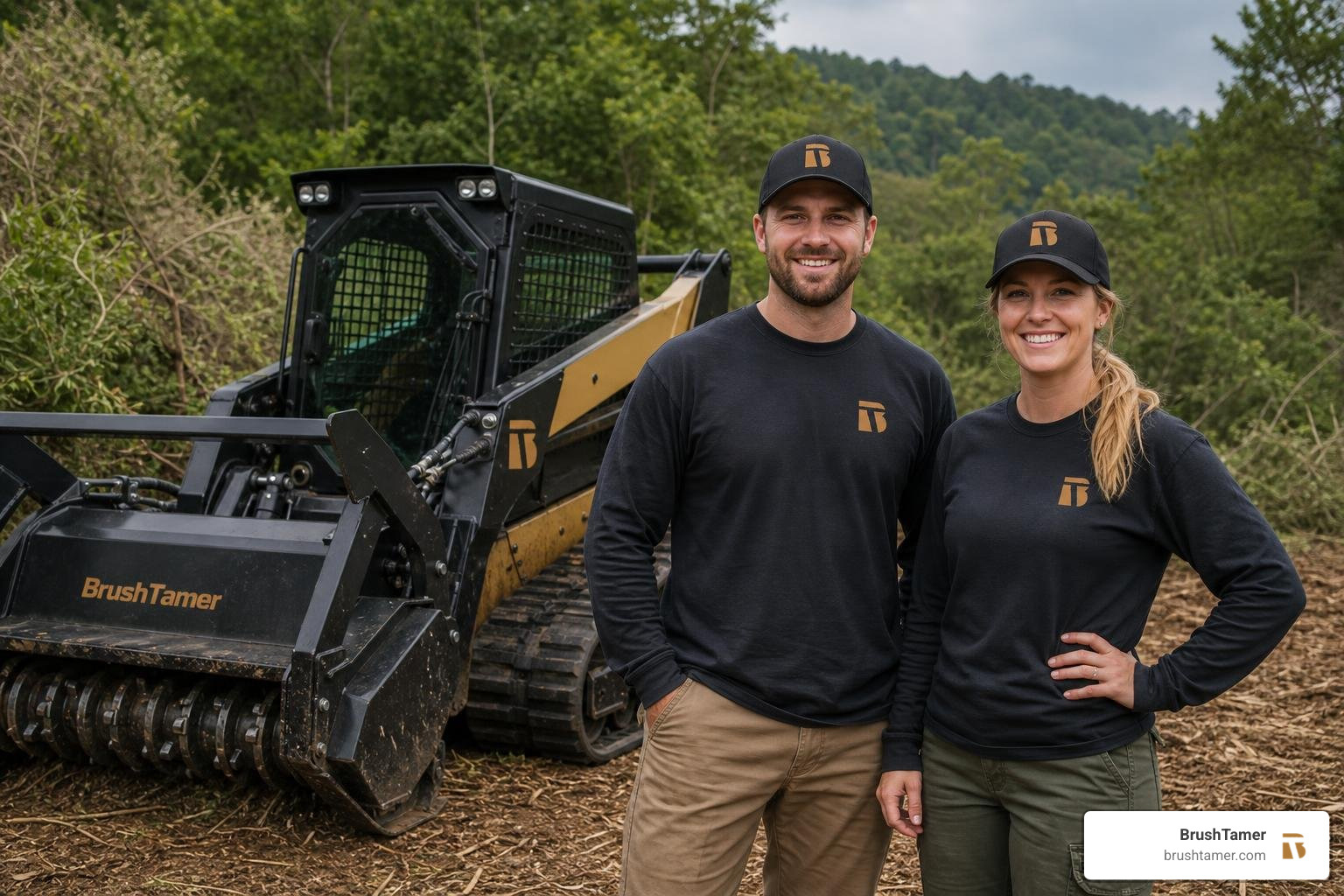
For properties in Grand Rapids, Michigan, or Valparaiso, Indiana, that are completely choked with dense woody brush, manual extraction is simply not feasible. We utilize high-performance forestry mulchers to grind down thickets of honeysuckle, privet, and multiflora rose. This process leaves behind a clean, uniform layer of organic mulch that helps suppress weed seed germination and protects the soil from erosion. To get your property cleared quickly and professionally, you can learn more about our specialized forestry mulching services.
Step 5: Targeted Chemical Application
Targeted chemical application is the precise use of systemic herbicides, such as glyphosate or triclopyr, applied directly to the cut stems or foliage of invasive plants to kill the root system. When chemical treatment is appropriate, it should be applied selectively and precisely to reduce risk to surrounding native wildflowers and trees.
Mechanical clearing removes the visible portion of the plant, but systemic herbicides are often required to finish the job. For instance, when dealing with highly aggressive herbaceous invaders, a specialized Japanese Knotweed Treatment is essential. We use selective herbicides like triclopyr, which targets broadleaf woody plants without injuring native grasses, and apply them using low-volume backpack sprayers or direct cut-stump treatments to ensure that every drop of herbicide goes exactly where it is intended.
Step 6: Debris Management and Waste Repurposing
Debris management is the process of handling, processing, and repurposing the massive volume of woody biomass generated during the land clearing process. We manage this waste responsibly by turning cleared brush into beneficial wood chips or processing it for local bioenergy and agricultural applications.
When clearing acres of thick, woody understory in places like Warsaw, Indiana, or Battle Creek, Michigan, the resulting piles of brush can become a major fire hazard and an eyesore if left unmanaged. Rather than hauling this material to a landfill, we utilize on-site processing methods to turn the debris into valuable soil amendments. By integrating our professional land clearing services, we ensure that all cleared material is either mulched directly into the soil to improve organic matter or consolidated safely to support local bioeconomy initiatives.
Step 7: Long-Term Monitoring and Maintenance Control
Long-term monitoring and maintenance control is the scheduled, multi-year process of inspecting treated areas and performing spot treatments on emerging seedlings to prevent the invasive population from reestablishing. We design follow-up plans to protect the progress made during treatment and support sustained recovery of the land.
Invasive plant seeds can remain dormant in the soil for years, waiting for the sunlight and space created by our clearing operations to germinate. Without consistent follow-up, a cleared site can quickly be overrun again. We provide structured maintenance rotations that target these emerging seedlings before they have a chance to mature and produce new seeds. Landowners can explore BrushTamer’s invasive species control resources to better understand why routine monitoring helps prevent regrowth.
Limitations of Traditional Vegetation Management Methods
While traditional methods like manual hand-pulling, broadcast chemical spraying, and biological controls have their place, each comes with operational limits and environmental risks. To achieve lasting success, we must carefully weigh these limitations against the specific needs of your Midwest property.
According to the Weed Control Methods Handbook: Tools & Techniques for Use in Natural Areas , relying solely on a single traditional control method often leads to poor long-term outcomes. For example, manual pulling is incredibly labor-intensive and causes severe soil disturbance, which actually stimulates the weed seed bank. On the other end of the spectrum, continuous broadcast chemical spraying can lead to herbicide resistance and the accidental destruction of non-target native plants. Even biological control—introducing natural insect predators from the weed’s native range—carries the unpredictable risk of host-shifting, where the insects begin feeding on native agricultural crops or rare local flora.
| Control Method | Primary Limitations | Environmental Side Effects | Long-Term Feasibility |
|---|---|---|---|
| Mechanical Clearing (Manual) | Extremely slow; limited to small stems; causes high soil disturbance. | Stimulates dormant weed seeds; causes soil erosion on slopes. | Very low for properties over a quarter-acre. |
| Chemical Control (Broadcast) | High risk of herbicide resistance; non-selective damage. | Water contamination; destruction of native pollinators and flora. | Moderate, but requires ongoing chemical costs. |
| Biological Control | Extremely slow to show results; cannot eradicate populations. | Unpredictable risk of insects attacking non-target native plants. | Low for localized private properties. |
Circular Bioeconomy: Repurposing Invasive Plant Waste
Responsible biomass handling can turn cleared invasive vegetation into useful materials such as mulch, biochar, or organic soil conditioners when site conditions and regulations allow. We embrace these sustainable practices to reduce the overall environmental footprint of our clearing operations.
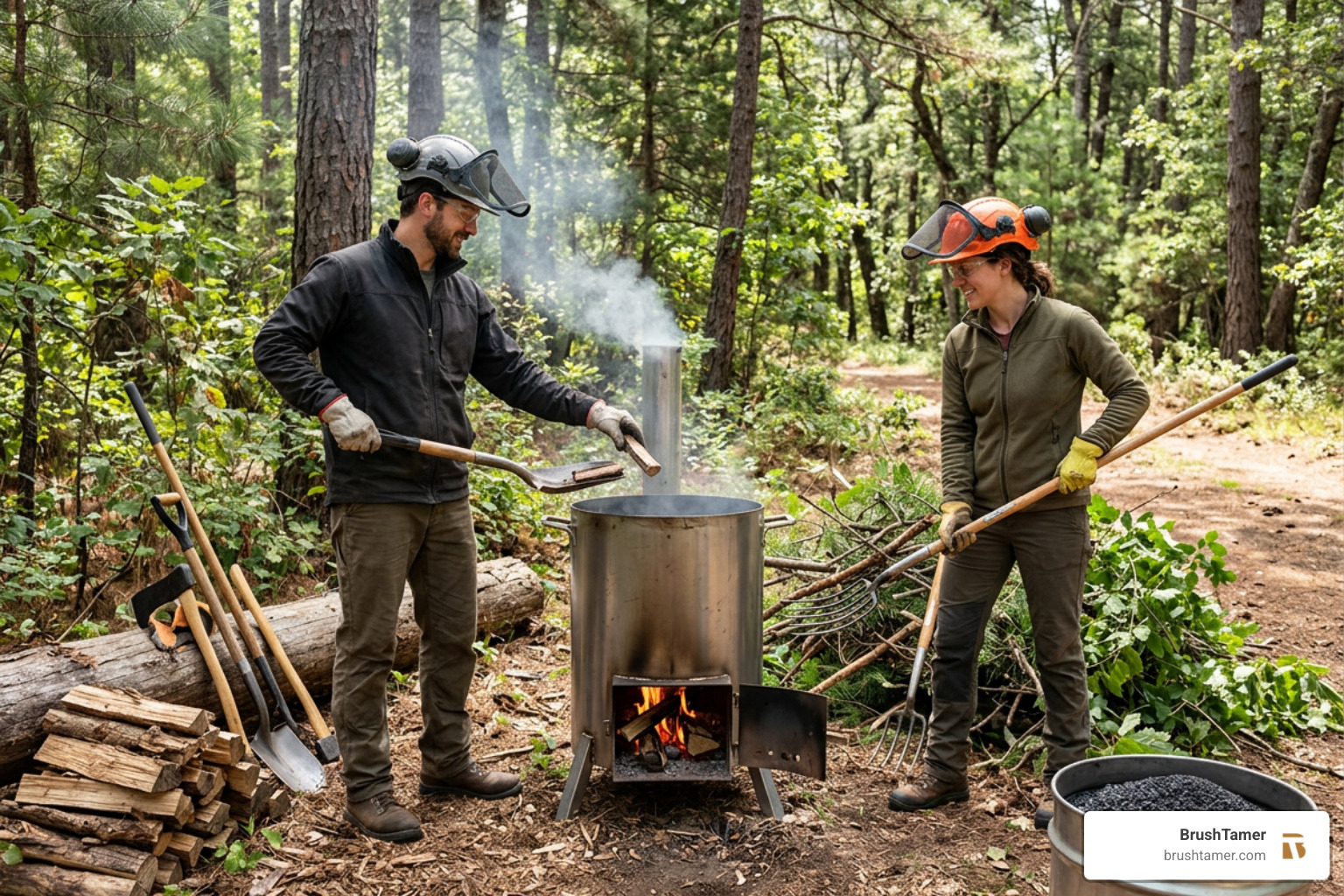
When we clear massive volumes of invasive woody biomass, such as autumn olive or buckthorn, from properties in Goshen, Indiana, or Portage, Michigan, we generate tons of organic material. Research on invasive plant management notes that cleared biomass may be reused in practical applications when it can be handled safely and responsibly. For example, some invasive plant biomass has been studied for reuse in products such as pulp, bioenergy, and soil amendments.
On a local scale, we can process cleared woody waste into biochar—a highly stable form of carbon created by burning organic matter under low-oxygen conditions. When applied to agricultural fields in Northern Indiana, biochar improves soil water retention, locks in nutrients, and permanently sequesters carbon in the ground.
However, utilizing invasive plant waste does come with regulatory and biological challenges. If not handled with strict professional oversight, transporting cleared brush can accidentally spread viable seeds or root fragments to uninfested areas. This is why we process all biomass directly on-site or under highly controlled conditions, mitigating any risk of secondary seed dispersal.
Frequently Asked Questions about Invasive Plant Control
What is the most effective method for long-term invasive plant control?
The most effective method for long-term control is an integrated vegetation management (IVM) approach that combines mechanical clearing with highly targeted, selective chemical applications. We utilize high-capacity forestry mulching equipment to rapidly clear mature, dense brush, followed by precise, low-volume herbicide treatments on emerging sprouts. This multi-method strategy directly exhausts the root system’s energy reserves and prevents the plants from producing new seeds. For commercial and industrial properties, customized vegetation management protocols are often the most reliable path toward sustained, maintenance-level control.
Why is Professional Invasive Plant Control Essential for Midwest Properties?
Professional control is essential because commercial-grade equipment, specialized ecological knowledge, and strict safety standards are required to permanently eradicate aggressive invaders without damaging the surrounding environment. Many common Midwest invaders, such as bush honeysuckle and autumn olive, have extensive, resilient root systems that will rapidly resprout if they are not extracted or chemically treated correctly.
Furthermore, applying specialized herbicides around local water systems requires professional licensing and specialized aquatic formulations to prevent environmental contamination. By working with a professional vegetation control team, landowners can reduce risk, follow proper treatment practices, and create a clearer plan for long-term management.
How does the seed bank affect invasive plant control timelines?
The soil seed bank is the natural storage of dormant seeds within the soil, and it directly dictates how long an eradication project will take. Many invasive species produce thousands of highly durable seeds every year that can remain viable in the soil for decades.
For example, studies show that completely eradicating garlic mustard (Alliaria petiolata) from a forested area requires 11 years of 100% effective annual control. If your control efforts are only 90% effective, the eradication timeline stretches to more than 50 years. This is why we emphasize the absolute necessity of multi-year monitoring and scheduled maintenance rotations; missing even a single season of treatment allows the seed bank to completely replenish itself.
Conclusion
Reclaiming your property from aggressive, non-native species starts with professional invasive plant control, specialized equipment, and a commitment to long-term land stewardship.
Since BrushTamer was founded in 2021, we have dedicated ourselves to providing the highest-quality, environmentally responsible land clearing and vegetation management services across Northern Indiana and Lower Michigan. From our home base in Plymouth, Indiana, we regularly serve landowners in:
- Northern Indiana: South Bend, Elkhart, Mishawaka, Granger, Valparaiso, and Warsaw.
- Lower Michigan: Grand Rapids, Kalamazoo, Battle Creek, Portage, and St. Joseph.
Ready to reclaim your property from aggressive invasive plants? Contact BrushTamer today to discuss a professional invasive plant control plan tailored to your land.