
Why Professional Trail Building and Maintenance Matters for Your Property
Trail building and maintenance is a specialized field that, when handled by a professional land clearing contractor like Brush Tamer, transforms your property into a safe, durable, and sustainable asset. Based in Northern Indiana, we extend our premier land-clearing services to regions in Wisconsin, Illinois, and Ohio, ensuring your investment stands the test of time while protecting natural resources.
Professional trail work is far more than clearing a path. As the USDA Forest Service’s experience with its 164,000-mile network shows, trails built without sustainability principles suffer from erosion and require constant, expensive repairs. In contrast, professionally designed trails can last for generations with minimal upkeep.
Water is the primary enemy of trail longevity. Trails that fail to manage water flow will erode and eventually require complete reconstruction. This is why professionals focus heavily on drainage design, using proven techniques to shed water effectively.
I’m Leon Miller, owner of BrushTamer, and I’ve spent years changing overgrown properties into functional, beautiful spaces. My expertise in professional land management, including trail building and maintenance, prioritizes sustainability and long-term durability to create trails that improve your property’s value while protecting its natural integrity.
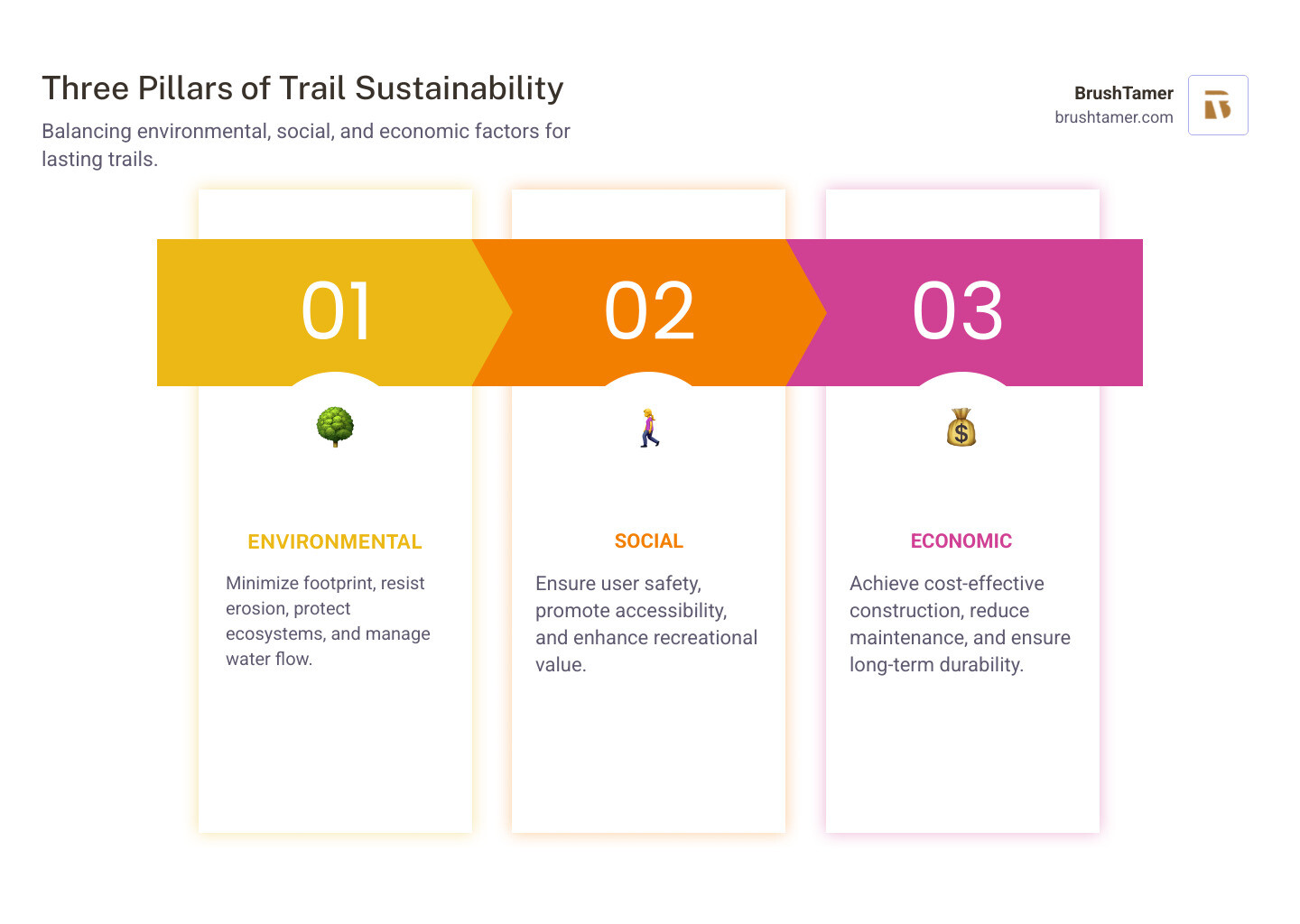
The Foundation: Principles of Sustainable Trail Design
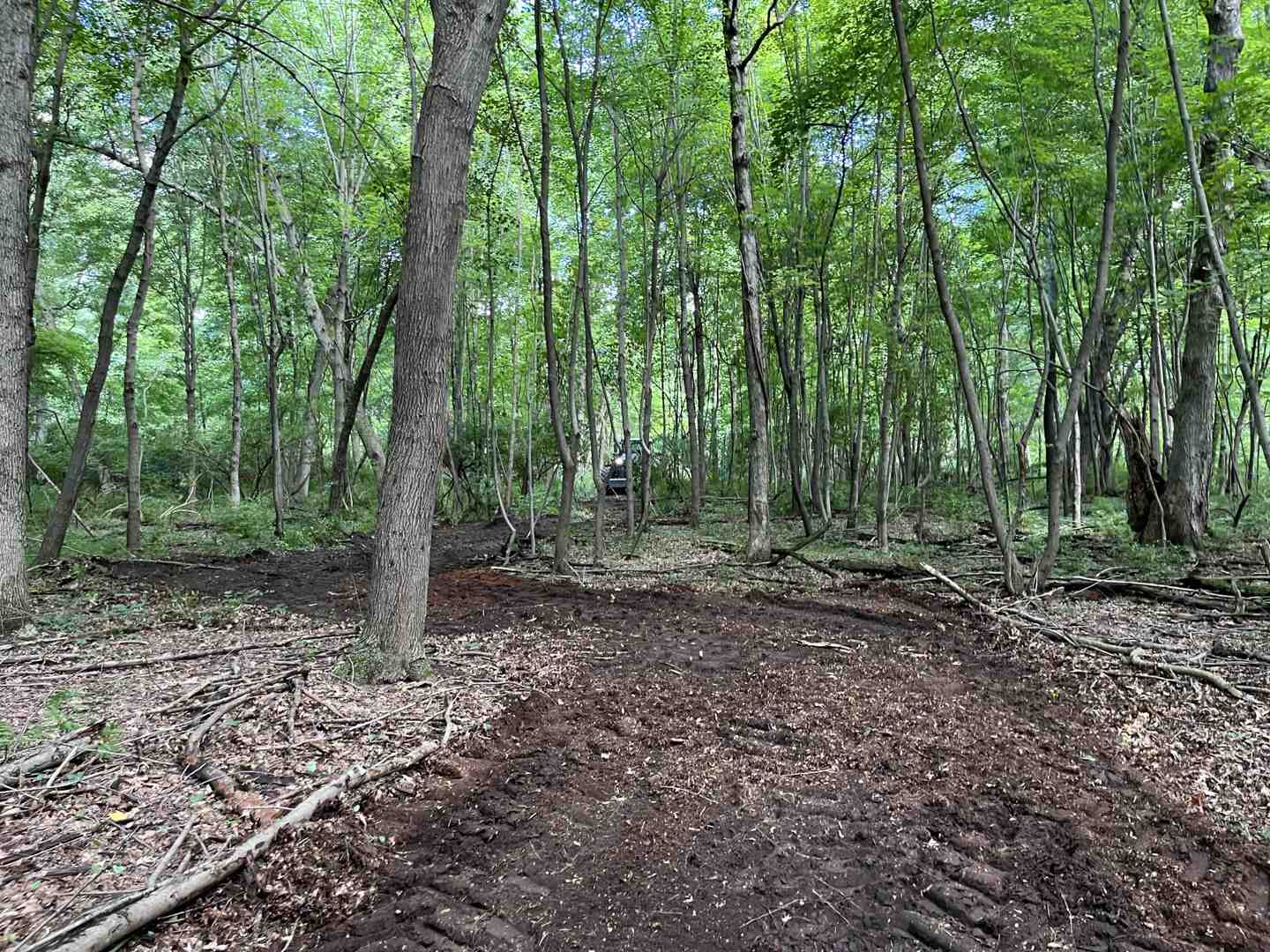
Every lasting trail begins with thoughtful, sustainable design. At BrushTamer, we know that trail building and maintenance is about creating an asset that serves your property for generations. Sustainable design balances environmental protection, user needs, and economic viability. Environmentally, a trail must work with nature, resisting erosion and maintaining the natural flow of water to achieve what we call “hydrological invisibility.”
Successful trail work depends on a deep understanding of your property’s unique characteristics. Our process begins with a thorough analysis of soil composition. We determine which soils, like loamy soil, provide the ideal balance of stability and drainage, and which, like clay or sandy soils, require specialized construction techniques based on our extensive Midwestern terrain expertise. Terrain adaptation is equally critical. Our team has experience navigating all local terrains, from rolling hills to steep ravines, and we employ specialized construction, often using the power and precision of our Fendt tractors and FAE forestry mulchers, to protect sensitive ecosystems.
We design with specific user groups in mind, whether hikers, mountain bikers, or equestrians, to minimize wear patterns and user conflicts. We always strive to create pathways that are safe, firm, stable, and have gentle grades, making your property more accessible and durable.
Understanding Trail Grades and Water Management
Trail grade and layout are the most critical factors in longevity. Our goal is to build trails with moderate grades (ideally under 7%) that require only light seasonal attention. We follow the half rule, which dictates that a trail’s grade should be less than half the hillside’s slope. This allows water to sheet across the trail instead of channeling down it and causing erosion.
We specialize in rolling contour trails, the most sustainable design possible. These trails follow the land’s contours and feature repeated grade reversals—gentle dips and crests that shed water naturally. Aligning a trail down the fall line (the steepest path down a slope) is a common mistake that guarantees erosion; our professional planning avoids this entirely. Using precision tools like clinometers, we ensure every segment of your trail meets sustainable design specifications.
Effective water management is the key to a long-lasting trail. The foundation of this is outsloping the trail tread at a 3 to 5 percent angle, allowing water to run off in a thin, non-erosive layer known as sheet flow. Where necessary, we incorporate subtle drainage dips or construct durable waterbars and culverts to manage larger water volumes. Our approach to preventing erosion is holistic, combining proper alignment, stable soils, and a system of drainage features to achieve hydrological invisibility—a state where the trail has such a minimal impact on water movement that the surrounding landscape’s drainage patterns remain virtually unchanged.
Professional Trail Construction: From Blueprint to Trailhead
A great design is only as good as its execution. Professional trail building and maintenance brings a blueprint to life with precision and the right techniques for long-term durability.
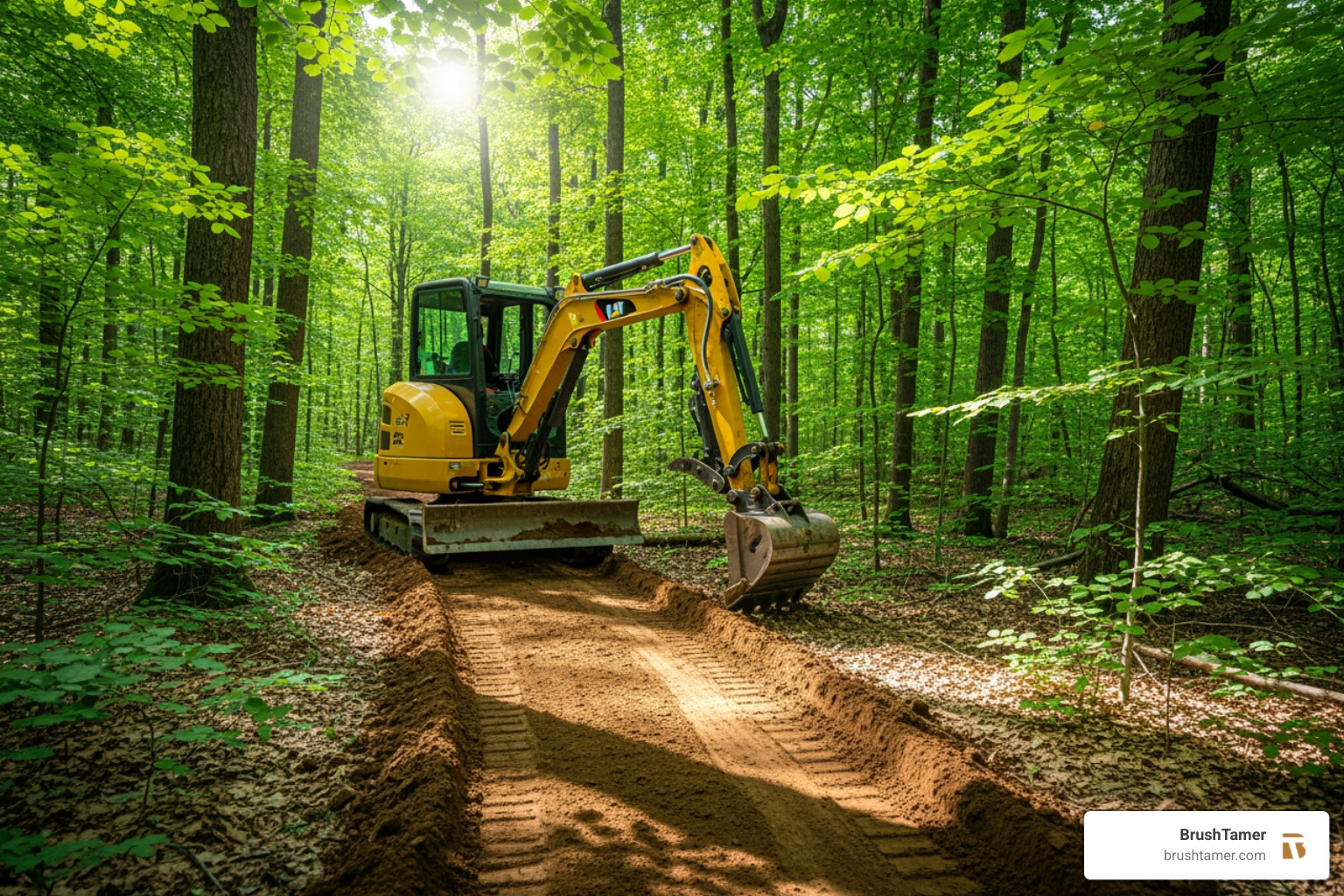
We use full-bench construction, the undisputed gold standard for durability on any hillslope. This method is non-negotiable for professional results. It involves excavating the entire trail width into the solid, undisturbed mineral soil of the hillside, creating a stable platform that will not settle or slump over time. This stands in stark contrast to the amateur “cut-and-fill” or “half-bench” method, where excavated material is simply moved to the downhill side to form half the tread. This uncompacted fill material acts like a sponge, becomes saturated, and inevitably fails, slumping down the slope and taking the trail with it. Our process involves carefully removing the organic topsoil (duff), making the full-bench cut, and then using the excavated mineral soil to blend and naturalize the downslope edge, a process called “broadcasting” or “dispersal” that leaves a minimal visual footprint. The tread is then shaped to the specified width (typically 24-36 inches for hiking) with a crucial 3-5% outslope and properly compacted. The adjoining backslope is blended into the hillside to prevent water from cascading onto the path.
For challenging terrain, we engineer durable trail structures. Switchbacks and climbing turns are more than just sharp turns; they are engineered systems. A proper switchback has a wide, nearly flat landing platform to allow users to stop and turn easily, reinforced with a rock or timber retaining wall on the downhill side. Critically, the approach and departure grades are flattened, and the old fall-line path is blocked and revegetated to prevent users from shortcutting, which would destroy the turn. Retaining walls of native rock or timber support the trail on steep side slopes. We build stone walls using proven principles like battering (leaning the wall back into the hillside) and ensuring each stone has solid contact with at least two stones below it, creating an interlocked, gravity-defying structure. Boardwalks and bridges provide safe, stable passage across wetlands and streams, protecting sensitive ecosystems. These structures are built on solid foundations—concrete piers or ground-contact-rated sills—to ensure they last for decades. These professional methods are outlined in resources like the [North Country Trail Construction Handbook](https://cdn2.assets-servd.host/material-civet/production/images/documents/North-Country-Trail-construction.pdf?dm=1620062747) and are essential for creating a functional trail system.
The Professional’s Toolkit and Corridor Management
Effective trail work requires the right tools. While specialized hand tools like the Pulaski and McLeod are essential for finishing work, our mechanized equipment provides the power and precision for modern trail construction. Mini-excavators and skid-steers shape the land with minimal disturbance. Our specialty, forestry mulchers, efficiently clear trail corridors by grinding vegetation into on-site mulch, eliminating debris hauling. You can learn more about our advanced [Land Clearing Equipment](https://brushtamer.com/land-clearing-equipment/). All work is performed under strict safety protocols, with our certified and equipped crew prioritizing a safe job site.
Beyond the tread itself, we manage the entire trail corridor. We establish clearing limits for width and height to ensure comfortable passage and clear sightlines on winding paths. Our professional pruning techniques and root removal methods slow regrowth and prevent future maintenance issues. We place special emphasis on invasive species control, completely removing aggressive plants like buckthorn, multiflora rose, and Japanese honeysuckle to protect your property’s native ecosystem. This includes treating stumps to prevent regrowth and carefully cleaning all equipment before moving to a new site to avoid transporting seeds and pathogens. Our comprehensive [Vegetation Management Solutions](https://brushtamer.com/vegetation-management-solutions/) and [Brush Management](https://brushtamer.com/services/brush-management/) services keep your trail corridors safe and healthy year after year.
The Long Game: Professional Trail Building and Maintenance Strategies
Investing in professional trail building and maintenance is a long-term commitment. Trails that receive consistent care thrive for decades, while neglected ones deteriorate into expensive liabilities. The key is proactive management.
Deferred maintenance is the silent budget killer for any trail system. A small drainage issue, like a clogged drainage dip, can quickly cascade into a washed-out trail section requiring complete reconstruction. The math is simple and unforgiving: clearing a clogged dip might take 30 minutes of professional labor, a task costing under $100. If neglected, that same spot can become a 15-foot-long eroded gully requiring a mini-excavator, several tons of imported fill, and days of skilled labor to repair, turning a minor task into a $5,000 emergency project. The National Park Service has seen trails “loved to death” by high use and low maintenance. Proactive care is always more cost-effective than emergency repairs. Our approach is built on regular assessments to catch small issues before they become major failures, prioritizing work based on safety, environmental protection, and user experience, as recommended by agencies like the USDA Forest Service in its Trail Construction and Maintenance Notebook.
Our Comprehensive Maintenance Plans
A professional maintenance plan is the blueprint for your trail’s longevity. At BrushTamer, we develop customized plans that include:
- Trail Inventory and Asset Mapping: We use GIS (Geographic Information System) technology to create a digital database of your trail system. Every trailhead, sign, bridge, culvert, and drainage structure is mapped with GPS coordinates and cataloged with its condition and maintenance history. This allows for precise work orders and efficient resource allocation—a crew can be dispatched to ‘repair the decking on bridge #B-03 at GPS coordinate X,Y’ instead of ‘look for a broken bridge somewhere on the north loop.’
- Systematic Inspections: Using detailed checklists, we regularly assess trail conditions to ensure nothing is overlooked. Inspections are scheduled based on use and environmental factors; a high-use trail near a river might get a quick monthly walk-through, while a remote, low-use loop may only need a semi-annual check. This systematic approach tracks changes over time, allowing us to predict future needs and budget accordingly.
- Customized Maintenance Schedules: We create a schedule of recurring tasks—from annual drainage clearing and seasonal brushing to long-term structure repair and eventual replacement—with clear timelines and cost estimates.
- Professional Project Execution: For specialized tasks like extensive tree removal, invasive species control, or culvert clearing, BrushTamer acts as your expert contractor. Our Professional Land Management services integrate seamlessly to handle the most challenging work.
Common Professional Maintenance Tasks
Our maintenance services preserve your trail’s integrity and safety. Key tasks include:
- Tread and Drainage Repair: We perform tread repair to fix ruts, correct “grade creep” where the outslope flattens over time, and restore the trail’s original profile. This includes deberming—the critical task of removing the soil and organic debris ridges that inevitably form on the outer edge of the trail. These berms act like dams, trapping water and channeling it down the tread, which is the primary cause of trail erosion. We also ensure all drainage structures are clear and functional.
- Corridor Clearing: We conduct regular brushing and clearing to maintain the “trail prism”—the designed width and height of the corridor. This ensures comfortable passage, prevents users from walking on the trail edge (which leads to trail widening), and maintains critical sightlines for safety. Our Brush Hogging services are ideal for keeping larger areas clear and safe.
- Hazard and Structure Management: This includes professional hazard tree removal to protect users, as well as regular structure inspection and repair for bridges and boardwalks to ensure their safety and extend their lifespan. We also maintain signage and wayfinding systems to keep them effective.
Frequently Asked Questions about Trail Building and Maintenance
Property owners and land managers often have key questions about trail building and maintenance. Here are the answers to the most common concerns we hear at BrushTamer.
What makes a trail “sustainable”?
A sustainable trail works in harmony with nature. It is designed and built to minimize its environmental footprint, resist erosion, and require only light seasonal maintenance. This is achieved by balancing environmental, social, and economic factors, with a primary focus on professional water management. A sustainable trail is a permanent asset that protects your investment and the natural beauty of your property.
How much does professional trail maintenance cost?
Costs for trail building and maintenance vary based on the trail type, terrain, and specific needs. However, investing in a proactive professional maintenance plan is always more cost-effective than paying for emergency repairs caused by deferred maintenance. A small drainage issue left unaddressed can become a major reconstruction project. We develop annual maintenance plans that spread costs predictably, protecting your investment and keeping your trails safe and enjoyable for decades.
Why is it better to hire a professional for trail building?
Hiring a professional brings three critical advantages. First, we have expertise in sustainable design, understanding how to assess terrain, calculate grades, and manage water to prevent erosion. Second, we use specialized equipment, like forestry mulchers and mini-excavators, to construct durable, full-bench trails correctly and efficiently. Third, we steer the complex regulatory landscape of permits and environmental compliance. An amateur-built trail often leads to erosion, constant headaches, and costly reconstruction. A professional trail is an asset that adds value to your property for generations. Learn More info about our services.
Conclusion
The wisdom of professional trail building and maintenance is in understanding that a trail is a living part of the landscape. It requires thoughtful design, expert construction, and diligent care to ensure the long-term health of your land and the safety of its users.
This guide has explored the pillars of successful trails: expertise in sustainable design, longevity through proper construction, and safety through planned maintenance. Trails built without this professional approach quickly deteriorate, becoming eroded and unsafe. In contrast, we’ve seen how properly designed trails blend seamlessly into the landscape, managing water so effectively they remain beautiful and functional for years.
Environmental stewardship guides every project we undertake. Our methods protect water quality, preserve habitats, and minimize environmental impact. Sustainable design and professional construction aren’t luxuries—they are necessities for any trail system you want to last.
Ready to transform your landscape and fulfill your vision? Don’t let heavy brush continue limiting your property’s potential. Contact BrushTamer today for a free consultation on forestry mulching, brush management, or complete land clearing services. Our commitment to valuing people and service ensures we deliver the exceptional resultsyou need to bring your land back to earth.