
Understanding Brush Hogging: The Heavy-Duty Solution for Overgrown Land
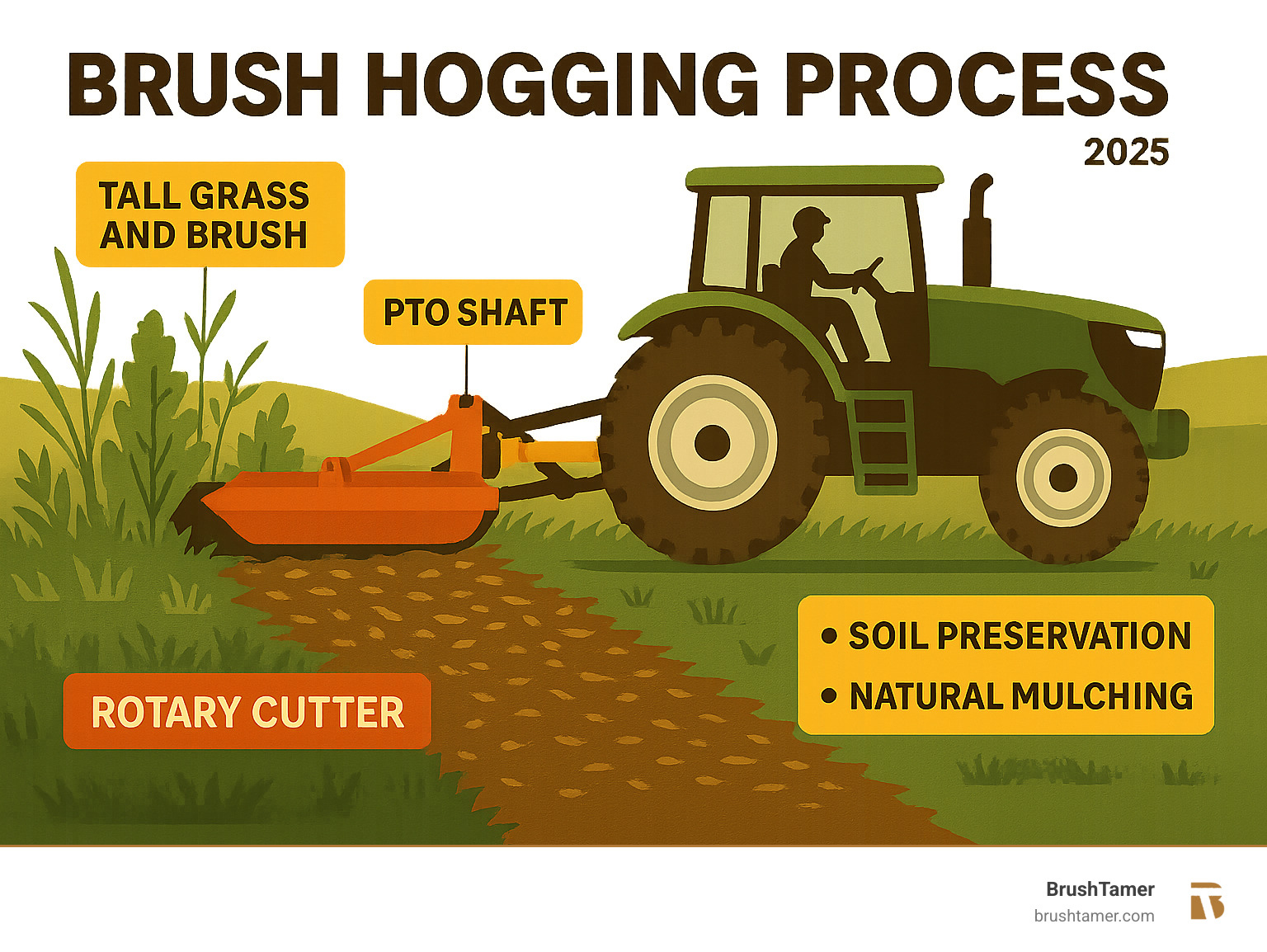
Brush hogging is a land clearing method that uses a heavy-duty rotary cutter attached to a tractor to cut through thick vegetation, dense brush, and small trees that regular lawn mowers can’t handle.
Quick Answer:
- What it is: A tractor-pulled rotary mower for heavy vegetation
- What it cuts: Tall grass, weeds, brush, vines, and saplings up to 3 inches
- Why use it: Clears overgrown land without disturbing soil
- When needed: For pasture maintenance, land reclamation, and fire prevention
If you’ve ever looked at an overgrown field and wondered how to tackle vegetation that’s too thick for a regular mower, brush hogging is your answer. This powerful land management technique breaks down dense growth right at the soil surface, leaving the root systems intact to prevent erosion.
Unlike bulldozing or other invasive methods, brush hogging is what experts call a “non-invasive practice.” The cut material stays on the ground, acting as natural mulch that feeds the soil as it breaks down. This makes it an environmentally responsible choice for property owners who want to reclaim their land without damaging the ecosystem.
The term “brush hogging” comes from the Bush Hog brand name – much like how we say “Googling” for internet searches. Today, any heavy-duty rotary cutter used for this type of work is commonly called a brush hog, regardless of the manufacturer.
I’m Leon Miller, owner of BrushTamer, and I’ve spent years helping property owners transform overgrown land through professional brush hogging and forestry mulching services. My hands-on experience with everything from small residential lots to large commercial properties has taught me that proper brush hogging requires the right equipment, technique, and understanding of your land’s unique needs.
What is Brush Hogging? A Deeper Dive
Think of brush hogging as the heavy-duty cousin of regular lawn mowing. While your lawn mower uses sharp, thin blades for a clean cut, a brush hog uses a different approach for tough vegetation.
A brush hog is a type of rotary cutter attached to a farm tractor’s three-point hitch. The tractor’s power take-off (PTO) shaft drives the cutting mechanism, providing far more power than any walk-behind mower and turning the tractor into a land-clearing powerhouse.
The secret weapon is the blades. Made from heat-treated high carbon steel, they can be an inch thick. Instead of being sharp, brush hog blades are intentionally dull and designed to “whack” through vegetation rather than slice it cleanly.
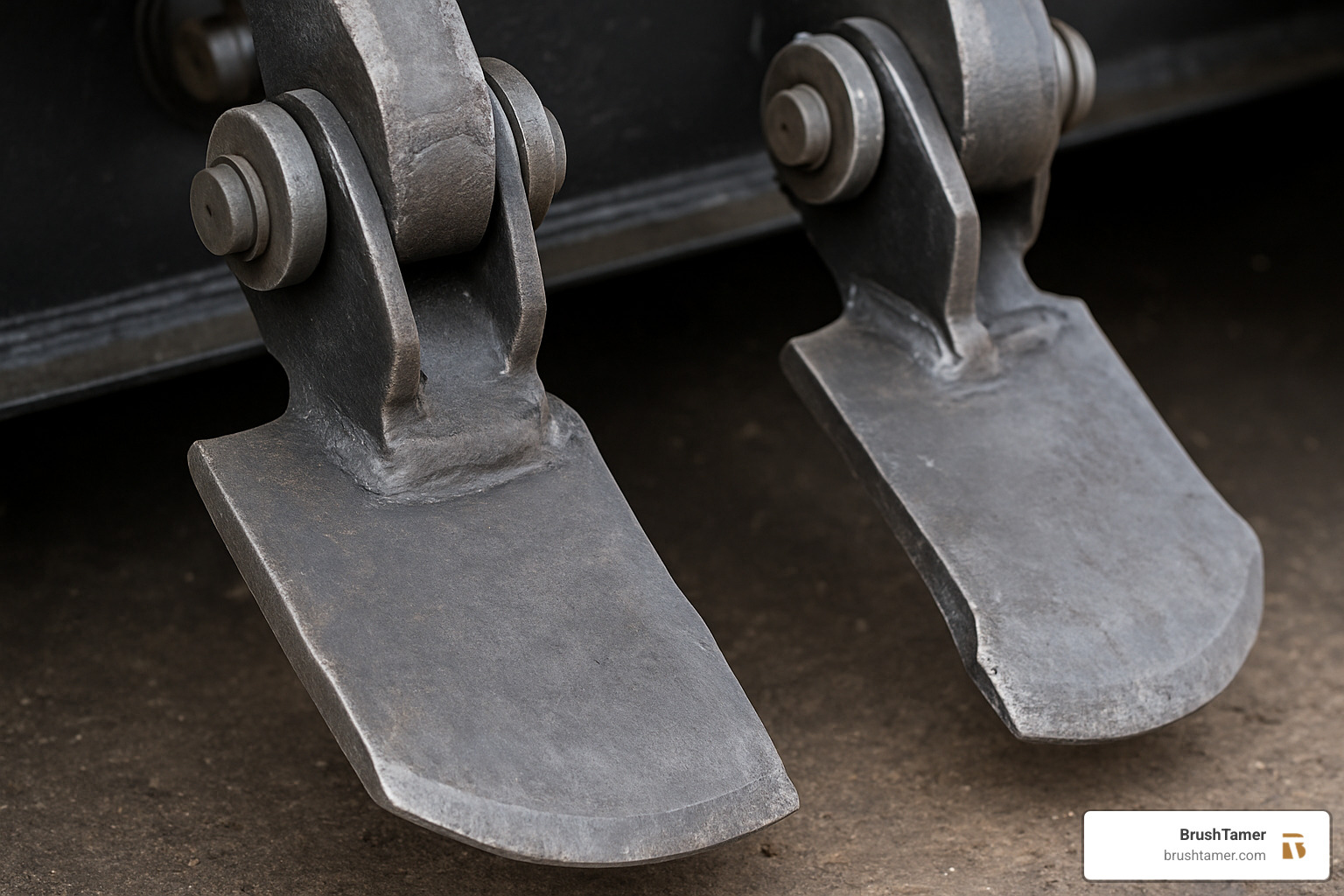
Cleverly, these blades are hinged, not rigidly attached. When a blade hits a rock or stump, it swings back instead of breaking. This flexible design allows brush hogs to work safely in rough terrain with hidden obstacles.
The cutting power comes from kinetic energy. The blades spin at over 150 mph, generating enough force to cut through saplings several inches in diameter. This combination of weight, speed, and flexible mounting makes brush hogging effective for thick vegetation that would destroy a regular mower.
Understanding Brush Hog Equipment Types and Specifications
Not all brush hogs are created equal. Understanding the types helps you appreciate why professionals choose specific equipment for different jobs.
Standard Brush Hogs (4-15 ft width) are workhorses for level terrain, handling most residential and small commercial projects with regular maintenance needs. These units typically feature lighter construction suitable for routine pasture maintenance and moderate vegetation density.
Heavy-Duty Brush Hogs have reinforced decks and larger blades for challenging terrain, tackling material up to 4 inches in diameter with sufficient tractor power. These models include additional features like chain guards, reinforced gearboxes, and heavier blade assemblies designed to withstand impacts from rocks and stumps.
Flail Mowers use small blades (flails) for a finer cut. They are often used where appearance is a priority over raw cutting power. The multiple small blades create a more uniform finish and can handle uneven terrain better than traditional rotary cutters.
Offset Brush Hogs allow operators to cut areas that the tractor can’t directly access, such as ditches, fence lines, and around obstacles. The cutting deck extends to one side of the tractor, providing versatility in tight spaces.
Professional-grade units have reinforced cutting deck construction to withstand impacts. Blade configuration (typically 2-3 blades) and overlap are key for efficiency, and professionals balance this with ground speed for optimal results. The deck thickness on professional units often ranges from 10-gauge to 7-gauge steel, with heavier construction for more demanding applications.
Hydraulic vs. Gear-Driven Systems represent another important distinction. Hydraulic systems provide smoother operation and better protection against shock loads, while gear-driven systems offer simplicity and lower maintenance requirements. Professional operators often prefer hydraulic systems for their ability to handle varying loads more effectively.
What Vegetation Can a Brush Hog Clear?
Brush hogging shines when dealing with vegetation that’s too tough for regular mowers but not big enough for heavy forestry equipment. The sweet spot is thick, dense, or woody material.
Tall grasses and dense weeds are where brush hogs prove their worth. They handle overgrown pastures, thick fescue, and stubborn weeds that bog down regular mowers. This includes native prairie species like switchgrass and big bluestem, and invasive grasses like Johnson grass, which have thick, fibrous stems. Brush hogs excel at cutting through dense stands of goldenrod, ragweed, and other tall weeds that create impenetrable barriers in abandoned fields.
Thick brush and woody vegetation is where the real power shows. A properly sized brush hog can clear softwood saplings up to 3 inches thick and hardwood saplings up to 1.5 inches. It efficiently clears dense shrubs, wild blackberry canes, and invasive species like multiflora rose, sumac, and honeysuckle. Brush hogs are particularly effective against thorny vegetation that would be dangerous to clear by hand, including wild rose bushes, hawthorn, and dense bramble patches.
Vines and brambles that create impenetrable tangles are another specialty. Whether it’s honeysuckle taking over a fence line, grape vines climbing through trees, or those thick bramble patches that seem impossible to walk through, the rotating blades slice through the mess and leave it as manageable mulch on the ground.
Wild grape vines deserve special mention because they can completely overwhelm small trees and create massive tangles that are difficult to clear by any other method. Brush hogging cuts through these vine masses effectively, though follow-up treatments may be necessary to prevent regrowth. Poison ivy, Virginia creeper, and other climbing vines that create dense mats are also effectively managed through brush hogging.
Small trees and saplings represent the upper limit of what brush hogs can handle. Most setups can tackle material from 1 to 3 inches in diameter, depending on the tractor’s horsepower and the size of the rotary cutter. Storm debris, sucker growth from larger trees, and volunteer trees that pop up in fields all fall within this range.
Tree species that brush hogs commonly encounter include eastern red cedar, various pine species, oak saplings, maple volunteers, and fruit trees that have gone wild. The key factor is diameter rather than species – a 2-inch oak sapling presents the same challenge as a 2-inch pine. However, some species like willow and poplar are easier to cut due to their softer wood, while others like hickory and locust require more power due to their density.
Invasive plant species often require special attention during brush hogging operations. Species like autumn olive, bush honeysuckle, and multiflora rose can be effectively controlled through properly timed brush hogging, but understanding their growth patterns is crucial for long-term management success.
The key factor in determining what your brush hog can handle is the combination of your tractor’s power and the size of your cutting deck. A typical 50 horsepower tractor with a 6-foot cutter represents a solid setup that can handle most residential and small commercial clearing tasks effectively. However, matching equipment to vegetation density and terrain conditions requires experience and understanding of both equipment capabilities and plant characteristics.
Seasonal Considerations for Optimal Results
Timing your brush hogging project correctly can dramatically improve results and minimize environmental impact. Understanding seasonal growth patterns and wildlife considerations helps ensure your land management efforts are both effective and environmentally responsible.
Late fall and early winter (November through February) is the ideal window for most projects. Plants are dormant, reducing stress on beneficial species and making it easier to target unwanted growth. This timing also benefits wildlife by avoiding nesting seasons while providing winter cover from the cut material. The dormant season allows you to see the underlying terrain more clearly, making it easier to identify obstacles and plan your approach.
Early spring (March through early April) is another excellent window, especially for encouraging new grass growth. Clearing before the growing season gives desirable plants a competitive advantage. However, be mindful of wildlife, as ground-nesting birds may begin establishing territories in April. Spring brush hogging can be particularly effective for controlling cool-season weeds before they set seed.
Late spring considerations become more complex as wildlife activity increases. Many states have regulations protecting ground-nesting birds during peak nesting season (typically May through July). Violating these regulations can result in significant fines and legal complications.
Summer brush hogging should generally be avoided except for emergencies like fire prevention. The heat stresses plants, the activity can disrupt wildlife, and conditions create more dust. However, in some cases, mid-summer cutting can be strategically used to weaken persistent invasive species by forcing them to use stored energy reserves for regrowth.
Weather conditions are crucial. Wet ground can cause rutting and make slopes dangerous. Dry conditions increase fire risk and create excessive dust. Strong winds are also a safety hazard, as they can blow debris unpredictably. Ideal conditions include firm, dry ground with minimal wind and moderate temperatures.
Soil moisture considerations affect both equipment performance and environmental impact. Operating on saturated soils can cause compaction that persists for years, while extremely dry conditions can create dust clouds that affect visibility and neighboring properties.
Brush Hogging vs. Other Land Clearing Methods
Choosing the right land clearing method can save you time, money, and headaches down the road. Brush hogging fills a unique niche in the land management world – it’s the sweet spot between regular lawn maintenance and heavy-duty land clearing.
Think of it this way: if your property needs more than a riding mower can handle but less than bringing in bulldozers, brush hogging is likely your best bet.
| Factor | Brush Hogging | Traditional Mowing |
|---|---|---|
| Purpose | Heavy vegetation, brush, small trees | Maintained grass, light weeds |
| Soil Impact | Non-invasive, preserves soil structure | Minimal impact on established lawns |
| Vegetation Type | Dense brush, saplings up to 3″, tall weeds | Grass, light weeds under 6″ |
| Cost | Moderate equipment/service cost | Low for regular maintenance |
| Final Appearance | Rough cut, natural mulch left behind | Clean, manicured finish |
Traditional mowing works great for maintained lawns and light weeds, but it’s like bringing a butter knife to a sword fight when you’re dealing with thick brush and saplings. Your regular mower simply wasn’t designed to handle the tough stuff.
Bulldozing sits on the opposite end of the spectrum. While it can clear anything in its path, it’s overkill for most situations. Bulldozing tears up the soil, destroys beneficial root systems, and often requires expensive restoration work afterward. Plus, you’ll need permits for soil disturbance in many areas.
Chemical treatments might seem like an easy solution, but they take time to work and introduce herbicides into your environment. Brush hogging gives you immediate results while keeping your land chemical-free.
Forestry mulching is another excellent option that can handle larger material and creates a finer finished product. However, it’s typically more expensive than brush hogging and might be overkill if you’re dealing with lighter vegetation.
The beauty of brush hogging lies in its environmental friendliness. It cuts vegetation at ground level while leaving root systems intact, preventing erosion and maintaining soil health. The cut material becomes natural mulch, feeding your soil as it decomposes.
For property owners who want to reclaim overgrown land without the environmental impact of soil disturbance, brush hogging offers the perfect balance of effectiveness and responsibility. If you’re unsure which method suits your property best, our brush management services can help you determine the most effective approach for your specific situation.
The Benefits and Best Times for Effective Brush Hogging
Brush hogging offers numerous advantages for property owners looking to reclaim overgrown land while maintaining environmental responsibility. The timing of your brush hogging project can significantly impact its effectiveness and environmental benefits.

Key Benefits for Your Property
Increased Accessibility and Land Use
Brush hogging transforms unusable overgrown areas into accessible space. Whether you’re looking to create trails, expand usable acreage, or simply move freely across your property, clearing dense vegetation opens up possibilities that weren’t there before. This increased accessibility can reveal property features you forgot existed, such as old fence lines, water sources, or scenic viewpoints that were hidden by overgrowth.
Many property owners find that brush hogging reveals significantly more usable land than they realized they had. Areas that seemed like impenetrable wilderness often become functional space for recreation, agriculture, or development after proper clearing. This expansion of usable acreage effectively increases your property’s functional value without requiring additional land purchases.
Wildfire Prevention and Fuel Load Reduction
Regular brush hogging significantly reduces fire hazards by keeping grass and vegetation at controlled heights. This minimizes the fuel available for fires to spread rapidly, which is especially important in areas prone to wildfires or during dry seasons. The practice creates natural firebreaks and reduces the continuity of combustible material across your property.
Fire prevention through brush hogging becomes increasingly important as climate patterns shift and drought conditions become more common. Properties with regular brush hogging maintenance often qualify for reduced insurance premiums in fire-prone areas, as insurance companies recognize the reduced risk profile of well-maintained land.
Improved Wildlife Habitat Management
When timed correctly, brush hogging can improve wildlife habitats rather than harm them. The practice helps maintain grassland habitat, preventing meadows from turning into forests over time. This supports biodiversity by creating ideal conditions for grassland wildlife species including quail, rabbits, and various songbird species that depend on open habitat.
According to conservation experts, brush hogging once a year in late winter (March) avoids disturbing grassland wildlife nesting season (April-September) while providing overwintering habitat. This timing allows the cut material to provide natural shelter during winter months while creating the edge habitat that many wildlife species prefer.
The practice also helps control invasive plant species that can crowd out native plants that wildlife depends on for food and shelter. By maintaining diverse plant communities through strategic brush hogging, property owners can support higher wildlife populations and greater species diversity.
Improved Soil Health and Nutrient Cycling
The chopped-down vegetation acts as nutrient-rich mulch, feeding existing grass and plants while encouraging healthy growth. This natural mulching process improves soil structure, retains moisture, and provides essential nutrients as the organic matter decomposes. The gradual decomposition of cut material creates a slow-release fertilizer effect that can improve soil fertility for years.
Brush hogging also helps prevent soil erosion by maintaining ground cover while reducing the height of vegetation. The root systems remain intact to hold soil in place, while the cut material provides immediate surface protection against wind and water erosion. This combination creates ideal conditions for soil health improvement over time.
Research indicates that properly timed brush hogging can increase soil organic matter content by 15-20% over a three-year period, as the regular addition of cut vegetation feeds beneficial soil microorganisms and improves soil structure.
Aesthetic Appeal and Property Value
Well-maintained land simply looks better and can increase property value. Brush hogging transforms untamed landscapes into well-maintained areas that are more appealing to potential buyers and more enjoyable for current owners. The practice creates clean sight lines, reveals property boundaries, and gives the impression of active land management.
Real estate professionals often recommend brush hogging as one of the most cost-effective ways to improve property appearance before listing. The investment in professional brush hogging typically returns 3-5 times its cost in increased property value, particularly for rural and suburban properties where land use potential is a key value factor.
Invasive Species Management
Regular brush hogging helps control invasive plant species by preventing them from establishing deep root systems and going to seed. While it may not eliminate invasive species entirely, it significantly slows their spread and reduces their competitive advantage over native plants. Strategic timing of brush hogging can weaken invasive species by forcing them to use stored energy reserves for regrowth.
Combining brush hogging with other management techniques, such as selective herbicide application or overseeding with native species, can create comprehensive invasive species control programs that restore natural plant communities over time.
Safety First: The Dangers of DIY Brush Hogging
While brush hogging might seem straightforward, it involves serious safety risks that many property owners underestimate. The combination of high-speed rotating blades, heavy machinery, and unpredictable terrain creates multiple hazard scenarios that require professional expertise and equipment.
Thrown Object Hazards
Brush hog blades can propel rocks and debris at speeds exceeding 150 mph, with objects traveling more than 300 feet from the cutting area. A softball-sized rock launched at these speeds can cause severe injury or death. Most rental companies have stopped renting tractors with brush hogs due to historically high injury rates and liability concerns.
The unpredictable nature of thrown objects makes this hazard particularly dangerous. Rocks can ricochet off trees or other obstacles, changing direction unexpectedly. Even experienced operators maintain strict safety zones and use protective equipment to minimize exposure to this risk.
Equipment-Related Dangers
The PTO shaft that drives the brush hog spins at 1,000 times per minute (16 times per second), creating an extreme mess hazard. The kinetic energy involved can cause severe bodily injury or death upon contact. Additionally, the brush hog’s rear can swing around quickly and unexpectedly when turning, catching operators off guard.
Hydraulic systems operate under extreme pressure and can cause injection injuries if hoses fail. The weight of brush hog attachments (often 1,000+ pounds) creates crushing hazards during attachment and maintenance procedures. Proper safety procedures and equipment are essential for managing these risks.
Terrain and Hidden Obstacle Risks
Uneven terrain poses rollover risks, especially when combined with the weight and momentum of a brush hog attachment. Hidden obstacles like rocks, stumps, or holes can cause sudden stops that may throw the operator or damage equipment. Dips in fields can damage PTO shafts and cause equipment to become stuck.
Slope stability becomes critical when operating heavy equipment on hillsides. What appears to be stable ground can become treacherous when disturbed by heavy machinery, particularly after rain or during spring thaw conditions.
Operational Complexity
Proper brush hogging requires understanding tractor hydraulics, PTO engagement procedures, and equipment matching. Inexperienced operators often struggle with blade height adjustment, appropriate ground speed, and recognizing when conditions are too challenging for safe operation.
The complexity increases significantly when dealing with varying vegetation types, changing terrain conditions, and environmental considerations such as wetland buffers or conservation areas that require special handling.
Why Hire a Pro for Your Brush Hogging Project
Professional brush hogging services offer significant advantages over DIY approaches, particularly for property owners who want reliable results without the associated risks and equipment investment.
Proper Equipment Sizing and Matching
Professional services use appropriately sized equipment for each job. A 50 HP tractor typically requires a 40-50 HP cutter, while a 30 HP tractor needs a 20-30 HP cutter. Mismatched equipment leads to poor performance, excessive wear, and potential safety issues. Professionals maintain multiple equipment configurations to handle different terrain and vegetation conditions effectively.
Equipment matching extends beyond simple horsepower calculations to include considerations like hydraulic capacity, weight distribution, and blade configuration. Professional operators understand these relationships and select equipment combinations that optimize both safety and efficiency.
Operator Experience and Efficiency
Experienced operators can complete brush hogging projects 3-4 times faster than inexperienced users. They understand how to read terrain, recognize and avoid hazards, and adjust techniques based on vegetation type and density. This efficiency often makes professional services cost-competitive with equipment rental when you factor in time and safety considerations.
Professional operators also understand how to work around obstacles, manage varying terrain conditions, and adjust their approach based on seasonal factors and vegetation characteristics. This expertise results in better outcomes and reduced risk of property damage or safety incidents.
Knowledge of Local Regulations and Environmental Considerations
Professional services understand local regulations regarding land clearing, especially around wetlands, conservation areas, and buffer zones. Clearing in these areas without proper permits can result in fines exceeding $100,000. Many lakes, ponds, and waterways over 10 acres have automatic 30-foot buffers requiring special permission to clear.
Environmental regulations vary significantly by location and can include restrictions on timing, methods, and areas that can be cleared. Professional services stay current with these regulations and can help property owners steer the permitting process when necessary.
Insurance and Liability Protection
Licensed and insured professionals carry liability coverage for property damage and injuries. This protection is crucial given the high-risk nature of brush hogging operations and the potential for expensive equipment damage or personal injury. Professional services typically carry both general liability and equipment coverage that protects clients from financial exposure.
The insurance protection extends beyond simple accident coverage to include environmental liability and professional indemnity coverage that protects against regulatory violations or improper land management practices.
Comprehensive Land Management Approach
Professional services can assess your property holistically and recommend the most appropriate clearing methods. Sometimes brush hogging isn’t the best solution, and alternatives like forestry mulching or selective clearing might be more effective for your specific goals. This comprehensive approach ensures that your land management investment delivers optimal long-term results.
Professional services can also coordinate brush hogging with other land management activities such as seeding, fertilization, or invasive species control to create integrated management programs that improve property value and functionality over time.
For properties requiring comprehensive vegetation management, our land clearing services provide the expertise and equipment necessary to handle projects of any size safely and effectively.
Frequently Asked Questions about Brush Hogging
Can a brush hog cut small trees?
Yes, a brush hog is specifically designed to tackle small trees and saplings that would stop a regular mower in its tracks. The cutting capacity depends on your equipment size and power, but most professional setups can handle softwood saplings up to 3 inches thick and hardwood saplings up to 1.5 inches thick. Heavy-duty models paired with high-horsepower tractors can even handle larger material.
The secret lies in the design. Unlike lawn mowers with thin, sharp blades, brush hogs use intentionally dull, heavy blades that can be up to an inch thick. These blades don’t slice through material cleanly – instead, they “whack” through woody growth using pure kinetic energy from spinning at over 150 mph.
The hinged blade design is crucial here. When a blade hits something solid like a rock or thick sapling, it swings back rather than breaking or damaging the equipment. This allows the brush hog to power through vegetation that would destroy conventional mowing equipment.
Does brush hogging destroy the soil?
No, when done properly, brush hogging actually improves soil health rather than harming it. This technique is considered a non-invasive practice because it cuts vegetation at the surface while leaving the root systems completely intact.
Those intact roots continue doing their job – holding soil structure together and preventing erosion. This is a huge advantage over methods like bulldozing, which disturb soil significantly and can create long-term erosion problems.
Here’s where it gets even better: the cut material stays put. All that chopped vegetation becomes natural mulch that breaks down over time, returning nutrients to the soil. This process improves soil structure, helps retain moisture, and supports the beneficial microorganisms that keep soil healthy.
Research shows that brush hogging in middle to late fall creates a natural blanket effect that actually increases microbial activity by warming the surface area. Your soil literally becomes more alive and productive after proper brush hogging.
How often should I brush hog my property?
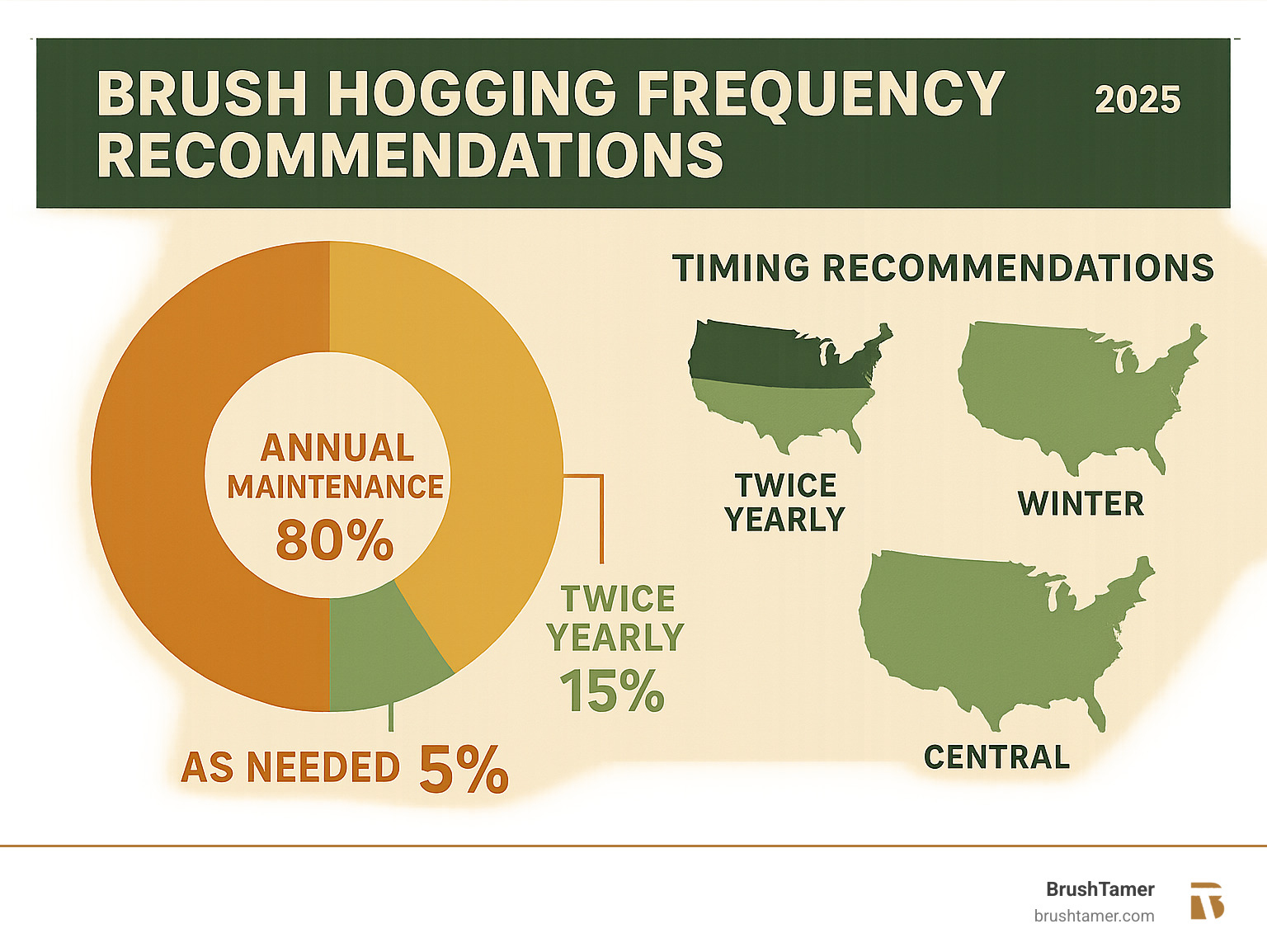
The frequency depends on what you’re trying to accomplish and what type of vegetation you’re dealing with. For most property owners, once or twice a year keeps things under control without overdoing it.
For established pastures and fields, annual brush hogging in late winter or early spring prevents woody growth from taking over while maintaining healthy grassland habitat. This timing works well because it happens before the growing season really kicks in.
For overgrown areas that haven’t been maintained, you might need more frequent attention during the first year to get things under control. After that initial push, annual maintenance usually keeps regrowth manageable.
For wildlife habitat management, once yearly in late winter (March) hits the sweet spot. This timing avoids disturbing nesting seasons while still providing overwintering habitat for beneficial wildlife.
For fire prevention, annual clearing during appropriate seasons helps maintain reduced fuel loads and minimizes wildfire risk – especially important during dry seasons or in fire-prone areas.
The key is finding the right balance. Too frequent brush hogging can interfere with beneficial plant life cycles and wildlife habitat, while too infrequent clearing allows woody growth to get out of hand. Most properties find their groove with annual maintenance, adjusting timing based on local climate and specific vegetation types.
Reclaim Your Land with Confidence
Brush hogging isn’t just about cutting down overgrown vegetation – it’s about taking back control of your property in a way that works with nature, not against it. After years of helping property owners transform their land, I’ve seen how this powerful technique can turn unusable, overgrown areas into functional, beautiful spaces that improve both property value and quality of life.
What makes brush hogging special is its sweet spot in land management. It’s tough enough to handle dense brush and small trees that would laugh at a regular mower, yet gentle enough to preserve your soil structure and support healthy ecosystems. This balance makes it an ideal choice for sustainable land management that delivers immediate results while protecting your property’s long-term health.
The environmental benefits are particularly impressive. By leaving root systems intact and creating natural mulch from cut vegetation, brush hogging actually improves soil health over time. The cut material feeds beneficial microorganisms, retains moisture, and slowly releases nutrients back into the ground. It’s like giving your land a haircut that makes it healthier and more attractive.
But here’s the reality I share with every property owner: DIY brush hogging is genuinely dangerous. Those spinning blades can launch rocks at 150+ mph, sending debris more than 300 feet in any direction. The PTO shaft spins 16 times per second, creating an extreme hazard that demands respect and experience. Hidden stumps, uneven terrain, and equipment mismatches turn what looks like simple mowing into a high-risk operation.
That’s why professional services make so much sense. We bring the right equipment, matched properly to each job’s specific needs. Our operators understand how to read terrain, avoid hazards, and work efficiently around conservation areas and wetland buffers. More importantly, we carry the insurance and licensing that protects you from liability if something goes wrong.
At BrushTamer, we’ve built our reputation on understanding Midwest vegetation and terrain. From the thick undergrowth common in wooded areas to the prairie grasses that can grow shoulder-high, we know what works and what doesn’t. Our environmentally responsible approach means we’re not just clearing your land – we’re helping you manage it sustainably for years to come.
Whether you’re dealing with a small overgrown area behind your house or managing acres of commercial property, the change that proper brush hogging delivers is remarkable. Suddenly, you can walk your property again. You can see what you actually own. Fire risks drop dramatically, and wildlife habitat improves.
The investment in professional brush hogging pays for itself through improved accessibility, reduced fire hazards, and improved property value. More than that, it gives you peace of mind knowing the job was done safely and correctly.
Ready to see what your property can become? Explore our professional brush management services to find how we can help you reclaim your land safely and effectively. Our experienced team will assess your specific situation and recommend the best approach for your goals and budget.