
Reclaiming a Lost Heritage
Orchard restoration is the process of reviving neglected or abandoned fruit orchards by assessing tree health, removing invasive vegetation, implementing proper pruning techniques, and creating a sustainable management plan to return the orchard to productive use while enhancing biodiversity and preserving heritage fruit varieties.
Key steps in orchard restoration include:
- Initial Assessment – Survey tree condition, identify varieties, test soil drainage and structure
- Site Preparation – Clear invasive species, manage competing vegetation, address soil compaction
- Tree Restoration – Remove dead/diseased wood, prune over multiple years (max 20% canopy per year), balance tree shape
- Habitat Improvement – Manage grassland sward, preserve deadwood for wildlife, plant native species
- Long-Term Management – Establish annual pruning schedule, fill gaps with heritage varieties, monitor tree health
Across Northern Indiana and Lower Michigan, orchard restoration often starts the same way: an old homestead, a few mature fruit trees, and years of competing growth. These forgotten orchards tell the story of early settlers who understood that fruit trees were essential, not optional. Many traditional orchards have declined since the mid-20th century due to neglect, land use change, and redevelopment. In the UK, the decline is even more dramatic, with traditional orchards decreasing by 81%.
But something remarkable is happening. That renewed interest is bringing orchard restoration back into focus, with more landowners rediscovering heritage trees and historic plantings. Property owners are redefining the value of these historic landscapes, not just for fruit production, but for their role as biodiversity hotspots, genetic reservoirs, and connections to regional history.
I’m Leon Miller, owner of BrushTamer, and through years of land management work across Plymouth and Elkhart County, I’ve seen how proper site preparation and vegetation management are critical first steps in successful orchard restoration projects. Whether you’re uncovering century-old apple trees on an inherited property or managing overgrown land that once supported a thriving orchard, understanding the restoration process helps you make informed decisions about bringing these valuable landscapes back to life.
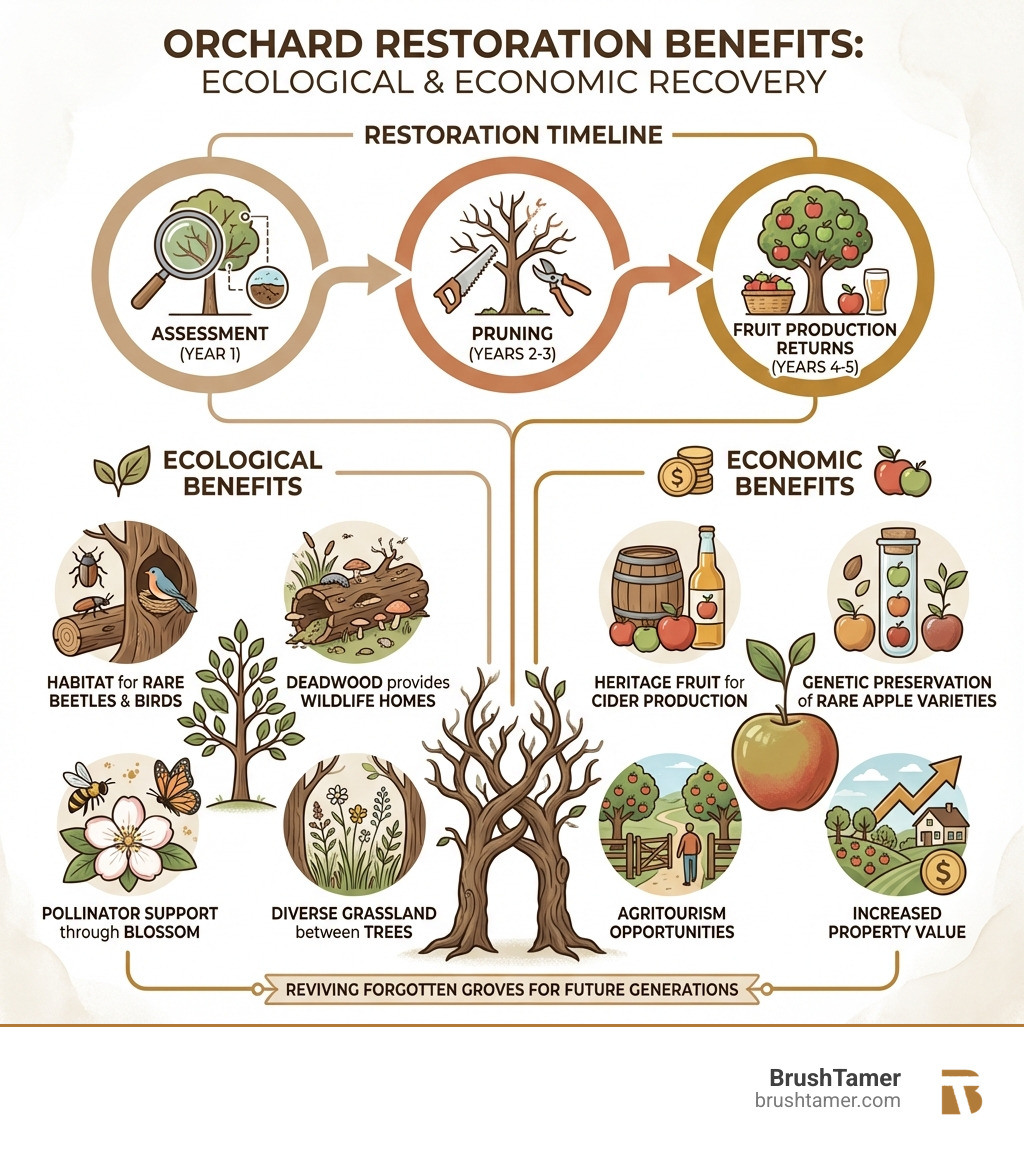
Why Revive an Old Orchard? The Ecological and Economic Payoff
When we consider orchard restoration, we’re not just looking at bringing back fruit production; we’re investing in a rich mix of ecological and economic benefits. These forgotten groves, whether near Goshen, IN, or throughout Lower Michigan, are often hidden gems waiting to be refinded.

Ecologically, traditional orchards are proven biodiversity hotspots, creating a rich mosaic habitat of trees, grasses, and shrubs. As fruit trees age, they develop veteran characteristics much faster than other hardwoods, creating essential deadwood habitats. Deadwood and mature canopies support cavity-nesting birds, bats, beneficial insects, and a broader web of native wildlife, especially when the understory is managed thoughtfully. The ecosystem thrives from top to bottom. The early spring blossoms offer a vital nectar source for bumblebees and other pollinators, while the autumn fruits feed migrating and overwintering birds such as redwings and fieldfares. Below the canopy, the careful management of the sward—the grassy layer between trees—is crucial. Allowing wildflowers, sedges, and native grasses to flower and set seed provides food and shelter for countless insects and small mammals. Integrating native hedgerows along the orchard’s edge further enhances this effect, creating wildlife corridors that improve landscape connectivity. Preserving and enhancing these complex habitats helps maintain unique local features and fosters a deeper connection to the natural world.
The practical benefits of orchard restoration can be just as compelling, especially when heritage varieties and long-term site health are priorities. Different trends have created a renewed market for heritage apple varieties, many of which offer unique flavor profiles ideal for trending products. This demand can inspire farmers and landowners in places like Plymouth, IN, and North Liberty, IN, to revitalize old orchards or even plant new ones with these valuable heritage trees.
Beyond cider, restored orchards can become hubs for agritourism, attracting visitors to U-Pick farms near communities like Elkhart, IN, or Valparaiso, IN. This can strengthen community engagement, expand educational opportunities, and create a destination landscape that people want to visit and care for. Furthermore, these efforts contribute to genetic preservation. Early European settlers brought apple seeds to America, starting the first orchards, and figures like John Chapman (Johnny Appleseed) planted countless seedlings across the expanding United States. These trees represent a living history, and many can produce bountiful crops for 200 years, offering a long-term, sustainable resource. By restoring these old orchards, we safeguard a part of our agricultural heritage and ensure the survival of unique, regional fruit varieties that might otherwise be lost.
Key Steps in a Professional Orchard Restoration
Starting on an orchard restoration project requires a methodical approach, starting with a thorough assessment and culminating in careful, professional site preparation. This is where our expertise at BrushTamer truly shines, especially for properties in the South Bend, IN, or Kalamazoo, MI, areas.

The first step in any successful orchard restoration is a comprehensive initial assessment. This involves carefully mapping the site, identifying existing trees, and understanding the unique challenges presented by neglect. We often encounter dense overgrowth, aggressive invasive species like common buckthorn or Amur honeysuckle, and compacted soils that stifle tree health. This initial phase also includes a detailed tree health survey, examining each tree for signs of disease, structural issues, and overall vigor.
Following the assessment, professional site preparation begins. This crucial stage involves eco-friendly land clearing to remove competing vegetation and invasive species without harming the valuable fruit trees. Our specialized equipment and experienced teams ensure that this process is carried out safely and efficiently, setting the stage for the trees’ recovery. We focus on vegetation management solutions that are sustainable and effective, preparing the ground for long-term health. For more detailed information on our approach to clearing land, explore our Land Clearing Services Complete Guide and learn about our Services: Land Clearing. Our commitment to Eco-Friendly Land Clearing ensures that we respect the delicate balance of the environment while achieving optimal results. Our comprehensive Vegetation Management Solutions and Commercial Vegetation Control services are designed to handle even the most challenging conditions in areas like Niles, MI, or Auburn, IN.
Initial Assessment for Orchard Restoration
A detailed initial assessment is the bedrock of any successful orchard restoration. Our certified arborists and land management specialists begin by conducting a thorough tree condition survey. This involves assessing the general health of each tree, noting new growth versus dieback, and identifying any signs of disease or pest damage. We look for indicators like lichen on trees, which, while not harmful itself, can signal damp air and limited air movement, pointing to a need for canopy thinning.
Soil testing is another critical component. We analyze samples to determine the soil’s pH, texture, and nutrient levels. Most fruit trees thrive in a slightly acidic to neutral pH (6.0-7.0), and deficiencies in key macronutrients like nitrogen, phosphorus, and potassium can severely limit recovery and fruit production. Based on the results, we can recommend specific amendments, such as applying lime to raise pH or incorporating rich compost to boost organic matter and improve overall fertility. Compacted soil is also a major challenge, as it restricts root growth and water absorption. Depending on the site, this can be remediated through mechanical aeration or by planting deep-rooted cover crops like daikon radishes, which naturally break up dense soil layers over time. Finally, we identify competition from scrub and weeds, which can choke out young trees and deprive mature ones of vital resources. The goal is to understand the full picture of the orchard’s health, allowing us to create a multi-year management plan that addresses both immediate concerns and long-term sustainability. This meticulous approach is central to our Professional Land Management services, ensuring we lay the right groundwork for your orchard’s future.
Uncovering History: Identifying Heritage Varieties
One of the most exciting aspects of orchard restoration is the detective work involved in identifying the varieties of apples, pears, or other fruits in an old orchard. This is important for several reasons: it preserves historical significance, contributes to genetic diversity, and can uncover unique flavors highly sought. Imagine finding a rare variety in an old orchard in Three Rivers, MI, that hasn’t been seen in generations!
Identifying these heritage varieties can be challenging. Some cultivars can be identified by comparing fruit to old records and paintings, or by consulting with local experts and historical societies. In the past, dedicated pomologists like John Bunker and Dan Bussey spent years traveling backroads, documenting and collecting cuttings from old trees. Today, modern techniques, including DNA analysis of leaf samples, offer a high-tech option to accurately identify cultivars and even trace their parentage. Organizations like the Montezuma Orchard Restoration Project have successfully found varieties where only a single tree of that cultivar remained, like the “Colorado Orange.” This blend of historical research and scientific analysis allows us to uncover and preserve rare cultivars, ensuring their survival and potential reintroduction to the region. MyFruitTree.org also offers DNA testing for apple trees and other identification helpers.
The Art of Revitalizing Veteran Trees
The heart of orchard restoration lies in the careful, often multi-year, process of revitalizing veteran fruit trees. These majestic old trees, whether in Rochester, IN, or Battle Creek, MI, are living monuments that require a gentle yet firm hand to bring them back to health and productivity.
Our best practices for caring for old fruit trees emphasize a phased approach to avoid shocking the tree. We typically recommend removing no more than 20% of the woody growth in the crown per year. This allows the tree to gradually adapt and recover. We adhere to the “4 D’s” of pruning: removing anything that is Dead, Damaged, Diseased, or Decaying. This initial clearing opens up the canopy, allowing for crucial sunlight penetration and improved air circulation, which are vital for photosynthesis and overall tree health. Our certified arborists apply expert insights to ensure that each cut promotes the tree’s long-term vigor. For instance, in an old plum orchard neglected for 15 years, where fruit was dropping prematurely, the first priority would be pruning to open up the trees to more sun and moving air.
The timing of pruning is also critical and varies by fruit type.
| Fruit Type | Best Pruning Time |
|---|---|
| Pome Fruits | Late winter (dormant season), on a dry, frost-free day |
| (Apples, Pears) | |
| Stone Fruits | Summer (May-September), during dry weather, to minimize |
| (Plums, Cherries) | risk of diseases like silver leaf |
This careful, multi-year approach, often involving techniques from experts like Mike Biltonen of Know Your Roots LLC, ensures that we maintain a delicate balance between rejuvenation and preservation, allowing these old trees to thrive once more.
Long-Term Goals for Orchard Restoration
Once an orchard has undergone its initial restoration, the focus shifts to establishing long-term goals and a sustainable maintenance schedule. This ensures the orchard remains productive and ecologically rich for generations to come, whether it’s a community orchard in Portage, MI, or a private estate in Valparaiso, IN.
Ongoing maintenance is paramount. This includes annual pruning to maintain tree health, encourage fruit production, and prevent overcrowding. Consistent soil health management, including mulching around the base of trees, helps retain moisture, suppress weeds, and enrich the soil.
Succession planting is also a vital long-term strategy. This involves grafting cuttings from particularly vigorous or rare old trees onto new rootstock to preserve their genetics. We also encourage sourcing heritage saplings from reputable suppliers, like Fedco Trees, to fill gaps in the orchard and introduce new, resilient varieties. MyFruitTree.org also offers other identification helpers and resources for those looking to expand their orchard. The long-term goal is to achieve both economic and ecological sustainability. This means an orchard that consistently produces fruit, supports a healthy ecosystem, and can even offer opportunities for agritourism, potentially creating Sustainable Private Land Trails for visitors to enjoy. Through careful planning and consistent care, we can ensure these restored orchards thrive well into the future.
Frequently Asked Questions about Orchard Restoration
Can every old, neglected fruit tree be saved?
While we approach every orchard restoration with optimism, the reality is that not every old, neglected fruit tree can be saved. The lifespan of fruit trees varies significantly: plum trees typically live 50-70 years, apples and cherries 80-120 years, while pear trees can produce bountiful crops for 200-300 years, and cobnuts indefinitely. We assess each tree’s structural integrity, signs of advanced disease, and overall vigor.
However, even a dying tree holds ecological value. If it’s not a safety hazard or spreading a harmful disease, we may advise leaving standing deadwood as valuable wildlife habitat. When a tree is beyond saving, or poses a significant risk, we can provide professional orchard removal services, including careful removal and site preparation for replanting. Our expertise extends to various orchard types, including services for Services: Blueberry Orchard Removal and a Blueberry Bush Removal Complete Guide when needed.
How long does it take to see fruit from a restored orchard?
The timeline for seeing fruit from a restored orchard can vary significantly, but patience is key. After the initial rejuvenation period, which involves several years of phased pruning, the trees begin to recover and redirect energy into fruit production. For a severely neglected tree, a full restoration can take three or more years, with benefits from pruning not fully evident until several years after the initial cuts.
Factors such as the tree’s age, its specific variety, and the underlying soil health all play a role. Younger trees often rebound faster than very old, veteran specimens. While some fruit might appear within the first year or two after initial pruning, a return to consistent, healthy fruit production often takes between three to five years. It’s a gradual process, but the rewards of seeing an old tree come back to life are immeasurable.
What are the biggest challenges in restoring an orchard in the Midwest?
Restoring an orchard in the Midwest, particularly across Northern Indiana and Lower Michigan, comes with its unique set of challenges. Our regional climate, characterized by cold winters, wet springs, and sometimes late summer droughts, can stress fruit trees and make them more susceptible to disease and pests. For instance, prolonged wet springs can create conditions favorable for soil-borne pathogens.
Another significant challenge is managing pervasive invasive species. Plants like common buckthorn, Amur honeysuckle, Winged Euonymus (Burning Bush), and Oriental bittersweet are rampant throughout our service areas, including cities like Fort Wayne, IN, and Grand Rapids, MI. These aggressive growers outcompete native plants, choke out young fruit trees, and can quickly re-establish themselves if not managed properly. Their prolific seed production and rapid growth make them a constant threat to restored ecosystems.
Additionally, many old orchard sites suffer from compacted soils and nutrient depletion, requiring careful amendment and long-term management. Addressing these issues effectively often requires professional commercial vegetation control expertise to ensure the long-term success of the orchard restoration project. Our Commercial Vegetation Control services are specifically designed to tackle these persistent invasive species and restore ecological balance.
Conclusion: Cultivating the Future by Preserving the Past
The journey of orchard restoration is a profound act of environmental stewardship, changing neglected land into vibrant, productive ecosystems. From the initial assessment of gnarled trees in Mishawaka, IN, to the careful, multi-year pruning cycles in Granger, IN, each step in the process brings us closer to reclaiming a lost heritage. We’ve explored the immense ecological benefits, creating biodiversity hotspots, supporting pollinators, and providing crucial wildlife habitat, as well as the economic payoffs.
The challenges are real, particularly in the Midwest, with our climate and persistent invasive species. However, with the right professional expertise, these challenges can be overcome. We at BrushTamer believe in the value of these living historical sites and are dedicated to responsible land management that respects both the past and the future. The rewarding outcome is a thriving orchard, a testament to resilience, and a source of beauty and bounty for generations to come.
Ready to start an orchard restoration plan that protects your existing trees and clears the way for long-term stewardship? Contact BrushTamer to discuss your site and next steps.