
Why Consider Repurposing Your Blueberry Fields?
When considering repurposing blueberry fields, property owners often face a crossroads. The decision to transform agricultural land can be driven by several factors. Understanding these can help pave the way for a successful new venture.
Here are the primary reasons property owners choose to repurpose blueberry fields:
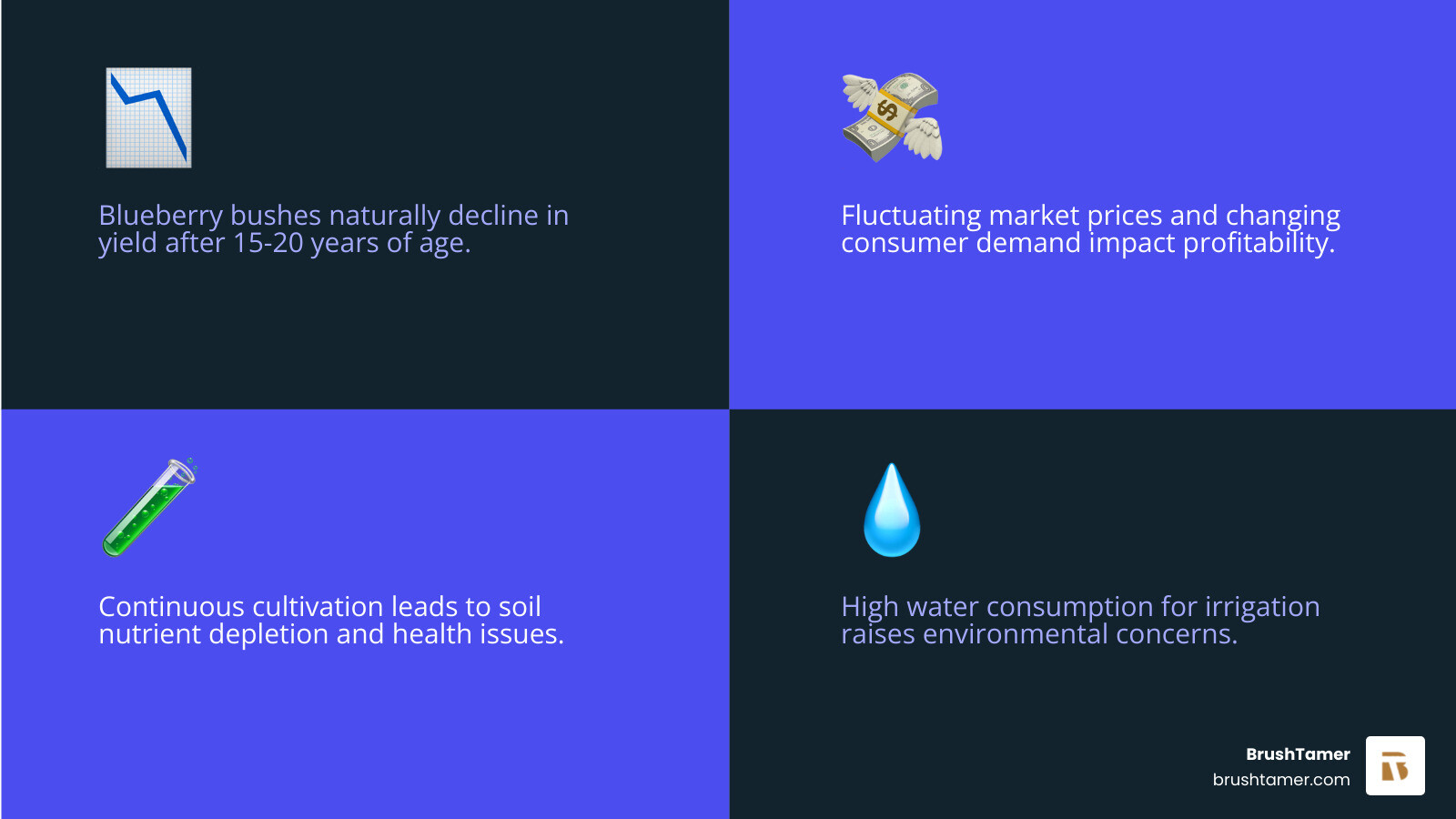
- Declining Yields: As blueberry bushes age, their productivity naturally decreases, making the farm less profitable.
- Market Changes: Shifts in consumer demand, competition, or fluctuating prices can make blueberry farming less viable.
- Soil Health Issues: Continuous cultivation can deplete soil nutrients or worsen existing conditions, requiring extensive remediation for future crops.
- Environmental Concerns: High water usage for irrigation, especially in drought-prone areas, prompts a search for more sustainable land uses.
- New Revenue Opportunities: Property owners might seek more innovative or diversified income streams than traditional farming.
- Ecological Restoration: A desire to return land to its natural state, benefiting local ecosystems and wildlife.
Repurposing blueberry fields is a growing trend, moving beyond traditional farming to accept more sustainable and profitable uses. This shift often comes from declining crop yields, fluctuating market prices, or a desire for a more environmentally friendly approach. It’s about seeing new potential in existing land. This kind of change requires careful planning and the right expertise to ensure long-term success.
I’m Leon Miller, owner of BrushTamer. My deep expertise in land management, including brush clearing and site preparation, means I’ve worked on many projects involving repurposing blueberry fields. I help clients transform their properties efficiently and with respect for their vision.
The decision to start on repurposing blueberry fields is rarely made lightly. It often stems from a combination of economic pressures, environmental considerations, and a forward-thinking vision for the land’s potential. For many landowners in the Midwest, where agriculture is a cornerstone of our economy, understanding these driving forces is the first step toward a successful transition.
One of the most common catalysts is the natural lifecycle of the blueberry bush itself. As bushes age, typically after 15-20 years, their productivity begins to wane. Declining crop yields mean less fruit to sell, directly impacting profitability. What was once a vibrant, high-producing field can become a drain on resources, requiring more input for diminishing returns. When we observe fields with aging bushes, the conversation often turns to how to breathe new life into the land.
Market price volatility also plays a significant role. Blueberry prices can fluctuate based on supply, demand, and competition from other regions. A few years of low market prices can make a substantial dent in a farm’s viability, forcing owners to seek more stable or diversified income streams. The unpredictability of agricultural markets means that relying on a single crop can be a risky venture.
Beyond economics, soil health degradation is a critical concern. Blueberry plants thrive in highly acidic soil, and years of cultivation can alter the soil’s delicate balance. This can lead to nutrient imbalances or soil fatigue, making it challenging to maintain healthy blueberry production. When soil conditions become suboptimal, it’s not just the blueberry crop that suffers; the long-term health of the land is at stake. Addressing these issues often requires significant soil amendment and a fresh start.
Furthermore, environmental impacts, particularly high water consumption, are increasingly influencing land-use decisions. While blueberries are a valuable crop, the irrigation demands can be substantial, especially during dry spells. In an era where water conservation is paramount, landowners are actively seeking alternatives that reduce their ecological footprint. Repurposing can often lead to significantly lower water usage, benefiting local water tables and contributing to broader environmental goals.
Lastly, the desire for new revenue streams and changing land values can motivate a shift. Landowners may recognize that their property holds greater potential for uses beyond traditional blueberry farming, whether that’s through agritourism, renewable energy, or even ecological restoration. As property values evolve, so too does the opportunity cost of maintaining a less profitable operation. Repurposing blueberry fields then becomes an act of strategic land management, aimed at maximizing both economic and environmental value.
7 Innovative Uses for Former Blueberry Fields
When we consider repurposing blueberry fields, the possibilities extend far beyond simply planting a different crop. With careful planning and the right expertise, these lands can be transformed into thriving, sustainable ventures that benefit both landowners and the broader community. Here are seven innovative approaches we’ve seen successfully implemented or considered for our Midwest regions.
1. Transition to a Diversified Agritourism Hub

One of the most engaging and community-centric ways to repurpose former blueberry fields is to transform them into a diversified agritourism hub. This approach leverages the existing appeal of farm life to create multiple revenue streams. Imagine a vibrant destination where visitors can enjoy U-pick operations for new crops, browse a charming farm store filled with local goods, or dine at an on-site eatery.
A compelling example of this strategy comes from a farm that successfully diversified its offerings, creating a popular tourist destination. They integrated U-pick fruits, a specialty store selling homemade goods, and a diner serving meals, all designed to offer a unique visitor experience. This model, which emphasizes creativity and hard work, proves that former agricultural land can become a vibrant community hub. In our own region, where blueberry farms like The Blueberry Ranch in Mishawaka, IN, and those in Marshall County near Plymouth, IN, already have a presence, these agritourism strategies offer exciting possibilities for future land use. We understand the importance of creating spaces that draw people in, and our land clearing services can prepare the groundwork for new structures, parking areas, and visitor pathways, ensuring your vision for an agritourism hub becomes a reality.
More info about Land Clearing Services
2. Restore Native Habitats and Riparian Zones

For those prioritizing environmental stewardship, repurposing blueberry fields into native habitats or restoring riparian zones offers profound ecological benefits. This involves returning the land to its natural state, fostering biodiversity, and improving local ecosystems.
An inspiring example of such ecological benefit comes from a conservationist who, through their work with a nonprofit, demonstrated how agricultural land could be transformed into thriving riparian habitats. This initiative, which involved restoring over 8,000 acres of habitat, showed that retiring irrigation pumps on former farmland could save significant amounts of water—up to 7,000 acre-feet per year in one instance. Such efforts highlight the profound impact these projects can have on water conservation and local ecosystems, principles highly relevant to land management in our Midwest communities. By planting native trees, shrubs, and grasses, these projects can attract local wildlife, improve water quality, and even contribute to carbon sequestration. We specialize in land clearing that respects and promotes ecological restoration, preparing sites for new growth while managing existing vegetation responsibly.
A look at River Partners’ conservation work
More info about Forestry and Wildlife Management
3. Develop Sustainable Solar Farms
Developing sustainable solar farms on former blueberry fields represents a forward-thinking approach to land use, aligning agricultural heritage with renewable energy needs. This strategy offers landowners a stable, long-term income stream through land leases while contributing to clean energy production.
The expansive, relatively flat terrain often found in former blueberry fields makes them ideal candidates for solar panel installations. Integrating solar energy into agricultural landscapes, sometimes referred to as agrivoltaics, can even allow for certain crops or grazing beneath the panels, maximizing land utility. This transition provides a reliable source of clean energy, reducing carbon footprints and supporting regional energy independence. Our team is adept at solar farm preparation, handling everything from initial site clearing to ensuring the ground is perfectly leveled and ready for installation, always with an eye towards environmentally responsible practices.
More info about Solar Farm Preparation
More info about Solar Energy Sustainable Development
4. Cultivate Niche or Alternative High-Value Crops
When considering repurposing blueberry fields, cultivating niche or alternative high-value crops can be a lucrative option. This often involves a shift from traditional commodity crops to specialty items that command higher market prices or cater to specific demands. Examples include organic specialty vegetables, medicinal herbs, or even unique ornamental flowers.
One innovative approach involves advanced growing techniques like hydroponics, which allows for extended growing seasons and precise control over environmental factors. For instance, some farms have successfully implemented hydroponic strawberry systems, extending the picking season significantly. Another growing trend is the cultivation of specialty flowers, which can be repurposed for various uses, from local markets to event decor. However, this transition often requires significant soil remediation due to the specific acidic soil requirements of blueberries. Our expertise in land clearing and vegetation management ensures that the soil is properly prepared and amended, creating the ideal conditions for your chosen high-value crop.
See how flowers can be repurposed
5. Establish a Silvopasture System
Establishing a silvopasture system on former blueberry fields is an innovative way to integrate livestock, trees, and forage production. This agroforestry practice combines the benefits of forestry and pastureland, leading to a more resilient and diversified farming operation.
In a silvopasture system, trees are strategically planted or managed to provide shade and shelter for grazing animals, while the animals, in turn, help manage vegetation and fertilize the soil. This can improve animal welfare, improve soil fertility, and create additional income streams through timber, nuts, or other tree products. The initial clearing of blueberry bushes and subsequent vegetation management are crucial steps in setting up such a system, ensuring proper spacing and healthy growth for both trees and forage. We provide the necessary vegetation management solutions to help you design and maintain an effective silvopasture system, fostering a harmonious balance between agriculture and forestry.
More info about Vegetation Management Solutions
6. Create Recreational Spaces or Event Venues
Changing former blueberry fields into recreational spaces or event venues offers a unique opportunity to capitalize on the natural beauty and open space of the land. This can range from developing a wedding venue or corporate retreat center to creating nature trails, campgrounds, or spaces for farm-to-table dinners.
The inherent charm of a rural setting, combined with ample space, makes these fields ideal for hosting gatherings and activities. Imagine an outdoor wedding against a picturesque backdrop, or a corporate team-building event amidst rolling fields. This repurposing strategy often requires significant infrastructure development, including clearing for access roads, parking, and building sites. Our comprehensive land clearing services are essential for preparing these spaces, ensuring they are safe, accessible, and aesthetically pleasing for any event or recreational use. We help create the perfect canvas for your vision, from clearing dense brush to precise site preparation.
More info about Land Clearing
7. Revert to Managed Timber or Carbon Farming
Reverting former blueberry fields to managed timber production or engaging in carbon farming represents a long-term investment in natural resources and environmental sustainability. This strategy focuses on reforestation, allowing the land to contribute to timber resources, ecological restoration, and potentially carbon credit markets.
Managed timber involves planting and cultivating trees for future harvest, providing a renewable resource and a future revenue stream. Carbon farming, on the other hand, prioritizes maximizing carbon sequestration in the soil and biomass through sustainable land management practices. This can involve planting native trees and vegetation that effectively capture atmospheric carbon. Both approaches contribute to environmental health and offer long-term financial returns. The initial step of clearing existing blueberry bushes and preparing the soil for new tree growth is crucial for the success of these projects. Our professional land management services ensure that your land is optimally prepared for reforestation, setting the stage for decades of sustainable growth and environmental benefit.
More info about Professional Land Management
Key Challenges in Repurposing Blueberry Fields
While the opportunities for repurposing blueberry fields are vast and exciting, they are not without their unique challenges. Successfully transitioning these lands requires a thorough understanding of the specific issues posed by former blueberry cultivation, particularly concerning soil health and the removal of existing infrastructure.
Overcoming Unique Soil Health Problems
One of the most significant problems when repurposing a blueberry field is addressing its unique soil chemistry. Blueberry plants thrive in highly acidic soil, typically with a pH range of 4.5 to 5.5. This extreme acidity, which is ideal for blueberries, is often unsuitable for most other crops, trees, or vegetation without substantial intervention.
Years of cultivating blueberries can also lead to nutrient imbalances and organic matter depletion. The soil may lack the diverse microbial life necessary for other plant species to flourish. Therefore, a critical first step in any repurposing project is a professional soil analysis. This detailed assessment will identify the specific pH levels, nutrient deficiencies, and organic matter content. Based on these findings, extensive soil remediation may be required, which could involve applying lime to raise the pH, incorporating organic compost to improve structure and fertility, and introducing beneficial microorganisms. This process is complex and demands expert knowledge to ensure the soil is properly balanced for its new intended use. We adhere to environmentally friendly land clearing practices, ensuring that any necessary soil amendments are carried out thoughtfully and sustainably.
More info about Environmentally Friendly Land Clearing
The Process of Efficient Orchard Removal for repurposing blueberry fields
The physical removal of blueberry bushes is another challenge that requires specialized equipment and expertise. Blueberry plants have deep, fibrous root systems that can be quite extensive, making their complete extraction more difficult than it might appear. Simply cutting them down often leaves root fragments that can hinder future land use or even resprout.
Efficient orchard removal typically involves more than just clearing the visible brush. It requires a systematic approach that includes:
- Complete Bush Extraction: Ensuring that the entire plant, including the extensive root ball, is removed.
- Stump Grinding: For any stubborn stumps or larger root crowns, professional stump grinding is essential to create a smooth, clear surface.
- Debris Management: Proper disposal or mulching of the removed plant material is crucial to avoid creating future problems or fire hazards.
- Site Preparation: After removal, the land needs to be graded and prepared according to the requirements of the new project, whether that’s planting new crops, installing solar panels, or constructing an event venue.
Our team specializes in brush management and land clearing, providing the expertise and heavy machinery necessary for thorough and efficient blueberry orchard removal. We ensure that your former blueberry field is left as a clean slate, perfectly prepared for its next chapter, saving you time, effort, and potential future complications.
More info about Brush Management
Expert Advice for a Smooth Transition when repurposing blueberry fields
For those considering repurposing blueberry fields, expert advice can make all the difference between a challenging endeavor and a seamless transition. Our experience working with various land change projects in the Midwest has taught us several key principles:
- Start with a Clear Vision: Before any machinery touches the ground, have a precise idea of what you want your land to become. This vision will guide all subsequent decisions.
- Conduct Thorough Site Analysis: Understand your land’s specific characteristics—soil type, topography, water access, and existing vegetation. This informs the most suitable repurposing options and necessary preparatory work.
- Engage Experts Early: From soil scientists to land management professionals like us, bringing in specialists from the outset ensures that all potential challenges are identified and addressed proactively. This is especially crucial for managing the unique soil conditions of former blueberry fields and executing efficient orchard removal.
- Implement a Phased Plan: Large-scale land changes often benefit from a phased approach. This allows for adaptability, manages costs, and minimizes disruption. For example, some conservation projects have successfully transitioned agricultural land over a 5-7 year period, allowing neighbors to adjust their operations.
- Mitigate Risks: Identify potential environmental, financial, or operational risks and develop strategies to address them. This includes proper permitting and zoning considerations specific to your chosen new use.
By following these steps and leveraging professional guidance, you can ensure your project of repurposing blueberry fields is set up for long-term success.
Your Partner in Changing Your Land
The journey of repurposing blueberry fields is one of change and opportunity. Whether you envision a vibrant agritourism destination, a thriving ecological habitat, or a sustainable energy source, the success of your project hinges on meticulous planning and professional execution. The first, and often most critical, step in any repurposing project is preparing the land correctly.
At BrushTamer, we understand the unique demands of transitioning former agricultural land. We provide essential services, from comprehensive blueberry orchard removal to expert vegetation management and precise site preparation. Our commitment to delivering reliable, high-quality results, combined with a client-focused and environmentally responsible approach, ensures your new venture starts on solid ground. We pride ourselves on being your partner, guiding you through the complexities of land change and providing the professional expertise needed to realize your vision.
Ready to give your blueberry field a new life? Our expert team specializes in Blueberry Orchard Removal Services and site preparation to set your project up for success from day one.