
What Is Fence Line Clearing — and Why It Matters for Your Property
Fence line clearing is the professional process of removing invasive vegetation, dense brush, woody debris, and overhanging limbs along a property boundary to ensure structural integrity and visibility. This specialized service is essential for maintaining the lifespan of fencing materials and preventing the encroachment of aggressive plant species that can compromise land value and legal boundaries. For many property owners, the fence line is the most neglected part of the landscape, yet it is the most critical for defining ownership and protecting assets. When left unmanaged, a fence line quickly transforms from a clear boundary into a biological corridor for invasive species that can eventually destroy the very infrastructure meant to secure the land.
At BrushTamer, we provide fence line clearing and vegetation management across Lower Michigan and Northern Indiana. Since our founding in 2021, we have focused on delivering high-efficiency results that protect your infrastructure. Understanding the mechanics of fence line maintenance is the first step in preserving your property’s perimeter. Our approach combines heavy-duty mechanical power with ecological sensitivity, ensuring that your land is not just cleared, but improved for the long term. Whether you are managing a small residential lot in Mishawaka or a sprawling agricultural estate in rural Indiana, the principles of effective clearing remain the same: remove the threats, restore the visibility, and protect the investment.
The Biological Threat to Infrastructure
Professional clearing involves more than just cutting grass; it is a strategic removal of biological threats to your infrastructure. This includes:
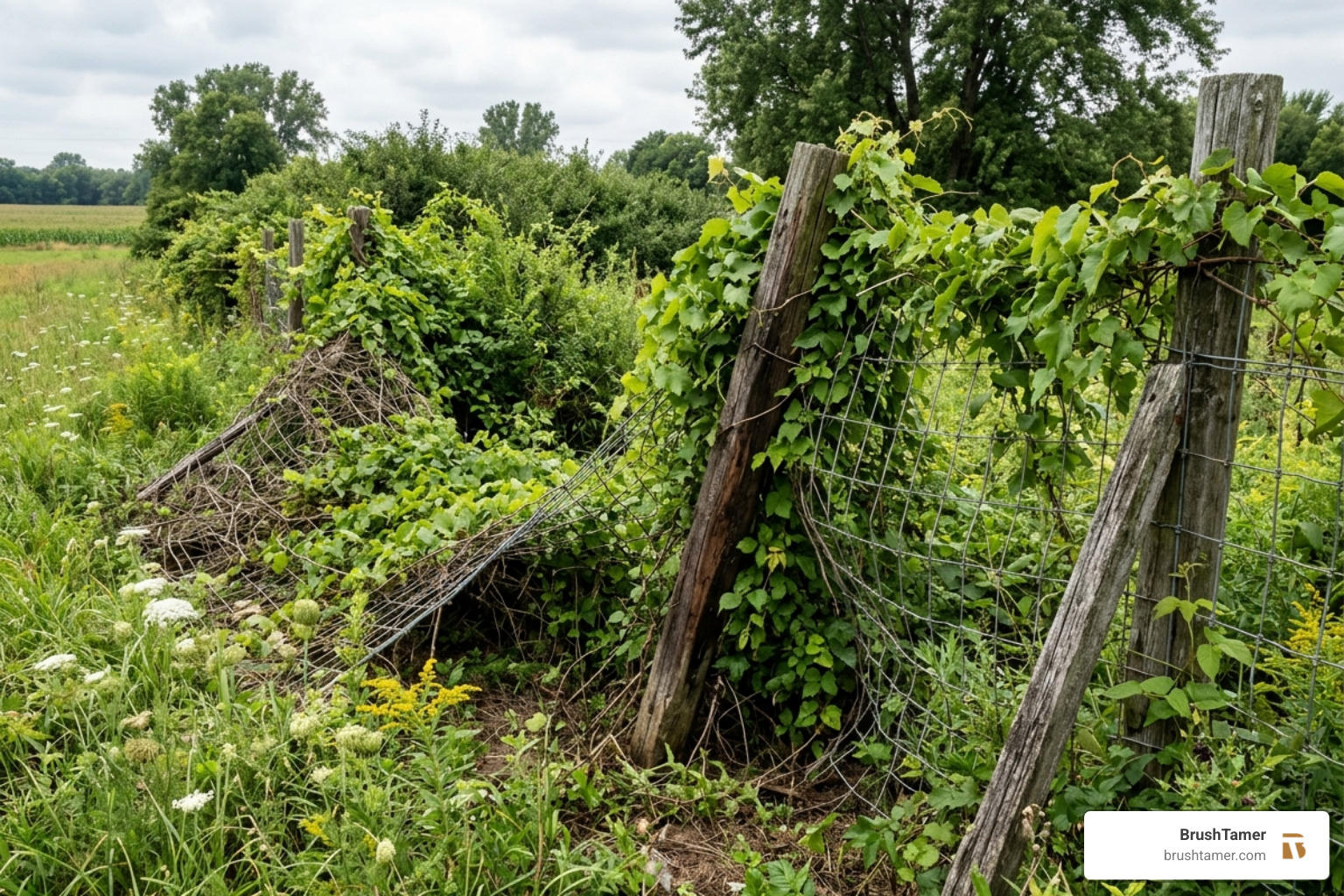
- Vegetation Suppression: Eliminating vines like Virginia Creeper and Wild Grape that strangle fence panels. These vines use the fence as a trellis, adding immense weight and trapping moisture against the material. Over time, the weight of these vines can exceed the load-bearing capacity of the fence posts, leading to a slow-motion collapse.
- The Composting Effect: Clearing fallen limbs and accumulated organic matter that trap moisture against posts. This organic buildup creates a “composting effect” at the base of your fence. As the organic matter breaks down, it creates a nutrient-rich, high-moisture environment that is perfect for wood-destroying fungi and insects like termites and carpenter ants.
- Canopy Management: Trimming overhanging branches that pose a risk of falling during Midwest ice storms or high winds. A single fallen limb can crush a section of chain link or snap a wooden rail instantly. Furthermore, dense canopies block sunlight, preventing the fence line from drying out after rain, which further accelerates material decay.
- Root System Management: Utilizing professional-grade equipment to address the root causes of regrowth. Simply cutting the top of a plant is a temporary fix; managing the root system is the only way to ensure long-term clarity and prevent the displacement of fence posts by expanding root balls.
Why Professional Maintenance is Non-Negotiable
Neglecting fence line clearing and maintenance leads to rapid fence deterioration. In the humid climates of South Bend, Indiana, and Kalamazoo, Michigan, moisture is the primary enemy of wood and metal. When brush is allowed to grow against a fence, it creates a stagnant micro-environment. This trapped humidity accelerates fungal rot in wooden posts and oxidation (rust) in steel or chain-link components. The lack of airflow prevents the materials from drying out after rain or morning dew, effectively cutting the lifespan of a fence in half.
Furthermore, an overgrown fence line is a liability. It obscures property markers, which can lead to costly boundary disputes with neighbors. By hiring BrushTamer, property owners keep boundaries visible and reduce preventable damage that shortens fence lifespan. A well-maintained fence line also increases the curb appeal and market value of the property, signaling to neighbors and potential buyers that the land is cared for and the boundaries are respected.
The Critical Role of Professional Fence Line Clearing
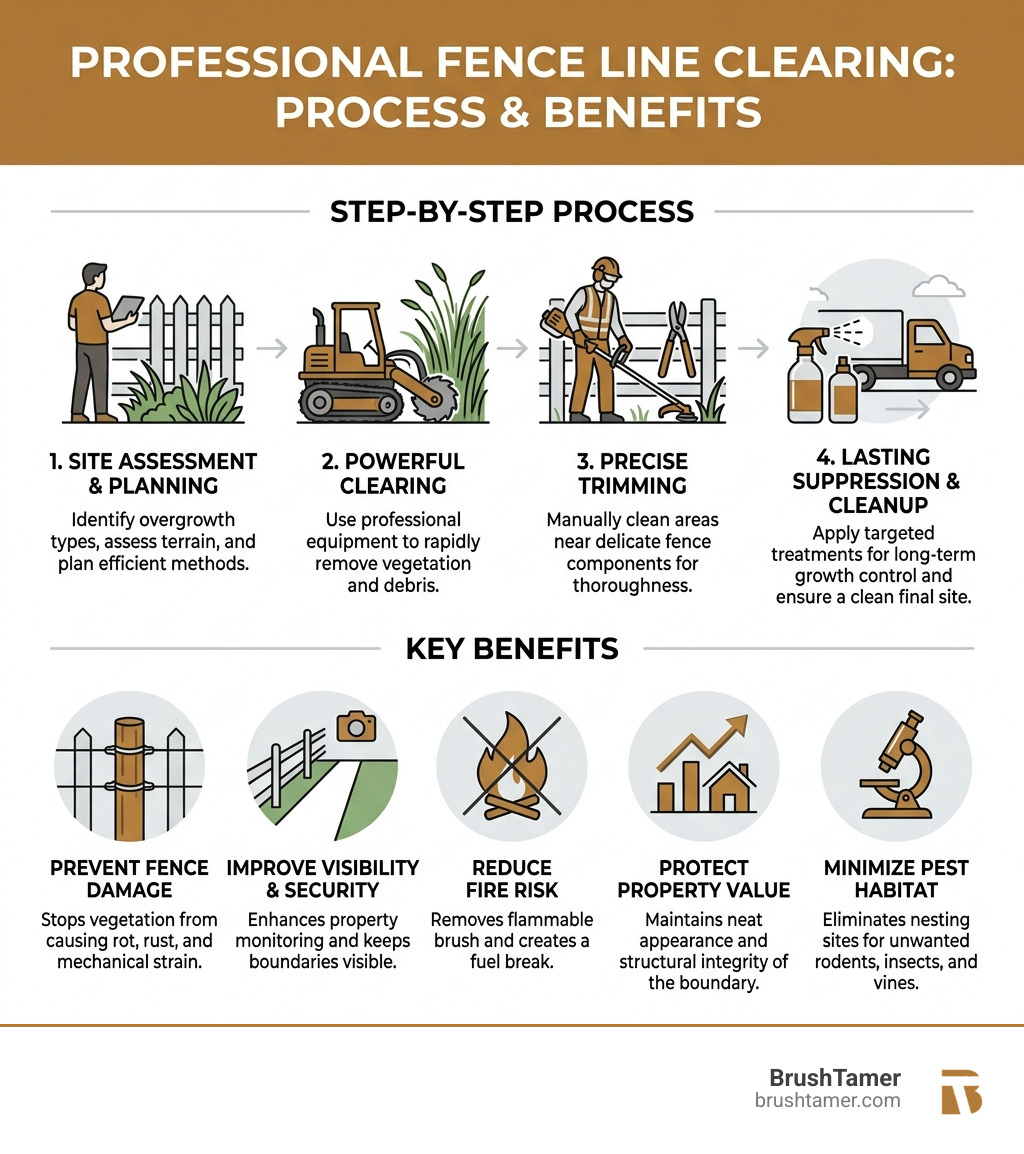
Professional fence line clearing preserves the structural integrity of property boundaries by removing moisture-trapping vegetation and physical stressors that cause material failure. By establishing a clean corridor, typically 3 to 5 feet wide, BrushTamer ensures that fencing materials remain dry, accessible for inspection, and free from the mechanical weight of climbing vines and invasive saplings. This corridor acts as a buffer zone, preventing the natural “creep” of the forest or field from reclaiming your infrastructure. Without this buffer, the fence becomes part of the landscape rather than a barrier against it.
In regions like Elkhart and Mishawaka, the rapid growth of woody brush can overwhelm a fence in a single season. Without professional intervention, the cost of repair quickly exceeds the cost of maintenance. For a deeper look at how we manage these environments, see our vegetation management ultimate guide. Our team understands that different fence types require different clearing techniques. For example, a high-tensile wire fence used for livestock requires a much more delicate touch than a heavy-duty commercial chain-link perimeter. We tailor our mechanical approach to the specific material and age of your fence to ensure no damage occurs during the process.
Preventing Structural Damage through Mechanical Stress Relief
The primary cause of fence failure in the Midwest is mechanical stress from vegetation. Vines and heavy brush do not just grow alongside a fence; they integrate into it. As these plants mature, their woody stems thicken, exerting thousands of pounds of pressure on wire mesh and wooden slats. This leads to sagging, snapping, and eventually, the complete collapse of the fence line. This process is often slow and invisible until a major storm event causes the entire structure to fail under the combined weight of the vegetation and the wind.
BrushTamer utilizes specialized machinery to clear these stressors without damaging the underlying structure. Our process focuses on:
- Weight Reduction: Removing heavy vine mats that pull down top rails. These mats can weigh hundreds of pounds when saturated with rain or snow, causing the fence to bow and eventually fail at the post connections.
- Airflow Restoration: Clearing dense thickets to allow wind to pass through, reducing the “sail effect” during storms. An overgrown fence acts like a solid wall, catching the wind and putting immense strain on the posts. By restoring airflow, we allow the fence to withstand high-wind events without leaning or snapping.
- Post Protection: Eliminating brush that hides the base of posts, allowing for early detection of rot or shifting. If you can’t see the base of your post, you can’t see the termites or the fungal growth destroying it. Regular clearing allows for visual inspections that can catch minor issues before they become catastrophic failures.
Utilizing heavy brush removal ensures that these stressors are eliminated, effectively doubling the lifespan of your investment. By removing the physical burden from the fence, the materials can perform as intended and stay easier to inspect and maintain.
Enhancing Security and Visibility in Northern Indiana and Lower Michigan
A clear fence line is the first line of defense for any property. Overgrowth creates “blind spots” that compromise security systems and provide cover for unauthorized access. In areas like Granger and Niles, maintaining high visibility along the perimeter is essential for both residential privacy and commercial security. A fence that is buried in brush is no longer a deterrent; it is a hiding spot. For commercial properties, this can lead to increased theft or vandalism, as intruders can work undetected behind a screen of invasive brush.
When BrushTamer clears a boundary, we restore the “line of sight.” This allows security cameras to function correctly and property owners to identify breaches immediately. Furthermore, clear boundaries prevent legal “encroachment” disputes. When a fence is buried in brush, it is easy for neighbors to inadvertently build structures or plant gardens over the property line. Keeping the line clear keeps the peace. You can learn more about how we maintain these perimeters in our guide to field edge maintenance. A clean line also facilitates easier maintenance for the property owner, allowing for simple mowing or spraying without the need for heavy equipment every time.
Advanced Methods for Boundary Vegetation Management
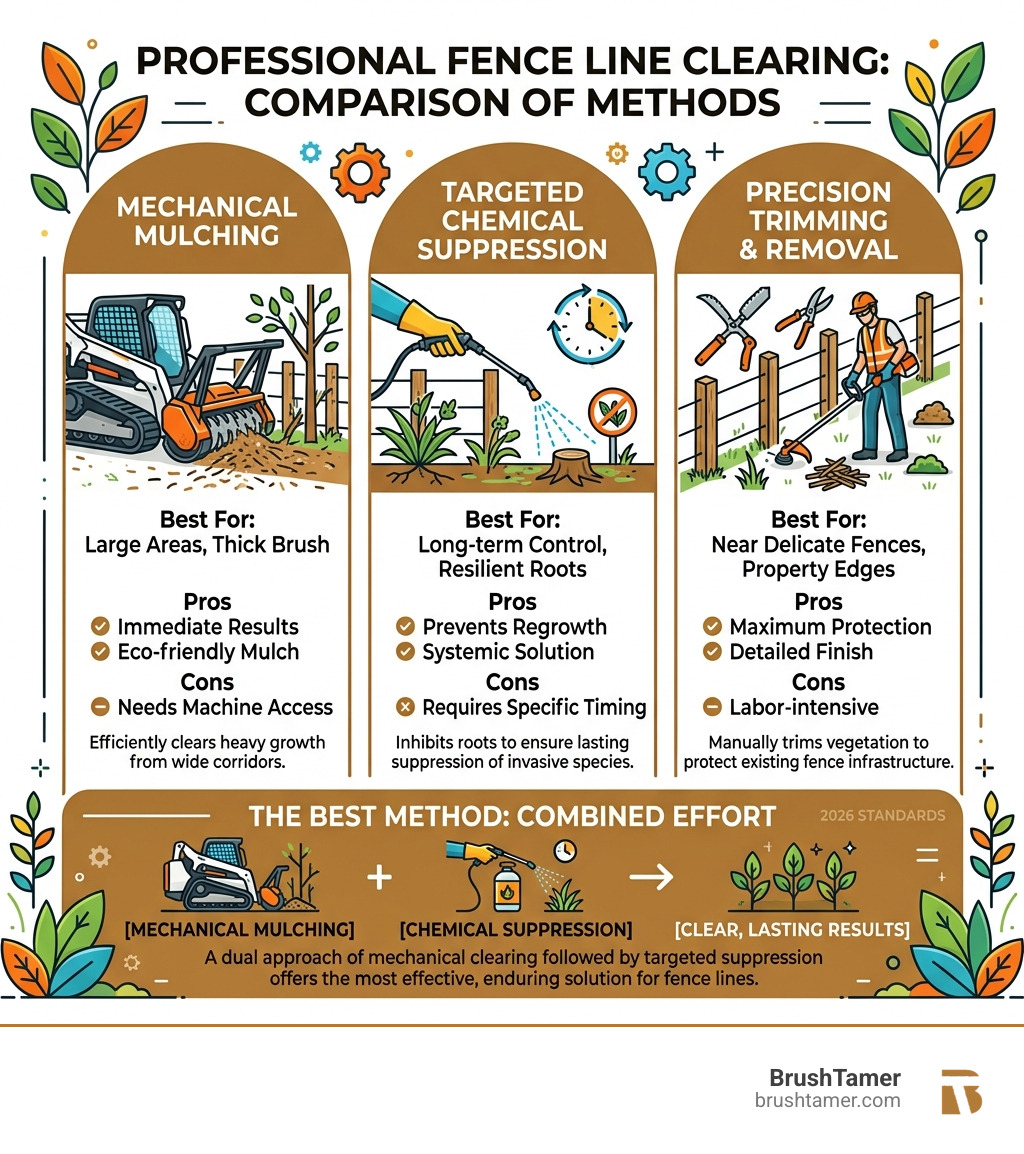
For overgrown boundaries, fence line clearing is most effective when it combines precision mechanical mulching with a targeted regrowth-control plan. This dual-action approach ensures that existing overgrowth is removed instantly while the root systems are inhibited from regenerating. BrushTamer employs high-output skid steers and excavators equipped with specialized mulching heads to process vegetation into a fine, nutrient-rich mulch that stabilizes the soil. This method is far superior to traditional “cut and haul” techniques, as it leaves the organic matter on-site to protect the soil from erosion while eliminating the need for unsightly brush piles.
Best practice in fence line clearing prioritizes efficient removal with minimal soil disturbance, especially near established property boundaries. Our methods are designed to clear hundreds of feet of fence line per hour, a feat impossible with manual labor or standard lawn equipment. By using low-ground-pressure tracks, our machinery can operate in sensitive areas without leaving deep ruts or damaging the root systems of desirable trees that may be located near the fence line.
Mechanical Clearing Equipment and Precision Engineering
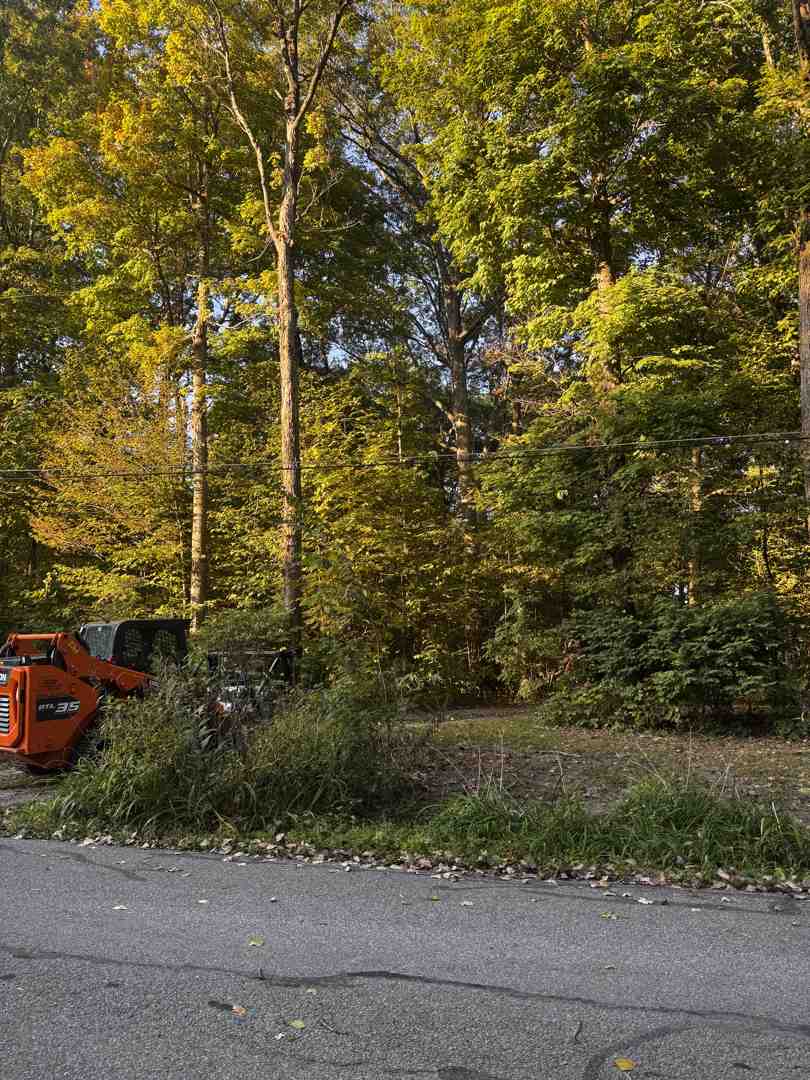
BrushTamer utilizes compact, high-performance machinery that allows us to work in tight spaces without compromising the fence. Our skid steers are equipped with mulching attachments that can grind a 4-inch diameter sapling into wood chips in seconds. This equipment is essential for properties in Warsaw and Goshen, where dense woodlots often meet manicured fence lines. The precision of our operators allows us to work within inches of the fence fabric without making contact, ensuring that the vegetation is removed while the fence remains untouched.
The advantage of using professional-grade brush hogging equipment includes:
- Speed and Efficiency: We can clear in a single day what would take a manual crew weeks of grueling labor. This minimizes the disruption to your property and your schedule, allowing you to regain use of your land immediately.
- Safety and Protection: Our operators are protected in climate-controlled cabs, away from thorns, poison ivy, and biting insects. This also eliminates the risk of injury associated with chainsaws and manual brush cutters, which are common causes of accidents on rural properties.
- Precision and Finish: We maintain a strict buffer from the fence, using hand-operated precision tools for the final inches to ensure no contact with the wire or posts. This hybrid approach ensures a perfectly clean finish that looks professional and lasts longer.
For more details on these approaches, explore our land clearing services complete guide. Our mechanical process also helps to identify hidden issues, such as broken posts or loose wires, that were previously obscured by the brush, allowing for immediate repair before the damage worsens.
Professional Chemical Suppression and the “Hydra Effect”
Cutting a shrub is often only a temporary fix. Many invasive species in the Midwest, such as Autumn Olive, exhibit the “Hydra Effect”—where cutting one stem leads to five new sprouts from the same root system. This rapid regrowth can actually make the problem worse within a single growing season, as the plant enters a survival mode that triggers aggressive sprouting. To prevent this, BrushTamer integrates professional chemical suppression into our workflow. This is the “second punch” in our clearing strategy, ensuring that the work we do today doesn’t have to be repeated in six months.
When appropriate, our fence line clearing workflow can include targeted, professional regrowth control applied carefully to limit re-sprouting. This is not a generic “weed killer” but a targeted application designed for woody invasive species. By treating the stumps or the regrowth zone, we ensure that the clearing lasts for years. This is a critical step for property owners in Valparaiso and Portage, where the fertile soil leads to aggressive regrowth. Our technicians are trained in the safe and effective application of these products, ensuring that only the target species are affected while surrounding desirable vegetation remains healthy and unaffected.
Regional Challenges in Michigan and Indiana
Property owners in Lower Michigan and Northern Indiana face unique environmental challenges, specifically the rapid spread of invasive species like Autumn Olive, Glossy Buckthorn, and Multiflora Rose. These plants thrive in the region’s high-moisture, glaciated soils, often growing several feet in a single season. BrushTamer specializes in identifying and eradicating these specific threats to ensure your fence line remains a clear boundary rather than a nursery for invasives. These species are particularly problematic because they produce thousands of seeds that are spread by birds, meaning a single neglected fence line can infest an entire neighborhood or farm.
From the sandy soils of St. Joseph and Benton Harbor to the heavy clay of Three Rivers and Elkhart, the local geography dictates the clearing strategy. Our team understands the soil bearing capacities of the region, ensuring our heavy machinery does not cause compaction or erosion that could undermine your fence’s foundation. In sandy areas, we focus on maintaining ground cover to prevent wind erosion, while in clay-heavy areas, we prioritize drainage to prevent water from pooling at the base of your fence posts. For those in Goshen, specialized property line clearing services are essential to handle the dense thickets common to the area.
Managing Invasive Species: A Biological Necessity
Invasive species are more than an aesthetic problem; they are biological invaders that destroy native ecosystems. Autumn Olive, for example, fixes nitrogen in the soil in a way that prevents native grasses from growing, creating a monoculture of thorny brush. This changes the soil chemistry and makes it difficult for native oaks and maples to regenerate. Multiflora Rose creates impenetrable thickets that can trap livestock and pets, while Buckthorn acts as a host for agricultural pests like the soybean aphid.
Professional fence line clearing by BrushTamer restores the ecological balance. By removing these invasives, we allow native flora to return, which supports local pollinators and improves the overall health of your land. This is particularly important for agricultural properties in rural Indiana, where invasive brush can harbor livestock diseases and pests. A clean fence line also makes it easier to spot and manage new invasive outbreaks before they become established. You can find more information in our article all about land clearing.
Legal Considerations and Boundary Compliance
Because property boundaries can carry legal responsibilities, fence line clearing also supports clear markers and easier compliance with local rules. Landowners are often legally responsible for maintaining their half of a shared fence, which includes keeping it clear of noxious weeds and brush. Failure to do so can result in legal notices, fines from local townships, or even civil lawsuits if the neglect causes damage to a neighbor’s property or livestock. Maintaining a clear fence line is not just about aesthetics; it is about being a responsible neighbor and staying in compliance with state statutes.
Before BrushTamer begins a project, we emphasize the following professional standards:
- Utility Safety: We coordinate with 811 to mark all underground lines, ensuring that our clearing process never interrupts power, water, or fiber optic services. This is critical, as many utility lines run parallel to property boundaries and can be easily damaged by heavy equipment if not properly marked.
- Boundary Verification: We work within the established survey markers to ensure all clearing is performed on the correct side of the line. We encourage property owners to locate their pins before we arrive to ensure total accuracy and avoid any potential disputes with neighbors.
- Ordinance Adherence: We stay current on local regulations in towns like Stevensville and Bridgman, especially regarding clearing near protected wetlands or waterways. We ensure that our work meets all environmental standards and local zoning requirements, providing you with peace of mind that the job is done legally and ethically.
For general information on boundary maintenance standards, you can refer to professional property boundary maintenance.
Frequently Asked Questions about Fence Line Maintenance
How often should fence lines be cleared by professionals?
Many properties benefit from at least one planned maintenance visit each growing season, adjusted to local growth conditions and site goals. A spring clearing addresses the initial growth surge, while a fall pass removes the season’s accumulated debris and prepares the fence for winter snow loads. In high-growth areas like Michigan City or La Porte, annual maintenance is the absolute minimum required to prevent vines from causing permanent structural damage. Regular maintenance reduces the chance of the fence line becoming fully overgrown and harder to restore later. By staying on top of the growth, you ensure that the vegetation never reaches a size where it can cause mechanical stress to the fence fabric or posts, keeping your property looking pristine year-round.
Can professional clearing prevent wildfires and property damage?
Absolutely. Overgrown fence lines act as “fuel ladders,” allowing ground fires to climb into the tree canopy or spread rapidly across a property. By removing deadwood, dry brush, and tall weeds, BrushTamer creates a vital firebreak. This is a critical safety measure for rural estates and agricultural operations throughout Northern Indiana, where a clear perimeter can protect barns, livestock, and homes from fast-moving grass fires. In the event of a fire, a clear fence line also provides a safe access point for emergency vehicles and firefighters to navigate the property, potentially saving structures and lives.
Why shouldn’t I use standard lawn equipment for this?
Standard lawn mowers and string trimmers are not designed to handle woody stems or thick vines. Attempting to clear heavy brush with underpowered equipment often leads to mechanical failure, broken blades, and incomplete results. Furthermore, professional machinery like that used by BrushTamer can mulch material in place, whereas manual clearing leaves behind piles of debris that must be hauled away or burned. Our professional approach is cleaner, faster, and more effective at preventing regrowth. Additionally, standard equipment often requires the operator to be in close proximity to the brush, increasing the risk of exposure to ticks, poison ivy, and hidden debris that can be thrown by a mower blade, posing a significant safety risk to the homeowner.
What is the best time of year for fence line clearing?
While clearing can be performed year-round, late fall and early winter are often ideal. During this time, the vegetation is dormant, and the lack of leaves provides better visibility for the operators to see the fence and any hidden obstacles. Furthermore, the ground is often firmer or frozen, which minimizes soil disturbance and prevents rutting. However, spring clearing is also highly effective for applying chemical suppressants to new growth. BrushTamer operates throughout the seasons, adjusting our techniques to match the environmental conditions and the specific needs of your property, ensuring optimal results regardless of the weather.
Conclusion
At BrushTamer, we understand that your fence line is more than just a boundary; it is a significant investment in your property’s security, value, and legal standing. Since 2021, we have provided the expertise and specialized equipment necessary to reclaim overgrown land and protect infrastructure across Lower Michigan and Northern Indiana. From Fort Wayne to Grand Rapids, our team is dedicated to delivering results that last, ensuring that your property remains a source of pride rather than a maintenance burden. We take pride in our ability to transform neglected perimeters into clean, manageable boundaries that enhance the overall aesthetic and functionality of your land.
Choosing professional fence line clearing ensures that your property remains secure, your boundaries stay visible, and your fencing materials reach their full intended lifespan. Don’t let invasive species and neglect dictate the condition of your land. Let BrushTamer help you set a boundary that stands the test of time and provides the security your property deserves. Our commitment to quality, safety, and efficiency makes us the premier choice for land management in the Midwest, providing you with the peace of mind that your investment is protected for years to come. Contact us today!