
The Foundation of Farming: Understanding Land Clearing for Agriculture
Land clearing for agriculture is the vital first step in turning undeveloped or overgrown areas into thriving farmland. This essential process sets the stage for productive crop cultivation or livestock grazing.
It involves several key actions:
- Removing Obstacles: Eliminating trees, brush, stumps, and large rocks that prevent farming.
- Preparing the Soil: Creating an optimal surface for planting or pasture establishment.
- Expanding Usable Land: Converting previously unproductive areas into valuable agricultural acreage.
- Improving Efficiency: Making fields accessible for modern farm machinery and practices.
Today, land clearing for agriculture is a practical way to expand usable acreage and improve field access for modern equipment. It transforms raw landscapes into fertile ground, offering farmers new opportunities to expand their operations. Modern practices combine effectiveness with a strong focus on environmental care, ensuring that new agricultural spaces contribute to long-term sustainability. This strategic investment lays the groundwork for future success, enhancing both the value and utility of your property.
I’m Leon Miller, owner of BrushTamer, and our team delivers land clearing for agriculture that prepares fields for planting, grazing, and long-term land use. My team and I specialize in land clearing for agriculture, ensuring every project transforms your property efficiently and with care. We apply our expertise to prepare your land for its next agricultural chapter.
Essential Methods of land clearing for agriculture
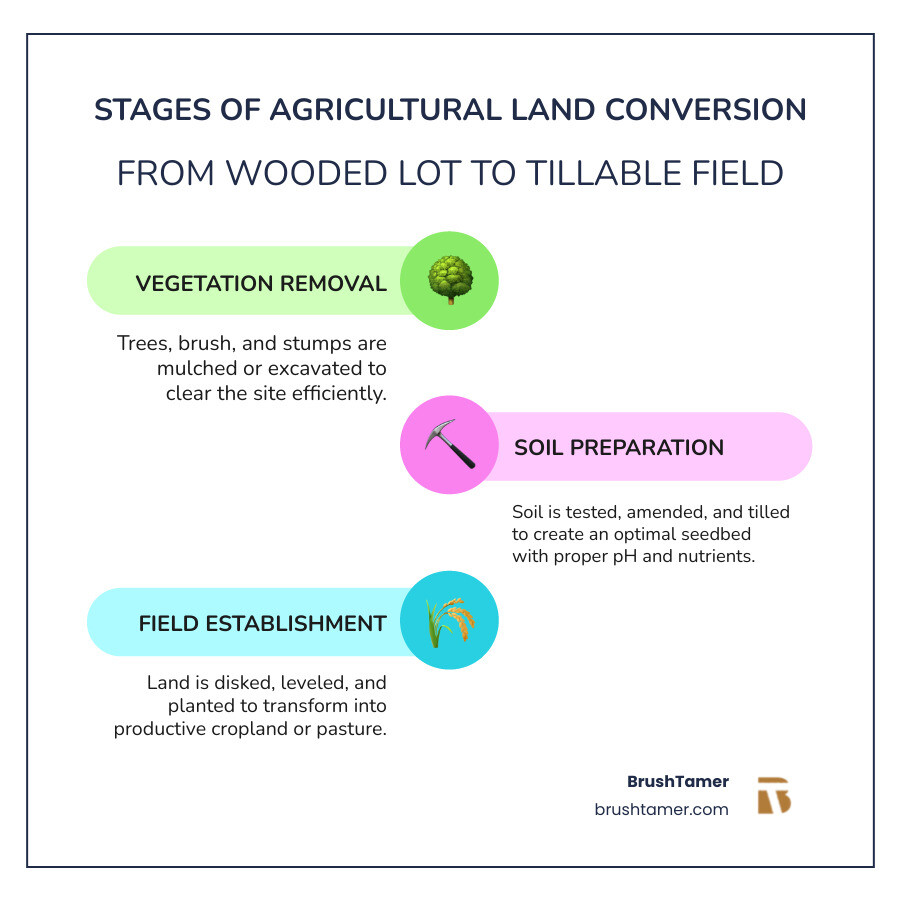
Land clearing for agriculture is the strategic removal of trees, brush, and stumps to transform uncultivated acreage into productive farmland for crops or livestock. In April 2026, the industry prioritizes high-efficiency mechanical methods that preserve soil integrity while maximizing usable space in regions like Elkhart and Goshen. Choosing the right method is one of the most important decisions in land clearing for agriculture, because it affects soil condition and how quickly you can move to planting or pasture.
We focus on professional execution that avoids the pitfalls of older, more destructive techniques. Older clearing approaches can disturb topsoil and increase erosion risk; modern land clearing for agriculture should prioritize soil protection and stable ground conditions. Today, we utilize advanced technology to ensure that the transition from woods to fields is seamless and productive.
Forestry Mulching: The Sustainable Choice for land clearing for agriculture
For many projects, forestry mulching is a leading option for land clearing for agriculture because it clears vegetation in one step while leaving protective mulch on the ground. Unlike traditional clearing, which involves hauling away debris or burning it, a forestry mulcher shreds trees and brush right where they stand. This creates a rich “mulch blanket” that stays on the ground to protect the earth.
This approach works well across Northern Indiana and Lower Michigan, where maintaining surface stability matters during seasonal rainfall. By recycling nutrients back into the soil, we help maintain the organic matter that crops like corn and soybeans crave. The resulting mulch layer acts as a natural barrier against erosion, holding the soil in place during our heavy spring rains. It also helps with moisture retention, giving your new pasture or field a head start.

Mechanical Excavation and Site Preparation
For projects requiring deep-rooted removal or the conversion of dense woodlots, mechanical excavation is necessary. This process involves more than just “pushing dirt.” It requires a detailed guide to agricultural land conversion to ensure the land is truly tillable. We use specialized equipment to handle stump removal and root raking, ensuring that no hidden obstacles remain to break your plow or planter.
In areas like South Bend and Mishawaka, where soil types can vary from sandy loam to heavy clay, our heavy brush removal ultimate guide strategies come into play. We meticulously rake the soil to remove roots and large stones. This level of all about land clearing ensures that the subsurface is as clean as the surface, providing a uniform environment for root development.
Environmental Stewardship and Regulatory Compliance
Responsible land clearing for agriculture requires following conservation standards that reduce runoff, protect waterways, and preserve long-term soil productivity. In the Midwest, this involves managing water runoff and protecting native habitats in accordance with the National Standard Document (Code 460) to ensure the land remains viable for generations. We believe that being a good farmer starts with being a good steward of the land.
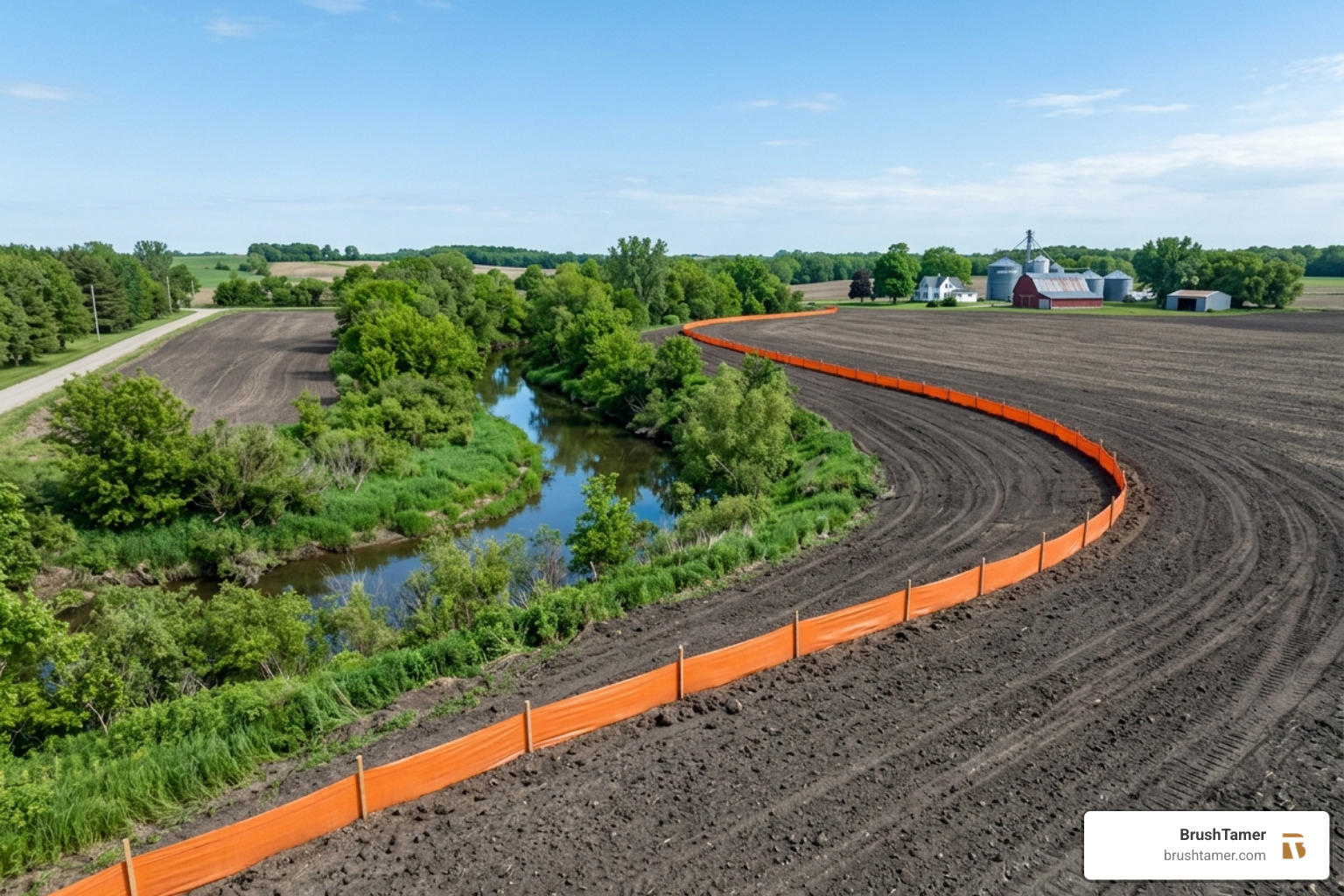
The environmental impact of clearing can be significant if not managed correctly. Large-scale clearing can damage biodiversity and soil health when erosion controls and buffers aren’t used—so we plan land clearing for agriculture around water protection and stabilization. To avoid similar issues in our local communities, we implement strict mitigation strategies that protect water quality and soil health from day one.
Navigating Permits and Conservation Standards
Before we ever unload a machine in Bristol or Middlebury, we ensure all regulatory hurdles are cleared. The USDA Natural Resources Conservation Service (NRCS) provides Practice Standard 460, which outlines how land clearing should be performed to minimize environmental damage. While these standards provide a framework, local bylaws in Indiana and Michigan often have specific requirements regarding wetland protection and habitat preservation.
We help our clients navigate these complexities. For instance, if a property contains federally protected wetlands or habitat for endangered species like the Indiana Bat, specific clearing windows and buffer zones must be maintained. Skipping permits or buffer requirements can trigger stop-work issues and enforcement actions, delaying agricultural timelines.
Mitigating Soil Erosion and Habitat Loss
One of the biggest risks during land clearing for agriculture is the loss of topsoil. A single heavy thunderstorm on a freshly cleared, unprotected slope can wash away decades of accumulated fertility. To prevent this, we utilize detailed guide to agricultural land conversion techniques that include the installation of silt fences and the maintenance of riparian buffer zones near streams and ponds.
In Granger and Nappanee, we often recommend leaving “wildlife corridors” or selective stands of trees. This not only helps with windbreak protection for your crops but also maintains a level of biodiversity that benefits the farm through natural pest control and pollination. We also prioritize immediate stabilization—getting a cover crop down as soon as the machines are off the field to lock that soil in place.
Economic Factors and Equipment Requirements
Project scope for land clearing for agriculture depends on vegetation density, terrain, access, and the method required to protect the soil. Professional land clearing for agriculture can improve field layout and access, helping landowners move faster from raw ground to usable planting or pasture conditions. When you clear land correctly, you aren’t just spending money; you are manufacturing new assets.
Economic data from 2022-2023 showed that in some regions, over 86% of clearing was driven by the need for pasture expansion. This highlights the competitive nature of modern farming—if you aren’t expanding your usable footprint, you may be falling behind. Professional clearing allows for “economies of scale,” where larger, unobstructed fields reduce the time and fuel spent turning tractors and managing small, fragmented plots.
Cost-Benefit Analysis of land clearing for agriculture
When evaluating land clearing for agriculture: cost to clear land 2026, it is important to look beyond the initial invoice. Professional mechanical clearing is significantly more efficient than manual labor or outdated methods. Forestry mulching can be an efficient approach because it clears and processes debris on-site, reducing extra handling and supporting soil cover.
| Factor | Professional Mechanical Clearing | Manual/Traditional Clearing |
|---|---|---|
| Speed | High (5-15 acres/day) | Very Low |
| Soil Impact | Minimal (Nutrient recycling) | High (Topsoil loss) |
| Debris | Processed into mulch | Requires hauling/burning |
| Long-term ROI | High (Immediate planting) | Moderate (Delayed by debris) |
By increasing your tillable acreage, you increase the overall value of your property. Increasing tillable acreage can expand how the property can be used for planting, grazing, and long-term farm planning.
Specialized Equipment for Midwest Terrain
To handle the diverse landscapes of Lower Michigan and Northern Indiana, we maintain a fleet of high-performance machinery. Our services/land clearing utilize high-flow track loaders equipped with specialized mulching heads. These machines exert very low ground pressure, which is vital for preventing soil compaction—a major enemy of crop yields.
We also employ excavators with specialized attachments for stump extraction and stump grinders for precision work. In April 2026, technology like GPS-guided clearing and drone surveying allows us to map out the most efficient routes, ensuring we don’t move more earth than necessary. This precision keeps our services/land clearing efficient and cost-effective for farms of all sizes.
Preparing the Soil for Agricultural Production
Post-clearing preparation is the final phase of land conversion, focusing on creating an optimal seedbed through soil testing and mechanical refinement. This process ensures that newly cleared land in areas like South Bend and Elkhart is chemically and physically ready for immediate planting or pasture establishment. You can’t just clear the trees and expect a record-breaking harvest the next month; the soil needs to be “awakened.”
Newly cleared forest soil is often acidic and may have nutrient imbalances. Furthermore, the physical structure of the soil might need adjustment after years of being under a heavy forest canopy. We view this stage as the bridge between “raw land” and “farmland.”
Soil Testing and Nutrient Management
After land clearing for agriculture, soil testing is the first step to confirm pH and nutrient balance before planting. Forest soils in our region often have a lower pH, meaning they are more acidic than what most row crops prefer. Using a detailed guide to the agricultural land conversion approach, we help landowners identify exactly how much lime and fertilizer are needed to balance the soil chemistry.
We look at:
- pH Levels: Essential for nutrient availability.
- Organic Matter: Usually high in mulched areas, which is a great sign.
- Macronutrients: Checking Nitrogen, Phosphorus, and Potassium levels.
- Compaction: Ensuring the soil is loose enough for roots to penetrate deeply.
Seedbed Preparation and Invasive Species Control
Once the chemistry is right, it’s time for mechanical refinement. This involves disking and harrowing the land to break up any remaining small roots and incorporate the mulch into the upper layers of the soil. Our heavy brush removal ultimate guide doesn’t stop at the surface; we ensure the seedbed is smooth and firm.
Invasive species management is also a top priority. Cleared land is a magnet for “pioneer” weeds and invasive brush that want to reclaim the space. Our services/brush management include proactive strategies to ensure that your new pasture or crop field isn’t overtaken by unwanted vegetation. For those looking to repurpose specific types of land, such as repurposing blueberry fields or blueberry orchard removal, we offer specialized techniques to handle the unique root systems and soil conditions associated with those crops.
Frequently Asked Questions about Agricultural Land Clearing
How long does it take to convert a wooded lot into tillable land?
The clearing itself can move quickly—often 5 to 15 acres per day with high-efficiency mulchers. However, the full conversion to “tillable” land usually takes a few months to a full season. This allows time for soil testing, pH adjustment with lime, and the breakdown of organic mulch into the soil profile.
Do I need a permit for land clearing in Indiana or Michigan?
In most cases, yes. While agricultural exemptions often exist, you must still comply with local drainage boards, wetland regulations, and erosion control requirements. We always recommend checking with your local county planning office or NRCS field office in cities like Elkhart, Warsaw, or Benton Harbor before starting.
Conclusion
Land clearing for agriculture is a transformative process that requires a balance of heavy-duty power and scientific precision. At BrushTamer, we take pride in helping Midwest farmers expand their horizons by turning overgrown acreage into productive assets. Since our founding in 2021, we have remained committed to a client-focused, environmentally responsible approach.
Whether you are in South Bend, Fort Wayne, or Kalamazoo, our team is ready to help you navigate the complexities of land preparation. From the initial lot clearing guide 2025 planning stages to the final blueberry bush removal complete guide if you’re reclaiming specialized fields, we provide the expertise needed for success.
Sustainable farming begins with professional land management. By choosing the right methods today, you ensure that your land remains fertile and productive for decades to come. If you’re ready to revitalize your property, our services/land clearing team is here to pave the way for your next harvest. Let’s grow the future of Midwest agriculture together. Contact us today!