
The Real Dangers of Overgrown Grass (And Why They’re Worse Than You Think)
The dangers of overgrown grass include serious health risks from disease-carrying pests, elevated fire risk, code-enforcement issues, and avoidable safety hazards for families and neighbors. While many homeowners view a tall lawn as a mere cosmetic inconvenience, the reality in Northern Indiana and Lower Michigan is that unmanaged vegetation quickly transforms into a biological and financial liability. From the humid summers of Grand Rapids to the aggressive growing seasons in South Bend and Elkhart, grass that exceeds six inches becomes a sanctuary for ticks, a fuel source for fires, and a magnet for local government fines.
A Rapidly Escalating Liability
In our region, the transition from a “messy yard” to a “hazardous property” happens with alarming speed. The combination of rich Midwestern soil and high humidity creates a perfect storm for rapid overgrowth. When grass is left unmanaged, it doesn’t just grow taller; it changes the entire ecosystem of your property. It traps moisture against your home’s foundation, provides cover for invasive species, and creates a physical barrier that hides dangerous debris. For residents in cities like Kalamazoo, Fort Wayne, and Mishawaka, ignoring these risks can lead to property liens and expensive structural repairs that far outweigh the cost of professional maintenance.
Professional Land Management Expertise
BrushTamer was founded in 2021 by Leon Miller to help property owners reclaim land from aggressive overgrowth across Northern Indiana and Lower Michigan. My team and I specialize in high-efficiency brush clearing and forestry mulching, utilizing industrial-grade equipment that standard residential tools simply cannot match. We have seen firsthand how the dangers of overgrown grass compound over time, leading to pest infestations that migrate indoors and fire risks that threaten entire neighborhoods. This guide provides an authoritative look at the five most critical dangers of overgrown grass and why professional intervention is the only reliable solution for long-term property safety.
1. Critical Health Risks: The Dangers of Overgrown Grass as Pest Habitats
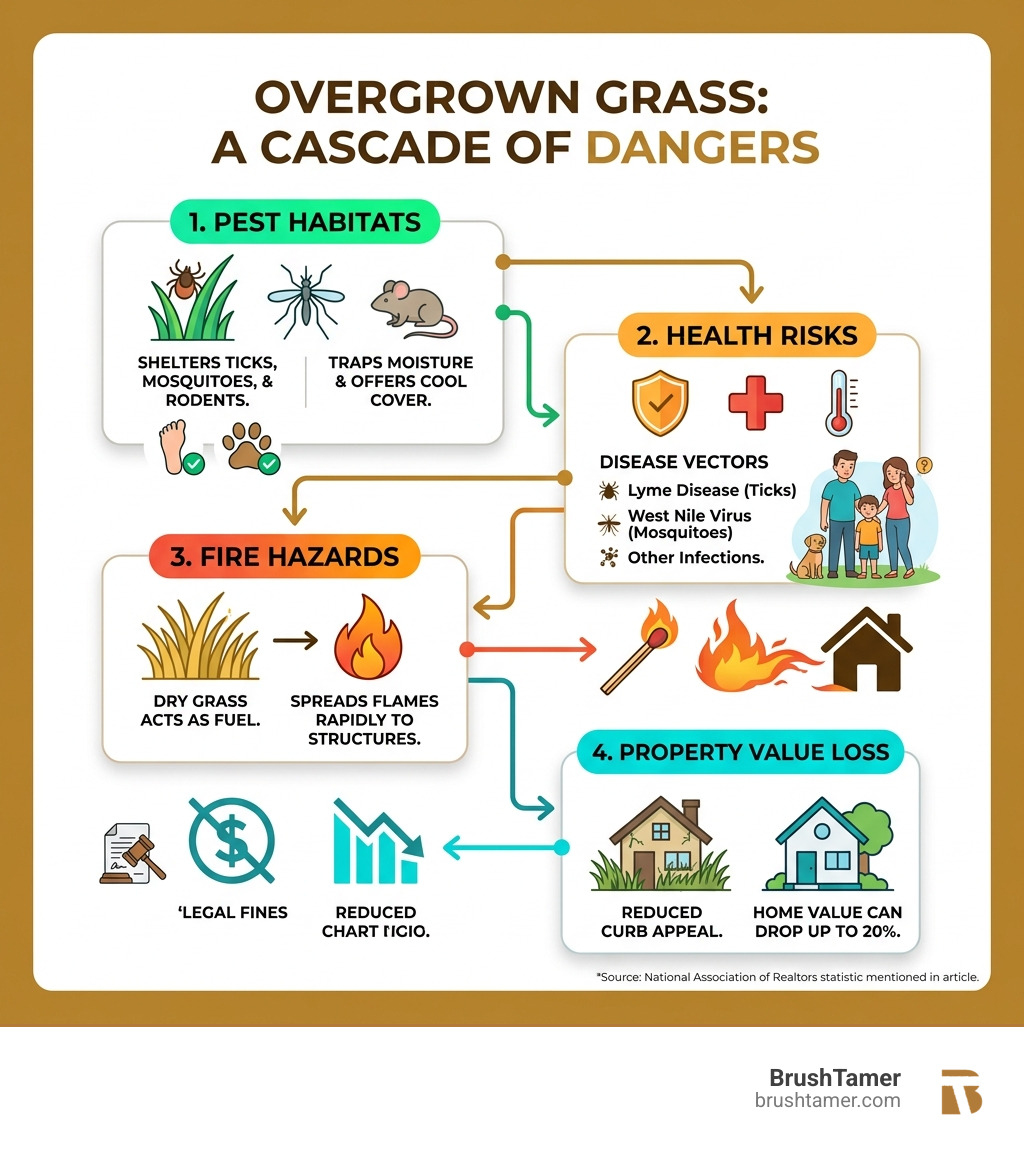
Overgrown grass creates a dangerous microclimate that serves as a primary breeding ground for ticks, mosquitoes, and rodents, directly increasing the risk of Lyme disease and West Nile virus for residents. When grass is allowed to grow unchecked, it creates a shaded, humid environment at the soil level that is significantly cooler than the surrounding air. This specific microclimate is essential for the survival of disease vectors that would otherwise perish in the direct sunlight of a well-maintained lawn.
Habitat for Disease Vectors in the Midwest
In the Great Lakes region, spanning from South Bend to Grand Rapids, the damp environment provided by tall grass is a sanctuary for the Black-legged tick (Ixodes scapularis). These ticks require high humidity to remain active; they climb to the tips of long grass blades to “quest,” waiting for a human or pet to brush past so they can latch on. Similarly, mosquitoes find refuge in the stagnant air and shaded dampness of thick vegetation during the heat of the day, emerging at dusk to feed. Neglecting these areas essentially invites these pests to colonize your yard, turning a private space into a public health hazard.
The CDC specifically recommends clearing tall grasses and brush around homes to reduce tick habitat. For properties that have transitioned from “long grass” to “heavy brush,” the risks multiply exponentially. This is why our heavy brush removal ultimate guide emphasizes that clearing these habitats through professional forestry mulching is the first line of defense for your family’s health.
Rodent and Wildlife Infestations
Tall grass provides essential cover for vermin, including Norway rats and field mice, which are prevalent in urban centers like Fort Wayne and South Bend. These rodents use overgrown lots as nesting grounds and protected “highways” to reach your home’s foundation. Once established, they frequently seek entry into crawlspaces and basements for food and warmth, bringing with them additional parasites and allergens. Furthermore, tall grass conceals snakes and other wildlife that can lead to dangerous encounters for children and pets. Our team specializing in category brush removal often finds that once the overgrowth is cleared, the rodent population loses its protective cover and is forced to relocate away from the living space.
Allergens and Respiratory Distress
For residents in Grand Rapids, Kalamazoo, and surrounding areas, the health impacts of overgrown grass extend to the air quality. When grass reaches maturity, it produces massive quantities of pollen, which can spike local counts and trigger severe seasonal allergies or asthma attacks. Additionally, the moisture trapped at the base of tall grass promotes the growth of mold and mildew spores. Utilizing the best brush management near me ensures that these biological triggers are eliminated, maintaining a safer environment for those with sensitive respiratory systems.
2. Escalating Fire Hazards and Structural Property Damage
One of the lesser-known dangers of overgrown grass is how dry vegetation can function as ‘ladder fuels,’ helping fire move from ground level toward fences, outbuildings, and structures. In the Midwest, particularly during the dry spells of late summer, tall and desiccated grass becomes highly flammable. What begins as a small spark from a passing vehicle or a lightning strike can rapidly escalate into a structure-threatening blaze when fueled by unmanaged vegetation.
The Ladder Fuel Effect and Fire Spread
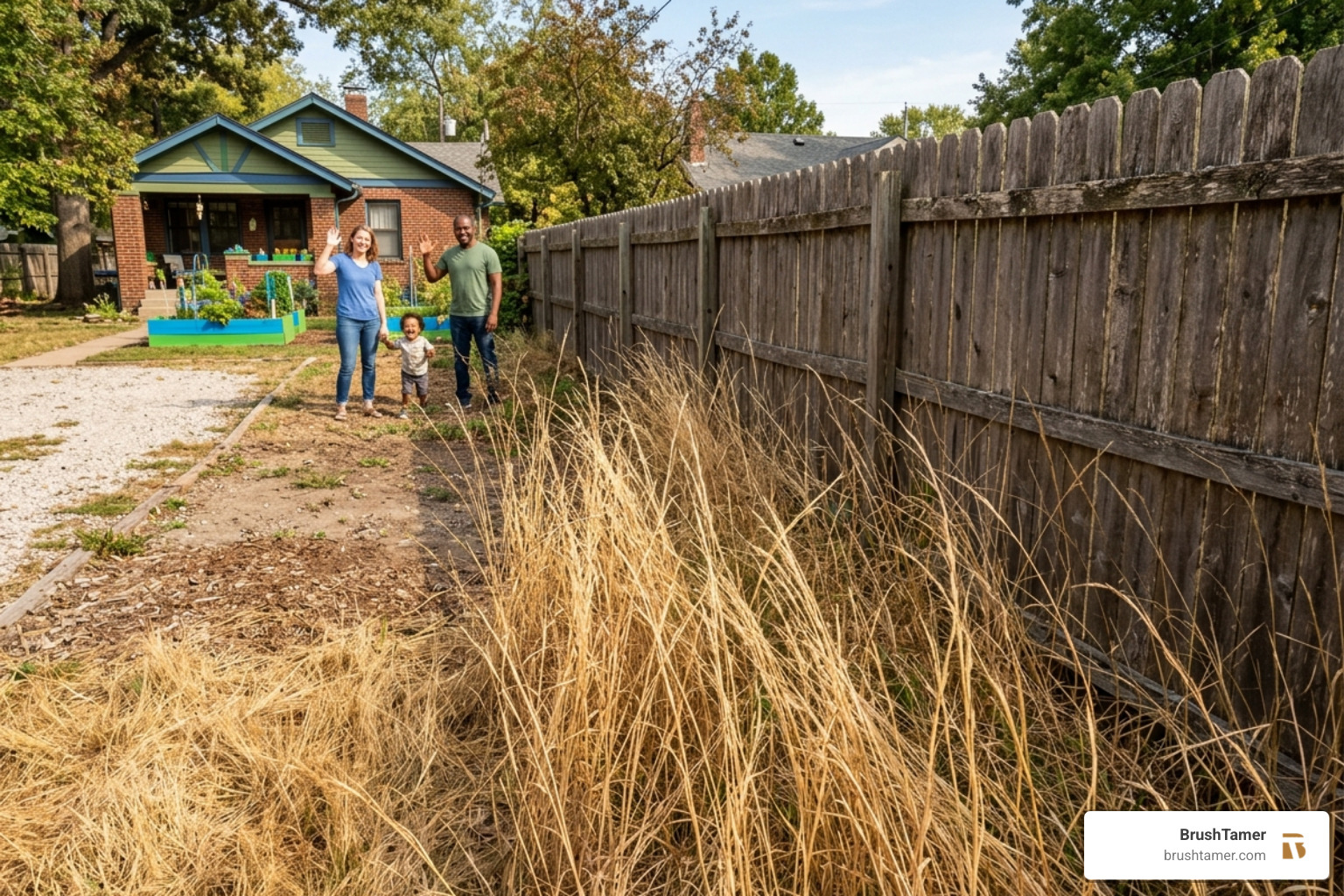
In fire science, “ladder fuel” describes the vertical arrangement of flammable materials that allows a fire to climb from the ground into the canopy of trees or the eaves of a house. Tall, dry grass provides the initial horizontal fuel bed. Once ignited, the flames can easily jump to low-hanging tree branches, wooden fences, or vinyl siding. As noted in the 5 Dangers of Overgrown Vegetation on Your Property, this vertical spread is what turns a manageable grass fire into a catastrophic property loss. Regular brush hogging by BrushTamer is essential to break this fuel chain and create a defensible space around your home.
Structural Integrity and Foundation Risks
Property owners in Kalamazoo, Portage, and Battle Creek are often surprised by the physical damage that grass and brush can inflict on a building’s structure. Overgrown vegetation traps moisture directly against siding and foundations, preventing the sun and wind from drying these surfaces. This constant dampness leads to wood rot, paint failure, and the gradual degradation of masonry and mortar. Furthermore, the aggressive root systems of certain weeds and woody brush can infiltrate small cracks in a foundation, widening them over time and leading to expensive structural failures. For comprehensive risk mitigation, our land clearing services remove these threats at the root.
Obstruction of Public Utilities and Emergency Access
In Elkhart and Mishawaka, municipal codes are strictly enforced regarding utility access. Overgrown grass can completely obscure fire hydrants, making them impossible for emergency responders to locate during a crisis. It also blocks access to utility meters and electrical transformers, leading to service interruptions or estimated billing. Perhaps most critically, tall grass at the edge of a property can block visibility for drivers, creating a significant traffic safety hazard. Our forestry mulching services can quickly clear these obstructions, ensuring your property remains compliant and safe for the entire community.
3. Legal Liabilities and Financial Impacts on Property Value
Neglecting lawn maintenance can reduce curb appeal and create a strong perception of neglect—often deterring buyers before they ever step onto the property. The financial dangers of overgrown grass are twofold: the loss of equity in the asset and the mounting costs of legal non-compliance. In a competitive real estate market, curb appeal is the primary driver of perceived value, and a neglected lawn is a significant red flag for buyers and appraisers alike.
Property Value Depreciation and Market Perception
NAR guidance emphasizes that curb appeal and basic yard maintenance strongly influence buyer interest and showing performance. In regions like Grand Rapids and South Bend, prospective buyers view a “jungle” in the yard as a sign of systemic neglect. The assumption is that if the exterior is not maintained, the internal systems, like HVAC and plumbing, have also been ignored. High-quality brush management services from BrushTamer are an investment that protects your home’s equity and ensures the property remains attractive to the market.
Municipal Fines and Legal Consequences
Local governments in Northern Indiana and Lower Michigan take the dangers of overgrown grass seriously to protect public health and safety. In Elkhart, for example, codes require grass and weeds to be kept under 10 inches. Failure to comply results in a warning, followed by hefty daily fines. As reported by ABC57 News, many cities will hire a private contractor to clear the property and then bill the homeowner at a rate significantly higher than standard service fees, often attaching the cost as a property lien. BrushTamer provides the professional intervention needed to avoid these legal entanglements.
Crime Attraction and Premises Liability
There is a documented psychological element to property maintenance known as the “Broken Windows Theory.” An overgrown yard sends a clear signal that the property is unattended, which can attract vandalism, illegal dumping, or squatters. Furthermore, under “premises liability” laws, property owners are responsible for the safety of anyone on their land. If a delivery driver or neighbor trips on a hidden obstacle in your tall grass, you could be held legally responsible for their medical expenses. Maintaining your land through our brush removal services is a critical step in comprehensive risk management.
4. The Hidden Dangers of Overgrown Grass to Lawn Longevity
Allowing grass to grow beyond recommended heights fundamentally weakens the turf’s biological structure, causing root rot through thatch buildup and inviting invasive species that eventually kill the desirable grass. Many property owners believe that letting grass grow long is harmless, but in reality, it triggers a biological decline that is difficult and expensive to reverse. Once a lawn reaches a certain height, it can no longer be restored with standard mowing; it requires professional remediation.
Thatch Buildup and Nutrient Suffocation
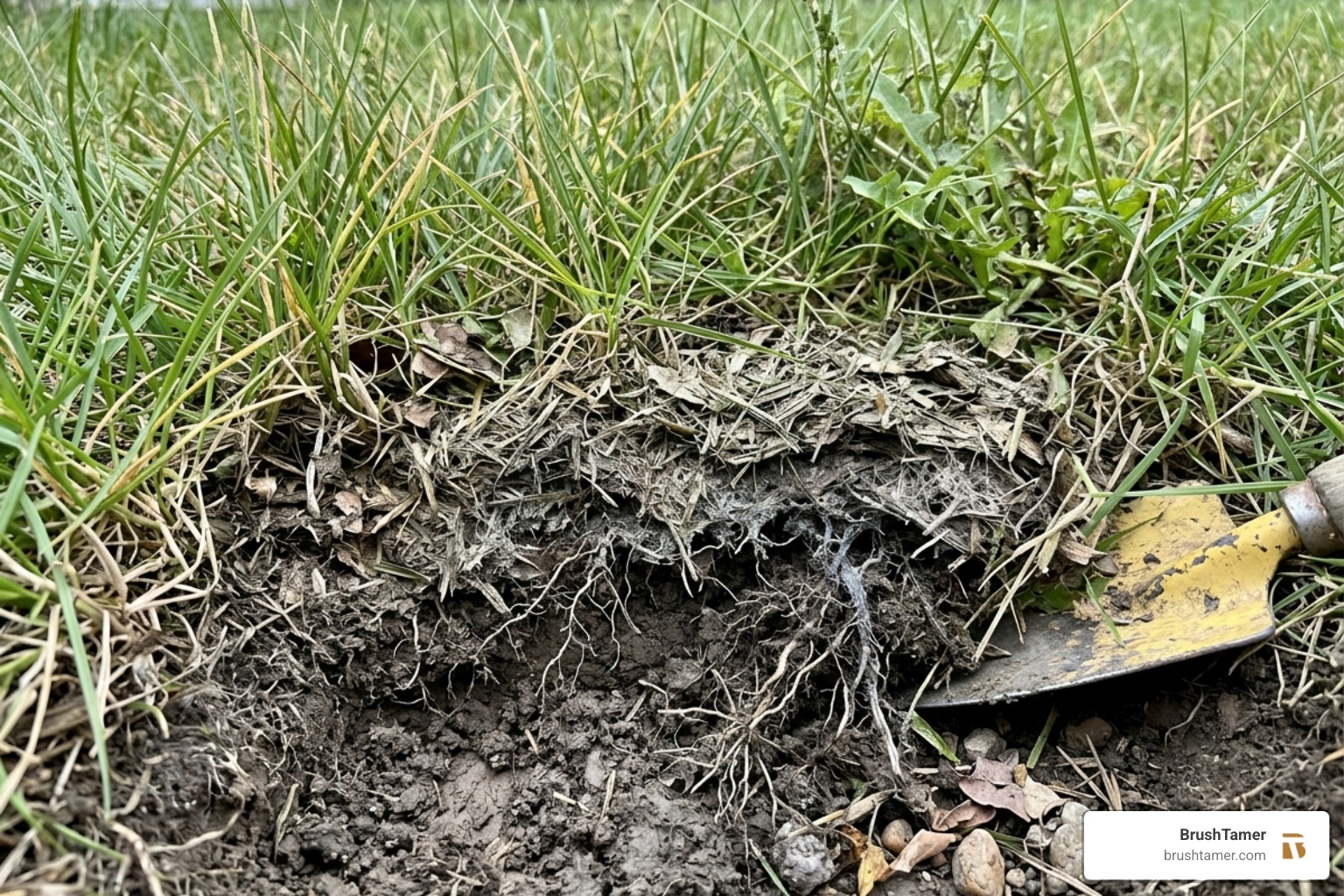
When grass grows too long, the blades eventually flop over, creating a thick, matted layer of organic debris known as “thatch.” This layer acts as a waterproof barrier that prevents oxygen, water, and nutrients from reaching the soil. This leads to “nutrient suffocation” and creates a breeding ground for fungal diseases like brown patch or dollar spot, which thrive in the trapped moisture. As explained in the article on why waiting too long to mow can damage your lawn, this damage is often permanent. Fixing overgrown land requires the specialized equipment and expertise that BrushTamer has provided since 2021.
The Myth of ‘No Mow May’ in the Midwest
While the “No Mow May” movement is popular, it can be disastrous for Midwest turfgrass. Most residential lawns consist of non-native grasses that do not provide high-quality pollen for bees. By the time June arrives, the grass is so tall that cutting it causes “lawn shock,” where more than one-third of the blades are removed at once. This severely weakens the root system, making the lawn susceptible to the summer heat of Indiana and Michigan. Consistent brush management services are far more effective for the ecosystem than a single month of neglect followed by traumatic cutting.
Invasive Species and Weed Infestations
Overgrown grass is an open invitation for invasive species like crabgrass, dandelions, and poison ivy. While your desirable grass is struggling for sunlight under its own weight, these hardy invaders thrive, producing thousands of seeds that can remain dormant in your soil for years. Once these weeds take over, they outcompete the grass for water and nutrients, eventually killing the lawn entirely. Reclaiming a yard from these invaders often requires professional land clearing services to remove the biomass and allow for a fresh start.
5. Physical Safety Risks: The Dangers of Overgrown Grass for Children and Pets
Tall grass conceals physical hazards such as rocks, fallen branches, and deep holes that cause severe injury to children and pets, while also obstructing motorist visibility at intersections. The “hidden trap” effect of overgrown vegetation is one of the most immediate dangers to family safety. What appears to be a soft field of green can hide lethal obstacles that are invisible to the naked eye until an accident occurs.
Hidden Obstacles and Trip Hazards
In the rural and suburban areas of Fort Wayne, Lafayette, and Valparaiso, tall grass easily hides large rocks, metal scrap, or abandoned equipment. For a child running through the yard or a pet chasing a toy, these hidden objects are a recipe for broken bones or deep lacerations. Beyond human injury, these hidden objects are catastrophic for equipment. Hitting a piece of rebar or a large stump with a standard mower can send metal shrapnel flying at high speeds, posing a deadly risk to the operator and bystanders. BrushTamer’s brush management services utilize heavy-duty forestry mulchers designed to handle these hazards safely, as detailed in Robert Heslip’s blog.
Visibility Obstructions for Motorists
If you own a corner lot or a property with a long driveway in cities like Grand Rapids or Elkhart, overgrown grass is a major liability. When vegetation at the edge of your property exceeds 12 inches, it can block the line of sight for motorists exiting driveways or navigating intersections. This obstruction makes it impossible to see small children on bicycles or pedestrians. Ensuring clear sightlines through regular brush management services is a fundamental duty of a responsible property owner to prevent tragic accidents.
Poisonous Plants and Skin Irritants
In the humid climates of Northern Indiana and Lower Michigan, poison ivy, stinging nettles, and giant hogweed frequently hide within tall grass. Because these irritants are obscured by the overgrowth, children and pets often walk directly through them, leading to painful skin rashes and allergic reactions. In some cases, the oils from these plants can be carried on pet fur into the home, affecting the entire family. Our heavy brush removal ultimate guide explains how our professional clearing process identifies and eliminates these irritants, restoring the safety of your outdoor living space.
Frequently Asked Questions about Overgrown Grass
How tall can grass grow before it becomes a legal issue in Indiana?
In most Indiana municipalities, including Elkhart, Mishawaka, and South Bend, the legal limit for grass and weeds is 10 inches. Once vegetation exceeds this height, you are in violation of local ordinances and subject to fines. In more rural areas, the limit may be 12 inches, but the fire and pest risks remain significant regardless of the specific legal threshold. BrushTamer provides the professional clearing needed to bring any property back into compliance quickly.
Can overgrown grass actually decrease my home’s appraisal value?
Yes, significantly. Real estate experts and appraisers agree that neglected landscaping can reduce a property’s value by up to 20%. It creates “negative curb appeal,” which deters potential buyers and suggests that the entire property has been poorly maintained. Investing in professional brush management services is one of the most cost-effective ways to protect and increase your property’s market value.
Why is mowing overgrown grass dangerous for standard equipment?
Standard residential mowers are engineered for grass under 6 inches. Attempting to mow tall grass can clog the cutting deck, overheat the engine, and snap drive belts. More importantly, tall grass hides “mower killers” like large rocks, stumps, or metal debris that can destroy blades and spindles instantly. For overgrowth exceeding 10 inches, professional brush hogging or forestry mulching from BrushTamer is the only safe and effective solution.
What are the primary health risks associated with tall grass in the Midwest?
The primary risks are tick-borne illnesses like Lyme disease and mosquito-borne viruses like West Nile. Tall grass provides the humid, shaded environment these pests need to survive and reproduce. Additionally, overgrown areas attract rodents that carry parasites and can cause respiratory issues through the spread of allergens and mold spores.
Conclusion
The dangers of overgrown grass are a serious threat to your health, your finances, and your physical safety. From the hidden nests of disease-carrying ticks to the volatile fuel loads that invite fire, the cost of neglect far exceeds the cost of professional maintenance. In the aggressive growing conditions of Northern Indiana and Lower Michigan, a lawn can transition from a minor eyesore to a major liability in just a few weeks.
At BrushTamer, we have been the region’s trusted land management specialists since 2021. Whether you are in South Bend, Elkhart, Grand Rapids, or Kalamazoo, we provide the industrial-grade land clearing services you need to reclaim your property. We don’t just cut grass; we eliminate hazards and restore the health of your land using environmentally responsible forestry mulching techniques.
Don’t let your property become a hazard or a target for municipal fines. Contact BrushTamer today to restore the safety, beauty, and value of your land with professional brush management you can trust.