
What Habitat Restoration Projects Do and Why They Matter
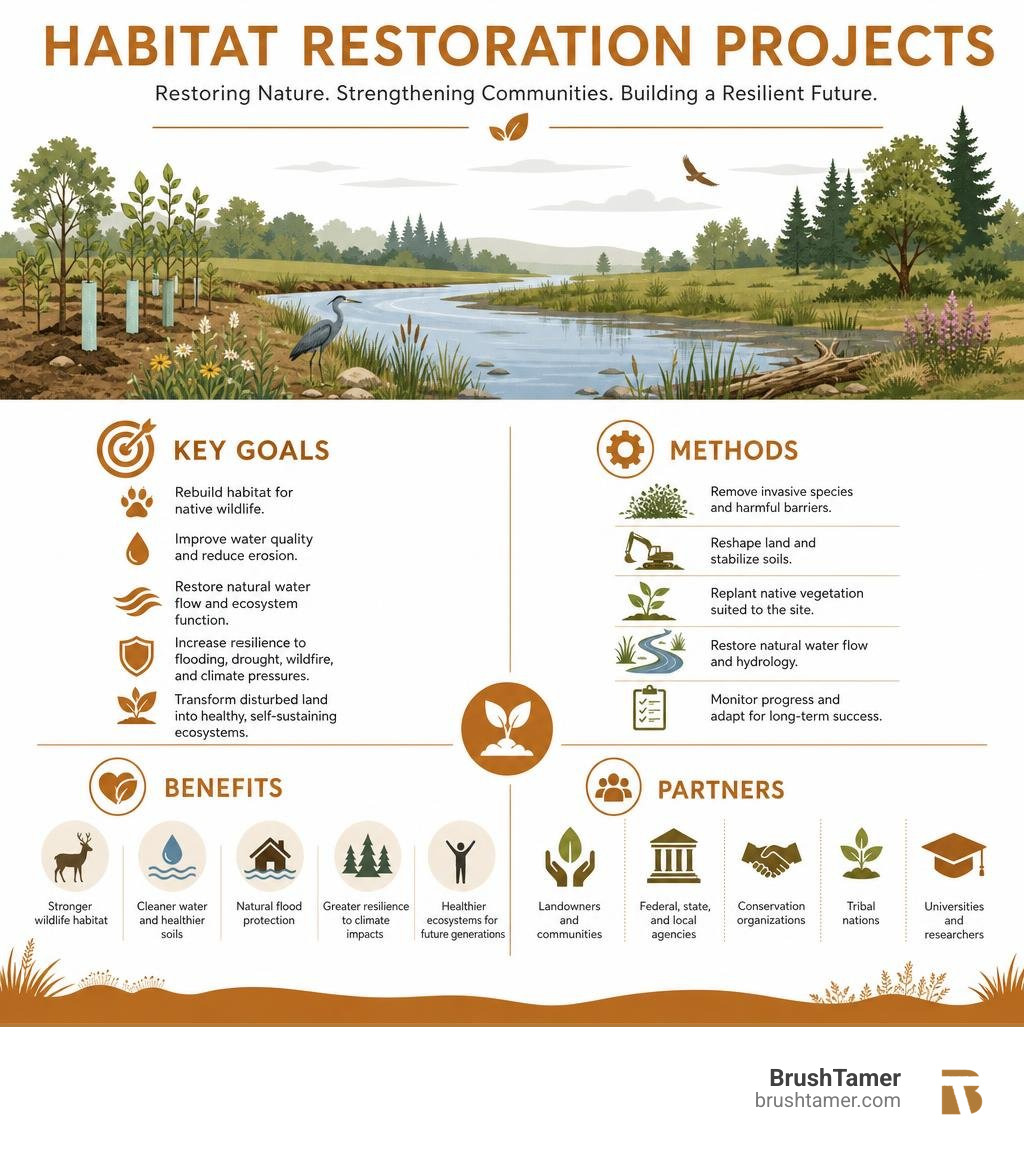
Habitat restoration projects repair damaged land and water systems so native plants, wildlife, and natural processes can return to full ecological function. They systematically restore wetlands, upland forests, rivers, prairies, floodplains, and coastal marshes by removing artificial barriers, controlling aggressive invasive plant growth, re-engineering degraded ground, and replanting locally appropriate native flora.
At their core, these comprehensive initiatives aim to:
- Rebuild critical food sources, structural shelter, and migratory travel routes for native wildlife.
- Improve regional water quality while preventing severe topsoil erosion and sediment runoff.
- Restore natural hydrological flow regimes for aquatic life, headwater streams, and floodplains.
- Enhance landscape resilience against severe environmental stressors like flooding, prolonged drought, and wildfires.
- Reclaim neglected, overgrown, former agricultural, or industrially disturbed ground into high-functioning ecosystems.
The scope of habitat restoration projects can range from removing obsolete dams that block fish passage to managing degraded streambank vegetation before native planting begins. Nationally, organizations like NOAA have supported more than 3,700 restoration projects across the United States since 1991, highlighting the expanding role of ecological stewardship in modern land management.
For private property owners across Northern Indiana and Lower Michigan, successful habitat restoration projects begin with a comprehensive site assessment that identifies native canopy cover, invasive species pressure, drainage patterns, and soil conditions. Professional clearing and ground preparation are critical during this phase because improper earthmoving tactics can destroy sensitive topsoil, accelerate the spread of invasive weed seeds, or eliminate valuable habitat structures that should be preserved.
I’m Leon Miller, founder of BrushTamer, a Plymouth, Indiana land-management company serving property owners across Northern Indiana and Lower Michigan. Through specialized hands-on operations in heavy-duty brush clearing, stump removal, site preparation, and forestry mulching, my team and I assist property owners across Knox, IN, LaPorte, IN, and surrounding regions in transforming overgrown acreage into healthy, balanced habitats designed for long-term ecological resilience.
Core Goals and Ecosystems in Habitat Restoration Projects
Habitat restoration projects aim to re-establish the self-sustaining structure, biodiversity, and natural ecological functions of degraded landscapes. By systematically reversing environmental damage caused by industrial development, agricultural runoff, and invasive plant infestations, these initiatives recover vital ecosystem services such as clean water filtration, natural flood defense, nutrient cycling, and topsoil preservation.
When evaluating regional sites across Northern Indiana and Lower Michigan—from South Bend, IN to Kalamazoo, MI—land managers focus on creating balanced conditions where native fauna and flora can naturally recover. Federal programs like the U.S. Fish and Wildlife Service (USFWS) Partners for Fish and Wildlife Program have assisted over 25,000 private landowners in completing more than 40,000 projects since 1987. Similarly, national databases like the NOAA Restoration Atlas track thousands of coastal and inland initiatives, demonstrating how structured land management restores critical wildlife habitats.
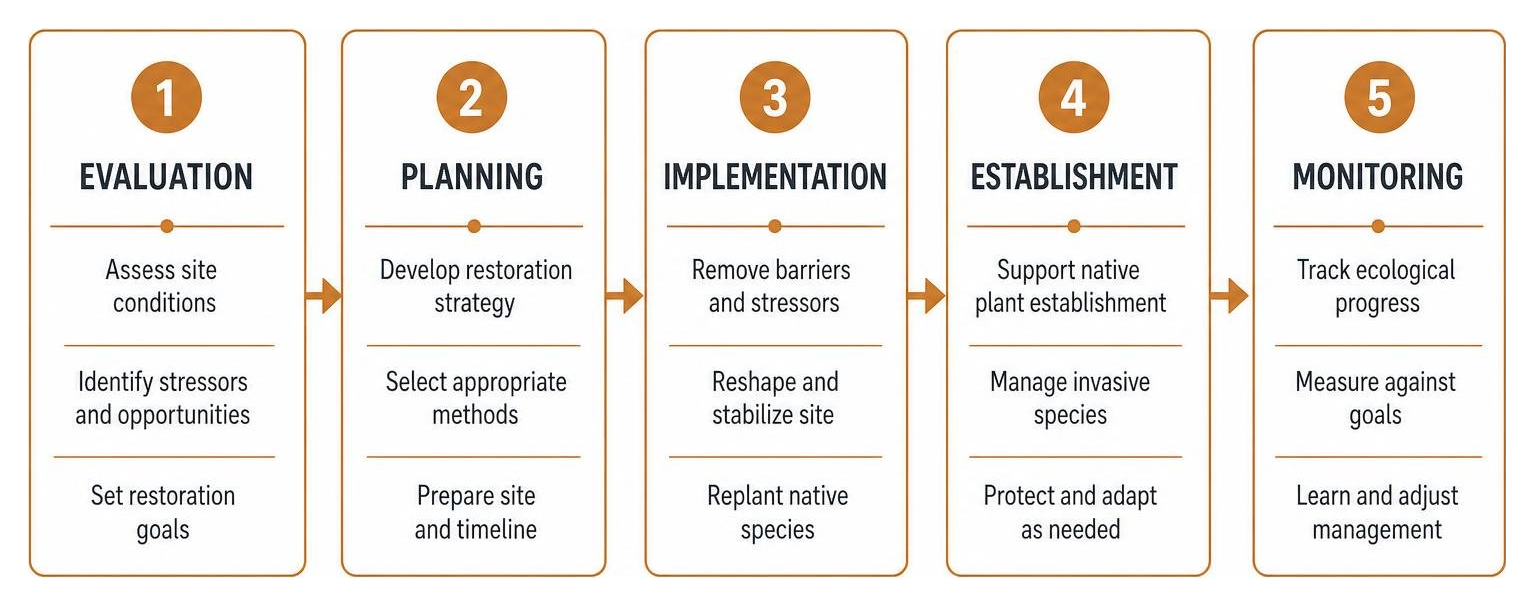
To achieve lasting results, habitat restoration projects should follow recognized ecological restoration standards that combine science-based planning, field execution, and ongoing monitoring.
Target Ecosystems Across Regions
The primary ecosystems targeted in habitat restoration include freshwater wetlands, riparian corridors, headwater meadows, native prairies, oak savannas, and low-gradient floodplains. In our regional service area spanning Plymouth, IN, Elkhart, IN, and St. Joseph, MI, targeted restoration focuses heavily on restoring degraded wetland basins, riverbank buffers, and fragmented hardwood forests.
- Freshwater Wetlands & Marshes: Over 35% of native wetlands in states like Vermont have been historically lost or drained due to agricultural ditching and filling. Wetland restoration restores natural water storage, recharges underground aquifers, and traps excess nutrients before they reach local watersheds like the Kankakee River basin.
- Riparian Zones & River Corridors: Restoring vegetation along waterways like the St. Joseph River or Elkhart River stabilizes eroding banks, lowers ambient water temperatures, and provides critical migration corridors for native aquatic and terrestrial wildlife.
- Oak Savannas & Native Prairies: Historically dominant across Northern Indiana and Southern Michigan, prairie and savanna landscapes require active brush management and selective clearing to suppress aggressive woody encroachment by species like Autumn Olive and Buckthorn.
- Coastal & Estuarine Marshes: Initiatives like Restoring tidal wetlands in Siletz Bay demonstrate how removing artificial dikes allows natural tidal flows to rehabilitate delicate saltwater and brackish habitats.
Proper planning for habitat restoration projects requires aligning site preparation with historic soil profiles, native plant communities, drainage patterns, and long-term maintenance goals. Property owners interested in site dynamics can consult The Definitive Guide to Habitat Restoration for insights on balancing native vegetation with structural land management.
Ecological and Economic Benefits
Habitat restoration projects deliver profound ecological stability and tangible economic growth by generating local employment, increasing property resilience, and expanding natural defense infrastructure against extreme weather events. Habitat restoration projects can support local collaboration among equipment operators, environmental specialists, land managers, and property owners while improving long-term land resilience.
Ecologically, these initiatives provide:
- Enhanced Biodiversity & Wildlife Support: Restored habitats protect endangered or threatened species, from migrating waterfowl to native pollinators. In Minnesota alone, non-profit trusts have successfully restored over 12,000 acres of critical wildlife habitat.
- Flood Attenuation & Water Quality: Reconnecting historic river channels allows floodwaters to spread out across natural floodplains, reducing property damage in low-lying residential areas in communities like Valparaiso, IN and Grand Rapids, MI.
- Carbon Sequestration: Healthy wetland soils and expanding hardwood canopies trap carbon efficiently, helping offset regional emissions across working rural landscapes.
- Community Resilience: Restored rivers, wetlands, and floodplains can support recreation, improve stormwater performance, and strengthen natural infrastructure.
Integrating professional land clearing with long-term ecological goals ensures private lands remain highly productive while serving broader wildlife needs. Property owners can explore our comprehensive approach to Forestry and Wildlife Management to understand how targeted clearing supports game species and biodiversity.
Technical Execution and Key Restoration Methods
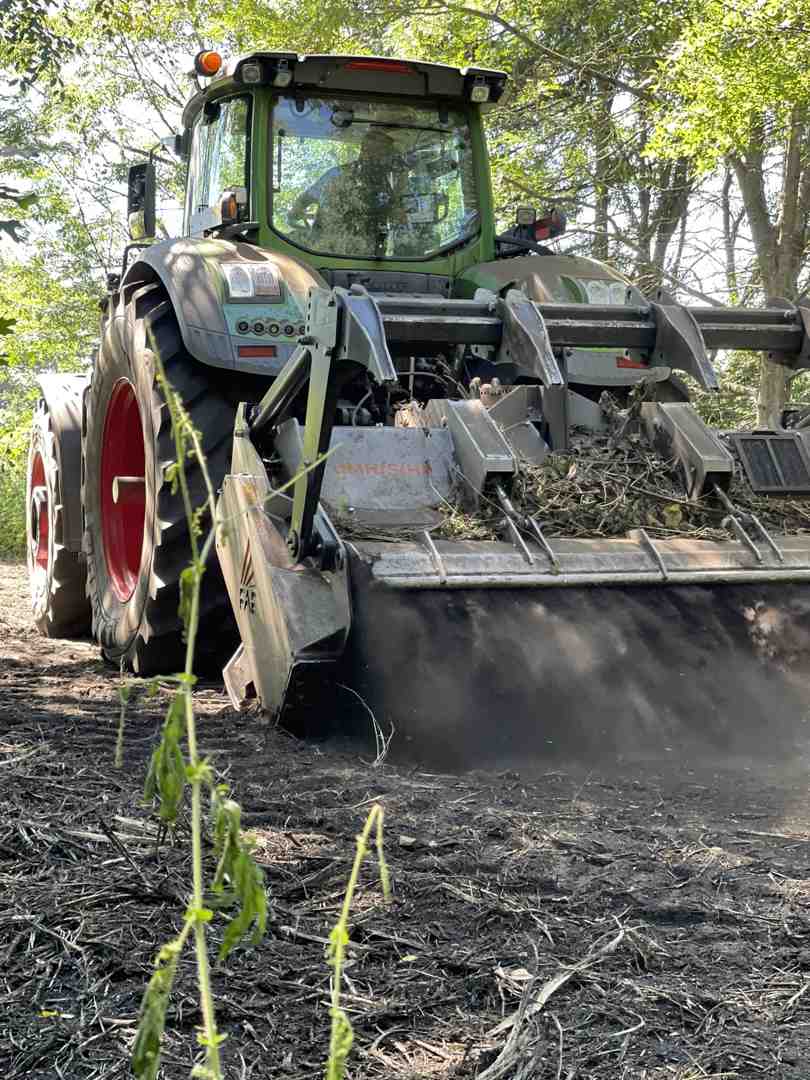
Executing successful habitat restoration projects requires commercial-grade machinery, detailed ecological site analysis, and specialized earthmoving techniques to correct physical terrain damage. The primary technical phase involves removing physical barriers, eliminating invasive brush monocultures, re-engineering natural hydrology, and preparing stable seedbeds for native planting.
When working across complex sites in Niles, MI, Warsaw, IN, or Fort Wayne, IN, professional land managers utilize heavy-duty equipment like specialized forestry mulchers and tracked excavators. BrushTamer’s trained operators use specialized equipment to support habitat restoration projects with precise clearing, reduced soil disturbance, and careful erosion control.
Key Restoration Methods for Habitat Restoration Projects
The core technical methods used in modern ecological restoration include dam removals, low-tech process-based structures, levee notching, invasive plant eradication, and stream channel re-alignment.
- Dam Removal and Culvert Upgrades: Across the United States, over 500,000 artificial dams fragment river systems. Removing obsolete structures re-establishes natural sediment movement and allows migratory aquatic species to reach upstream spawning grounds.
- Beaver Dam Analogs (BDAs) & Post-Assisted Log Structures (PALS): Low-tech methods mimic natural beaver activity to slow down rushing stream waters. For instance, the Haskell Peak Meadows headwater restoration project successfully installed over 500 BDAs and log structures across 229 acres of high-priority meadow and fen habitat to raise groundwater levels and capture beneficial sediment.
- Levee Breaching & Notching: Cutting channels through historical agricultural levees allows rivers to access their natural floodplains during wet seasons, suppressing drought-tolerant weeds through controlled, natural inundation.
- Mass Native Revegetation: Re-establishing plant cover is vital following structural earthwork. As seen in the landmark Klamath River revegetation case study, restoration teams sowed millions of native seeds alongside 76,000 trees, shrubs, and bunchgrass plugs, 28,000 acorns, and over 4,200 milkweed plants to stabilize 2,200 acres of exposed riverbed.
- Invasive Brush Management: Overgrown invasive vegetation like Autumn Olive, Buckthorn, and Reed Canary Grass quickly smothers native saplings. Hiring expert contractors to perform targeted mechanical clearing is critical to preventing invasive reinvasion. Learn more about strategic vegetation control by reviewing our guide to vegetation management for long-term habitat health.
Agricultural and Commercial Land Conversion
Habitat restoration projects on retired agricultural land, commercial properties, or disturbed sites often require systematic soil evaluation, infrastructure removal, and ground stabilization before native habitat can recover. In retired cranberry bogs, old agricultural farms, and heavily disturbed commercial acreage, legacy ditching networks and compacted soils block natural ecological recovery.
Major ongoing conversion initiatives provide excellent blueprints for technical site transformation:
- Retiring Cranberry Bogs: The Century Bog restoration project details highlight the active conversion of 72 acres of retired cranberry farmland, restoring 12,300 feet of Red Brook stream channel and 47 acres of native upland habitat to benefit 56 species of conservation concern.
- Farmland Rewilding & Vernal Pools: Industrial and agricultural sites often require extensive earthmoving to construct vernal pools—seasonal wetlands free of predatory fish that serve as essential amphibian breeding sites. A notable example includes a Raritan River 112-acre restoration project, which planted 50,000 native trees and shrubs while establishing 3 acres of protective vernal pools on former farmland.
Property owners converting old pastures or commercial acreage in locations like Goshen, IN, Granger, IN, or Portage, MI must ensure site preparation avoids soil degradation. We recommend partnering with professional land clearing specialists and reviewing Eco-Friendly Land Clearing strategies to maintain topsoil integrity during site prep.
Project Leadership, Climate Resilience, and Success Metrics

Successful habitat restoration projects are led through collaborative partnerships between Indigenous tribes, public natural resource agencies, non-profit land trusts, and private landowners. Long-term ecological resilience relies on combining Traditional Ecological Knowledge (TEK) with modern scientific monitoring, ensuring restored landscapes withstand climate impacts like severe seasonal flooding and extended heatwaves.
In our service footprint across Northern Indiana and Southern Michigan, multi-agency partnerships help coordinate the planning, permitting, site preparation, and long-term stewardship needed to rehabilitate degraded working lands and stream buffers.
Indigenous Leadership and Public-Private Partnerships
Indigenous communities play a foundational role in leading large-scale habitat restoration projects by combining generations of land stewardship knowledge with modern science. Organizations like the Yurok Tribe and Snoqualmie Indian Tribe lead major river corridor and forestry initiatives, demonstrating how cultural values enhance ecological outcomes.
Public-private partnerships are equally vital for reconnecting fragmented landscapes across state and county boundaries:
- Public-Private Coalitions: Initiatives like the Great Valley Grasslands State Park floodplain reconnection show how a 15-year collaborative effort between state authorities, non-profits, and tribal leaders reconnected the San Joaquin River to over 220 acres of historic floodplain.
- Private Landowner Collaborations: Because much of the Midwest is privately owned, programs like the USFWS Partners for Fish and Wildlife Program help private landowners coordinate voluntary habitat restoration projects across working acreage.
Volunteer and Community Involvement in Habitat Restoration Projects
Community participation fuels long-term site maintenance, data collection, and public awareness for ecological projects, ranging from volunteer planting days to structured scientific monitoring.
Key community engagement pathways include:
- Schoolyard Habitat Programs: Educational institutions install outdoor learning classrooms, native pollinator gardens, and watershed buffer strips, giving students hands-on ecology experience while protecting drainage basins.
- Volunteer Planting and Invasive Removal Days: Local watershed councils organize workdays to clear invasive brush and plant native saplings along municipal stream banks in Mishawaka, IN and Battle Creek, MI.
- Citizen Science & STEAM Education: Programs like Girls in Science collect groundwater data, monitor vegetation transects, and track soil composition to establish baseline data for project managers.
Landowners planning habitat restoration projects can review our Vegetation Management Ultimate Guide for professional strategies on invasive brush control, selective clearing, and long-term plant stewardship.
Measuring Project Success and Overcoming Obstacles
Measuring the success of habitat restoration projects requires multi-year physical, biological, and hydrological tracking. Key metrics include native plant survival rates, groundwater levels, stream temperature fluctuations, and indicator species counts.
| Monitoring Dimension | Primary Key Performance Indicator | Field Measurement Method |
|---|---|---|
| Hydrological Function | Groundwater elevation & channel aggradation | Continuous piezometer well tracking & stream gauge readings |
| Vegetation Health | Native species canopy cover vs. invasive cover | Fixed quadrat transects & aerial drone mapping |
| Wildlife Recovery | Population density of indicator species | Electrofishing count, bird point-counts & aquatic sampling |
| Soil Stability | Topsoil retention & sediment buildup | Erosion pins & cross-sectional channel elevation surveys |
Main obstacles encountered during project execution include:
- Aggressive Invasive Regrowth: Invasive species like Reed Canary Grass re-colonize freshly cleared beds if mechanical control and native overseeding are omitted.
- Wildlife Herbivory: High deer populations browse young native saplings, making deer exclusion fencing essential during initial growth years.
- Permitting and Landowner Delays: Complex hydrological re-engineering requires engineering permits, flood impact modeling, and multi-year stakeholder alignment.
Frequently Asked Questions
What is the main objective of ecological restoration?
The main objective of ecological restoration is to assist in the recovery of an ecosystem that has been degraded, damaged, or destroyed. This involves re-establishing historical natural hydrology, suppressing non-native invasive plants, reintroducing native vegetation, and repairing fragmented soil structures so the habitat can independently support native wildlife, improve regional water quality, and withstand ongoing environmental stress.
Who typically manages habitat restoration projects?
Habitat restoration projects are typically managed through partnerships among government agencies, Indigenous stewards, conservation organizations, private landowners, and professional land management contractors. These partnerships define project goals, coordinate site preparation, guide native revegetation, and monitor long-term habitat recovery.
How do restored landscapes help fight climate change?
Restored landscapes fight climate change by serving as natural carbon sinks and biological buffers against extreme weather events. Healthy freshwater wetlands, organic floodplains, and dense native forests capture and store high amounts of atmospheric carbon dioxide. Additionally, restored floodplains absorb high storm runoff to prevent severe regional flooding, while healthy headwaters release stored water slowly during summer heatwaves to mitigate local drought impacts.
Conclusion
Successful habitat restoration projects require generational commitment, sound ecological design, and rigorous physical site preparation. From re-establishing historic wetland hydrology to suppressing dense invasive brush across Midwest prairies, restoring working land restores critical natural infrastructure, protects endangered species, and strengthens local communities against shifting environmental pressures.
Achieving lasting success begins with working alongside experienced, fully equipped land management professionals who understand how to prepare terrain without destroying delicate ecological features. At BrushTamer, founded in 2021, we specialize in delivering precision land management, brush clearing, and forestry mulching services across Northern Indiana and Southern Michigan, helping private landowners and project leaders in South Bend, IN, Kalamazoo, MI, Elkhart, IN, and surrounding communities bring their conservation vision to life.
If you are planning habitat restoration projects on private acreage, overgrown land, or commercial property, contact BrushTamer today to discuss the right site preparation strategy for your land. Our team can help you clear invasive vegetation, prepare terrain for native revegetation, and bring your restoration vision back to earth.