
Orchard Removal Michigan: What Landowners Need to Know
Orchard Removal Michigan projects involve more than cutting down old fruit trees. A proper removal plan accounts for local permits, soil and drainage protection, tree roots and stumps, disease concerns, and a responsible plan for wood and brush.
For a quick answer, most Michigan orchard removals follow this basic path:
- Assess tree health, orchard layout, access, drainage, and the property’s next use.
- Check township zoning, wetland limits, and soil-erosion requirements before disturbing land.
- Remove trees with equipment suited to the tree size, density, and ground conditions.
- Decide whether stumps and roots should be ground, grubbed, or left in place.
- Reuse or process wood and brush into mulch, firewood, chips, or other approved materials.
- Grade, protect, and prepare the soil for replanting, another crop, pasture, or development.
Michigan owners often remove orchards because trees are aging, yields are falling, disease has spread, or the land is being converted to a more productive use. The right approach protects the value of the land rather than simply leaving behind stumps, compacted soil, and unmanaged debris.
I am Leon Miller, owner of BrushTamer, a land-management and forestry-mulching company founded in 2021. My work in Orchard Removal Michigan planning, brush clearing, stump removal, and site preparation helps property owners turn overgrown or retired orchard ground into land ready for its next purpose.
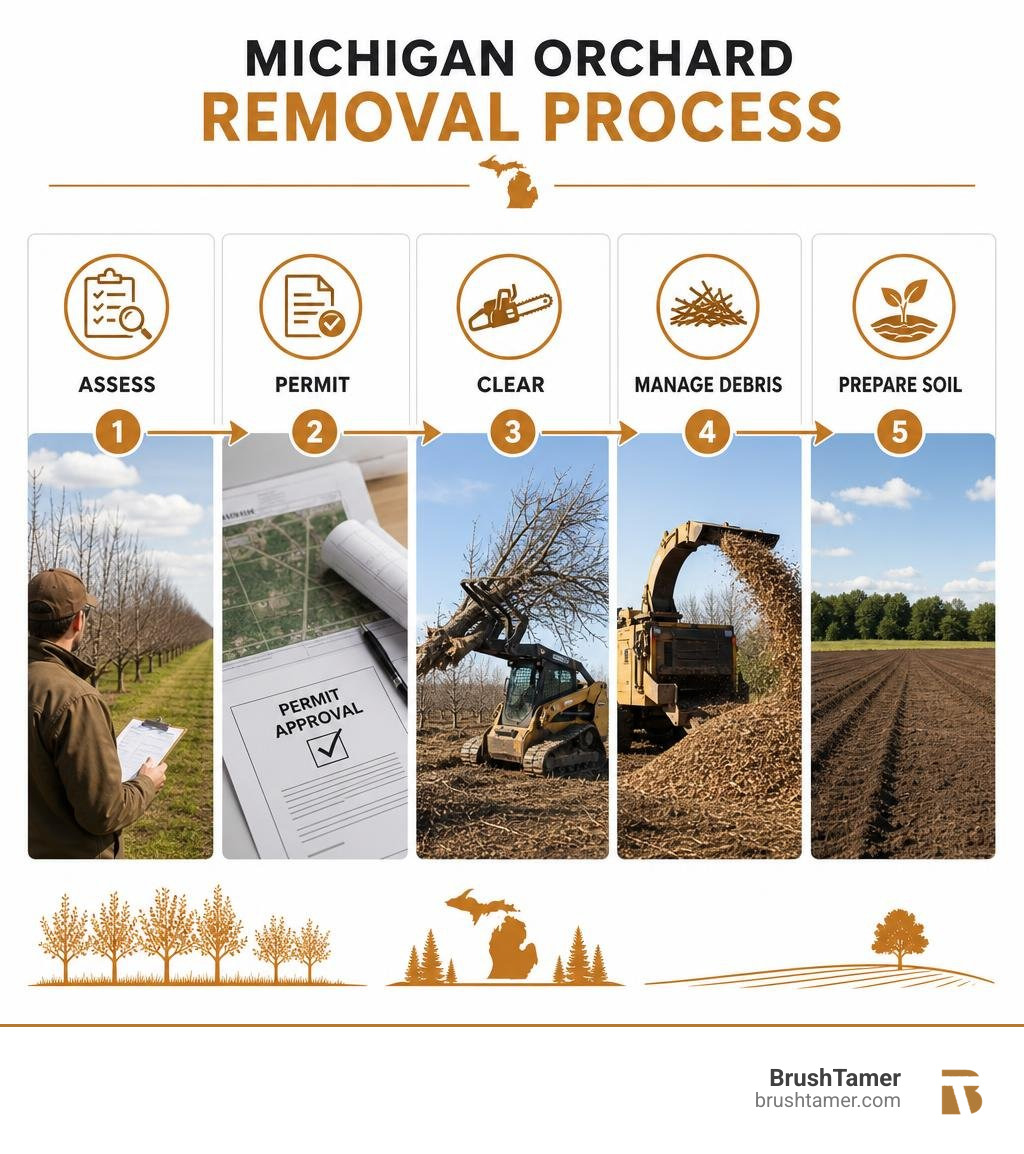
Essential Guide to Orchard Removal Michigan Regulations and Permits
Before beginning an Orchard Removal Michigan project, landowners should determine which local zoning, soil-erosion, wetland, and environmental requirements apply to the property.
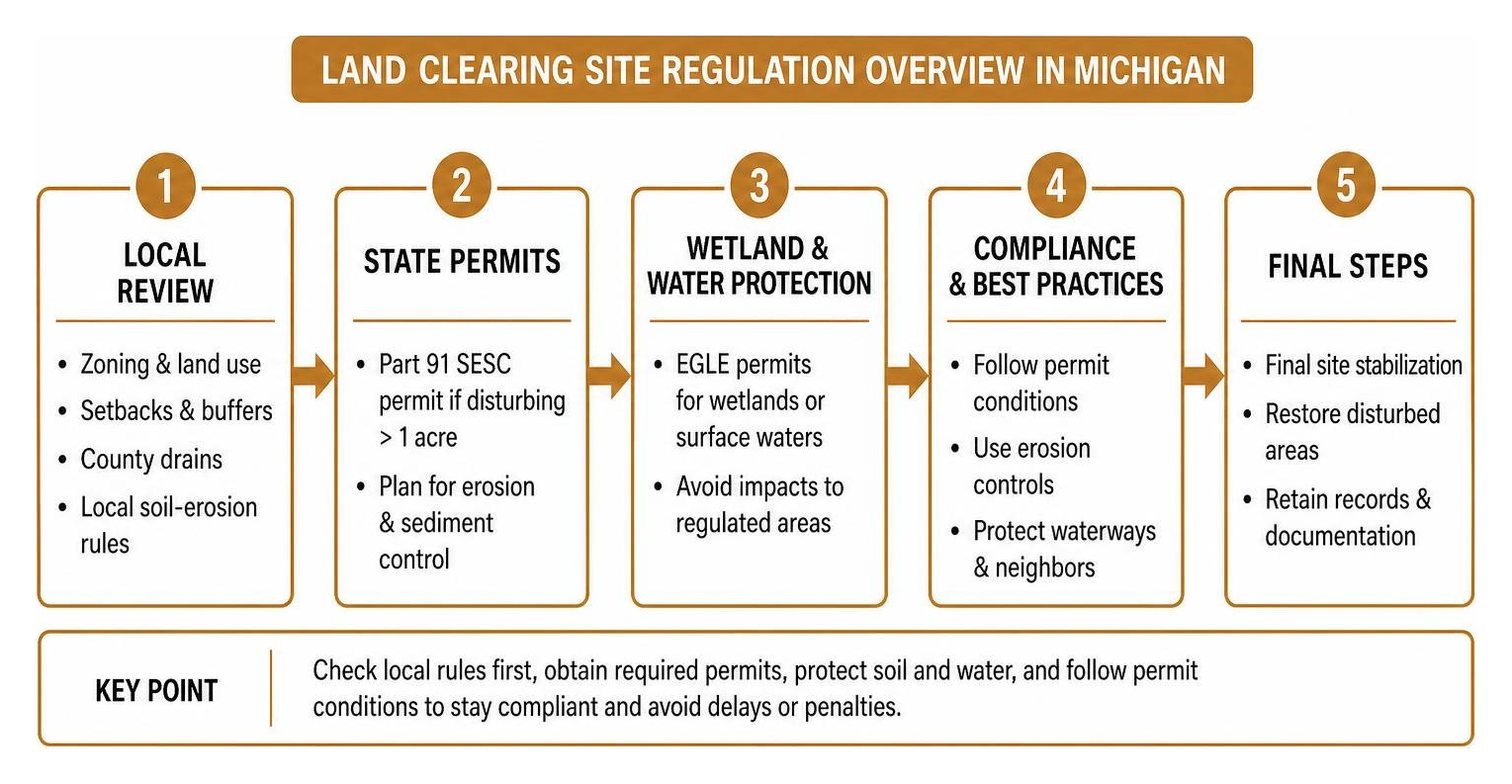
Before beginning work in areas like Grand Rapids, Kalamazoo, or Benton Harbor, landowners must ensure soil disturbance complies with state and local codes. Under Part 91 of Michigan’s NREPA, a Soil Erosion and Sedimentation Control permit is generally required when an earth change disturbs one or more acres or occurs within 500 feet of a lake or stream.
Additionally, the Michigan Department of Environment, Great Lakes, and Energy (EGLE) regulates work near wetland boundaries. Historical fruit orchards in Van Buren, Allegan, or Berrien counties frequently border protected wetland areas or natural swales. Operating heavy equipment without confirming regulated boundaries can create environmental violations, project delays, and required remediation. Early site planning ensures property boundary verification, subsurface agricultural drain compliance, and proper permitting. For Michigan-specific guidance, review EGLE’s wetland permitting requirements before clearing, grading, stump removal, or other soil-disturbing work near regulated wetlands.
Understanding Environmental Considerations and Disease Management
Environmental planning for an Orchard Removal Michigan project should account for fruit-tree disease, soil-borne pathogens, chemical residues, drainage, and surrounding sensitive areas.
Old orchards frequently harbor persistent diseases such as fire blight, black rot, or phytophthora root rot. Clearing trees without proper tool sanitation and biomass management can spread fungal spores across neighboring acreage. When disease is present, removal methods, equipment sanitation, biomass handling, and project timing should be planned to reduce the risk of moving infected material into unaffected areas.
Legacy orchards also carry residual agricultural chemicals from decades of routine spraying. Soil disturbance during land conversion must be carefully managed to minimize dust drifting and soil movement into sensitive watersheds. Landowners planning crop transitions can review our guide on Repurposing Blueberry Fields for practical insights on soil testing, organic matter incorporation, and seedbed preparation.
Alternatives to Full Removal: Selective Thinning and Replanting
Landowners can choose selective thinning, orchard renovation, or high-density replanting as viable alternatives to complete orchard removal when portions of the grove remain productive.
When only specific blocks of a grove are declining, selective thinning eliminates unproductive or diseased rows while improving sunlight penetration and airflow for healthier trees. Many modern fruit growers transition from traditional wide-spaced plantings to high-density dwarf varieties using specialized rootstocks designed to support higher-density planting and improved orchard productivity.
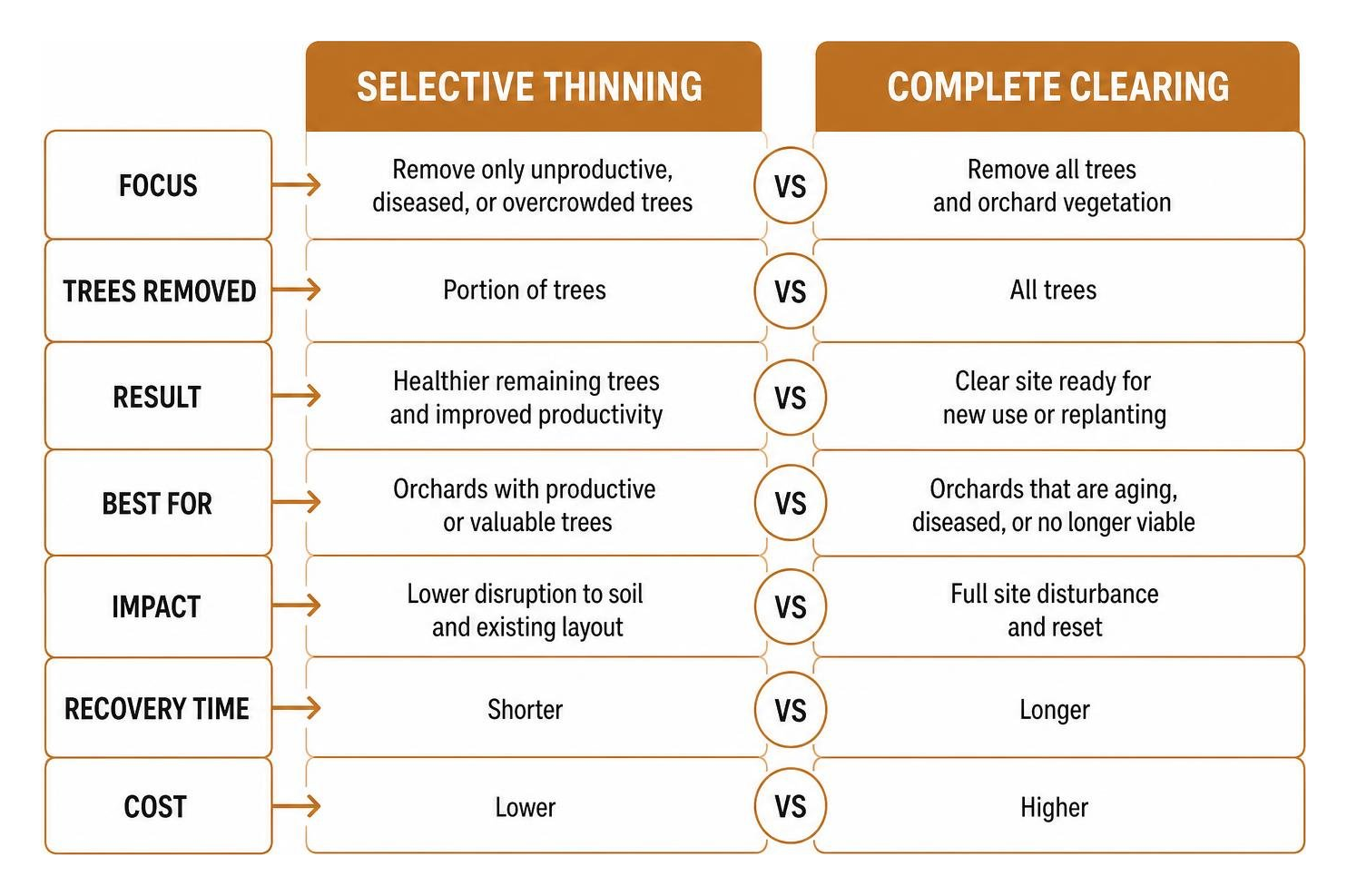
Selective clearing establishes precise new planting lanes while preserving productive blocks. Landowners exploring partial conversion can read our tips on Pruning Blueberry Bushes and examine our Detailed Guide To Agricultural Land Conversion to decide between row thinning and full site clearing.
Key Reasons and Timelines for Clearing Michigan Orchards
Michigan landowners typically clear orchards due to aging fruit trees, declining crop yields, shifting agricultural markets, crop rotation strategies, or land repurposing for new agricultural uses.
As commercial fruit trees age, production can decline while pruning, pest management, harvesting, and tree maintenance become increasingly demanding. Old trees also become susceptible to structural limb failure and heart rot, turning standing blocks into operational liabilities. Furthermore, market shifts across Southwest Michigan—from Holland down through St. Joseph, Paw Paw, and Niles—often prompt growers to transition away from labor-intensive fruit crops toward row crops, pasture land, solar farms, or high-yield specialty crops.
When fruit trees reach the end of their productive lifespan, leaving declining rows standing can encourage borers, invasive vegetation, and unmanaged brush. Landowners looking to transition out of perennial fruit production often explore our specialized Services/Blueberry Orchard Removal solutions to reclaim productive acreage cleanly and quickly.
Typical Timeline for Commercial Orchard Removal Michigan Projects
The timeline for an Orchard Removal Michigan project varies by acreage, tree size, soil conditions, access, and weather; safely frozen ground can sometimes improve equipment access and reduce rutting.
The execution timeline for an Orchard Removal Michigan project follows several distinct phases:
- Site Assessment and Permitting (1–2 Weeks): Conducting property boundary verification, reviewing soil maps, identifying underground utilities, checking tile drain lines, and securing local township or soil conservation permits.
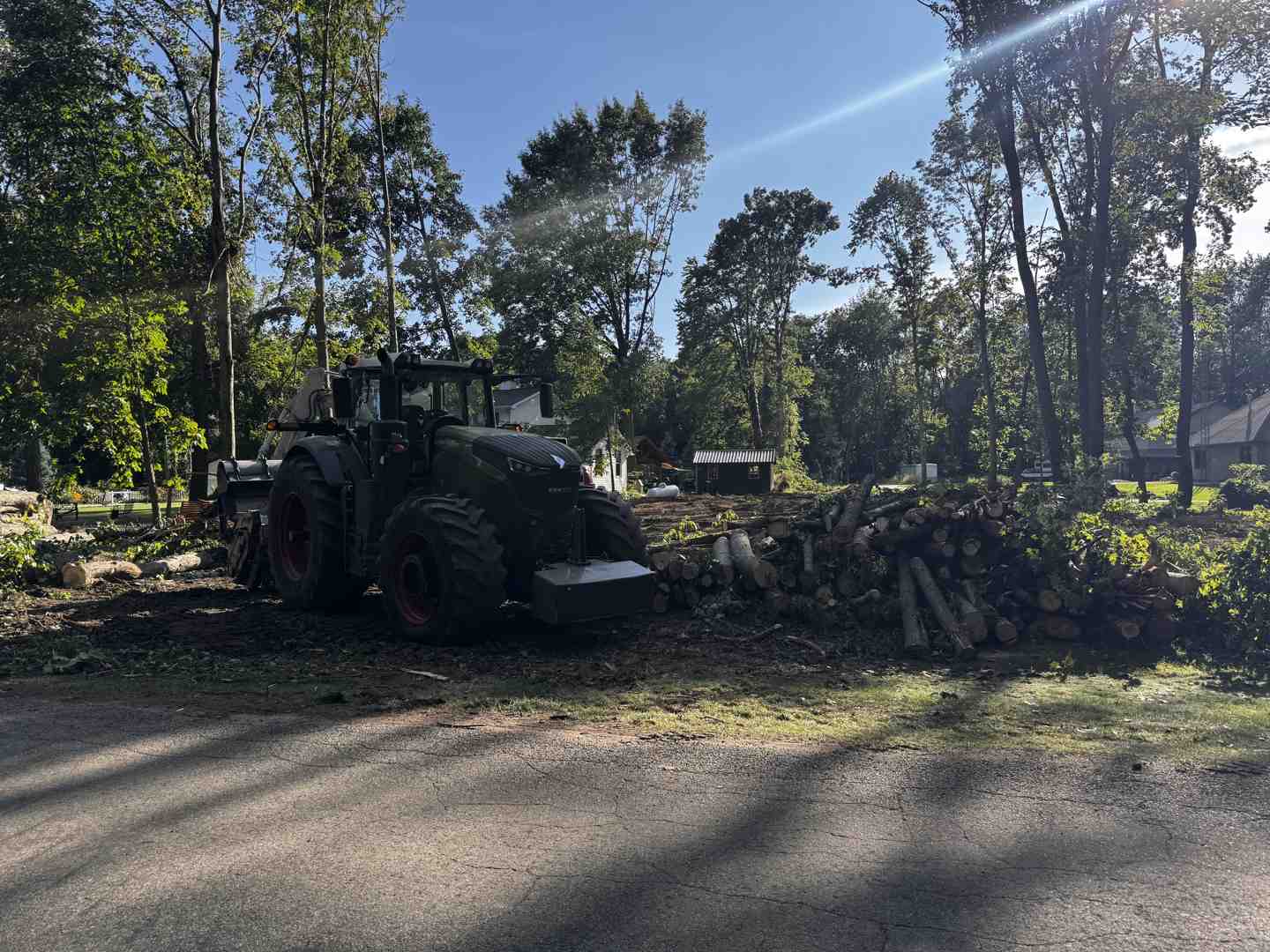
- Vegetation Knockdown and Mulching (2–5 Days): Utilizing high-horsepower forestry mulchers and excavators to knock down standing trees, chip limbs, and shred above-ground brush into manageable ground cover.
- Subsurface Root Extraction and Grubbing (3–7 Days): Utilizing specialized root rakes and excavator thumbs to pull stump bases and deep root balls out of the ground, preventing future soil sinkholes, root sprouts, and equipment snagging during future tillage.
- Final Grading and Soil Stabilization (1–3 Days): Smoothing the terrain, grading high spots, incorporating mulched biomass into topsoil where appropriate, and establishing cover crops or grass seedbeds.
Executing orchard clearing during late fall or frozen winter conditions offers significant practical advantages across Michigan farmland. Firm or frozen ground can reduce rutting and surface compaction, but existing drainage tile should still be located and considered before heavy equipment enters the site.
Cost Breakdown and Financial Resources for Michigan Landowners
The scope of an Orchard Removal Michigan project depends on acreage, tree density, trunk size, root-removal requirements, accessibility, terrain, and equipment needs.
Every commercial orchard clearing project includes site-specific variables that determine the equipment, sequence, and level of site preparation required. Rather than relying on rigid per-acre estimates, professional site evaluations consider several key operational factors:
- Tree Size and Trunk Caliper: Mature, full-standard apple or sweet cherry trees require significantly heavier machinery and processing time than modern high-density dwarf bush orchards.
- Root Grubbing vs. Surface Mulching: Projects requiring complete subterranean root extraction for immediate row-crop planting demand deep root raking, whereas surface forestry mulching focuses on above-ground biomass reduction.
- Terrain, Drainage, and Soil Conditions: Soft, wet soil or rolling topography requires specialized tracked machinery to prevent equipment entrapment, deep rutting, and severe erosion.
- Debris Processing Requirements: On-site forestry mulching processes woody material where it is cleared, reducing the need for loading, hauling, and off-site disposal.
- Infrastructure Teardown: Properties containing old farm structures, trellis systems, post-and-wire framing, or legacy irrigation lines require additional mechanical teardown and sorting.
Landowners looking for a complete overview of clearing methodologies and factors can consult our comprehensive resource on Land Clearing Services Complete Guide.
Sustainable Practices for Debris Disposal and Wood Repurposing
Sustainable debris management after orchard removal involves forestry mulching, stump grinding, root raking, and repurposing waste into firewood, biochar, or usable timber products.
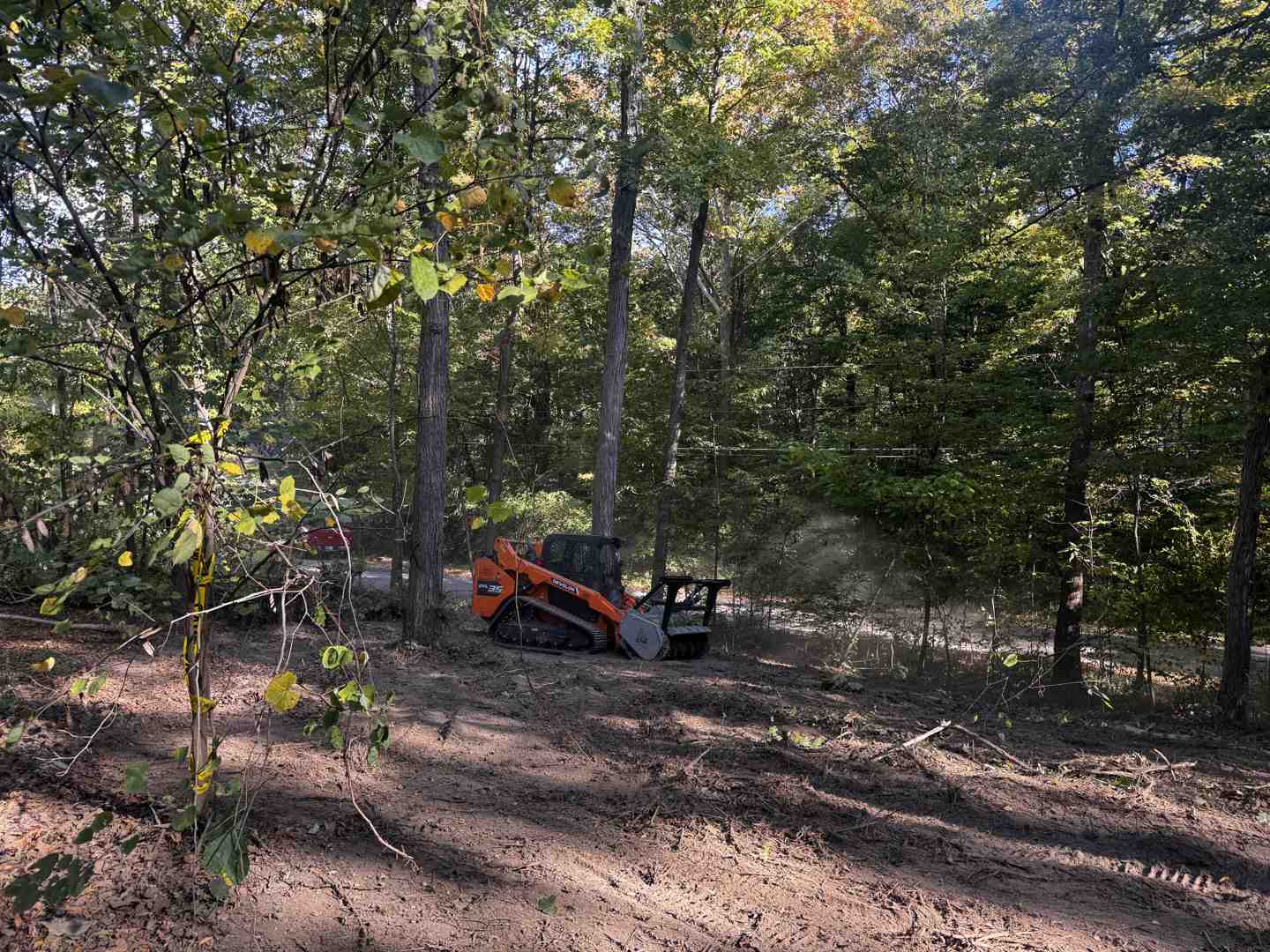
Rather than burning waste in hazardous open piles, modern clearing relies on eco-friendly forestry mulching. At BrushTamer, our mulching equipment shreds standing trees, branches, and stumps into rich organic ground cover in a single pass.
Key ecological benefits include:
- Erosion Control: Protective mulch guards topsoil against wind and heavy rain in Cassopolis and Dowagiac.
- Soil Enhancement: Decomposing mulch builds organic matter, improving moisture retention.
- No Burn Permits: On-site processing bypasses local open-burning restrictions and smoke issues.
- Topsoil Preservation: Forestry mulching leaves underlying topsoil intact unlike traditional bulldozing.
Compare methods in our guide on Land Clearing Vs Forestry Mulching.
Repurposing Orchard Wood, Brush, and Farm Structures
Harvested orchard wood, brush, and old agricultural structures can be recycled into firewood, biochar, woodchips, and scrap material while safely dismantling site infrastructure.
Fruitwoods like apple, cherry, and peach make highly sought-after firewood and smoking wood. Trunks can be processed for commercial timber, while smaller branches become woodchips or biochar to enrich agricultural soil.
Legacy orchards often include greenhouses, packing sheds, or trellis wiring. For structure teardowns, resources like Greenhouse Removal Orchard Lake Village, MI | Dismantling & Backyard Teardowns detail safe material sorting. Local cleanup options like Yard Debris Removal Orchard Lake, MI | Pickup & Disposal Services illustrate municipal waste hauling. Berry growers can also reference Saying Goodbye To Your Berry Best Friend Removing Blueberry Bushes With Ease for full bush removal guidance.
Selecting Reputable Services for Orchard Removal Michigan Landowners Can Trust
Landowners should select licensed, insured land clearing contractors equipped with specialized heavy machinery and agricultural land preparation experience to ensure safe and efficient site completion.
When hiring a contractor across Michigan and Northern Indiana, verify key qualifications:
- Fleet: High-flow mulchers, heavy excavators, and specialized root rakes.
- Insurance: Full general liability and worker’s compensation coverage.
- Agricultural Expertise: Knowledge of root grubbing, soil preservation, and drainage protection.
- Clear Scope: Detailed contracts for tree removal, stump handling, and grading.
Founded in 2021, BrushTamer delivers experienced land clearing across the region. View our operational reach on our Service Area page and read about our approach in Top Agricultural Clearing Services In The Midwest.
Frequently Asked Questions About Michigan Orchard Removal
What is the fastest method for clearing an old fruit orchard?
The fastest and most efficient method for clearing an old fruit orchard is commercial forestry mulching combined with excavator root grubbing. High-horsepower forestry mulchers rapidly shred standing trees and limbs into beneficial mulch in a single pass, while heavy excavators pull stump bases and taproots efficiently without causing widespread topsoil destruction.
How soon can new crops be planted after orchard removal?
If complete root grubbing and site grading are performed, cover crops or grasses can be seeded immediately. For row crops like corn or soybeans, planting can typically begin the following spring after soil testing, nutrient adjustment, and secondary tillage.
What happens to legacy tile drainage systems during orchard clearing?
Professional operators locate and map drain tile outlets prior to heavy clearing. Work scheduled during frozen ground conditions or using low-ground-pressure tracked machinery protects underground tile lines from compaction or crushing.
Conclusion
Successfully clearing an orchard in Michigan requires careful strategic planning, correct regulatory permits, efficient land clearing execution, and sustainable land management techniques. Whether transitioning an aging apple orchard in Kalamazoo, clearing retired peach rows in St. Joseph, or converting land in Elkhart, working with experienced professionals guarantees your soil remains healthy and prepared for future growth.
At BrushTamer, we specialize in high-efficiency land management, root extraction, and eco-friendly forestry mulching designed to help you reclaim your property safely and cost-effectively. Discover how our professional team can transform your acreage by visiting our Services/Land Clearing page or exploring our dedicated Services/Forestry Mulching solutions.
Planning an Orchard Removal Michigan project? Brush Tamer can help evaluate your site, determine the right clearing and root-removal approach, and prepare your acreage for its next productive use. Contact Brush Tamer today to discuss your orchard removal and site-preparation needs.