
Exotic Shrub Eradication Midwest: Why Invasive Shrub Removal Matters
Exotic shrub eradication Midwest is critical because invasive species like bush honeysuckle and buckthorn fundamentally dismantle the architecture of our local ecosystems. When these shrubs establish in a Midwest woodlot or lakeside property, they compete aggressively with native plants for sunlight, moisture, nutrients, and growing space. By leafing out earlier and staying green longer than any native species, they create a “shading effect” that starves spring ephemerals and young oak or maple seedlings of the sunlight they need to survive.
The damage goes deeper than just shade. Research indicates that large overstory trees in invaded forests are stunted by as much as 40%. This occurs because invasive shrubs are heavy competitors for soil moisture and nutrients. Furthermore, many of these plants exhibit allelopathy—releasing toxic chemicals into the soil that inhibit the germination of competing native plants. This interference can limit native regeneration, leaving fewer young trees available to replace mature canopy trees as they decline.
The shift in soil chemistry and the physical density of these thickets also triggers a “cascade effect.” For example, bush honeysuckle alters water chemistry in ways that actually boost the survival of mosquito larvae. According to scientific research on Bush Honeysuckles, severe infestations can reduce ecological function, wildlife habitat, accessibility, and recreational use. For more on how we manage these complex environments, see our Vegetation Management Ultimate Guide.
Impact on Human Health and Local Wildlife
The presence of invasive shrubs in regions like South Bend and Grand Rapids poses a direct threat to human health. Dense invasive thickets can create shaded, humid conditions associated with greater tick activity in some environments. Studies have shown that deer tend to congregate in honeysuckle stands, leading to higher concentrations of ticks and an increased risk of Lyme disease for property owners.
Wildlife also suffers a nutritional crisis. While birds eat the bright red berries of honeysuckle and buckthorn, although birds consume these fruits, some invasive berries may provide a less balanced nutritional profile than fruits produced by native shrubs. Migrating birds that rely on these invasive fruits often lack the energy reserves needed for long flights. To protect your local wildlife and your family’s health, professional intervention is often required. You can learn more about clearing these hazards in our Heavy Brush Removal Ultimate Guide.
Identifying the Primary Invaders in Michigan and Indiana
Accurate identification is the foundation of any successful exotic shrub eradication Midwest strategy. It is important to distinguish invasive shrubs from native look-alikes, including native bush honeysuckles and native roses that support local habitat. Most invasive shrubs in Northern Indiana and Lower Michigan share a “pioneer” strategy: they are the first to turn green in April and the last to drop their leaves in November.
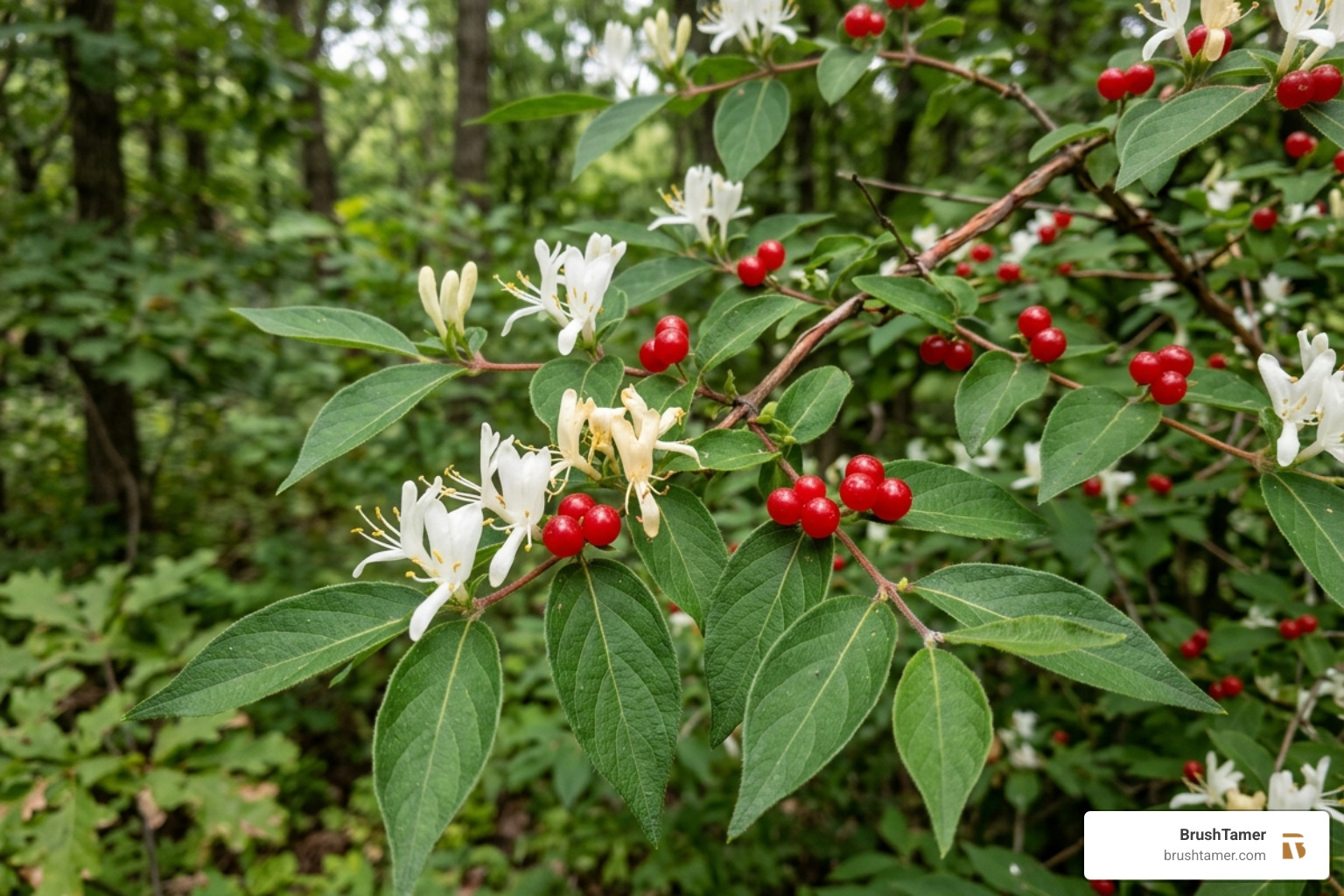
Common woody invaders across Northern Indiana and Lower Michigan include Amur honeysuckle, common buckthorn, and multiflora rose. Other common culprits include autumn olive, which has silvery undersides on its leaves, and Japanese barberry, a spine-covered shrub often found in older landscapes in Valparaiso or Granger. For a full list of our control capabilities, visit our Vegetation Management Solutions page.
Recognizing Bush Honeysuckle for Exotic Shrub Eradication Midwest
The most reliable way to identify invasive bush honeysuckle (Amur, Morrow’s, and Tatarian) is to look at the stems and leaves. Invasive varieties have hollow stems (you can see the hole if you snip a twig) and leaves that grow in opposite pairs along the branch. Native honeysuckles, by contrast, have solid stems.
In areas like Elkhart and Kalamazoo, these shrubs can reach heights of 20 feet. They produce fragrant white or yellowish flowers in the spring, followed by pairs of red or orange berries in the fall. These berries are then spread rapidly by birds along fence lines and forest edges. If you are unsure about a plant on your property, the Illinois Extension identification guide is an excellent resource, and our team at BrushTamer can provide professional Brush Management to handle the removal.
Identifying Buckthorn and Multiflora Rose
Common buckthorn is a deceptive invader that can grow into a small tree up to 25 feet tall. It features sub-opposite, glossy green leaves with fine teeth along the edges. A key identifying mark is the small, sharp thorn often found at the very tip of its twigs. In the fall, it produces clusters of black berries that act as a severe laxative for birds, ensuring the seeds are spread far and wide.
Multiflora rose was once promoted as a living fence, but it now forms dense, thorny thickets that restrict access and displace desirable vegetation. It is easily identified by the “feathery” or fringe-like stipules at the base of each leaf stalk—a feature native roses do not have. This plant forms massive, thorny mounds that are impossible to walk through. Scientific research on Multiflora Rose notes that its seeds can remain viable in the soil for up to 20 years. For dense monocultures of these species, professional Brush Hogging is often the first step in reclaiming the land.
Professional Methods for Exotic Shrub Eradication Midwest
Effective exotic shrub eradication Midwest requires more than just a pair of loppers; it requires a systematic approach that neutralizes the plant’s ability to resprout. When invasive shrubs are cut down, they often respond by sending up dozens of “sucker” shoots from the root crown, making the problem worse. Professional eradication combines high-capacity mechanical clearing with precise chemical applications.
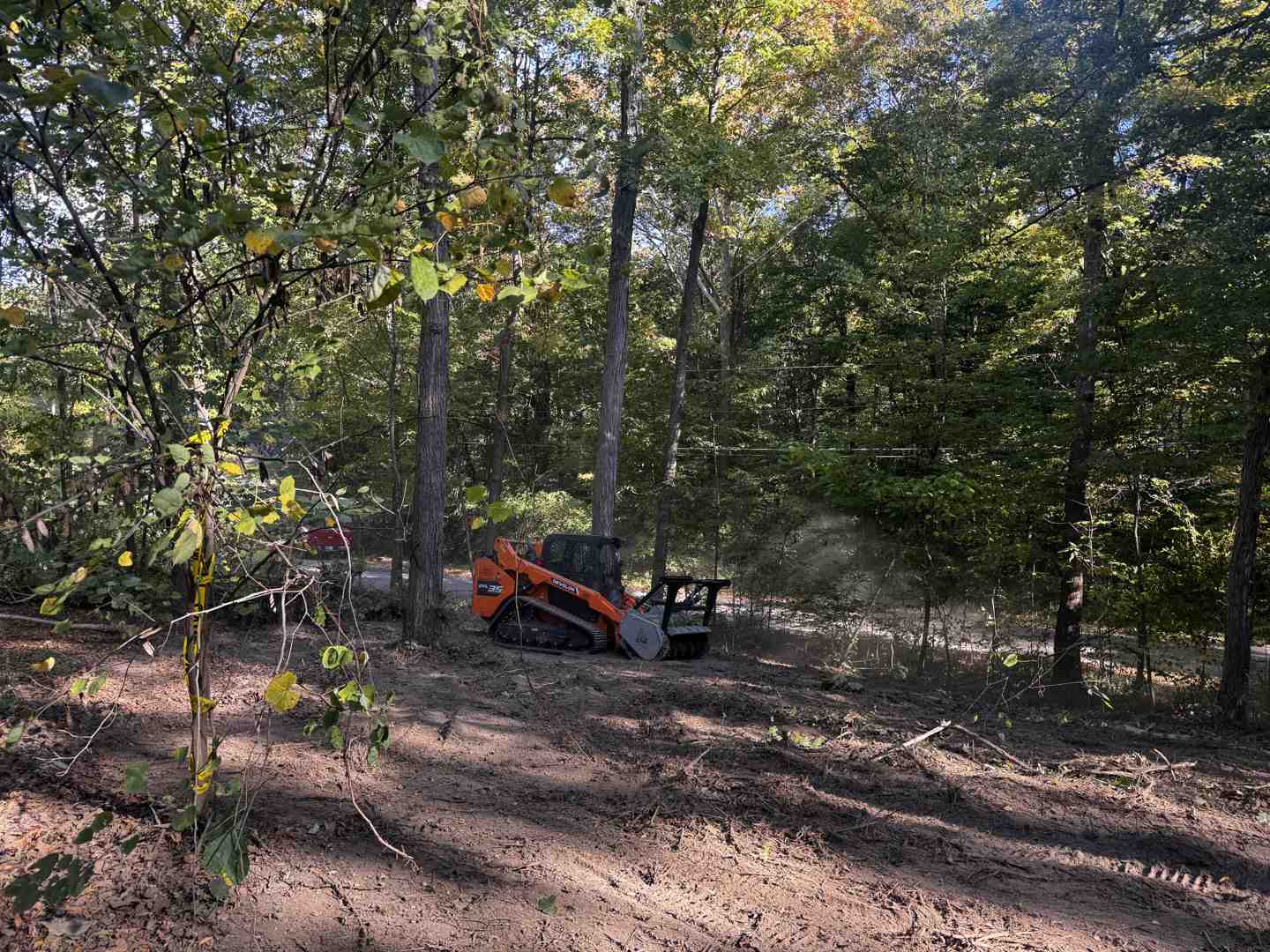
At BrushTamer, we utilize industrial-grade equipment and licensed expertise to manage infestations that would take years to clear by hand. Whether it’s a commercial site in Fort Wayne or a private woodland in Niles, we employ methods like forestry mulching and targeted herbicide applications. To see how we handle large-scale projects, explore our Commercial Vegetation Control and Industrial Vegetation Management services.
Advanced Forestry Mulching and Mechanical Clearing
Forestry mulching is one option for removing dense, large-scale stands of invasive shrubs. Our specialized skid steers equipped with high-speed mulching heads grind entire shrubs—stems, branches, and all—into a fine layer of wood chips in a single pass. This method can process dense above-ground growth in a single operation, depending on stem size, terrain, site access, and project objectives.
This process offers several environmental benefits:
- Soil Protection: The mulch layer acts as a blanket, preventing soil erosion on slopes.
- Moisture Retention: It helps keep moisture in the ground for future native plantings.
- Seed Suppression: A thick layer of mulch can help suppress the germination of the invasive seed bank.
For more information on this process, visit our Forestry Mulching and Land Clearing pages.
Strategic Chemical Control and Stump Management
When resprouting is likely, mechanical clearing may be followed by a targeted treatment designed to suppress regrowth from the root system. The most common method is the cut-stump treatment, where a high-concentration systemic herbicide (typically glyphosate or triclopyr) is applied directly to the cambium layer (the outer ring) of the stump within minutes of cutting. This ensures the chemical is pulled down into the root system before the plant can seal the wound.
For sensitive areas where we want to preserve specific native trees, we may use basal bark treatments. This involves spraying the lower 12-18 inches of a standing invasive shrub with a specialized herbicide mixture that penetrates the bark. This targeted approach can reduce exposure to surrounding desirable vegetation when it is performed according to the product label and site conditions. This level of precision is also used in our Japanese Knotweed Treatment protocols.
Strategic Timing for Exotic Shrub Eradication Midwest
Timing is everything when it comes to exotic shrub eradication Midwest efforts. The goal is to hit the invasive plants when they are most vulnerable and when native species are least likely to be harmed.
The most effective window for chemical treatment is late summer through early winter. During this time, plants are actively moving sugars from their leaves down into their roots for winter storage. During this period, systemic herbicides may be translocated toward the root system, improving treatment effectiveness when applied according to the label. Conversely, winter is the ideal time for heavy mechanical clearing because the frozen ground minimizes soil disturbance and heavy equipment is less likely to damage the dormant root systems of native wildflowers.
Spring is the best time for scouting and mapping. Because invasive shrubs leaf out 1-2 weeks before our native oaks and maples, they “glow” bright green against the brown backdrop of the spring woods. This makes it easy for us to flag infestations in areas like Goshen or LaPorte for later treatment. For more on timing removals for specific woody species, see our Blueberry Bush Removal Complete Guide and our information on Stump Grinding & Removal.
Seasonal Management Pitfalls to Avoid
A common mistake is applying foliar herbicides during the “spring green-up” (April and May). During active spring growth, treatment results can vary by species, application method, weather, and herbicide formulation. If you spray the leaves now, the chemical often stays in the upper portions of the plant and never reaches the roots, leading to disappointing results and vigorous regrowth.
Furthermore, cutting shrubs in the spring without herbicide is often counterproductive. The plant is at its peak energy level and will respond to the “trauma” of cutting by sending up a thicket of new stems. Professional management ensures that treatments are timed to the plant’s biology, preventing non-target damage and ensuring a long-term solution. Proper timing is just as important here as it is when Pruning Blueberry Bushes or other sensitive vegetation.
Legal Regulations and Habitat Restoration
The spread of these plants has become such a crisis that many Midwest states have enacted strict legal barriers. Illinois regulates numerous invasive plants under the Illinois Exotic Weeds Act, including common buckthorn, multiflora rose, and several exotic bush honeysuckles. It is illegal to buy, sell, distribute, or even plant these species without a permit. Similar regulations exist across the Great Lakes basin to prevent the further introduction of these ecological “vampires.”
Once BrushTamer has cleared the invasive biomass and treated the stumps, the work of restoration begins. Leaving the ground bare is an invitation for the invasive seed bank to move back in. We recommend immediately stabilizing the site and replanting with native alternatives that provide the same aesthetic and privacy benefits without the ecological damage.
| Invasive Shrub | Recommended Native Replacement | Benefits |
|---|---|---|
| Bush Honeysuckle | Serviceberry (Amelanchier) | Edible fruit, beautiful spring blooms, great fall color. |
| Common Buckthorn | Blackhaw Viburnum (Viburnum prunifolium) | Dense cover, native fruit for wildlife, and strong seasonal interest. |
| Multiflora Rose | Pasture Rose (Rosa virginiana) | Native habitat, beautiful flowers, non-invasive. |
| Japanese Barberry | Fragrant Sumac (Rhus aromatica) | Excellent ground cover, vibrant fall foliage. |
| Autumn Olive | Grey Dogwood (Cornus racemosa) | Thicket-forming for privacy, white berries for wildlife. |
Replanting with these species in places like Mishawaka or Benton Harbor ensures that your landscape remains beautiful and functional while supporting the local food web. For ongoing support in maintaining these restored areas, explore our Brush Management Services.
Frequently Asked Questions about Exotic Shrub Eradication Midwest
What is the most effective way to clear large areas of invasive shrubs?
For extensive infestations, forestry mulching combined with targeted cut-stump treatment can address both dense above-ground growth and resprouting roots. Forestry mulching clears the physical obstruction immediately, while the chemical treatment ensures that the root system is neutralized. This dual approach is far superior to mowing or hand-pulling, which often leaves roots behind to sprout again.
Why can’t I just cut the shrubs down without using chemicals?
Invasive shrubs like buckthorn and honeysuckle are survival specialists. They store massive amounts of energy in their root systems. If you cut the stems without applying a systemic herbicide, the plant enters a “stress response” mode. After cutting, an untreated stump can produce multiple new shoots and create a denser patch of regrowth.
When is the best time of year to hire a professional for shrub removal?
While we can clear brush year-round, late summer through early winter is the peak window for chemical effectiveness. If your goal is to protect the soil and surrounding native plants, winter is an excellent time for mechanical clearing. Spring is best utilized for professional scouting and mapping so that a treatment plan can be executed during the optimal fall window.
Conclusion
Exotic shrub eradication Midwest is a necessary battle for anyone who values the health of our local environment. From the stunting of our great oaks to the increase in disease-carrying pests, the ecological consequences of leaving an infestation unmanaged can become increasingly severe. By understanding the biology of these invaders and utilizing professional, science-based eradication methods, we can restore the balance of our Northern Indiana and Lower Michigan landscapes.
Since BrushTamer was founded in 2021, our mission has been to provide property owners with an environmentally responsible way to reclaim their land. We combine heavy-duty equipment with a deep understanding of Midwest ecology to deliver results that last. Whether you are in South Bend, Kalamazoo, or Chicago, we are ready to help you take your woods back. Protect your property with a site-specific invasive shrub removal and restoration plan.
Protect your property with a site-specific invasive shrub removal and restoration plan. Contact BrushTamer today to discuss professional invasive species removal for your Midwest property.