
Why Fire Mitigation Matters for Your Property
Fire mitigation is the strategic implementation of land management and structural hardening techniques designed to minimize the impact of wildfires on human life and property. By proactively reducing the volume and continuity of flammable vegetation, property owners can significantly decrease the probability of ignition and the intensity of fire behavior.
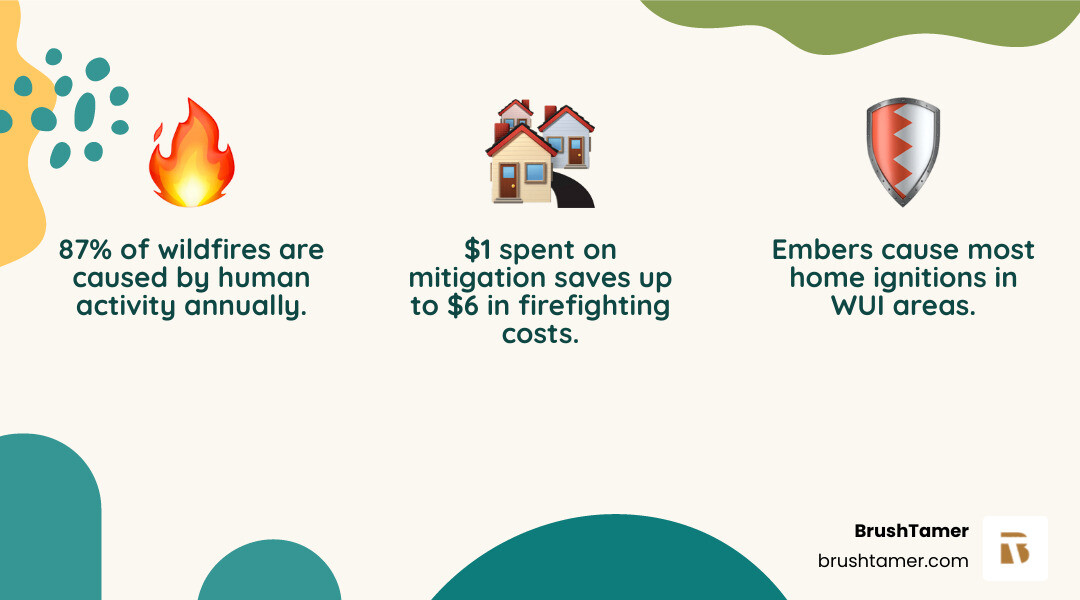
Today, professional fire mitigation is a practical step property owners can take to reduce wildfire exposure and improve defensible space. While wildfire risk is well known in the West, many Midwest communities are also strengthening fire mitigation practices as conditions and development patterns change. National reporting commonly shows that most wildland fires in the U.S. are human-caused, which is why consistent fire mitigation and prevention habits matter. That reality is why proactive fire mitigation—fuel management, access planning, and defensible space—matters before peak fire season.
Leon Miller, the founder of BrushTamer, established the company in 2021 to address these specific environmental challenges. BrushTamer provides authoritative, high-capacity solutions for property owners in South Bend, Fort Wayne, and surrounding regions. Our approach focuses on scientific fuel reduction and the creation of defensible space, ensuring that estates in areas like Granger, Indiana, and Niles, Michigan, are prepared for the evolving threat landscape. Professional mitigation offers several critical advantages:
- Systemic Risk Reduction: Professional thinning and clearing lower the probability of structure loss.
- Life Safety Enhancement: Creating clear access and egress routes protects residents and emergency personnel.
- Economic Preservation: Proactive management prevents the catastrophic financial loss associated with property destruction.
- Tactical Support for Firefighters: Managed landscapes provide a safe environment for responders to establish defensive lines.
- Ecological Stewardship: Removing invasive, high-fuel species like bush honeysuckle promotes the health of native hardwood forests.
Understanding fire mitigation in the Wildland-Urban Interface (WUI)
Fire mitigation in the Wildland-Urban Interface (WUI) refers to the specialized application of fuel management strategies in zones where human development meets or intermingles with undeveloped wildland or vegetative fuels. In these regions, the proximity of residential structures to dense forests and grasslands creates a unique hazard profile that requires professional intervention to manage effectively.
For residents in Northern Indiana and Lower Michigan, the WUI is a tangible reality. As urban centers like Elkhart and Mishawaka expand into previously wooded or agricultural lands, the risk of wildfire transmission increases. The primary threat in the WUI is not always the advancing flame front itself, but the “ember storm” that precedes it. Wind-driven embers can travel long distances and ignite receptive fuels around a structure—one reason fire mitigation must focus on the immediate zone around the home. Research emphasizes that a home’s vulnerability often comes down to fuels closest to the structure—making fire mitigation in the Home Ignition Zone a priority.
In our service area, the risk factors are geographically distinct. Properties on the outskirts of South Bend often deal with mature hardwood canopies and dense understory growth, while developing corridors in Fort Wayne may face risks from invasive grasslands and thickets. To address these local nuances, BrushTamer utilizes data-driven strategies tailored to the specific topography of the region. For a detailed analysis of local risks, we recommend reviewing A Quick Start Guide to Wildfire Mitigation for Fort Wayne.
| Risk Factor | South Bend (WUI Edge) | Fort Wayne (Developing WUI) |
|---|---|---|
| Primary Fuel Type | Mature Hardwoods/Underbrush | Grasslands/Invasive Thickets |
| Average Property Size | 2–10 Acres | 0.5–5 Acres |
| Main Ignition Threat | Ember Intrusion | Surface Fire Spread |
| Mitigation Priority | Ladder Fuel Removal | Fuel Break Construction |
Professional mitigation is the only reliable method to disrupt the path of a fire in these complex environments. BrushTamer’s specialized equipment and expertise allow for the creation of strategic fuel breaks that are essential for protecting high-value estates in communities like Stevensville and Benton Harbor, Michigan.
The Home Ignition Zone: Defensible Space Strategies
The Home Ignition Zone (HIZ) is the structure and its immediate surroundings, typically extending up to 100 or 200 feet, where the quality of defensible space determines a home’s survival. Creating defensible space is a technical process that involves the systematic modification of vegetation to reduce fire intensity and prevent direct flame contact. BrushTamer implements a three-zone management model to ensure maximum protection for properties in Northern Indiana and Lower Michigan.
- Zone 1 (0-5 feet): Zone 1 is the immediate zone where fire mitigation focuses on removing obvious ignition pathways—dry debris, stored combustibles, and flammable plant material. This includes the removal of flammable vegetation, the clearing of organic debris, and the recommendation of non-combustible ground covers. By ensuring this zone is free of fuel, we prevent embers from igniting the base of the structure.
- Zone 2 (5-30 feet): The “Intermediate Zone” requires professional thinning to create fuel breaks. In Zone 2, fire mitigation typically includes professional thinning and ladder-fuel reduction so surface fire is less likely to transition into tree canopies. This prevents ground fires from transitioning into the canopy and spreading between trees.
- Zone 3 (30-100+ feet): In the “Extended Zone,” the objective is to reduce the overall energy of an approaching fire. BrushTamer utilizes high-capacity machinery to thin dense stands of timber and remove invasive species, ensuring that any fire entering the property loses momentum and heat intensity.
For a technical overview of how we manage ground-level fuels to prevent home ignitions, see A Practical Guide to Surface Fuel Reduction.

Hardening Structures Against fire mitigation Risks
Home hardening is the process of retrofitting a structure with ignition-resistant materials to protect against flying embers, which are responsible for the majority of home losses during a wildfire. While vegetation management is critical, the structure itself must be capable of resisting ember intrusion. Professional assessment is necessary to identify vulnerabilities in the building envelope.
According to the Wildfire Mitigation | National Interagency Fire Center, the roof and ventilation systems are the most vulnerable points. BrushTamer advocates for the installation of Class A fire-rated roofing materials and the screening of all vents with 1/8-inch metal mesh. In communities like Goshen and Mishawaka, where many homes feature traditional wood siding or decks, we emphasize the importance of creating a non-combustible buffer at the foundation level. This ensures that even if embers accumulate against the house, they lack the fuel necessary to initiate a structure fire.
Professional Fuel Reduction and Vegetation Management
Professional fuel reduction is the systematic removal of “ladder fuels”—low-hanging branches and dense underbrush—that allow ground fires to climb into the tree canopy. When fire is confined to the ground, it burns at a lower intensity and is significantly easier for emergency services to contain. Once a fire reaches the “crown,” it becomes a high-energy event that is often impossible to extinguish until the fuel is exhausted.
BrushTamer utilizes specialized, high-performance equipment to create strategic fuel breaks and reduce biomass across large estates. In the Midwest, the proliferation of invasive species like bush honeysuckle and autumn olive creates dense, highly flammable thickets. These species are particularly dangerous in areas like Granger and Bristol, where they can quickly bridge the gap between the forest floor and the canopy of valuable hardwood trees. Our land clearing services are engineered to remove these hazards while preserving the health of the primary forest. For properties with overgrown fields or woodlots, our brush management services provide the targeted removal necessary to maintain a fire-resilient landscape.
Advanced fire mitigation through Forestry Mulching
Forestry mulching is a high-efficiency land management method that utilizes a single machine to cut, grind, and clear vegetation, leaving behind a moisture-retaining layer of mulch. Forestry mulching is a highly effective fire mitigation method for reducing fuel continuity without the added risks of burning piles. By converting standing fuel into a compressed ground layer, BrushTamer effectively neutralizes the fire threat while improving soil health.
The benefits of the mulching process are scientifically significant:
- Moisture Retention: The mulch layer acts as an insulator, keeping the soil hydrated and ensuring that remaining vegetation stays green and fire-resistant longer into the dry season.
- Erosion Control: Unlike traditional clearing that leaves soil exposed, mulching provides immediate ground cover, which is vital for properties in Middlebury and Nappanee that may have varying topography.
- Suppression of Fine Fuels: A thick mulch bed inhibits the rapid regrowth of “flashy” fuels like tall weeds and invasive grasses that are responsible for rapid fire spread.
For large-scale properties, forestry mulching services offer a rapid and environmentally responsible way to establish defensible space. Furthermore, if a property contains old stumps that could harbor underground fires, BrushTamer provides stump grinding services to eliminate these hidden hazards. Our approach ensures that your land is not only safer but more aesthetically pleasing and ecologically sound.
Community Resilience and Financial Incentives for Mitigation
Community-level fire mitigation involves the collaborative implementation of risk-reduction strategies across property boundaries, often through programs like Firewise USA® and the development of Community Wildfire Protection Plans (CWPPs). Wildfire does not recognize property lines; therefore, the safety of a single home is inextricably linked to the management of the surrounding landscape. In regions like Northern Indiana and Lower Michigan, coordinated efforts between neighbors are essential for creating a truly resilient environment.
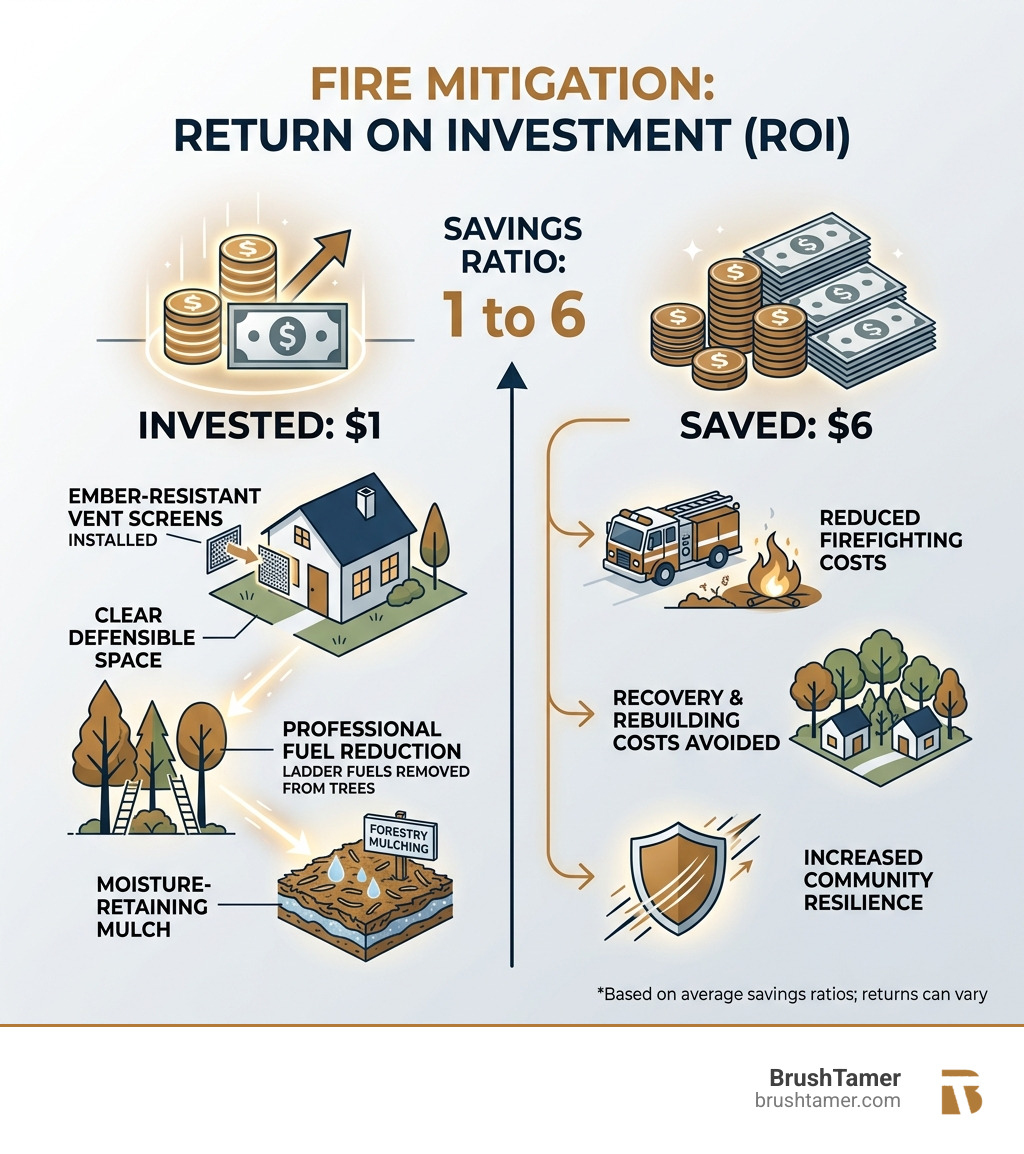
Investing in professional mitigation provides a substantial return on investment (ROI). Multiple national studies show hazard mitigation can deliver outsized community benefits by reducing damage and recovery burdens. In high-value residential areas, this ratio can reach as high as $1 to $40. By hiring BrushTamer to manage fuel loads now, property owners avoid the astronomical costs of rebuilding and the potential loss of irreplaceable assets.
Homeowners in our region should also investigate federal and state financial assistance. Programs through FEMA and the Department of the Interior frequently offer hazard mitigation grants to offset the costs of professional vegetation management. Additionally, many insurance providers now offer premium discounts or continued coverage guarantees for properties that have been professionally mitigated and certified. Engaging BrushTamer for a comprehensive property assessment is the first step toward securing these financial benefits and ensuring long-term peace of mind.
Frequently Asked Questions about fire mitigation
What is the primary cause of home loss during a wildfire?
The primary cause of home loss is ember intrusion. Embers are small, burning fragments of vegetation or building materials that are carried by the wind. They can travel significant distances and ignite a home by landing in gutters, entering vents, or falling into gaps in decking. This is why BrushTamer emphasizes both structural hardening and professional fuel reduction to create a comprehensive defense.
How often should professional fire mitigation be performed?
Fire mitigation is an ongoing process. While a major clearing project provides immediate protection, vegetation regrows and debris accumulates. BrushTamer recommends a professional assessment every two to three years to manage new growth and ensure that fuel breaks remain effective. Seasonal maintenance, such as clearing gutters and removing leaf litter from Zone 1, should be performed every spring and fall to maintain the integrity of the defensible space.
Why is professional forestry mulching preferred over other clearing methods?
Forestry mulching is preferred because it is a low-impact, high-efficiency method that manages fuel without the need for burning or hauling. Traditional methods often leave the soil vulnerable to erosion or involve dangerous burn piles. BrushTamer’s mulching process creates a protective layer that suppresses invasive regrowth and retains soil moisture, making the landscape naturally more fire-resistant. This is the most effective solution for properties in the Midwest WUI.
Does fire mitigation improve property value?
Yes. Beyond the obvious safety benefits, professional fire mitigation improves the aesthetic appeal and health of the land. By removing invasive thickets and thinning overgrown woodlots, BrushTamer creates a park-like appearance that is highly desirable. Furthermore, a mitigated property is easier to insure and less likely to suffer catastrophic loss, which protects the long-term valuation of the estate.
Conclusion
Fire mitigation is a fundamental requirement for property ownership in the Wildland-Urban Interface of 2026. As environmental conditions continue to evolve, the risk of wildfire in Northern Indiana and Lower Michigan remains a persistent threat. By integrating structural hardening with professional vegetation management, homeowners can significantly enhance the survivability of their properties and contribute to the safety of their entire community.
For residents from the dunes of Michigan City to the wooded estates of Fort Wayne, partnering with an authoritative provider is the only way to ensure effective results. BrushTamer, founded in 2021, is the region’s leader in high-capacity land management. We bring the specialized equipment and technical expertise necessary to transform overgrown, hazardous land into a resilient and beautiful landscape. Whether you are in Granger, Indiana, or Bristol, Michigan, our team is prepared to deliver results that meet the highest safety standards.
Do not wait for a wildfire event to expose the vulnerabilities of your property. Proactive management is the most cost-effective and reliable way to protect your home and family. Consider the long-term advantages of forestry mulching as a primary defense strategy. Contact BrushTamer today to schedule a professional assessment and take the first step toward securing your property against the threat of fire.