
The Importance of Professional Land Preparation
If you’re learning how to prepare land for planting, think of it as a proven, step-by-step process: clear the site, test the soil, and build a stable seedbed. Successful land preparation ensures that the soil is physically aerated, chemically balanced, and free from competitive invasive species. For property owners in Lower Michigan and Northern Indiana, this process is the critical foundation for agricultural productivity, reforestation, or high-end landscaping projects.
Professional land preparation typically follows six clear steps:
- Strategic Site Selection: Identifying areas with 8+ hours of solar exposure and natural drainage patterns.
- Advanced Vegetation Removal: Utilizing industrial machinery to eliminate brush, stumps, and invasive root systems.
- Scientific Soil Analysis: Conducting laboratory tests for pH, nitrogen, phosphorus, and potassium levels.
- Precision Soil Amendment: Applying lime, organic compost, or specialized fertilizers based on empirical data.
- Deep-Profile Tillage: Loosening the soil to a depth of 8-10 inches using high-torque equipment to eliminate compaction.
- Seedbed Finalization: Leveling the surface and mapping the layout for maximum planting efficiency.
Most property owners underestimate what it takes to know how to prepare land for planting on Midwest soil—especially when brush, compaction, or clay are involved. Overgrown brush, compacted clay, and aggressive perennial weeds can cause crop failure before the first season concludes. The soil must be physically and chemically prepared to support deep root growth and nutrient delivery. This is particularly true across Lower Michigan and Northern Indiana, where heavy seasonal moisture and dense clay soils create unique challenges for land management.
Since 2021, BrushTamer has helped property owners understand how to prepare land for planting by using the right equipment and the right sequence—so the results hold up season after season. Founded by Leon Miller, BrushTamer provides the equipment and expertise necessary to transform neglected fields in Kalamazoo, brushy lots in South Bend, and raw acreage in Plymouth, Indiana. Our approach focuses on long-term soil health and structural integrity, ensuring your land is ready for its next chapter. This guide outlines the professional standards for land preparation and why hiring a specialist like BrushTamer is essential for achieving professional-grade results.
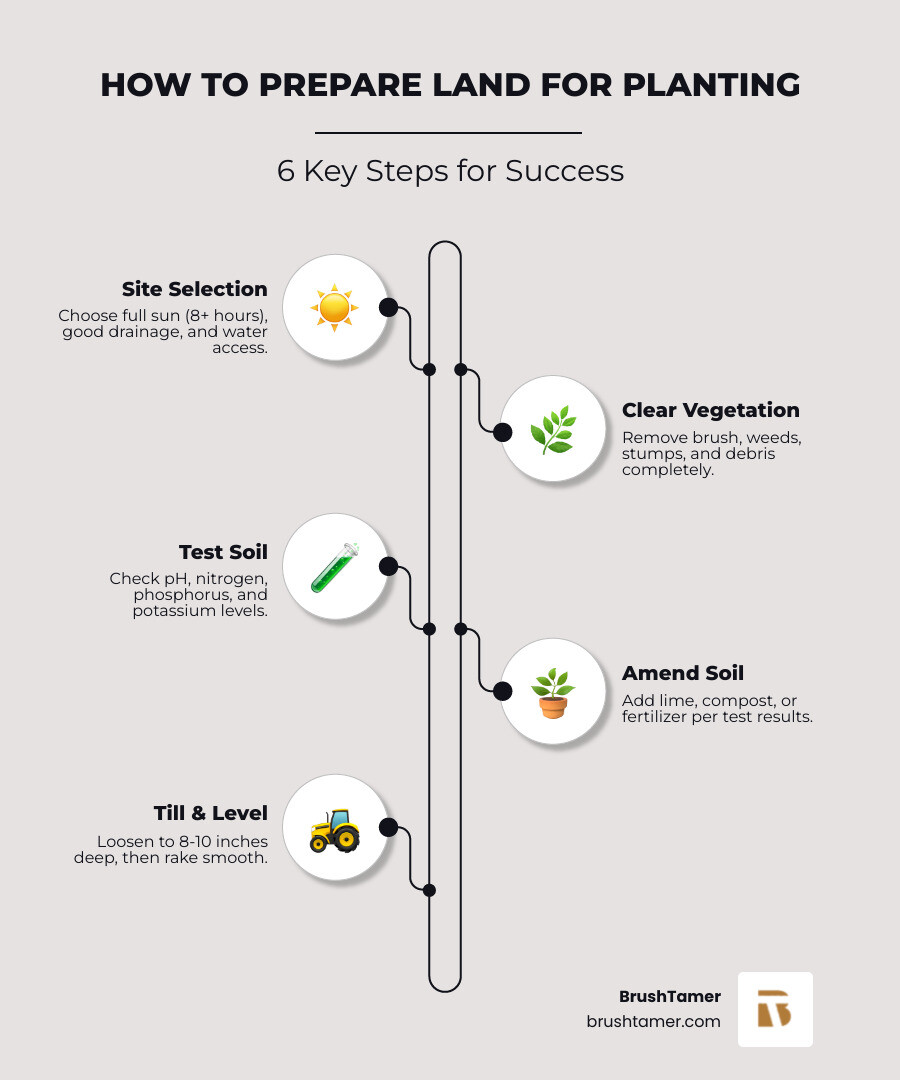
Professional land preparation optimizes the physical and chemical properties of the soil to ensure high germination rates. By eliminating competition from invasive species and alleviating subsurface compaction, BrushTamer creates an environment where roots can thrive. In the heavy clays of Mishawaka and the sandy loams of Benton Harbor, native soil can be unforgiving without professional intervention. Our services ensure deep root penetration, effective weed suppression, and superior moisture retention, allowing your crops to survive the Midwest’s varied climate. For those requiring a clean slate, you can find more info about land clearing services that establish the necessary groundwork for success.
How to Prepare Land for Planting: The Professional Process
Here’s how to prepare land for planting using a professional workflow—from site assessment through seedbed finalization. In regions like Grand Rapids, MI, and South Bend, IN, this process must be precisely timed to account for soil moisture levels and local topography to prevent long-term erosion and soil structure damage.
At BrushTamer, every project begins with a comprehensive site assessment. We evaluate the density of existing vegetation, identify property boundaries in towns like Elkhart and Warsaw, and determine the most efficient path for water drainage. Our professional progression includes:
- Site Assessment: Mapping protected trees and identifying drainage bottlenecks.
- Debris Removal: Clearing rocks, fallen timber, and legacy stumps that interfere with tillage.
- Soil Testing: Utilizing professional lab analysis to determine exact nutrient deficiencies.
- Primary Tillage: Breaking through the initial sod or the compacted “hardpan” layer common in Indiana pastures.
- Secondary Tillage: Refining the soil into a fine, workable tilth suitable for delicate seeds.
| Tillage Stage | Primary Tillage | Secondary Tillage |
|---|---|---|
| Objective | Break sod and loosen deep soil | Create a fine seedbed and level surface |
| Equipment | Heavy discs, subsoilers, or plows | Rotary tillers, harrows, and rakes |
| Depth | 8 to 14 inches | 3 to 6 inches |
| Final Result | Rough, turned earth | Smooth, ready-to-plant soil |
Mechanical Steps to Prepare Land for Planting
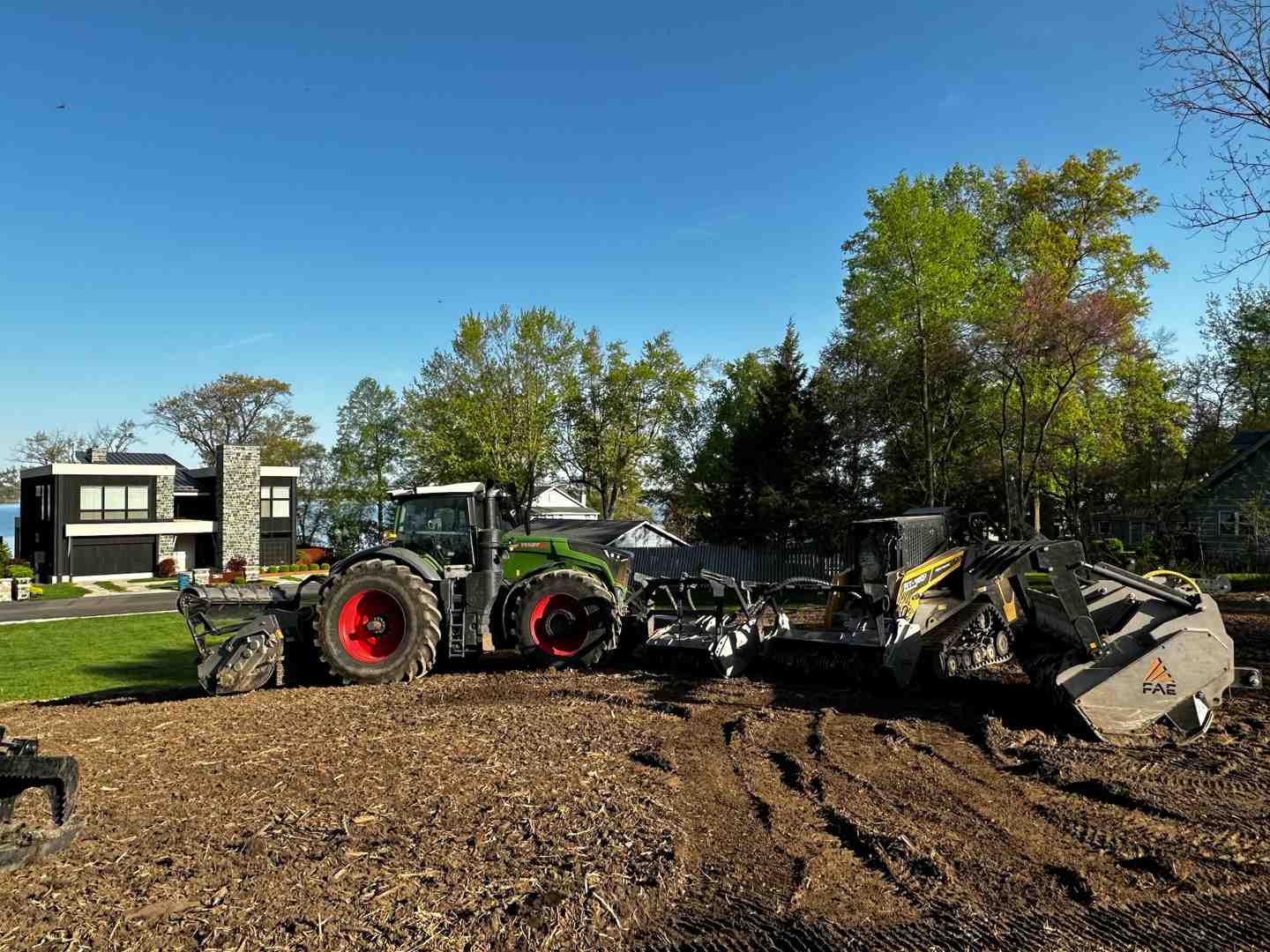
Mechanical preparation utilizes industrial-grade equipment to incorporate organic matter and create a fine tilth. BrushTamer uses commercial-grade tillers and discs to break up compacted soil and create a consistent seedbed depth. This depth is critical in Northern Indiana, where “contractor’s dirt” and heavily compacted pastures are common. Standard equipment often fails to penetrate these layers, but our specialized tractor attachments pulverize the soil into a perfect texture. By working the soil deeply, we ensure that as plants grow, they do not encounter a “brick wall” of clay. You can learn more about how we resolve these deep-soil issues by reading more info about subsoiling benefits.
Timing Your Schedule to Prepare Land for Planting
The ideal window for land preparation in the Midwest is late summer or fall, which allows organic matter to decompose over the winter months. However, spring preparation is viable if the soil passes the professional “crumble test.” In the Midwest, early fall is often a strong window for land preparation because it supports residue breakdown and reduces early-season weed pressure. If tillage occurs when the soil is too wet—a frequent issue in the rainy springs of South Haven or Niles—it results in “clods” that dry into concrete-like chunks. BrushTamer ensures that all mechanical work is performed under optimal moisture conditions to preserve soil structure. For those transitioning woodlots, the Site Preparation for Trees guide provides additional technical context.
Advanced Vegetation Management and Clearing
When brush or invasives are present, how to prepare land for planting starts with removal that prevents fast regrowth—and protects topsoil. Professional land preparation requires more than surface-level mowing; it necessitates the removal of deep-rooted perennial weeds and invasive brush that can quickly reclaim a field. BrushTamer utilizes state-of-the-art forestry mulching technology to convert standing biomass into a protective ground cover.
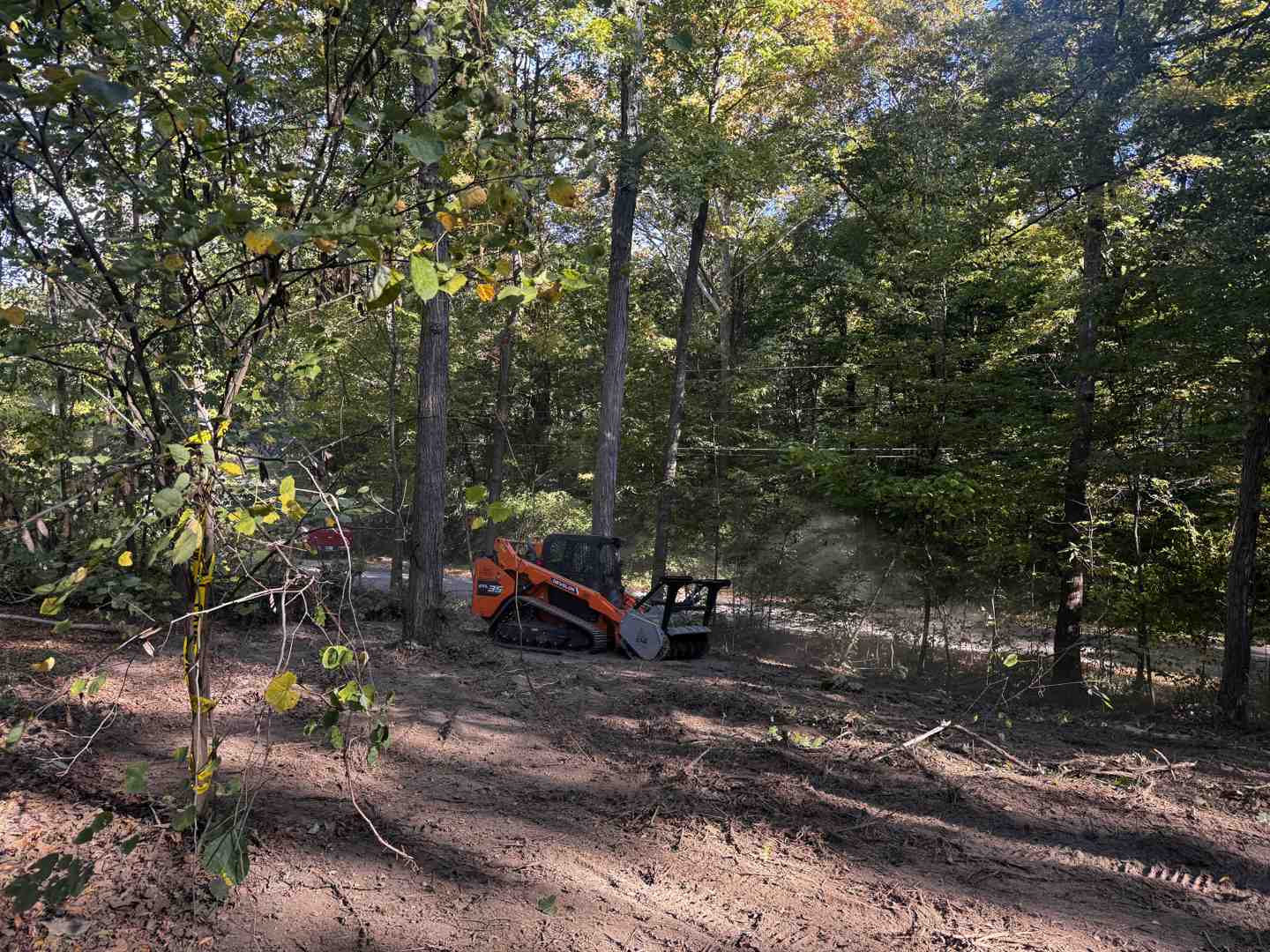
In areas like Valparaiso and Chesterton, land is frequently overtaken by invasive species such as honeysuckle, autumn olive, and buckthorn. These species possess aggressive root systems that traditional tilling cannot manage. BrushTamer’s forestry mulching process grinds the entire plant—from the canopy to the stump—into a fine mulch. This mulch remains on-site, serving as a natural weed suppressant and eventually decomposing into rich organic matter. This method is significantly more environmentally responsible than traditional “push and burn” techniques, as it retains nutrients on the property and protects the topsoil from erosion. If you are dealing with an overgrown lot, explore more info about forestry mulching or our specialized more info about brush management to see how we clear the path for your agricultural goals.
Soil Optimization and Nutrient Management
Soil testing is a core part of how to prepare land for planting because it tells you exactly what to amend for your crop goals. Native soils in Northern Indiana and Lower Michigan often exhibit high acidity, which can lock away essential nutrients. BrushTamer utilizes laboratory analysis to determine the precise application rates for lime, compost, and targeted fertilizers, ensuring a balanced growth medium.
In regions such as Goshen and Nappanee, soil pH often tests between 4.5 and 4.8. However, most vegetable crops and hardwood trees require a more neutral range of 6.5 to 6.8. BrushTamer eliminates the guesswork by conducting professional soil tests every three years for our clients. Based on these results, we apply necessary amendments, including:
- Agricultural Lime: To neutralize acidity and improve nutrient availability.
- Targeted Fertilizers: Applying specific ratios, such as 10-10-10 or organic 4-3-3 blends, to address deficiencies.
- Organic Matter: Incorporating 2-3 inches of high-quality compost to improve the structure of heavy clay or sandy soils.
Improving the physical structure of the soil is as vital as the chemistry. Aerated soil allows microorganisms to thrive, which in turn makes nutrients more accessible to plant roots. You can find more info about improving soil structure to understand how these professional amendments work together to create a sustainable and healthy ecosystem for your future plantings.
Addressing Compaction and Drainage in Midwest Soils
Addressing soil compaction requires mechanical subsoiling to fracture subsurface hardpans, thereby restoring vertical drainage and allowing for deep root penetration. Soil compaction is a primary barrier to plant health in the Midwest, particularly in areas with heavy clay like Mishawaka or Lansing. Without professional intervention, waterlogged soil can lead to root rot and poor crop performance.
If standing water persists on your property after a typical Indiana rainstorm, it is likely due to a “hardpan”—a layer of soil so densely compacted that water cannot move through it. BrushTamer utilizes heavy-duty subsoiling equipment with industrial shanks to rip through these layers up to 24 inches deep. This process restores the soil’s natural hydraulic conductivity. For clients in wetter regions like Laporte or Michigan City, we also specialize in creating raised planting rows. By elevating the planting area 10-12 inches, we ensure the root zone remains aerated even during the wettest months of the Great Lakes season. This is a critical component of professional land preparation. Explore more info about subsoiling services to see how BrushTamer can optimize your land’s drainage and productivity.
Frequently Asked Questions about Land Preparation
What is the first step in preparing a new field for planting?
The first step is a comprehensive site assessment and professional soil analysis. Before deploying heavy machinery, BrushTamer identifies property boundaries in towns like Granger or Angola and marks significant trees for preservation. Understanding the nutrient profile and soil structure from the outset prevents the misapplication of fertilizers and ensures the correct equipment is used for the specific terrain. This data-driven approach is the hallmark of professional land management.
How deep should the soil be tilled for vegetable crops?
For optimal root development, soil should be mechanically loosened to a depth of eight to ten inches. This depth allows the roots of crops like tomatoes, corn, and carrots to access deep-seated moisture during the dry Midwest months of August and September. Shallow tillage (3-4 inches) often results in plants that are prone to tipping and drought stress. BrushTamer’s industrial tillers ensure a consistent depth across the entire planting area, providing a uniform environment for growth.
Why is professional clearing better than traditional tilling alone?
Professional clearing, specifically forestry mulching, eliminates the entire plant structure and suppresses regrowth, whereas traditional tilling can inadvertently propagate weeds. Many aggressive Midwest weeds, such as quack grass or Canada thistle, can regenerate from small root fragments. A standard tiller often chops these roots and spreads them throughout the field. BrushTamer’s professional equipment manages vegetation correctly the first time, preventing a “weed explosion” and ensuring your new crops have no competition for nutrients and sunlight.
Conclusion
Preparing land for planting is the foundational step that determines how well your next season starts—and how reliably it continues. By employing professional clearing, subsoiling, and nutrient management, landowners in Lower Michigan and Northern Indiana can transform neglected or compacted lots into highly productive agricultural assets. Whether your property is in Fort Wayne, Grand Rapids, or anywhere in between, the secret to a bountiful harvest lies in the quality of the initial preparation.
Our team understands the unique soil profiles of the Great Lakes region and uses that knowledge to deliver superior results for every client. If you are ready to stop fighting your land and start growing on it, check out our more info about lot clearing and contact BrushTamer today to schedule your professional site assessment.