
Why Healthy Soil Structure is the Foundation of Every Successful Land Project
Improve soil structure is one of the most important steps you can take to transform overgrown, compacted, or underperforming land into productive, resilient property. Whether you’re preparing a site for agriculture, solar development, or simply reclaiming neglected acreage in Northern Indiana or Lower Michigan, the quality of your soil determines how well water infiltrates, how deeply roots can grow, and how effectively your land supports the vegetation you need.
Quick answer: To improve soil structure, you need to:
- Reduce soil compaction through professional subsoiling or controlled traffic methods
- Increase organic matter by incorporating mulched vegetation and plant residues
- Establish deep-rooted vegetation like cover crops or perennial grasses
- Protect soil from excessive disturbance and erosion
- Work with soil biology by feeding beneficial microbes and earthworms
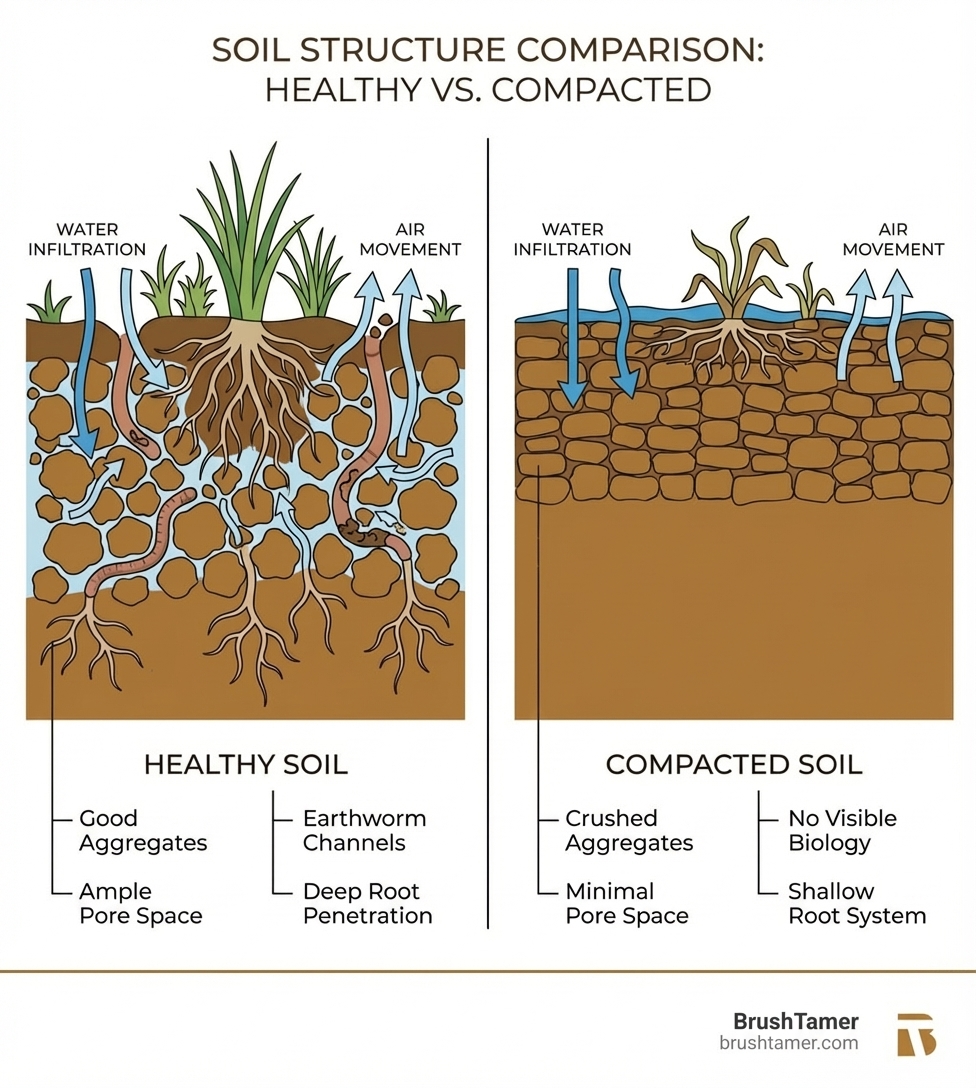
Healthy soil isn’t just dirt—it’s a living ecosystem, and the fastest way to improve soil structure is to protect that ecosystem while rebuilding pore space. Ideal soil contains roughly 45% mineral particles, 5% organic matter, and 50% pore space for air and water. When soil structure breaks down through compaction, tillage, or loss of organic matter, those pores collapse. Water pools on the surface instead of soaking in. Roots grow sideways instead of down. Nutrients wash away. Your land stops working for you.
The good news: you can improve soil structure with the right sequence, relieve compaction, add organic matter, and then establish deep-rooted cover. With the right equipment, expertise, and approach, even severely compacted or degraded soil can recover its function. Professional land managers understand how to assess your specific soil conditions, address compaction at the right depth, reintroduce organic matter strategically, and establish vegetation that continues improving structure over time.
I’m Leon Miller, owner of BrushTamer, and over the years I’ve helped property owners across Plymouth, South Bend, Elkhart County, and surrounding areas transform struggling land by addressing soil structure through professional forestry mulching, subsoiling, and vegetation management. Understanding how to improve soil structure is central to every successful land clearing and site preparation project we complete.
What is Soil Structure and Why Does It Matter?
Soil structure refers to the arrangement of mineral and organic soil particles and the spaces between them. Think of it as the architecture of your soil. This arrangement isn’t random; in healthy soil, these particles clump together to form what we call soil aggregates. These aggregates are like tiny sponges, creating crucial pore spaces between them. These pores are essential highways for air, water, and nutrients, allowing them to move freely through the soil profile.
The quality of your soil’s structure profoundly impacts almost every aspect of land health and productivity. When we say we want to improve soil structure, we’re aiming to optimize these aggregates and pore spaces.
Here’s why it matters:
Water Infiltration and Drainage: Good soil structure means adequate pore space. This allows water to infiltrate efficiently, rather than running off the surface. For properties in areas like South Bend, Mishawaka, or Valparaiso, where heavy rainfall can be common, proper water infiltration is key to preventing erosion and standing water. At the same time, good structure ensures adequate drainage, preventing waterlogging that can suffocate plant roots. Soils with excellent structure are well-drained yet maintain good water and nutrient holding capacity.
Nutrient Cycling: The intricate network of pores and aggregates creates a thriving habitat for soil microbes – a busy ecosystem that drives nutrient cycling. These microbes break down organic matter, releasing essential nutrients that plants need to grow. Without good structure, microbial activity can be stifled, hindering this vital process.
Root Growth: Plant roots need space to grow deeply and access both water and oxygen. In well-structured soil, roots can easily penetrate, spreading out to anchor plants and absorb nutrients. In compacted soil, roots are forced to grow laterally, limiting their access to resources and making plants more vulnerable to drought and disease. As we often see in areas from Elkhart to Goshen, deep-rooted plants are much more resilient.
Ecosystem Health: Soil is a living ecosystem. It’s home to billions of bacteria, fungi, earthworms, and other organisms. These creatures contribute to aggregate formation, nutrient cycling, and overall soil health. A robust soil structure supports this biodiversity, which in turn fosters healthier plants and a more resilient landscape.
While soil texture (the proportion of sand, silt, and clay) is a permanent characteristic determined by the parent rock, soil structure is dynamic. It’s built by the microbial community that glues soil particles together into aggregates, and it can be significantly improved through professional land management practices. This is particularly important as different management techniques can be used to address the unique challenges of various soil types, from the heavy clays in Elkhart County to the sandy soils near Michigan City.
Identifying Poor Soil Structure on Your Midwest Property
To improve soil structure, the first step is recognizing the visible signs of compaction, poor drainage, and weak aggregation on your property. We often observe these indicators on properties across Northern Indiana and Lower Michigan, from the farmlands of Nappanee to the developing sites around Noblesville.
Here are key indicators it’s time to improve soil structure on your land:
- Surface Crusting: After rainfall, does your soil form a hard, brittle crust on the surface? This is a clear sign of poor structure. This crust prevents water infiltration, leading to runoff, and can hinder seedling emergence.
- Water Ponding and Slow Drainage: If water lingers well after rainfall, compaction or weak aggregation may be limiting infiltration. A simple test-hole check can help estimate the drainage rate.
- Soil Compaction: Digging into the soil should feel relatively easy. If it’s difficult to penetrate or you find dense, hard layers (often called a hardpan), your soil is compacted. This reduces pore space and inhibits root growth.
- Lateral Root Growth: When plants struggle to push roots downward due to compaction, they often grow sideways, just beneath the surface. This makes them less stable and less efficient at absorbing water and nutrients.
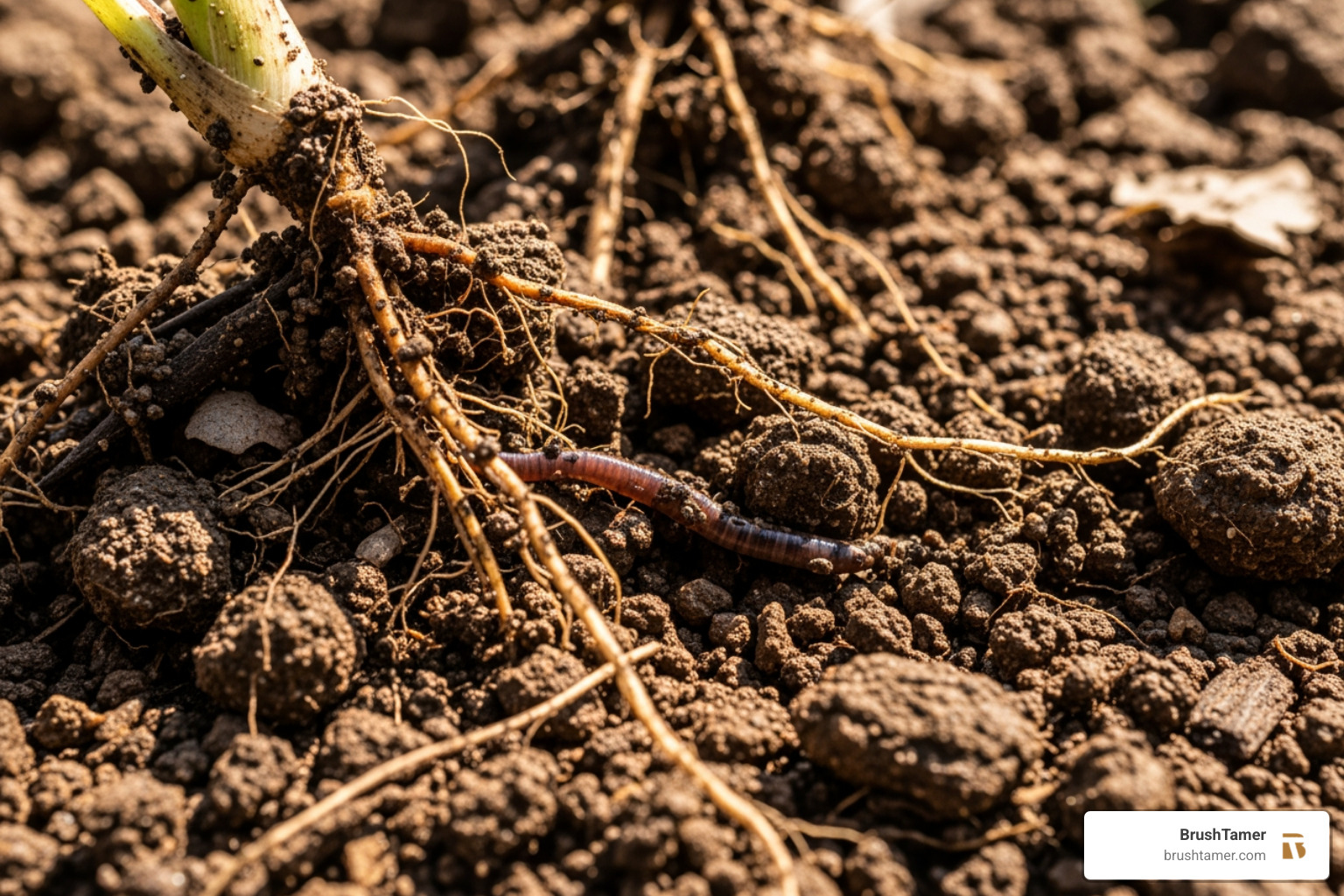
- Absence of Earthworms and Beneficial Organisms: A healthy soil teems with life, especially earthworms. Their burrows create valuable macropores. If you rarely find earthworms or other soil insects when you dig, it suggests an unhealthy environment.
- Cloddy or Platy Soil: Instead of a crumbly, granular texture, degraded soil might break into large, hard clods or flat, plate-like layers when disturbed. This indicates a lack of stable aggregates.
What causes this degradation?
- Heavy Equipment and Traffic: This is one of the most common culprits, especially on large properties, construction sites, and agricultural fields in areas like Plymouth, Knox, or Lafayette. The weight of combines, grain carts, and other machinery compresses the soil, reducing pore space and creating deep compaction. We’ve seen combine tracks leave visible patterns in fields the following year due to compaction.
- Tilling Wet Soil: Working soil when it’s too wet can destroy aggregates and lead to severe compaction.
- Excessive Tillage: While tillage can temporarily aerate the soil, repeated and intensive tillage breaks down soil aggregates over time, depleting organic matter and disrupting the delicate soil food web.
- Erosion: Wind and water erosion strip away nutrient-rich topsoil and organic matter, further compromising structure.
- Loss of Organic Matter: Organic matter is the glue that holds soil together. When it’s depleted through intensive farming practices or lack of replenishment, soil structure inevitably suffers.
To accurately assess your soil’s drainage and overall health, a professional evaluation is necessary. Our team can conduct thorough site assessments, including drainage tests, to pinpoint the exact causes of poor soil structure. Identifying these issues is the crucial first step toward implementing the effective solutions we provide as professional land managers.
Professional Methods to Improve Soil Structure
When managing large properties, farms, or solar sites across the Midwest, addressing soil structure requires a professional, strategic approach. We specialize in large-scale solutions designed to effectively improve soil structure and restore land health.

Mitigating Compaction with Specialized Equipment
Soil compaction is a silent killer of land productivity. It’s often caused by heavy machinery, especially when operated on wet soil, creating dense, impenetrable hardpan layers beneath the surface. This restricts root growth, impedes water movement, and starves soil microbes of oxygen. For areas undergoing solar farm preparation in Valparaiso or agricultural sites near Rensselaer, addressing this deep compaction is paramount.
We mitigate deep compaction using in-ground subsoiling tools that fracture hardpan layers while leaving surface soil largely intact. These tools are designed to penetrate and fracture compacted layers without inverting the soil, creating channels for roots, water, and air. This approach relieves deep compaction by creating new pathways for air, water, and roots at the depth where restriction is occurring. To learn more about how this process works, explore our page on More info about Subsoiling Benefits.
Beyond subsoiling, we advocate for practices like controlled traffic farming where feasible. This involves planning equipment routes to minimize the percentage of land impacted by heavy machinery, confining compaction to specific, permanent pathways. This careful planning, combined with proper equipment selection and operation, is crucial for preserving and rebuilding soil structure on large-scale projects.
How to Improve Soil Structure by Increasing Organic Matter
Organic matter is a primary lever to improve soil structure because it supports aggregation, pore stability, and soil biology. Ideally, soil should contain about 5% organic matter, but many agricultural soils in our region, including those in Rochester and Logansport, often fall to 1-2%. Our goal is to increase this percentage.
Here’s how increasing organic matter works to improve soil structure:
- Feeding Soil Microbes: OM is the primary food source for the billions of microorganisms in the soil. As these microbes decompose organic materials, they produce sticky exudates and glomalin, a powerful “soil glue” that binds mineral particles into stable aggregates. Fungi, particularly, weave their hyphae through the soil, further stabilizing these clumps.
- Aggregate Stability: Stable aggregates resist breakdown from rainfall and tillage, maintaining pore spaces for air and water. This is why healthy soil feels crumbly and holds its shape.
- Water Retention and Drainage: Organic matter acts like a sponge, increasing the soil’s capacity to hold water, which is particularly beneficial for sandy soils in areas like Michigan City. Conversely, in heavy clay soils, like those found in Elkhart County, OM creates larger pores, improving drainage and aeration.
We incorporate organic matter by expertly mulching cleared vegetation. Our environmentally friendly land clearing services process trees and brush directly on-site, converting them into valuable organic material. This material can then be spread back onto the land, feeding the soil and kickstarting the process of aggregate formation. This approach not only disposes of unwanted vegetation responsibly but actively contributes to soil health. Learn more about our sustainable practices on our Environmentally Friendly Land Clearing page.
Using Vegetation to Rebuild Your Soil
Strategic vegetation plays a powerful role in restoring and maintaining soil structure. It’s a natural, continuous process that works from the top down and the bottom up. For properties ranging from new developments in Greenwood to reclaimed blueberry fields in Benton Harbor, selecting the right plants is a game-changer.
- Cover Crops: These non-cash crops are planted specifically to protect and enrich the soil. Deep-rooted species like radishes and turnips act as “biological tillage,” penetrating compacted layers and creating channels for water and air. Annual ryegrass, with its extensive fibrous root system, also builds organic matter deep within the soil. Cover crops also reduce erosion, improve organic matter, promote aggregation, and sustain beneficial mycorrhizal fungi.
- Living Roots and Microbial Activity: Keeping living roots in the soil for as much of the year as possible is crucial. Plant roots exude carbohydrates that feed the soil food web, maintaining a vibrant rhizosphere – the zone of intense microbial activity around the roots. This continuous feeding supports the microbes that build and stabilize soil aggregates.
- Perennial Grasses: Converting land to perennial grasses has shown significant increases in soil organic matter over time, sometimes as much as 800 pounds per acre per year in the top 8 inches. These grasses provide continuous soil cover, protect against erosion, and contribute deeply to organic matter accumulation.
We integrate these principles into our vegetation management strategies. By carefully selecting and establishing appropriate vegetation after land clearing or site preparation, we ensure that your soil continues to improve soil structure long after our initial work is complete. Our expertise in Our Vegetation Management Solutions ensures a custom approach for your specific land and goals.
The Long-Term Payoff: Benefits of Healthy Soil Structure
Investing in healthy soil structure isn’t just about immediate improvements; it’s about securing the long-term productivity, resilience, and sustainability of your land. Whether it’s agricultural land in Nappanee, a new solar farm in Portage, or a repurposed blueberry field near Benton Harbor, the benefits are profound and far-reaching.
Here’s what you can expect when you improve soil structure:
- Improved Agricultural Productivity and Yield Stability: Healthy soil is the foundation for profitable and productive agricultural systems. With improved structure, roots can grow deeper, access more nutrients, and withstand environmental stresses better. This leads to more consistent and often higher crop yields, providing greater stability for farmers in areas like Lafayette and Kokomo.
- Drought Resilience: Well-structured soil has a greater capacity to infiltrate and retain water. During dry spells, this means plants have access to more stored moisture, making them significantly more resilient to drought conditions. This is a critical advantage for managing farmland across the Midwest.
- Flood Mitigation and Reduced Runoff: Paradoxically, healthy soil helps with both drought and excessive rain. Its increased pore space allows it to absorb and hold more water during heavy rainfall, reducing surface runoff and preventing localized flooding. This also minimizes erosion and the transport of sediment and pollutants into waterways, protecting water quality in rivers and lakes throughout Northern Indiana and Lower Michigan.
- Environmental Sustainability: By improving soil structure, we contribute to a healthier environment. Soil acts as a natural filter, buffering potential pollutants. It cycles nutrients more efficiently, reducing the need for excessive external inputs.
- Carbon Sequestration: Soil is the largest terrestrial carbon pool, holding significant amounts of carbon. When we improve soil structure and increase organic matter, we improve the soil’s ability to sequester atmospheric carbon dioxide, playing a role in climate resilience. Healthy soils can store carbon more effectively, turning your land into a valuable carbon sink.
- Project Success and Longevity: For large-scale projects like solar farm installations or the repurposing of blueberry fields, a strong soil foundation is critical. Properly structured soil supports infrastructure, promotes healthy ground cover, and reduces maintenance needs over the long term. Our work in Solar Farm Preparation ensures a stable base for energy projects, and our expertise in Repurposing Blueberry Fields in Lower Michigan helps transition land efficiently and sustainably.
The USDA Natural Resources Conservation Service (NRCS) emphasizes these benefits through its principles of Soil Health Management, which aim to maximize living roots, minimize disturbance, maximize soil cover, and maximize biodiversity. These principles are at the core of our approach to land management, ensuring that we create lasting value for our clients and the environment. You can learn more about these principles here: USDA principles of Soil Health Management.
Frequently Asked Questions about Improving Soil Structure
We frequently receive questions from property owners across Northern Indiana and Lower Michigan about the best ways to approach soil health. Here are some common inquiries and our professional insights.
What is the fastest way to see initial improvements in soil structure?
While building truly healthy soil is a long-term process, the fastest way to improve soil structure in severely compacted ground is targeted in-ground subsoiling followed by organic matter and cover.
To accelerate the biological recovery that follows, this mechanical step should be paired with the rapid introduction of organic matter (like on-site forestry mulch) and the planting of fast-growing, deep-rooted cover crops. This combination kickstarts the natural soil-building processes, but it’s important to remember that ‘fast’ in soil terms means providing immediate relief, while sustainable structure is built over seasons. You can find more detailed information on this process on our Subsoiling page.
How to improve soil structure in heavy clay or sandy soil?
The approach to improving soil structure differs slightly depending on your soil type, whether it’s heavy clay or excessively sandy. Many areas in Elkhart County, for example, contend with heavy clay soils, while some parts of Michigan City or Valparaiso might encounter sandier conditions. The common denominator for both is the strategic addition of organic matter.
- For Heavy Clay Soils (e.g., Elkhart County, Goshen, Nappanee):
- Clay particles are very fine and can pack tightly, leading to poor drainage, compaction, and a sticky texture when wet.
- Solution: We focus on increasing aggregation. Adding significant amounts of organic matter, such as finely mulched vegetation or compost, helps clay particles clump together into larger, more stable aggregates. This creates larger pore spaces, dramatically improving drainage, aeration, and workability. The biological glues produced by microbes (fed by organic matter) are crucial here. Deep-rooted cover crops can also physically break up clay layers.
- For Sandy Soils (e.g., Michigan City, Valparaiso, Bridgman):
- Sandy soils have large particles and large pore spaces, causing water to drain too quickly. They struggle to retain moisture and nutrients.
- Solution: We aim to increase water holding capacity and nutrient retention. Incorporating organic matter into sandy soils fills some of the excessively large pore spaces and adds colloidal material that acts like a sponge. This allows the soil to hold onto water and nutrients for longer, making them available to plants. The organic matter also supports microbial life, which is often sparse in sandy soils, leading to improved aggregation and overall fertility.
For both soil types, the goal is to create a balanced soil, rich in organic matter, that can effectively manage water, cycle nutrients, and support robust plant growth. Our professional land management services tailor solutions to your specific soil type and regional conditions.
Conclusion
A healthy soil structure is the bedrock of productive and resilient land. It dictates everything from how your property manages rainfall in South Bend to the vitality of vegetation in your repurposed blueberry fields in Lower Michigan. We’ve seen how compaction, erosion, and the loss of organic matter can degrade land, turning it into a challenge rather than an asset.
But the good news is that this degradation is not permanent. With the right professional expertise, equipment, and a commitment to sustainable practices, we can significantly improve soil structure. Whether it’s through precision subsoiling to relieve deep compaction, strategically incorporating organic matter from cleared vegetation, or establishing robust cover crops and perennial grasses, the path to healthier soil is clear.
At BrushTamer, we are dedicated to changing your land. If your land is staying wet, rutted, or underperforming, it may be time to improve soil structure. Our team uses in-ground subsoiling and low-disturbance methods to restore pore space and long-term function. Contact us to talk through your property goals.