
Why Forestry and Wildlife Management Matters for Your Land
Forestry and wildlife management is a disciplined, outcomes-driven practice that secures the long-term health, safety, and productivity of your forested acres. It aligns ecological processes with landowner objectives—habitat quality, recreational enjoyment, risk reduction, and, where appropriate, timber revenue—through professional planning and field execution. When carried out systematically, management elevates the ecological function of a property while improving access, viewsheds, and overall land value.
Healthy forests are not accidents; they are the result of deliberate actions that shape species composition, tree density, understory dynamics, and hydrology. Managed forests frequently deliver higher-quality habitat than those left to chance because they contain intentional diversity in age classes and vegetation structure. This structural variety supports a wider array of wildlife guilds, improves resilience to pests and weather extremes, and creates a continuous supply of food and cover. In the Midwest, where nearly 70 percent of wildlife species require forests under 40 years old during some part of their life cycle, planned disturbance—implemented professionally and at the right scale—produces essential early successional habitat while retaining mature stands for mast, cover, and connectivity.
I am Leon Miller, founder of BrushTamer. My team and I focus on practical, science-based solutions that convert overgrown, underperforming acres into purposeful, high-functioning landscapes. We plan, clear, thin, and maintain with attention to best management practices, equipment suitability, site protection, and safety. Our approach is comprehensive: diagnostics, prescriptions, and on-the-ground implementation are aligned to deliver measurable results—healthier stands, better wildlife use, and more resilient ecosystems.
Whether your goals prioritize deer and turkey, migratory songbirds, timber value, or improved aesthetics and access, BrushTamer brings the machinery, field experience, and project management discipline required to move from intent to impact. We design for outcomes, schedule work around growing seasons and wildlife needs, and execute with care for soils, water, and neighboring properties. The result is a forest that looks better, functions better, and serves your objectives—now and over the next generation.
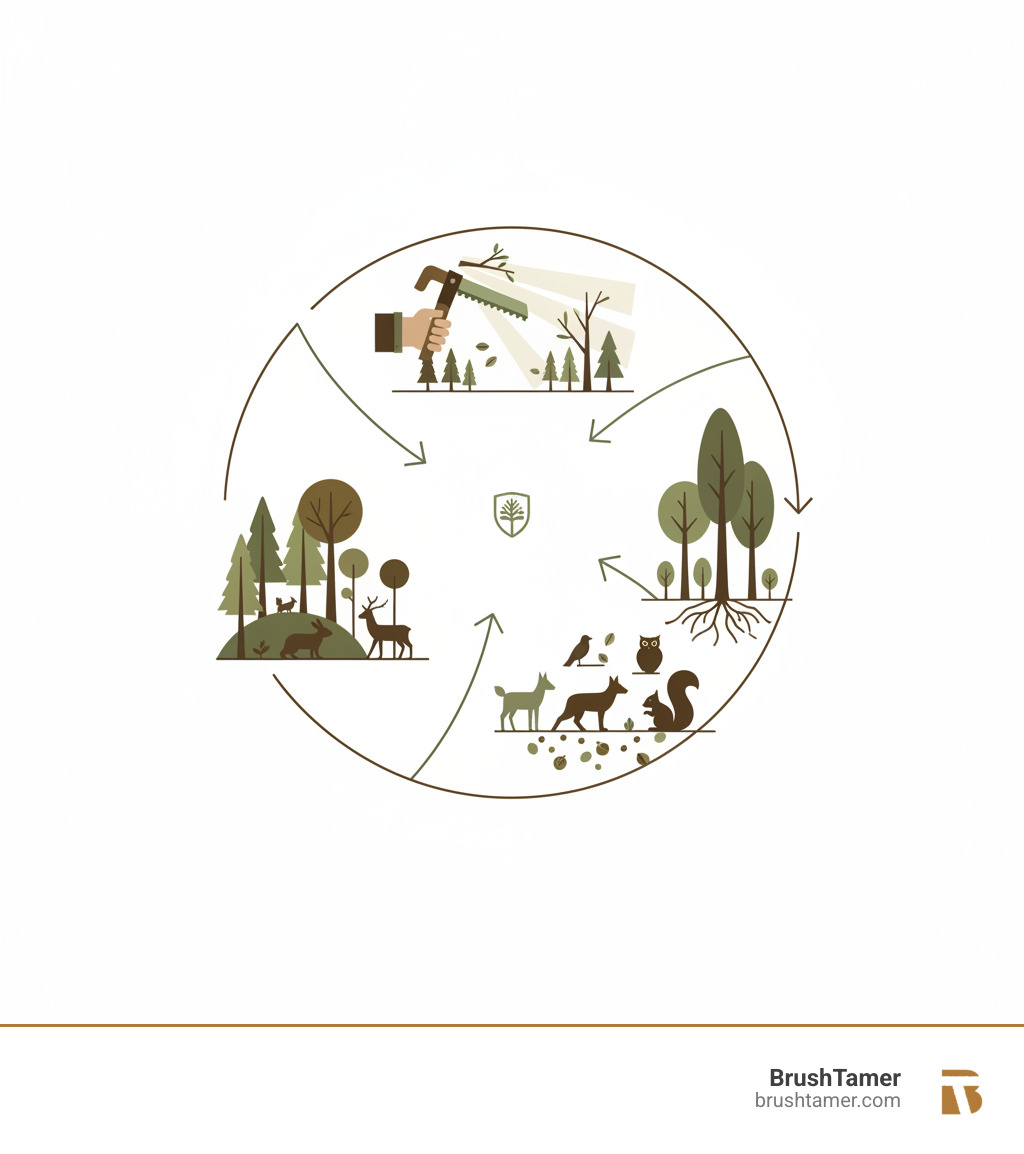
Understanding the Forest Ecosystem
Stewardship begins with accurate understanding. A forest is a living system governed by climate, soils, hydrology, disturbance, and time. Effective decisions must account for all five. BrushTamer evaluates these components on-site and translates them into actionable prescriptions that strengthen forest function and wildlife value across seasons and years.
Midwest Temperate Forests
BrushTamer focuses on temperate hardwood systems prevalent in Indiana, Michigan, Illinois, and Ohio. These forests feature distinct growing and dormant seasons, a mix of oaks, hickories, maples, walnuts, and associated understory shrubs and forbs, and a wildlife community adapted to seasonal pulses of food and cover. Site productivity varies with soil texture and depth, slope, and water availability. Bottomlands differ from uplands; north-facing slopes differ from south-facing exposures. A one-size-fits-all approach fails in this variability. Our management differentiates stands, assigns goals by site potential, and selects tactics suited to each unit.
Modern Midwestern forests face persistent pressures: invasive plants (such as bush honeysuckle and autumn olive) that suppress regeneration and reduce forage diversity, forest pests and diseases that alter species composition, and overbrowsing that hinders oak and other mast-producing species. Storms and freeze–thaw cycles add stress. Without a coordinated plan, these forces gradually erode habitat quality and stand health. BrushTamer addresses these challenges with targeted vegetation control, regeneration strategies that match light and soil conditions, and structural prescriptions that balance habitat needs with long-term stand vigor.
The Engine of the Forest: Energy and Nutrients
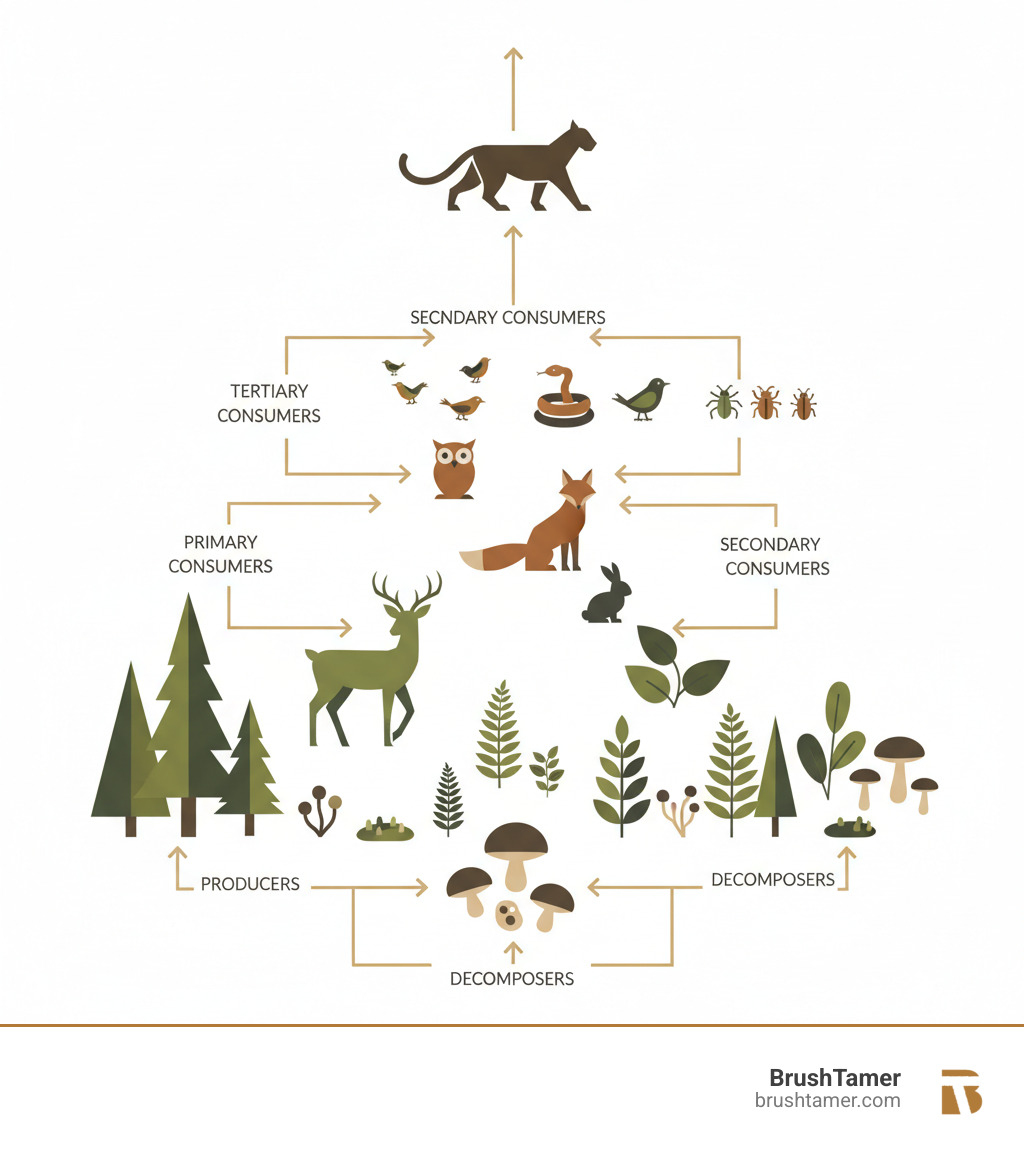
- Producers: Trees, shrubs, and herbaceous plants convert sunlight into chemical energy, forming the base of the food web.
- Consumers: Herbivores convert plant energy, and predators regulate herbivore populations, distributing nutrients and influencing vegetation patterns.
- Decomposers: Fungi, invertebrates, and microbes recycle organic matter, replenishing soil carbon and nutrients that sustain new growth.
BrushTamer enhances this engine by opening the canopy where appropriate to stimulate ground-layer diversity, using forestry mulching to return organic material in place, and timing operations to protect soils. Mulch retains moisture, moderates temperature, and reduces erosion—key steps in sustaining soil life and long-term productivity.
The Bounty of the Woods: Forest Products
Midwestern forests yield timber for durable goods and non-timber forest products (NTFPs) such as maple sap, nuts, and certain specialty botanicals. Markets fluctuate; ecological value should not. BrushTamer plans harvests to safeguard future stand condition, maintain structural habitat attributes, and protect water resources. We emphasize best management practices for stream crossings, skid trail layout, and residual stand protection. Where landowners value NTFPs or visual character, we incorporate those into objectives and tailor access, openings, and competition control accordingly. The result is a property managed for a full portfolio of benefits: biological diversity, recreational enjoyment, and appropriate revenue opportunities—all without compromising the integrity of the resource.
The Science of Silviculture: Cultivating Healthy Forests
Silviculture is the discipline of directing forest development toward clear, measurable outcomes. It integrates inventory, analysis, and field operations to shape species composition, structure, and regeneration over time. BrushTamer applies silvicultural systems that match site potential and ownership goals, then executes the work with careful attention to safety, timing, and environmental protection.
Core Principles of Silviculture
Sound silviculture begins with accurate inventory and stand delineation. BrushTamer evaluates species, age classes, stocking levels, health, and hazards; identifies invasive pressure; and maps access and sensitive areas. From this baseline, we develop prescriptions that:
- Control Stand Composition: Favor desirable species and genotypes through removal of low-vigor, diseased, poorly formed, or ecologically undesirable trees and shrubs.
- Optimize Stand Density and Health: Thin crowded stands to improve crown development, wind firmness, and disease resistance while accelerating growth on the best stems.
- Match System to Objective: Even-aged methods (including clearcut, seed-tree, and shelterwood) efficiently regenerate light-demanding species, create sunlight-rich conditions, and build early seral habitat. Uneven-aged methods (single-tree and group selection) maintain continuous cover, support shade-tolerant regeneration, and preserve visual continuity.
We select and sequence treatments to avoid soil damage, protect riparian areas, and retain legacy structures—large snags, den trees, and cavity-bearing stems—vital to wildlife.
Forest Regeneration and Tending Operations
Regeneration must be intentional. It can be natural, relying on seed rain, advance regeneration, or sprouting, or artificial, using planted seedlings to secure species that struggle to recruit under current conditions. BrushTamer prepares sites, manages competing vegetation, and calibrates light levels to the species being established. Where herbivory pressure is high, we specify protective measures and schedule follow-up to ensure success.
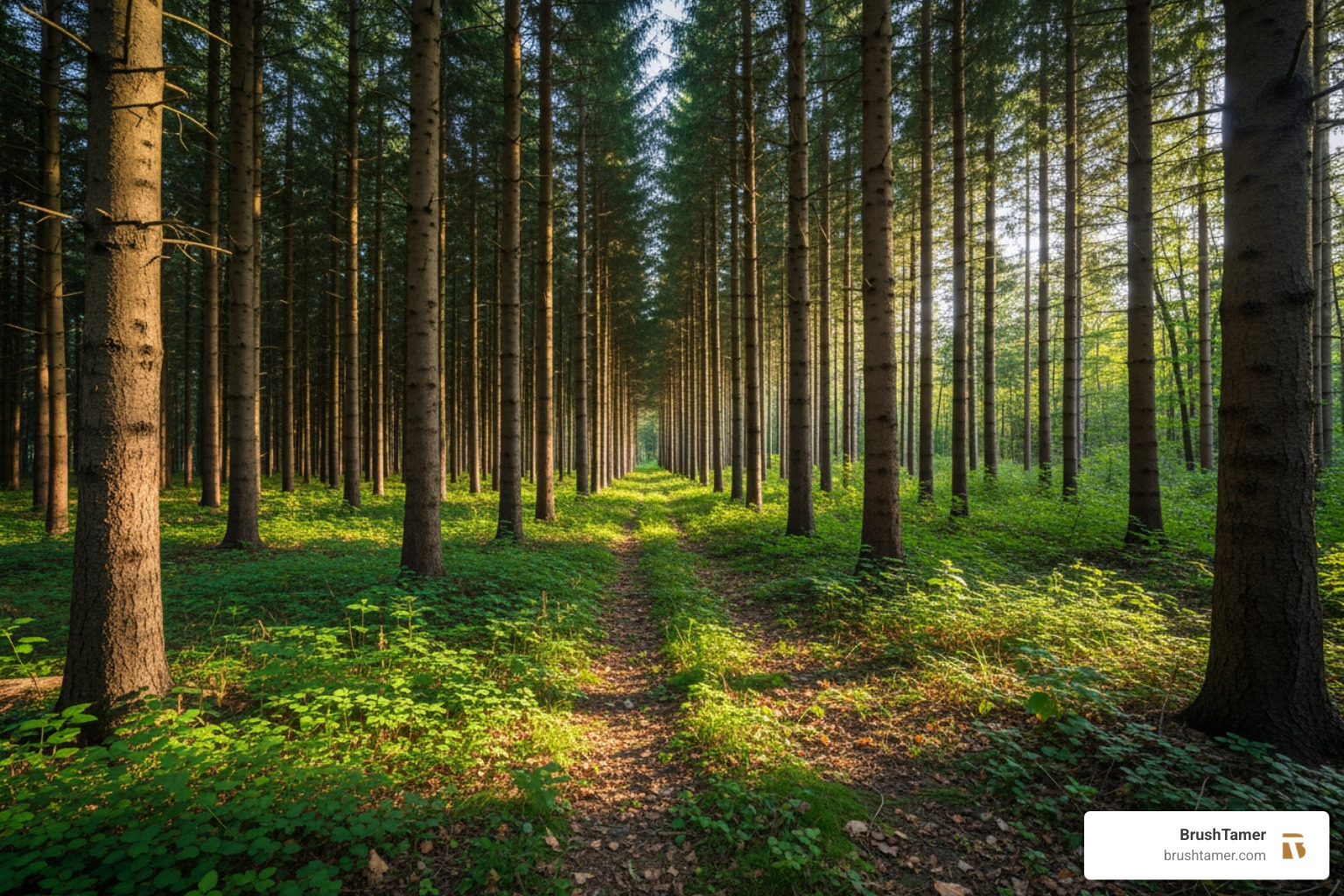
Intermediate treatments sustain trajectory and value:
- Weeding and Cleaning: Remove aggressive competitors—especially invasive shrubs and vines—that suppress desirable regeneration and reduce understory diversity.
- Thinning: Adjust stocking to concentrate growth on crop trees, improve crown ratios, and increase sunlight to the forest floor, which stimulates browse and forb layers beneficial to wildlife.
- Pruning: On selected stems, remove lower branches to increase clear wood for future timber quality where consistent with habitat objectives.
We schedule operations to minimize damage to residual trees, avoid rutting, and protect sensitive soils. Monitoring informs timing for the next intervention, keeping the stand on course.
Advanced Systems for Multiple Benefits
Complex objectives demand integrated systems:
- Agroforestry: Designs that align trees with forage or crops—such as silvopasture or alley cropping—can diversify revenue while maintaining habitat structure when implemented with careful spacing, shade management, and groundcover protection.
- Shelterwood: Phased overstory removal recruits even-aged cohorts under moderated light and wind, enabling establishment of species that require partial shelter.
- Group Selection: Small openings within an otherwise intact stand regenerate light-demanding species and create discrete patches of early cover embedded in mature forest.
BrushTamer designs these systems to achieve ecological diversity and economic performance together, then manages the logistics—from layout to access to contractor coordination—so the plan is delivered on the ground.
Principles and Strategies of Forestry and Wildlife Management
Integrated management balances human use with ecological integrity. The objective is not simply to grow trees or attract wildlife; it is to maintain a functioning system where habitat elements are present in the right amounts, configurations, and seasons while keeping impacts within the land’s capacity to recover.
The Goals of Modern Forestry and Wildlife Management
Conservation uses active, science-based management to sustain resources. Preservation limits human intervention to protect specific features or natural processes. On working private lands in the Midwest, conservation is typically the correct framework. BrushTamer plans within carrying capacity, recognizing that food, water, cover, and space are finite. By shaping vegetation and structure, we calibrate habitat supply to expected wildlife use, reducing the risk of habitat degradation, disease transmission, and nuisance conflicts.
We implement habitat manipulation strategically. Rather than managing animal numbers directly, we tune vegetation composition, canopy density, ground-layer diversity, and the spatial arrangement of cover to match target species’ seasonal needs. This produces predictable, durable improvements that support a broader community of wildlife while maintaining forest health. For additional background on core principles, see the FAO overview on wildlife management.
Creating and Enhancing Habitats for Wildlife
BrushTamer designs and executes prescriptions that deliver the four essentials—food, water, cover, and space—at the scale of your property and the surrounding landscape:
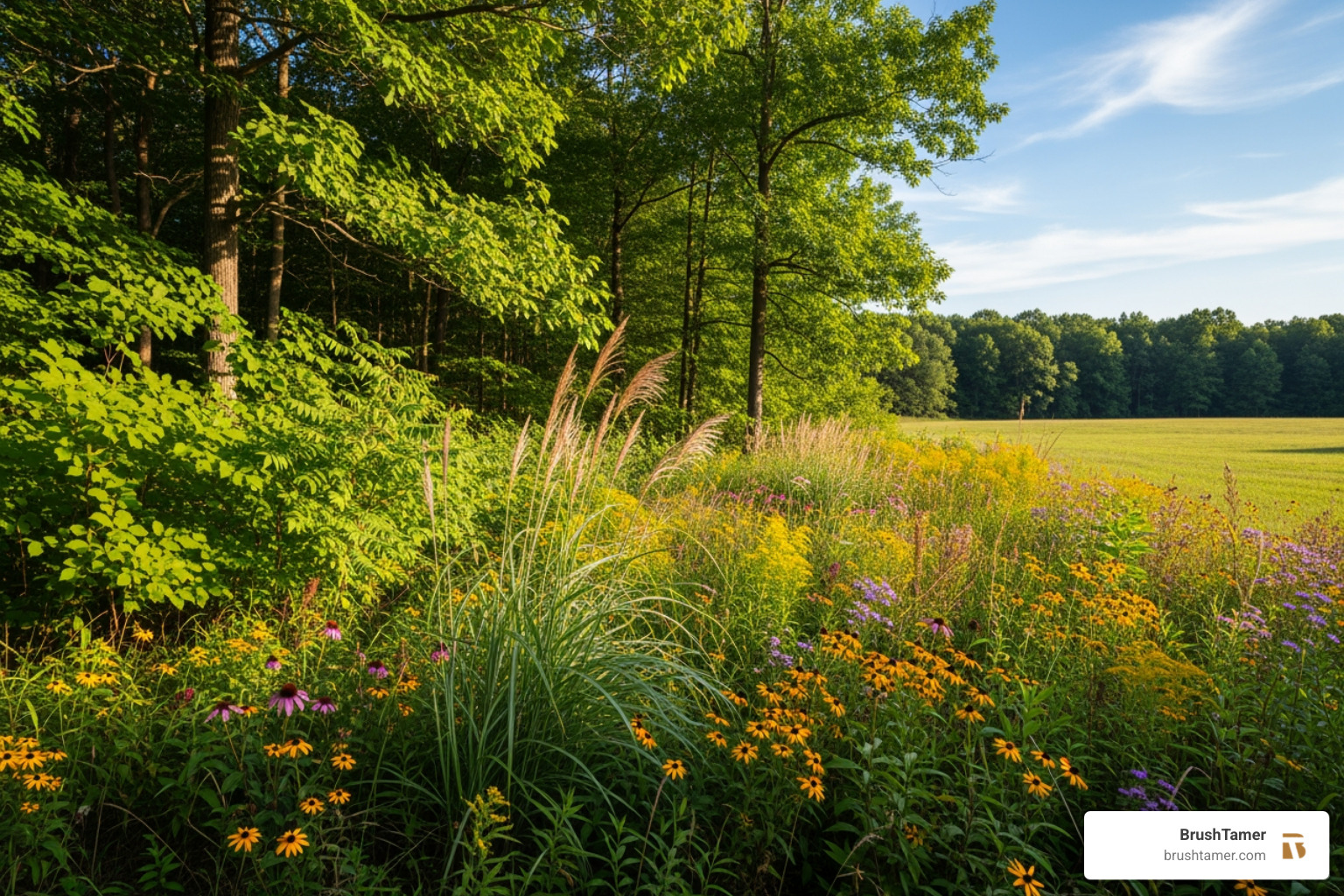
- Manage Succession: Implement targeted resets to produce dense, sunlit vegetation layers that provide brood cover, nesting sites, and soft mast.
- Retain Wildlife Structures: Preserve snags, cavity trees, and mast producers to maintain nesting, roosting, and seasonal food availability.
- Construct Cover Features: Use woody materials from operations to create brush piles and downed log clusters for small mammal and bird cover where appropriate.
- Safeguard Riparian Zones: Maintain buffers, protect hydrology, and control access to keep water clean and travel corridors intact.
A Focus on Key Midwest Species
Our prescriptions support the signature wildlife of Midwestern forests through seasonally appropriate cover and forage:
- White-tailed Deer: Balanced management supplies browse in sunlit patches, hard mast in mature stands, thermal cover in conifers or dense hardwoods, and secure movement routes. We align thinning and opening sizes to sustain year-round resources without overbrowsing.
- Wild Turkeys: Open understories for foraging, nesting cover near insect-rich edges, and roost trees with appropriate structure are created and maintained through selective removals and protection of key trees.
- Northern Bobwhite: Early successional cover with interspersed bare ground, shrub thickets, and herbaceous diversity is produced by rotational clearing and precise invasive control.
- Migratory Songbirds: Layered habitats with patches of young forest embedded in older stands, along with retained snags and cavity trees, support a wider guild of breeders and migrants.
BrushTamer integrates these needs into a cohesive plan so that improvements for one species complement, rather than compete with, the overall ecological function of your forest.
The Role of Professional Vegetation Management in Ecosystem Health
Forest improvement requires deliberate action, specialized equipment, and disciplined implementation. BrushTamer translates management plans into field results with services that restore structure, control competition, and protect sensitive resources.
Land Clearing for Habitat Restoration
Clearing is not simply removal; it is precision restructuring. BrushTamer:
- Eliminates Invasive Pressure: Targets species such as bush honeysuckle and multiflora rose with methods matched to site and season, reducing seed sources and releasing native vegetation.
- Establishes Sunlight Availability: Opens the canopy and midstory where indicated to stimulate browse, forbs, and shrubs essential to diverse wildlife use.
- Improves Access and Safety: Creates stable trails and operational corridors that reduce soil disturbance and enhance property usability for monitoring and recreation.
- Prepares Sites for Planting: Conditions seedbeds, controls competing vegetation, and specifies protection measures to secure successful establishment of desired species.
These activities follow established best practices for wildlife and water protection. BrushTamer sequences work to avoid wet conditions, protects riparian buffers, and stabilizes disturbed soil where needed.
Forestry Mulching for Understory and Fire Management
Forestry mulching is an efficient method for converting undesirable stems and slash into protective groundcover. Our equipment processes vegetation in place, retaining nutrients and shielding soil. This approach:
- Reduces Surface Fuels: Lowers the intensity and spread potential of wildfire where fuel loads have accumulated.
- Promotes Desirable Vegetation: By removing midstory competition, mulching allows native grasses, forbs, and shrubs to expand, improving forage and cover diversity.
- Protects Soil and Water: Mulch moderates temperature, reduces raindrop impact, and limits runoff and sedimentation.
- Enhances Movement: Creates wildlife travel lanes and management access through dense thickets without the disruption of conventional clearing where not required.
BrushTamer selects the appropriate head, carrier, and operating pattern for each site to minimize collateral damage, protect residual trees, and maintain habitat features.
Developing a Professional Forestry and Wildlife Management Plan
Durable outcomes require a plan that is specific, budgeted, and sequenced. BrushTamer delivers:
- Property Inventory and Assessment: Mapping of stands, soils, hydrology, invasive occurrence, hazards, and existing habitat structures.
- Objective Setting and Prioritization: Clear, measurable goals tied to timelines, seasons, and budget.
- Prescription and Design: Stand-by-stand actions, equipment selection, and protection measures including buffers, wildlife tree retention, and access layout.
- Implementation Schedule: Phased work windows aligned with weather, ground conditions, and wildlife considerations.
- Monitoring and Adaptation: Photo points, regeneration checks, and performance reviews that inform the next cycle of work.
BrushTamer manages the full process—from first site walk to final inspection—so that every action advances the plan’s objectives and respects the ecological constraints of your land.
Frequently Asked Questions about Forestry and Wildlife Management
How does timber harvesting affect wildlife?
The effect depends on how, where, and when it is done. When harvesting is integrated into a professional plan, it is the most reliable tool for introducing the light and structural diversity that many species require. BrushTamer designs opening sizes, shapes, and residual features (snags, cavity trees, mast trees) to align with target species while protecting soils and water. Unplanned removals that ignore access, buffers, and residual stand condition harm habitat; professionally executed harvests improve it.
Can a small property be managed for both timber and wildlife?
Yes—when objectives and treatments are precisely matched to the site. On small holdings, stand structure and spatial arrangement matter more than acreage. Group selection and targeted thinning can yield periodic timber income while creating productive cover and forage. BrushTamer plans and executes these interventions to maintain continuous cover, protect neighbors and water resources, and keep your stand on a healthy trajectory.
What is the difference between forest conservation and forest protection?
Conservation applies active management to sustain ecological function and human benefits over time. Protection (preservation) restricts intervention to allow natural processes to unfold with minimal human influence. On working private lands, conservation is typically the appropriate approach. BrushTamer operates within that framework, applying selective interventions that protect water, soils, and wildlife structures while meeting your objectives.
How often should thinning or habitat work occur?
Intervals depend on species composition, growth rates, competition levels, and objectives. In many Midwestern hardwood stands, review cycles of 5–10 years keep stocking, regeneration, and habitat attributes on track. BrushTamer monitors conditions and recommends timing based on measured stand dynamics rather than a fixed calendar.
Conclusion: Cultivating a Legacy of Healthy Forests and Abundant Wildlife
Forestry and wildlife management is a long-term commitment to ecological function, safety, and land value. The strongest results come from professional planning paired with precise field execution—actions that improve habitat, protect water and soils, and maintain resilient, productive stands.
BrushTamer delivers that full continuum. We assess, prescribe, and implement with the equipment, experience, and stewardship focus your property deserves. Partner with us to turn intention into impact and build a forest that thrives across seasons and generations. Learn more about our professional forestry mulching services at https://brushtamer.com/services/forestry-mulching/ and engage our team to design and execute a comprehensive plan for your land.