
What You Need to Know About Storm Damage Clean Up in the Midwest
Storm damage clean up in the Midwest is a specialized recovery process that focuses on removing hazardous debris, fallen timber, and structural wreckage after severe weather. For property owners in Northern Indiana and Lower Michigan, the complexity of these tasks requires industrial-grade equipment and expert land management to ensure safety and restore property value.
Professional recovery protocols for Midwest property owners:
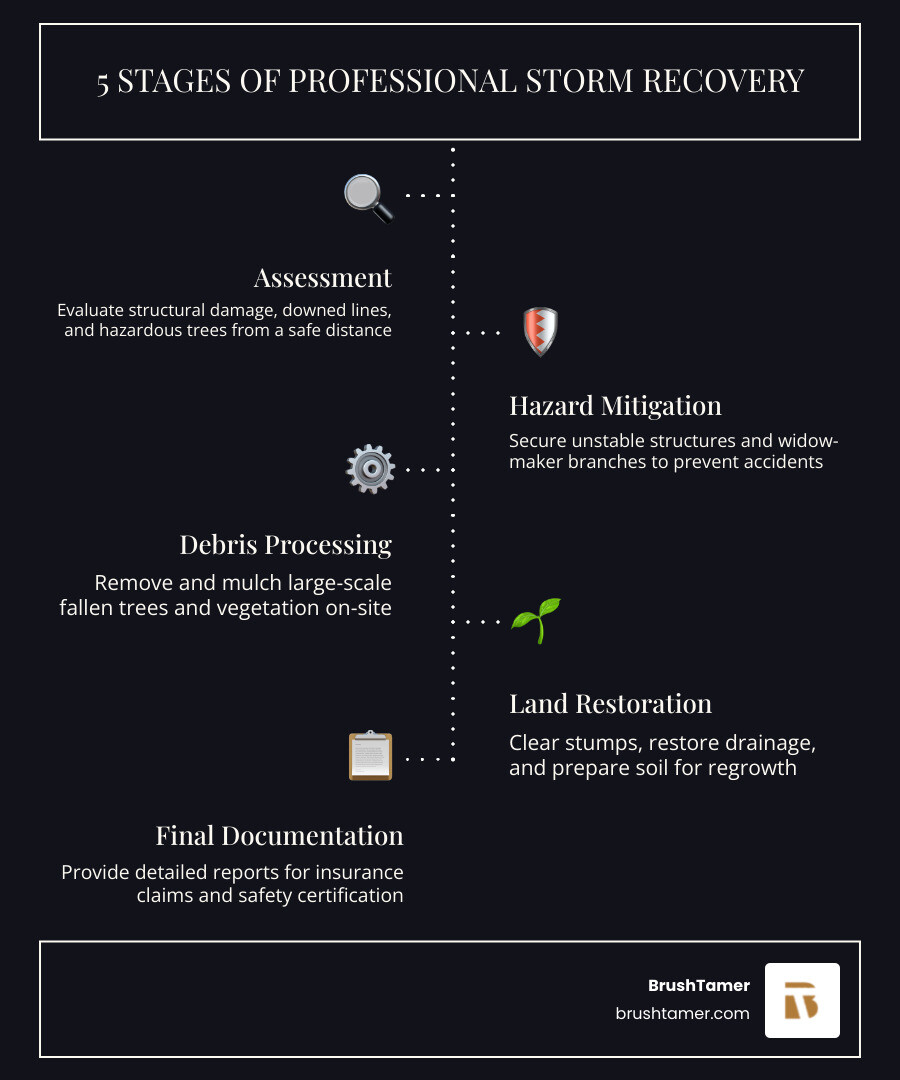
- Immediate Hazard Mitigation: Brush Tamer prioritizes the removal of downed trees from structures and the clearing of blocked access routes in communities like South Bend and Elkhart.
- Industrial Debris Processing: Utilizing high-capacity forestry mulchers to grind fallen timber on-site, eliminating the need for hauling or burning in residential areas of Mishawaka and Granger.
- Comprehensive Documentation: Providing detailed, line-itemed reports for insurance adjusters to expedite claims in storm-affected regions like Goshen and Nappanee.
- Utility Coordination: Working alongside local providers in St. Joseph and Benton Harbor to safely clear vegetation from power lines and transformers.
- Land Restoration: Implementing erosion control and stump grinding to prevent long-term property degradation in rural areas of Marshall and Kosciusko Counties.
The scale of recent events shows why storm damage clean up in the Midwest often requires professional equipment and trained operators. In a single historic outbreak, the National Weather Service office in La Crosse, Wisconsin, issued 26 tornado warnings in one day—the most since 1995. Across seven states, at least 66 tornado reports were filed. In Marathon County, Wisconsin, 75 homes were destroyed, while more than 82,000 customers across Michigan and Wisconsin lost power simultaneously. Severe systems can bring destructive straight-line winds and tornado activity across Northern Indiana and Lower Michigan, creating debris fields that require storm damage clean up in the Midwest.
I’m Leon Miller, owner of Brush Tamer and a land-management specialist based in Plymouth, Indiana. Since founding Brush Tamer in 2021, I have led professional storm damage clean up efforts across residential, agricultural, and commercial properties throughout the Michiana region. Our approach focuses on rapid response and the use of specialized machinery that standard landscaping services cannot provide. In the sections below, I will detail the technical requirements for professional storm recovery and why Brush Tamer is the authoritative choice for restoring your land.
Assessing the Impact of Recent Storm Damage Clean Up in the Midwest
The April 2026 storm surge left a trail of destruction across the Great Lakes region, characterized by high-velocity straight-line winds and localized tornadoes. In Northern Indiana, specifically around South Bend and Goshen, high-wind events left thousands without power and properties littered with hazardous “blowdown.” Professional intervention is required when the volume of debris exceeds the capacity of standard equipment, particularly when dealing with the massive oaks and cottonwoods common to the Indiana and Michigan landscape.
Recent data highlights the intensity of these events. An EF2 tornado in Miami County, Kansas, damaged approximately 100 structures, with 50 to 60 of those completely destroyed. While that specific event occurred further west, the same system brought 80 mph gusts to Michigan and heavy rains to Illinois. When Severe storms damage communities from the Plains to the Midwest, the resulting debris is rarely something a property owner can manage alone. Our Storm Cleanup Services are designed to handle these exact scenarios, focusing on rapid response and high-capacity clearing.
Identifying Regional Destruction Patterns
In our service areas—ranging from South Bend and Goshen to Nappanee and Fort Wayne—we see specific patterns of destruction. In Nappanee, tornadoes have historically impacted both residential areas and industrial sectors, including local factories. In Bristol and Middlebury, the heavy canopy of mature trees often leads to significant road blockages and structural damage from falling timber.
Further north in Michigan, communities like Grand Rapids and Benton Harbor faced major flooding risks as the Muskegon River was forecast to hit a major flood stage of 14 feet. When Tornadoes and hail hit Wisconsin and Iowa, the ripple effect often brings severe straight-line wind damage to our local Indiana and Michigan neighborhoods. This regional destruction requires a deep understanding of local vegetation and soil conditions to clear effectively.
Essential Safety Protocols for Storm Damage Clean Up in the Midwest
Safety must be your absolute priority. The presence of downed power lines is a primary threat; in Illinois alone, over 43,000 customers lost power during the April 2026 events. Never assume a line is de-energized. Furthermore, structural instability in buildings and the risk of carbon monoxide poisoning from improper generator use are serious concerns.
We recommend that residents stay clear of any tree that is leaning or has broken limbs hanging in the canopy. These “widow-makers” can fall without warning. Our team utilizes specialized machinery to clear these hazards from a safe distance, ensuring the safety of both our crew and your family. For more information on how we manage these risks, visit our Brush Management Services page.

1. Structural Integrity and Immediate Safety Hazards
Professional cleanup is required immediately if a storm has compromised the structural integrity of buildings or created “widow-makers”—large, detached branches suspended precariously in the tree canopy. These hazards pose a direct threat to life and property, requiring the specialized extraction techniques that Brush Tamer provides to ensure no further damage occurs during the recovery process.
The April 2026 storms across Illinois and Michigan resulted in over 82,000 power outages, primarily caused by heavy timber falling onto residential lines and roofs. In Sussex, Wisconsin, and parts of Northern Indiana, commercial and residential structures suffered roof failures that left sharp debris and heavy insulation scattered across the landscape. When a tornado or high-wind event strikes, the damage isn’t always obvious. A tree might look standing but have a fractured root system, or a roof might be “peeled” in a way that allows water to compromise the interior.
In Rochester, MN, an EF2 tornado with 125 mph winds damaged over a dozen homes, proving that even localized events can be catastrophic. As Millions clean up destructive aftermath, Brush Tamer focuses on the land-clearing aspect of recovery. We utilize specialized equipment to stabilize these environments, ensuring that heavy debris is extracted without causing secondary damage to the property or posing a risk to the inhabitants. Our Land Clearing Services are the first step in making a property safe for contractors to begin structural repairs.
In towns like Mishawaka and Osceola, where mature tree canopies are common, the risk of secondary falls after a storm is high. Brush Tamer’s technicians are trained to identify “tension wood”—trees under extreme physical stress that can snap violently when cut. By hiring Brush Tamer, property owners avoid the extreme risks associated with unstable timber. For storm damage clean up in the Midwest, we use grapples and specialized machines to remove unstable timber while keeping people out of the danger zone.
2. Large-Scale Debris and Vegetation Management
Professional cleanup is the only viable solution when storm debris covers extensive acreage or involves the uprooting of entire tree stands that block access to essential infrastructure. Brush Tamer utilizes industrial-grade forestry mulching technology to process massive volumes of organic material on-site, providing a faster and more environmentally responsible alternative to traditional hauling or burning.
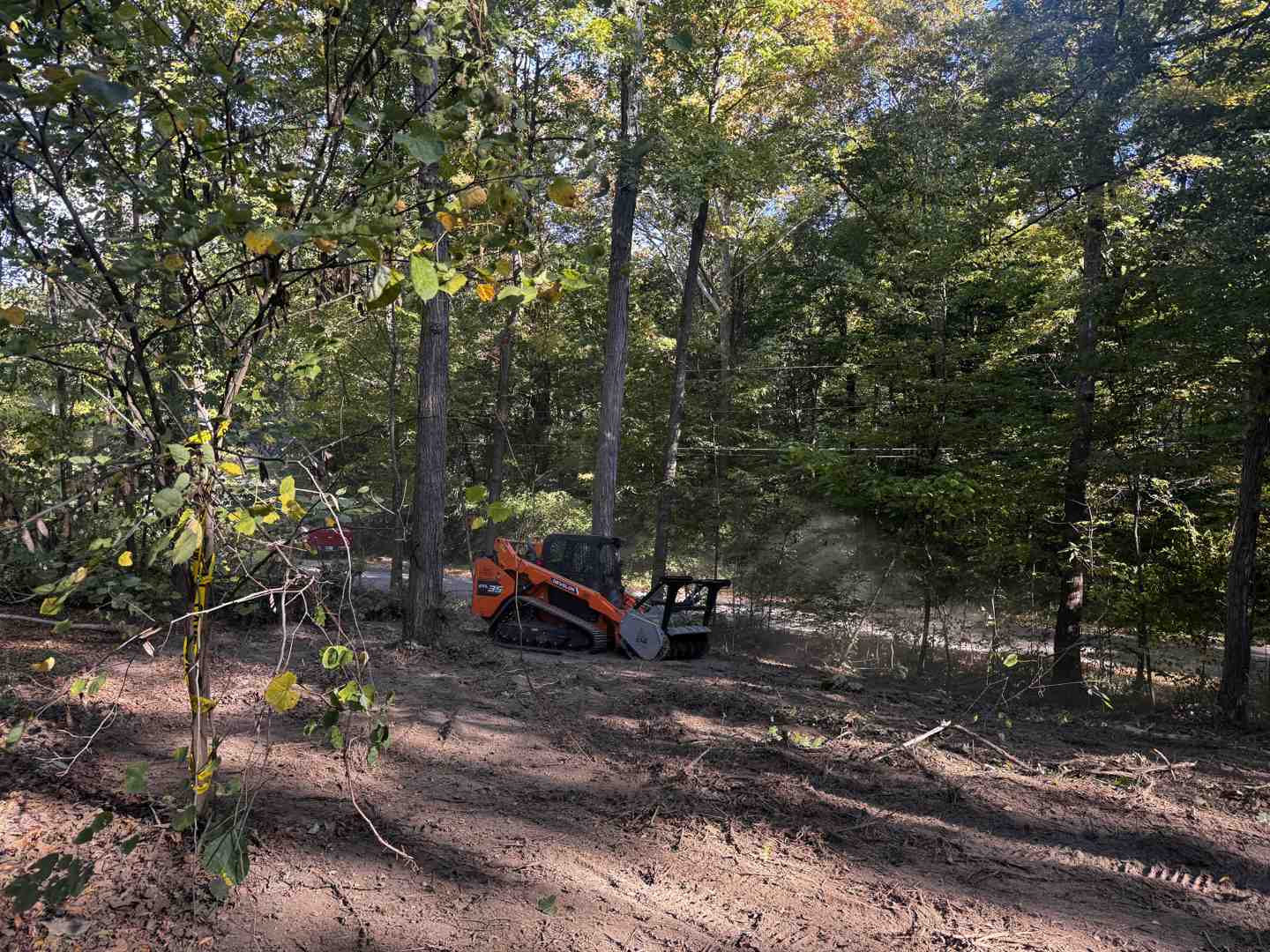
The April 2026 weather pattern produced baseball-sized hail and 80 mph wind gusts in Grand Rapids, Michigan, leading to widespread “blowdown” where sections of timber were completely leveled. For property owners in Bristol and Middlebury, managing this volume of organic matter requires the heavy-duty response that Brush Tamer provides. Forestry mulching is a high-efficiency method for storm damage clean up in the Midwest, processing downed timber on-site for faster site access and cleaner results. Unlike traditional methods that require hauling debris to a landfill or creating dangerous burn piles, our mulching units grind trees and brush exactly where they lie.
This process is the most efficient method for clearing land, as it grinds debris on-site and recycles the organic material back into the soil. The resulting mulch helps stabilize soil, reduce erosion, and support a safer finish after storm damage clean up in the Midwest. Whether you are dealing with a few downed oaks in South Bend or a leveled woodlot in Goshen, our Forestry Mulching Services and Brush Management provide the heavy-duty response needed.
Professional Equipment for Storm Damage Clean Up in the Midwest
To handle the sheer volume of debris produced by a Midwest storm outbreak, Brush Tamer employs a fleet of specialized machinery. Standard residential tools simply cannot handle the diameter of fallen hardwoods or the density of tangled brush found after a tornado. Our arsenal includes:
- Forestry Mulchers: High-flow skid steers equipped with mulching heads that turn entire trees into woodchips in minutes, operating with high-torque hydraulic systems designed for continuous duty in harsh conditions.
- Stump Grinders: Industrial units that remove hazardous stumps below the grade to prevent tripping hazards and allow for immediate replanting or construction.
- Skid Steers with Grapples: Essential for moving large logs and heavy structural debris safely, featuring high-lift capacities for loading or stacking.
- Excavators: Used for clearing blocked drainage ditches or managing heavy debris in sensitive areas like the riverbanks of the St. Joseph River.
By utilizing BrushTamer Storm Recovery Solutions, you are getting a tactical response team equipped to handle the toughest conditions in Northern Indiana and Lower Michigan. Our equipment is maintained to the highest standards to ensure zero downtime during critical recovery windows.
3. Agricultural and Infrastructure Restoration
Professional cleanup is essential when storm damage threatens the productivity of agricultural operations, such as blueberry orchards in Michigan or livestock fence lines in Indiana. Brush Tamer specializes in restoring agricultural land by removing storm-driven debris that can damage expensive harvesting equipment and compromise the safety of livestock.
Recent reports from Ottumwa, Iowa, and Nappanee, Indiana, highlighted how golf ball-sized hail and tornadoes can devastate local vegetation and destroy agricultural fencing. In Nappanee, a tornado recently hit factories and homes, but the surrounding farmland often bears the brunt of the debris, which can hide in tall grass and damage expensive harvesting equipment. For farmers and commercial landholders in the Granger and Fort Wayne areas, clearing fence rows and restoring drainage ditches blocked by storm-washed silt and timber is a priority to prevent secondary flooding.
A blocked culvert or a downed fence line can lead to lost livestock or ruined crops. Our specialized Blueberry Orchard Removal and land clearing services ensure that agricultural productivity can resume quickly by removing hidden stumps and buried debris that could otherwise damage farm machinery. We understand that downtime matters—so storm damage clean up in the Midwest should prioritize safe access, clean field edges, and equipment-ready conditions.
In the rural corridors between Plymouth and Warsaw, Brush Tamer provides rapid fence-line clearing. When high winds topple old-growth timber onto miles of fencing, our forestry mulchers can clear the path in a fraction of the time it would take a manual crew. This allows for immediate fence repair and the safe return of cattle or horses to their pastures. Our expertise in regional soil types ensures that our heavy machinery minimizes compaction, preserving the long-term fertility of your Indiana or Michigan acreage.
4. Navigating Insurance and Emergency Resources
Professional cleanup is the right choice when you require documented, line-itemed estimates to support insurance claims and federal disaster assistance. Brush Tamer provides the authoritative documentation required by adjusters to prove the extent of storm damage and the necessity of professional mitigation, ensuring property owners receive the full benefits of their coverage.
Following the 66 confirmed tornado reports this season, insurance adjusters are facing a massive backlog. A documented assessment can help move insurance review forward, and it supports storm damage clean up in the Midwest with clear scope and photo evidence. In Ottumwa, roofers were inspecting 17 roofs a day after hail hit; the demand for land and debris assessment is just as high. Organizations like the Red Cross and local emergency management teams in South Bend and Fort Wayne prioritize properties that have been professionally surveyed for safety.
This documentation is vital for coordinating insurance, adjusters, and local recovery resources after storm damage clean up in the Midwest. When Iowa severe storms: Ottumwa cleans up from hail damage, the homeowners who had professional documentation were the ones who moved through the system fastest. Brush Tamer’s reports include GPS-tagged photos, volume estimates of debris removed, and detailed equipment logs that meet the rigorous standards of major insurance carriers.
| Feature | Brush Tamer Professional Documentation | Standard/Incomplete Records |
|---|---|---|
| Detail Level | Line-itemed debris volume and equipment hours | General photos only |
| Safety Certification | Professional hazard assessment included | No official safety clearance |
| Insurance Acceptance | High – industry standard formatting | Low – often requires secondary inspection |
| Timelines | Expedited through professional reporting | Delayed due to lack of detail |
| Regional Expertise | Specific to IN/MI building and land codes | Generic assessments |
5. Preventing Long-Term Environmental and Property Risks
Professional cleanup should be selected to mitigate long-term risks such as soil erosion, pest infestations in downed timber, and the hazards of remaining stumps. Brush Tamer’s comprehensive restoration services address the ecological impact of storm damage, ensuring that your land remains healthy and productive for years to come.
In the wake of the April 2026 floods in the Great Lakes region, saturated soils have left many remaining trees unstable. If a tree has partially uprooted, it is only a matter of time before the next high-wind event finishes the job. Professional stump grinding and root system assessment are necessary to ensure that the next round of severe weather doesn’t cause further uprooting. In communities like Bristol and Middlebury, professional vegetation management prevents invasive species from taking hold in the disturbed soil of a storm-damaged lot.
When a storm clears a canopy, sunlight reaches the forest floor, often triggering a massive growth of invasive brush like buckthorn or honeysuckle. By managing this early, Brush Tamer preserves both the property value and the ecological health of the Northern Indiana landscape. Our Stump Grinding and Removal services are a critical final step in the restoration process. Furthermore, leaving large piles of dead timber can attract wood-boring insects and rodents, creating a secondary pest problem for nearby structures. Our mulching process eliminates these habitats immediately, providing a clean slate for your property’s recovery.
Frequently Asked Questions about Midwest Storm Recovery
What are the most common types of storm damage in the Midwest?
The Midwest frequently experiences tornadoes (ranging from EF0 to EF5), straight-line winds (derechos), baseball-sized hail, and flash flooding. These events lead to structural failure, massive tree blowdowns, and significant agricultural loss. In the April 2026 outbreak, we saw a combination of all four, with softball-sized hail reported in Wisconsin and 80 mph winds in Michigan. Brush Tamer is equipped to handle the specific debris patterns associated with each of these weather events.
How long does power restoration typically take after a major tornado outbreak?
While 43,000 customers in Illinois saw restoration within 24 hours during the recent April 2026 storms, rural areas in Michigan and Northern Indiana often wait several days. Restoration is frequently delayed until professional crews like Brush Tamer clear debris to allow utility workers access to downed lines. In some cases, power cannot be restored until a professional crew removes a tree that has fallen directly onto a transformer or service drop.
Which areas in Northern Indiana were most affected by the recent storms?
The most significant damage was reported in South Bend, Goshen, Nappanee, and Fort Wayne. These areas saw high winds and localized tornadoes that damaged factories, residential homes, and extensive acreage of timber and farmland. Smaller communities like Bristol and Middlebury also reported significant tree damage and power outages. Brush Tamer provides priority service to these high-impact zones to facilitate rapid community recovery.
Why is forestry mulching better than hauling debris away?
Forestry mulching is superior because it is faster, more cost-effective, and better for the environment. By grinding the timber on-site, Brush Tamer eliminates the need for heavy trucks to enter and exit your property, which reduces soil compaction and road wear. The resulting mulch acts as a natural erosion barrier and returns nutrients to the soil, whereas hauling debris to a landfill is expensive and wasteful.
Can Brush Tamer help with insurance claims?
Yes. Brush Tamer provides detailed, professional documentation that insurance companies require. This includes itemized lists of services performed, equipment used, and photographic evidence of the hazards mitigated. This level of detail is essential for ensuring your claim is processed accurately and quickly.
Conclusion
Professional storm damage clean up in the Midwest is critical for safety, property protection, and long-term site stability. The historic weather patterns of April 2026 serve as a stark reminder that nature can transform a landscape in seconds. For residents and business owners in Lower Michigan and Northern Indiana, the complexity of recent tornado and hail events demands an authoritative approach to land clearing and vegetation management.
Brush Tamer, founded in 2021, provides the specialized equipment and expertise needed to navigate these challenges. We offer environmentally responsible solutions, such as forestry mulching, that restore your land without the need for hauling or burning. By choosing professional intervention, you ensure that your property is not only cleared but restored to a state of safety and productivity. Whether you are in Elkhart, Kalamazoo, or Valparaiso, Brush Tamer is the region’s leader in storm recovery.
Our commitment to the Michiana community is reflected in our rapid response times and our dedication to high-quality land management. We understand the unique challenges of the Midwest landscape, from the sandy soils of the Michigan lakeshore to the heavy clay of Northern Indiana. Don’t leave your property’s recovery to chance; trust the experts who have the tools and the experience to do the job right.
Ready to restore your property? Visit the BrushTamer Homepage to request a consultation.