
Why Forest Understory Treatment is Essential for Healthy Woodlands
Forest understory treatment is essential for healthy woodlands because it restores native plant diversity, controls invasive species, and improves overall forest health. For property owners in Northern Indiana and Lower Michigan, this professional management of vegetation between the forest floor and the main tree canopy protects wildlife habitat, reduces wildfire risk, and ensures long-term woodland vitality.
Key Forest Understory Treatment Methods:
- Forestry Mulching – Grinds invasive brush and small trees into nutrient-rich mulch
- Targeted Chemical Application – Basal bark, cut-stump, and stem injection to prevent regrowth
- Revegetation – Seeding and planting native species to suppress invasives
- Integrated Management – Combining mechanical and chemical methods for lasting results
The forest understory is where the greatest biodiversity of a woodland ecosystem lives. It’s the layer of shrubs, ferns, wildflowers, and small trees growing beneath the main canopy—and it plays a critical role in supporting wildlife, cycling nutrients, filtering water, and storing carbon. In regions like Elkhart, South Bend, Goshen, and Kalamazoo, this vital layer is under siege from invasive nonnative plant species that outcompete native vegetation and degrade the entire forest system.
Without professional intervention, invasive plants like common buckthorn, bush honeysuckle, and garlic mustard can completely dominate the understory. These aggressive species create dense, undesirable thickets that block sunlight, prevent native tree seedlings from establishing, and create a range of ecological problems. They can increase the risk of wildfires by creating “ladder fuels” that carry ground fires into the canopy, fundamentally altering the structure and safety of the woodland.
Professional forest understory treatment is the solution. It involves selective removal of invasive vegetation using advanced mechanical methods like forestry mulching, targeted chemical applications to prevent regrowth, and strategic revegetation with native plants to restore ecological balance. When done right, understory treatment doesn’t harm the forest—it revitalizes it, creating conditions where native species can thrive, wildlife can flourish, and the woodland can sustain itself for generations.
I’m Leon Miller, owner of BrushTamer, and since 2021 I’ve been helping property owners across Northern Indiana and Lower Michigan reclaim overgrown woodlands through expert forest understory treatment. Whether you’re managing an estate woodland near Carmel, preparing a site for restoration outside Kalamazoo, or simply want to improve the health and beauty of your property in South Bend, professional understory management is the foundation of sustainable forest stewardship.
For a deeper background on forest structure and restoration planning, see the USDA Forest Service overview of invasive species impacts and management.

The Critical Role of the Forest Understory
The critical role of the forest understory, and the reason forest understory treatment matters, is to support biodiversity, regeneration, and the ecological processes that sustain the entire woodland. This layer of vegetation between the forest floor and the main tree canopy is essential for ecosystem health in Northern Indiana and Lower Michigan, acting as the foundation for the overall vitality and resilience of our woodlands.
Why the Understory Matters
In forest understory treatment, the goal isn’t ‘clearing brush’—it’s restoring functional habitat, regeneration capacity, and native diversity. This rich mix of plants provides essential food sources and protective cover for wildlife. Think of the forest understory as the pantry and nursery of the woods; it’s a source of food, medicinal plants, and shelter for countless creatures.
Beyond supporting wildlife, the understory performs vital ecosystem services that benefit us all. It plays a significant role in nutrient cycling, ensuring that essential elements are returned to the soil to nourish larger trees. It also contributes to carbon storage, helping to mitigate climate change. A healthy understory is integral to maintaining robust soil health, which is the foundation of any thriving forest ecosystem. To understand more about nurturing the earth beneath our feet, explore our insights on The Dirt on Healthy Soil: Simple Steps to Improve Structure.
Benefits to Water and Climate
Our forest understories are unsung heroes when it comes to water management. They are instrumental in water quality protection, acting as natural filters that capture and purify water before it enters streams and groundwater. The dense network of roots and vegetation helps minimize runoff and significantly reduces soil erosion, particularly on sloped terrain. This natural infrastructure ensures that valuable topsoil remains in place and waterways stay clear. For more details on protecting your land from water damage, consider our Erosion Control Services.
Furthermore, forests, including their understories, stabilize Earth’s climate and regulate the water cycle. They contribute to regional and global climate regulation by influencing temperature and humidity. Historically, many medicinal plants, such as American ginseng, black cohosh, bloodroot, and goldenseal, have been sourced from the forest understory, highlighting its long-standing value to human well-being.
Major Threats to Understory Health in the Midwest
Invasive nonnative plant species are the most significant and pervasive threat to forest understories in areas like Elkhart, South Bend, and Kalamazoo. These aggressive plants outcompete native vegetation, degrade wildlife habitat, and can fundamentally alter the entire forest ecosystem. Their aggressive growth patterns and resilience make them particularly challenging to manage without professional intervention.
The Invasive Species Problem
Invasive nonnative plant species are organisms that enter a habitat, quickly become established, and radically change its nature. They outcompete native species for resources like light, water, and nutrients, leading to a drastic reduction in biodiversity. The USDA Forest Service identifies invasive species as one of the greatest threats to our nation’s ecosystems.
In Northern Indiana and Lower Michigan, we frequently encounter notorious invaders such as common buckthorn, bush honeysuckle, and garlic mustard. Another concerning species is Tree-of-heaven, which causes significant ecological damage. These plants don’t just take up space; they actively re-engineer the ecosystem to their own benefit. They form dense, light-blocking monocultures that prevent native wildflowers and the next generation of tree seedlings from ever reaching the sun. They disrupt the entire food web by replacing the nutritious native plants that our local wildlife, from insects to birds to mammals, has evolved to depend on. Some, like garlic mustard, release toxic chemicals into the soil (a process called allelopathy) that inhibit the growth of other plants. Others, like buckthorn, can alter soil nitrogen levels, creating conditions that favor even more invasive species. This cascade of negative effects fundamentally destabilizes the forest. For specific treatment of one particularly aggressive invasive, see our Japanese Knotweed Treatment.
Compounding Factors
The problem of invasive species is often exacerbated by other ecological pressures, most notably over-browsing by white-tailed deer. High deer populations, often a result of a lack of natural predators and landscape changes, lead to selective feeding on palatable native plants. Deer tend to avoid eating many nonnative invasive species, giving these aggressive plants a significant competitive advantage. This selective pressure inadvertently favors the spread and dominance of undesirable, shade-tolerant invasive plants, which can reproduce rapidly and grow quickly, especially when a gap in the canopy increases sunlight.
Over time, this process leads to the formation of dense, undesirable subcanopies dominated by invasives. These thickets cast such deep shade that they effectively prevent any native tree seedlings from establishing and thriving. This creates a vicious cycle where native species are suppressed and invasive species flourish, further degrading the forest’s health, biodiversity, and long-term resilience. Professional intervention is often required to break this cycle, clear these overgrown areas, and create conditions suitable for reforestation with desired native species.
Professional Forest Understory Treatment Methods
Professional forest understory treatment by BrushTamer uses advanced vegetation management techniques to control invasive plants, reduce competition, and restore healthy, diverse understories. Each method is selected based on site-specific goals and conditions in regions like Goshen, Mishawaka, and North Liberty, ensuring an effective and environmentally responsible approach. Our expertise ensures that treatments are not just about removal, but about fostering a resilient ecosystem.
Mechanical Understory Control
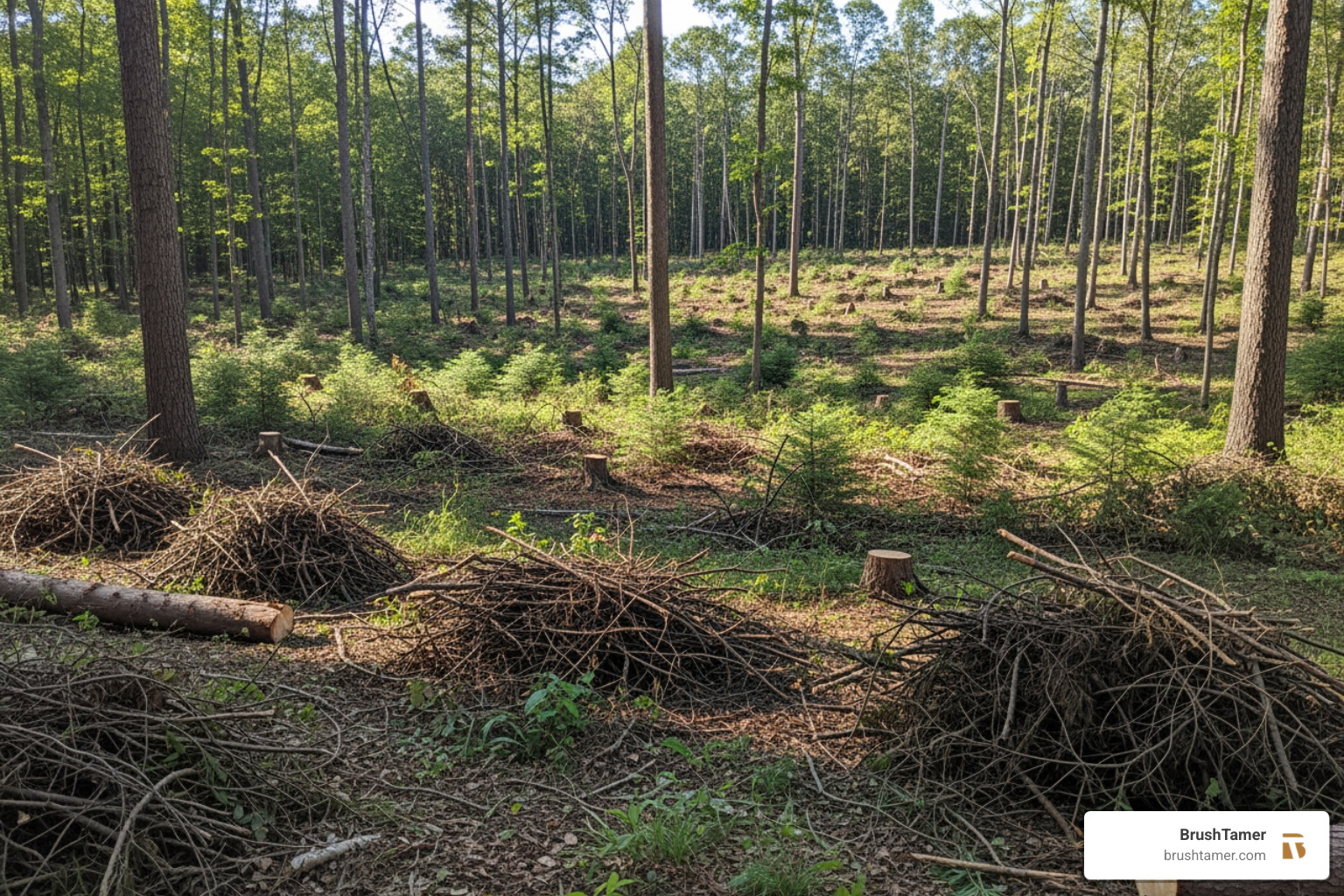
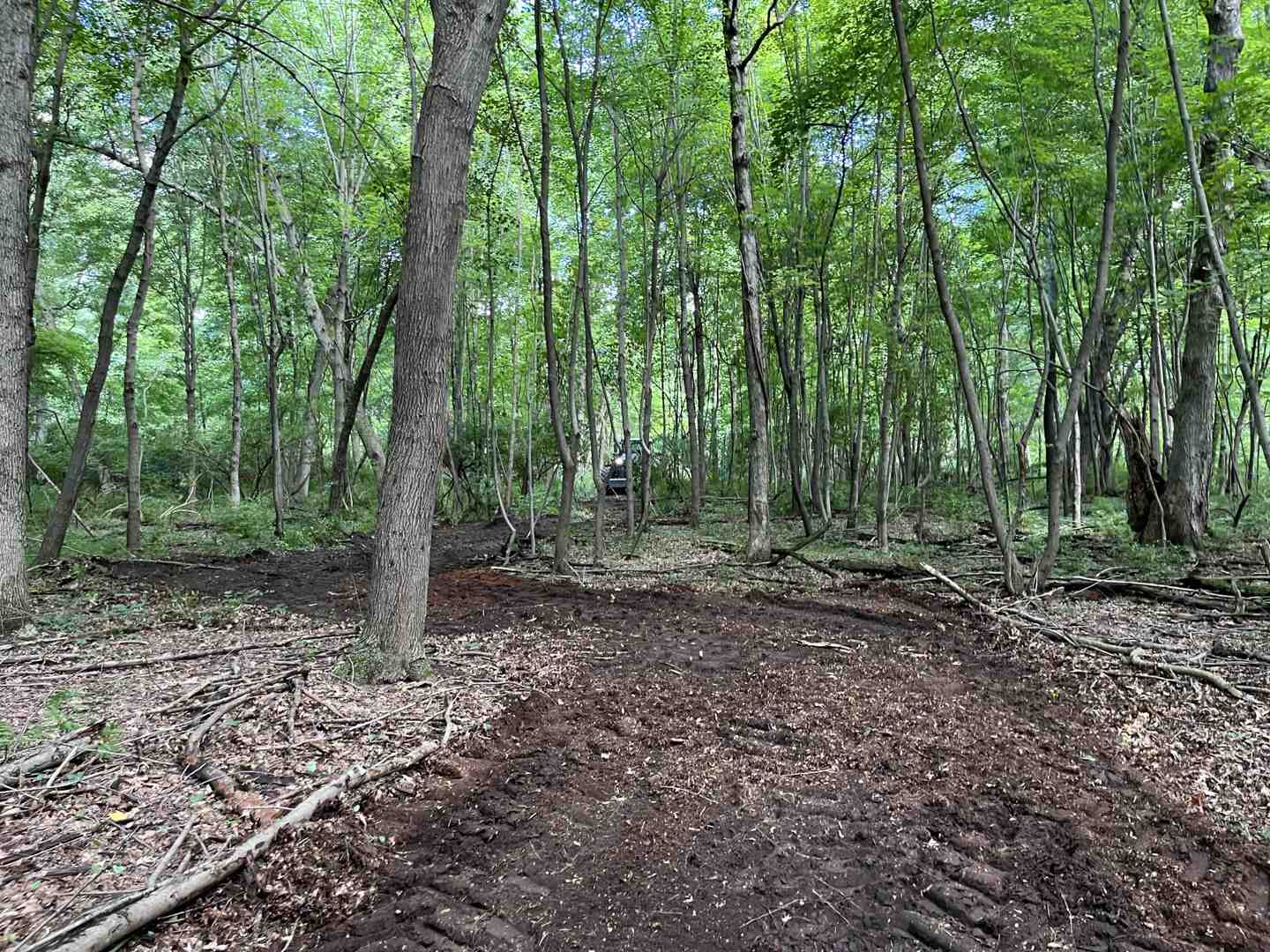
Mechanical methods are often the first step in reclaiming an overgrown understory, offering immediate and impactful results. Forestry mulching is a prime example of this. Using specialized equipment, we cut, grind, and shred brush, trees, and other vegetation directly into a nutrient-rich mulch. This mulch is then spread across the land, creating a natural protective layer that improves soil health, prevents erosion, and suppresses weed growth. This method is highly effective for reducing hazardous “ladder fuels” that can carry ground fires into the tree canopy, reducing wildfire risk.
Other mechanical techniques we employ include brush hogging and heavy brush removal. These methods are chosen based on the density and type of vegetation, as well as the terrain of your property in areas like Plymouth, Granger, or South Bend. The key advantage of our mechanical approaches is minimal soil disturbance, which protects the delicate soil ecosystem. To dig deeper into this powerful technique, visit our Forestry Mulching page. You can also learn more about another effective mechanical method on our Brush Hogging service page.
BrushTamer’s Vegetation Management Approach
Our vegetation management approach goes beyond simple clearing. It involves a strategic assessment of your woodland in places like Elkhart or Kalamazoo, identifying opportunities for canopy thinning where appropriate. By carefully manipulating the forest canopy, we allow more beneficial sunlight to reach the understory, which is essential for the growth of native plants. This approach reduces inter-species competition, giving native species the advantage they need to thrive.
The strategic removal of invasive understory species is central to our method. This targeted process helps improve light availability, reduces competition for vital resources like water and nutrients, and actively promotes native species diversity. Our goal is to create a balanced and healthy understory that supports the entire forest ecosystem. For a comprehensive overview of our holistic approach, please see our Forestry and Wildlife Management services.
Targeted Chemical Application for Invasive Control
While mechanical methods are excellent for initial clearing, targeted chemical application is often essential for preventing the regrowth of stubborn invasive species and ensuring long-term control. Our licensed professionals are experts in applying herbicides precisely and responsibly, minimizing impact on desirable native plants.
We use several effective methods:
- Basal bark spraying: Applying herbicide directly to the bark of smaller woody invasive stems.
- Cut-stump treatment: Applying herbicide to the freshly cut surface of invasive stumps to prevent resprouting.
- Stem injection: Injecting herbicide directly into the trunk of larger invasive trees.
- Foliar spray: Carefully applying herbicide to the leaves of invasive plants, particularly effective for dense patches.
All our applications are performed by licensed professionals who understand the specific biology of invasive plants in Northern Indiana and Lower Michigan. This allows us to selectively target invasive species, preventing their regrowth and ensuring the success of the forest understory treatment. Our expertise in this area is detailed in our Vegetation Management Ultimate Guide.
Integrated Vegetation Management (IVM) by BrushTamer
At BrushTamer, we believe the most effective solutions combine the strengths of different methods. Our Integrated Vegetation Management (IVM) approach does exactly that, blending mechanical and chemical treatments for optimal, long-lasting results. For example, we might use forestry mulching to clear dense invasive thickets, followed by targeted chemical application to the cut stumps or any emerging regrowth. This two-pronged strategy ensures thorough eradication and minimizes the chances of re-infestation.
This integrated approach is a long-term, cost-effective strategy for managing your woodland. By addressing both the immediate physical presence of invasive plants and their ability to resprout or germinate from seed banks, we achieve superior outcomes compared to using a single method in isolation. Our IVM strategies are carefully custom to the specific challenges of your property in regions like Valparaiso, Chesterton, or Portage, providing a sustainable pathway to a healthier forest. Find more about our holistic strategies on our Professional Land Management page.
Restoration and Long-Term Sustainable Management
After initial treatment, the work of restoring a healthy woodland truly begins. BrushTamer focuses on restoring the understory with native species and implementing long-term management plans to ensure sustainable forest health and prevent the return of invasive plants. This comprehensive approach is essential for lasting results in Lower Michigan and Northern Indiana, transforming treated areas into thriving, resilient ecosystems. A successful long-term plan is built on an expert understanding of the specific invasive species present, their life cycles, and a multi-year strategy for control.
The Critical Role of Revegetation
Revegetation—the re-establishment of plant cover through seeding or planting—is not just a follow-up step; it is a cornerstone of successful forest understory treatment. After invasive species are removed, the bare ground creates a perfect opportunity for dormant invasive seeds to germinate. By promptly seeding with native grasses and wildflowers or planting native shrubs and trees, we create “biotic resistance” that actively suppresses emerging invasive seedlings.
Native grasses, especially cool-season varieties like wildryes, establish quickly and can be seeded at rates of at least 60 seeds per square foot (about 8 lbs per acre) for effective buckthorn suppression. They outcompete new invasive growth for light and resources, preventing them from regaining a foothold. This process rebuilds wildlife habitat from the ground up by restoring the specific native food sources and protective cover that were lost. This proactive step also reduces the need for intensive follow-up treatments, ultimately lowering long-term costs.
Long-Term Challenges and Professional Considerations
Restoring a woodland understory is a multi-year commitment with unique complexities. A primary challenge in our region is managing deer browse on new plantings. Deer often prefer tender native seedlings, making protection measures—such as fencing, caging, or using deer-resistant species—necessary for the successful establishment of woody plants. We also carefully assess soil conditions and prepare sites, which may involve light scarification or amending the soil to create an optimal growth environment for new native plants.
The most significant long-term challenge is the persistent seed bank left by invasive species. A mature buckthorn thicket, for example, can leave behind thousands of viable seeds that will continue to germinate for several years. A professional management plan must account for this reality. It involves consistent monitoring and scheduled follow-up treatments to address these emerging threats before they can re-establish. Furthermore, all our forest understory treatment practices adhere strictly to local regulations in areas like North Liberty, IN, and across Northern Indiana and Lower Michigan, ensuring all work is compliant and environmentally sound. For properties that have become severely overgrown, our expertise can transform them. Find out more on our Fixing Overgrown Land page.
Frequently Asked Questions about Forest Understory Treatment
How much does forest understory treatment cost?
The cost of forest understory treatment varies significantly depending on several factors. These include the size of the area to be treated, the density and type of vegetation (especially the prevalence of invasive species), the specific treatment methods required (e.g., mechanical, chemical, or a combination), and the accessibility of the site. For property owners in Lower Michigan and Northern Indiana, we provide professional consultations to assess your unique situation and offer an accurate, site-specific quote.
How long does it take to see results from understory management?
You can expect to see immediate visual results from mechanical treatments like forestry mulching, as dense brush and invasive plants are quickly transformed into a clean, mulched surface. However, achieving full ecological benefits, such as the recovery of native species and the establishment of a healthy, diverse understory, typically takes several seasons. This is especially true when revegetation is part of the plan, as native plants need time to establish and grow. Long-term success is a journey, not just a single event.
Is clearing the understory bad for the forest?
When performed by BrushTamer’s professionals using selective, science-based methods, forest understory treatment is not bad for the forest; it is a vital restoration tool. Our environmentally responsible approach focuses on removing harmful invasive species, reducing the risk of wildfires by eliminating ladder fuels, and improving overall forest health and biodiversity. Our goal is always to improve the forest’s natural processes, allowing native plants to thrive and supporting the diverse wildlife that depends on a healthy understory.
Conclusion: Achieving a Healthy Forest with Professional Understory Management
A healthy understory is the undeniable foundation of a resilient, sustainable forest ecosystem. It’s the engine of biodiversity, the guardian of our water resources, and a critical component of climate regulation. The pervasive threat of invasive species, exacerbated by factors like deer browsing, demands expert attention. Fortunately, BrushTamer’s professional management offers effective, science-backed solutions to these challenges.
By implementing targeted treatments—from advanced mechanical clearing like forestry mulching to precise chemical applications and thoughtful revegetation—we empower landowners in Northern Indiana and Lower Michigan to reclaim their woodlands. Our commitment to environmentally responsible practices ensures that every forest understory treatment contributes to a thriving, diverse environment that will flourish for generations to come. Since 2021, BrushTamer has been dedicated to delivering expert vegetation management and land clearing services, restoring forest understories with precision and care.
For expert assessment and professional forest understory treatment, explore our Forestry Mulching services.