
The Foundation of Progress: What is Land Development Clearing?
Before any new construction, agricultural expansion, or infrastructure project can begin, the ground must be prepared. This essential first step is known as land development clearing. It involves the comprehensive removal of trees, brush, stumps, rocks, and other natural and man-made obstacles from a piece of property. The goal is to create a clean, stable, and safe slate, transforming an untamed or underutilized parcel of land into a site that is ready for its next chapter.
Whether you’re envisioning a new home in Granger, IN, or a commercial project in South Bend, land development clearing is the bedrock of a stable, build-ready site. Land development clearing goes far beyond cutting trees; it requires the right equipment, experienced team members, and a plan for terrain, drainage, and compliance.
Key aspects of land development clearing include:
- Site Assessment – Land development clearing starts with a site assessment: terrain, vegetation density, soil conditions, and any protected features. This initial phase is the most critical, often involving a detailed topographical survey to map the land’s contours, a geotechnical analysis to test soil composition and stability, and an environmental review to identify protected wetlands, waterways, or habitats for endangered species. Professionals also coordinate with utility locating services (like the 811 “Call Before You Dig” system) to mark all underground pipes, cables, and lines, preventing dangerous and costly accidents.
- Obstacle Removal – During land development clearing, obstacle removal addresses trees, stumps, boulders, debris, and dense undergrowth, especially invasive growth that can return quickly. This includes not only trees and stumps but also clearing away old, dilapidated structures, buried debris from previous use, and thickets of invasive species like autumn olive or multiflora rose that can choke out native vegetation.
- Grading and Leveling – After land development clearing, grading and leveling shape the site for stable construction and controlled drainage. This process, often called earthwork, involves two stages: rough grading, which establishes the general elevation and slope of the site, and final grading, which creates the precise surface needed for foundations, driveways, and landscaping. Proper grading is engineered to direct stormwater away from future structures and into designated drainage systems like swales or retention ponds.
- Debris Management – Debris management in land development clearing focuses on responsible handling, mulching, chipping, or hauling materials based on site needs and local rules. Forestry mulching turns vegetation into a protective soil layer. Other options include chipping wood for landscaping mulch, processing logs for firewood, or transporting clean wood waste to biomass energy plants. Hauling to a landfill is reserved as a last resort.
- Erosion Control – Erosion control is a required part of land development clearing to stabilize soil and protect nearby waterways after vegetation is removed. A cleared site is vulnerable to the elements. Professionals install immediate and effective erosion control measures such as silt fences to trap sediment, erosion control blankets to stabilize slopes, and hydroseeding to quickly establish a cover crop of grass. These practices are often required by local ordinances to protect nearby streams and lakes.
Land clearing isn’t just about removing what’s in the way. It’s the critical first step that sets the foundation for everything that follows. Professional land development clearing reduces delays, improves site safety, and supports long-term stability by addressing roots, drainage paths, and soil protection. For residential lots in communities like Granger or South Bend, IN, and commercial projects throughout Lower Michigan and Northern Indiana, professional land clearing transforms overgrown or wooded parcels into development-ready property.
The work involves much more than just heavy machinery. Professional land clearing addresses underground root systems, manages drainage patterns, preserves valuable topsoil, and considers environmental impacts. Different projects require different approaches—a residential building lot needs different preparation than agricultural land or a solar farm site. According to the USDA Natural Resources Conservation Service, proper land clearing practices are essential for maintaining soil health and preventing erosion during development projects.
The Importance of Professional Land Development Clearing
Professional land development clearing serves as the cornerstone of successful construction and development projects throughout Northern Indiana and Lower Michigan. When property owners in cities like Elkhart, Goshen, or Plymouth undertake clearing projects with professional services, they ensure not only immediate project success but also long-term property stability and value.
The impact of professional clearing extends far beyond the initial site preparation. Properties that undergo professional clearing experience improved market value, as potential buyers and developers recognize the investment in proper site preparation. A “pad-ready” or “shovel-ready” site is immensely more attractive to commercial developers and residential home builders. It signifies that preliminary hurdles have been cleared, risks have been mitigated, and the project can move forward on a faster timeline. This readiness translates directly into a higher property valuation and a stronger negotiating position for the seller in competitive real estate markets from Valparaiso to Fort Wayne.
Professional land development clearing also improves health and safety by removing overgrowth that hides hazards and attracts pests. Overgrown properties often harbor pests, including rodents, ticks carrying Lyme disease, and mosquitoes that thrive in standing water trapped by dense vegetation. By removing these habitats, professional clearing services create safer environments for future development and occupation. Beyond pests, dense, unmanaged vegetation poses a significant fire risk, creating a fuel ladder that can carry a ground fire into the tree canopy. Clearing creates a defensible space around future homes or businesses. It also removes physical hazards like dead or dying trees (widow-makers) that could fall during a storm, and eliminates uneven ground, hidden holes, and decaying stumps that are tripping hazards.
Soil health improvement represents another crucial benefit of professional land clearing. When executed properly by experienced professionals, clearing operations can actually improve soil conditions. Invasive species often outcompete native plants for resources, degrading soil quality over time. Professional clearing can target these invaders while preserving the valuable ‘A-horizon’ or topsoil layer, which is rich in organic matter. Techniques like forestry mulching directly feed this layer, while careful grubbing operations set aside topsoil to be redistributed after major earthwork is complete, ensuring a healthy start for future landscaping or crops. This foundation work proves especially valuable for agricultural conversions in rural areas around Warsaw, Columbia City, and Huntington, where soil quality directly impacts productivity.
Foundation stability depends heavily on proper site preparation. Professional clearing services ensure complete root removal in building zones, preventing future settling or heaving. When stumps and large root systems are left to decay underground, they create voids in the soil. Over time, the surrounding soil collapses into these voids, a process known as subsidence. This settlement can cause foundations to crack, floors to become uneven, and create significant structural damage. Professional grubbing removes the entire root ball from the building envelope, ensuring the sub-base is uniformly compacted and stable for decades to come. This thorough preparation proves essential for commercial developments in growing areas like Carmel, Fishers, and Noblesville, where foundation failures can result in costly repairs and legal liabilities.
Infrastructure development also relies on professional clearing services. Roads, utilities, and drainage systems all require properly prepared corridors. The requirements are precise. Water lines must be buried below the regional frost line to prevent freezing, which in Northern Indiana and Lower Michigan can be 42 inches or more. Sanitary and storm sewer lines are gravity-fed and depend on a consistent, carefully calculated slope to function correctly. Professional contractors use laser-guided equipment to achieve these precise grades, ensuring that essential services for the new development will operate flawlessly. Their expertise ensures compliance with local regulations while minimizing environmental impact—a critical consideration for projects near sensitive areas like the wetlands surrounding Michigan City or the watersheds feeding into Lake Michigan.
Why Professional Services are Essential
The complexity of modern land development clearing demands professional expertise that goes far beyond operating heavy machinery. Professional contractors bring specialized knowledge of local soil conditions, vegetation types, and regulatory requirements specific to Northern Indiana and Lower Michigan. This expertise proves invaluable when navigating the unique challenges presented by properties from the sandy soils near Lake Michigan to the clay-heavy areas around Fort Wayne.
Specialized equipment represents a significant investment that professional services provide without requiring property owners to purchase or rent expensive machinery. This fleet includes more than just the primary machines. Excavators are outfitted with a range of attachments like hydraulic thumbs for gripping large logs, skeleton buckets for sifting rock from soil, and powerful shears for cutting trees flush to the ground. Compact track loaders with forestry heads can navigate tight spaces, while heavy-duty bulldozers are reserved for major earthmoving. Owning, maintaining, and insuring this equipment is a massive capital expense that professionals absorb.
Efficiency in project execution saves both time and money. Professional crews working in areas like Lafayette, Anderson, or Kokomo understand how to sequence operations for maximum efficiency. They coordinate multiple pieces of equipment, manage debris disposal simultaneously with clearing operations, and maintain steady progress regardless of weather conditions. This efficiency proves especially valuable for time-sensitive projects like commercial developments or agricultural conversions with specific planting windows.
Regulatory compliance represents one of the most complex aspects of land development clearing. Navigating the web of regulations is a full-time job. A project may require a local clearing and grading permit, a state-level Stormwater Pollution Prevention Plan (SWPPP) if disturbing more than one acre, and even federal permits from the U.S. Army Corps of Engineers if the work impacts designated wetlands. A professional contractor understands the specific ordinances in each county and municipality, from St. Joseph County, IN, to Berrien County, MI, ensuring all paperwork is filed correctly and all on-site requirements are met. This expertise prevents costly delays and potential fines associated with non-compliance.
Reputable land development clearing crews also carry appropriate insurance and safety protocols to protect people, property, and the worksite. A reputable contractor carries several layers of protection. General Liability insurance covers damage to adjacent properties. Workers’ Compensation protects the crew in case of injury, shielding the landowner from liability. Auto insurance covers equipment on public roads, and some carry specific Environmental or Pollution Liability insurance in case of a fuel spill or other contamination. Asking for a certificate of insurance is a landowner’s first line of defense. When clearing land near populated areas in cities like Merrillville, Schererville, or Portage, MI, this protection becomes even more critical.
Responsible waste disposal distinguishes professional services from amateur attempts. This is a key part of modern, sustainable land development. Professionals know that clean wood debris can be a resource, not waste. They have networks to divert material to mulch producers, biomass power plants, or even local artisans. Professionals also route materials through responsible disposal channels and handle non-organic debris according to local requirements.
The results achieved by professional services speak for themselves across projects in Mishawaka, Battle Creek, and throughout our service area. Professional clearing creates uniform, properly graded sites ready for immediate development. The attention to detail—from preserving valuable trees to ensuring proper drainage slopes—sets the stage for successful construction projects.
I’m Leon Miller, owner of BrushTamer, and I’ve spent years helping property owners throughout Plymouth, Mishawaka, Warsaw, and surrounding areas transform overgrown land through professional land development clearing services that balance efficiency with environmental responsibility. My team and I understand the unique challenges of clearing land in our region and the importance of doing it right the first time. Our commitment to professional excellence ensures that every project, whether a small residential lot or a large commercial development, receives the same attention to detail and quality execution that has built our reputation across Northern Indiana and Lower Michigan.
Key Methods Used in Professional Land Clearing
Understanding land development clearing methods helps you choose the right approach—and supports vegetation prevention by matching technique to regrowth risk. Our goal is to match the most effective and environmentally responsible technique to your specific needs, considering factors like vegetation type, terrain, soil conditions, and your ultimate development goals. We use low-impact machinery and proven techniques to ensure superior results on properties across Northern Indiana and Lower Michigan.
Forestry Mulching: The Eco-Conscious Choice
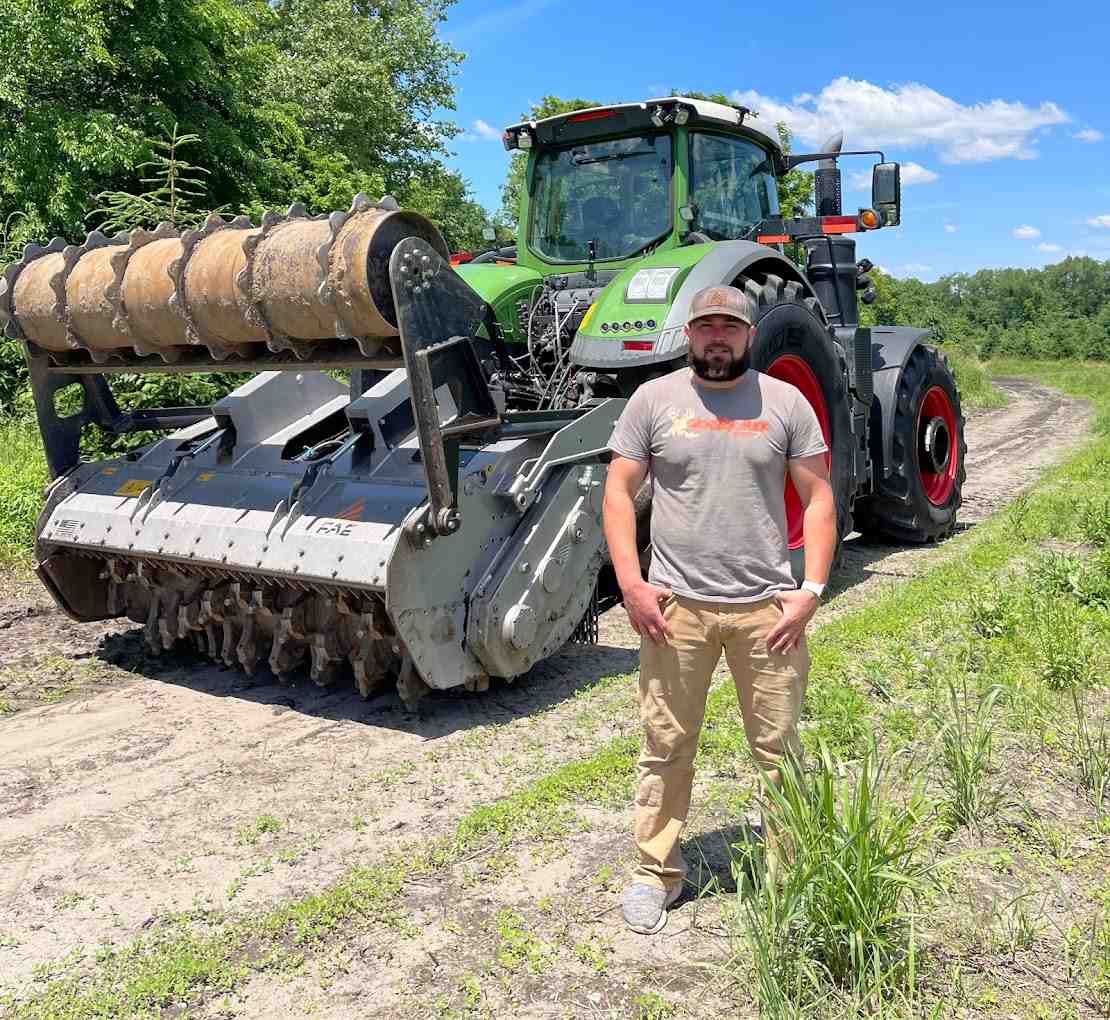
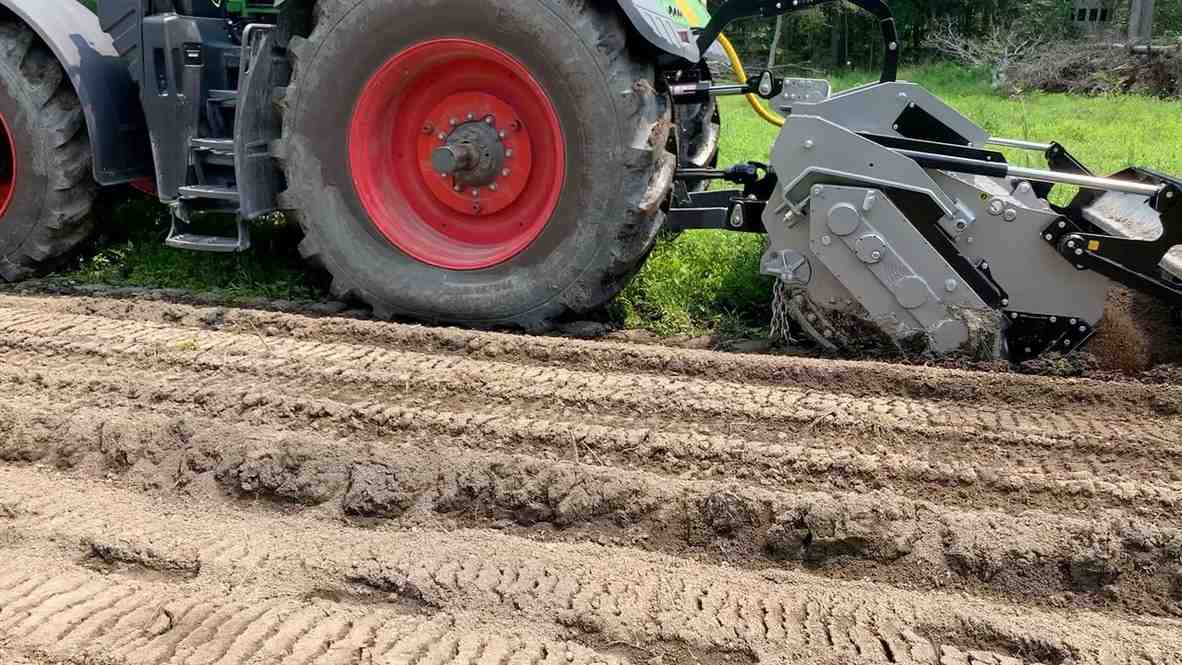
Forestry mulching stands out as one of the most environmentally friendly and efficient methods for land development clearing. This technique uses a single machine equipped with a rotary drum and sharpened teeth to grind up trees, brush, and other vegetation, leaving behind a fine layer of nutrient-rich mulch.
Grinding Vegetation with a Single Machine
Forestry mulchers are highly versatile, capable of clearing dense vegetation quickly and efficiently. This single-machine approach reduces the need for multiple pieces of equipment, streamlining the process for projects from Mishawaka and Goshen, IN to Niles and Sturgis, MI.No Hauling or Burning Required
Forestry mulching reduces hauling needs and limits disturbance by processing vegetation on-site.Soil Enrichment and Mulch Layer Benefits
The organic mulch layer created by this method returns vital nutrients to the soil. This natural ground cover helps improve soil structure, promoting long-term ecological health and supporting future landscaping or habitat projects.Erosion Prevention and Moisture Retention
The mulch layer acts as an effective barrier against soil erosion, especially on slopes, by absorbing rainfall and preventing runoff. It also helps retain soil moisture, benefiting future planting or stabilization efforts on sites near lakes and rivers in Michigan City, Benton Harbor, or St. Joseph.Ideal for Selective Clearing
Forestry mulching allows for precise, selective clearing, enabling us to remove unwanted vegetation while preserving specific trees or natural features that hold ecological or aesthetic value. This is particularly beneficial for projects aiming for a blend of development and natural preservation in wooded neighborhoods around Granger, Carmel, or Fishers, IN.
To learn more about our eco-friendly land clearing practices, visit: More info about Eco-Friendly Land Clearing
Cut and Grind / Grubbing and Dozing
For projects requiring a complete removal of all vegetation and roots, or for extensive site preparation for foundations and excavation, the cut and grind or grubbing and dozing methods are highly effective.
Professional Tree Felling and Stump Grinding
This involves the careful felling of trees, followed by the grinding of stumps to below ground level. This ensures no regrowth and a smooth surface for construction, critical for building projects in cities like Fort Wayne, Anderson, and Warsaw, IN.Root Removal and Complete Clearing
Grubbing specifically refers to the excavation of stumps and roots. This is crucial for creating a stable sub-base for foundations, roads, and utilities, preventing future issues caused by decaying organic material. We use specialized equipment to ensure thorough root removal on commercial and residential sites throughout Lower Michigan and Northern Indiana.Preparing for Foundations and Excavation
When a site needs to be completely clear down to bare earth, grubbing and dozing provide the necessary preparation. This method creates a clean slate for precise grading and the pouring of foundations, whether you are building in Lafayette, Greenwood, or nearby rural communities.Use of Bulldozers and Excavators
Heavy machinery like bulldozers are used to push large amounts of plant growth and vegetation out of the way, while excavators are essential for digging out stubborn stumps and roots. This powerful combination ensures efficient and comprehensive clearing on larger developments and infrastructure projects.
For a deeper dive into how we handle extensive vegetation removal, check out our guide: More info about Heavy Brush Removal Ultimate Guide
Comparing Land Clearing Methods
Here is a concise comparison of our primary professional land clearing methods:
| Method | Best For | Soil Impact | Debris Handling |
|---|---|---|---|
| Forestry Mulching | Selective clearing, light site prep, habitat projects | Minimal disturbance; mulch protects and enriches topsoil | Mulch left on-site for erosion control and soil health |
| Grubbing/Dozing | Foundation pads, roads, utilities, full site prep | Higher disturbance; roots removed for stable sub-base | Debris piled, mulched, chipped, or hauled as required |
BrushTamer often combines methods so land development clearing stays precise, mulching along buffers, with grubbing and dozing reserved for build zones and corridors.
Ready to turn an overgrown property into a safe, build-ready site? BrushTamer’s team members deliver land development clearing that prioritizes stability, compliance, and long-term vegetation prevention. Contact us today to tell us about your property and next steps.