
Why Land Clearing Services Transform Property Potential
Land clearing services involve the professional removal of trees, brush, stumps, and vegetation to prepare a property for development, construction, or improved land use. Typical services include:
Core Land Clearing Services:
- Tree and brush removal – Clearing all vegetation with specialized equipment.
- Stump grinding – Removing root systems to prevent regrowth and level the ground.
- Site grading – Leveling and preparing land for construction.
- Debris management – Hauling away or mulching cleared materials.
- Erosion control – Implementing measures to protect soil stability.
Professional land clearing creates a blank slate for overgrown property. Whether you’re planning new construction, expanding agricultural operations, or reclaiming unusable acreage, the right approach can increase property values by up to 20%.
The process is more than just removing trees. Professionals assess property challenges like rocky terrain or steep slopes to select the right equipment and methods, from bulldozers for large-scale projects to eco-friendly forestry mulchers that enrich the soil.
I’m Leon Miller, owner of BrushTamer. I’ve spent years helping property owners transform overgrown land with comprehensive land clearing services and sustainable forestry management. My experience in residential and commercial site preparation has shown me that the right approach is key to project success.
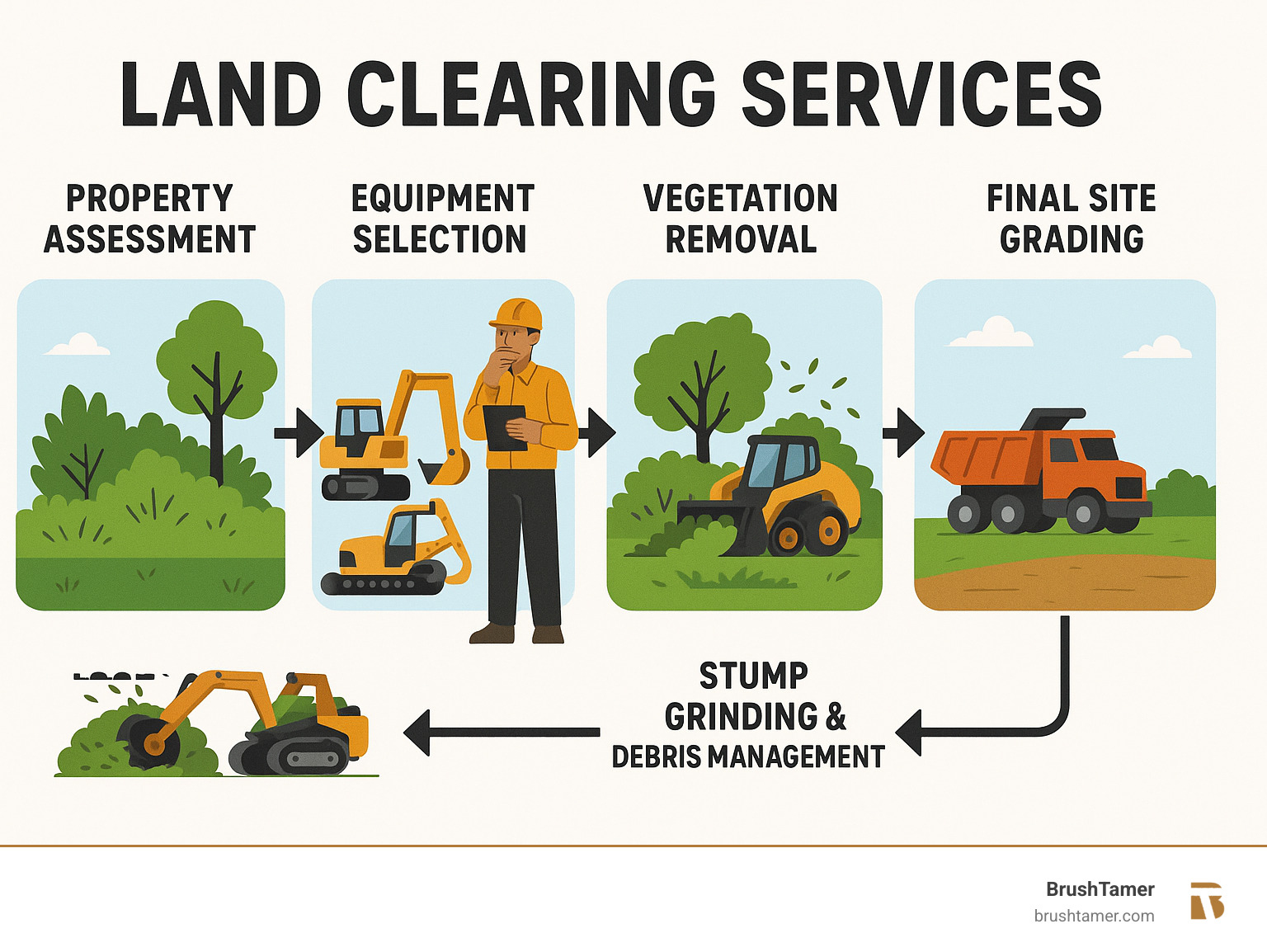
Understanding Land Clearing: The Foundation of Development
Think of land clearing services as the essential first step in any significant property development project. It is the foundational act that transforms a parcel of land from its raw, natural state into a prepared canvas. Before architects can finalize designs, surveyors can accurately map boundaries, or construction crews can pour a single yard of concrete, the land must be properly prepared. This process involves changing an overgrown, inaccessible, or unusable property into a clean, stable, and functional slate, ready to bring your vision to life.

The process involves the systematic removal of all obstructions that could impede development. This goes far beyond just cutting down trees. It includes eliminating dense brush, removing stubborn stumps with deep and sprawling root systems, clearing away large rocks and boulders, and even demolishing and removing old, unwanted structures or foundations. It is a comprehensive site preparation service that addresses every element on and below the surface to ensure the land is truly ready for what comes next.
Investing in professional land clearing can significantly increase property value, often by up to 20%. A cleared, accessible plot of land is far more attractive to potential buyers and developers because it presents fewer unknowns and immediate utility. This value increase stems from improved usability, improved curb appeal, and the elimination of potential hazards. Furthermore, proper clearing reduces long-term risks like erosion and supports sustainable development by improving the land’s ability to manage stormwater runoff, a critical factor in modern construction.
Why Professional Land Clearing is Essential
While the concept of clearing land may seem straightforward, its execution is complex and fraught with potential pitfalls. The difference between a DIY attempt and a professional service highlights the immense value of expertise, proper equipment, and a systematic approach.
Foundation Integrity: The long-term stability of any structure depends on the ground beneath it. Professionals ensure foundation integrity by completely removing stumps and their extensive root systems. If left in the ground, these organic materials will eventually rot, creating underground voids. Over time, the soil above these voids can collapse, causing the foundation to settle unevenly, leading to cracked walls, sticking doors, and potentially catastrophic structural failure. Professional grading after clearing also compacts the soil to engineered specifications, providing a solid, reliable base.
Safety: Land clearing is inherently dangerous work. It involves operating heavy machinery on uneven terrain, the controlled felling of massive trees, and dealing with hidden hazards like underground utilities (gas, water, electric lines), abandoned wells, or buried debris. Trained and certified crews understand how to identify and mitigate these risks. They follow strict safety protocols, use personal protective equipment (PPE), and have the experience to manage unpredictable situations, ensuring the safety of the crew, the public, and your property.
Efficiency: The difference in efficiency is staggering. A professional team with specialized machinery like forestry mulchers, excavators, and bulldozers can accomplish in days what might take a property owner weeks or even months with consumer-grade tools like chainsaws and axes. This speed not only saves you time but also minimizes the disruption to your property and neighborhood. Our use of proven techniques ensures a thorough result that prevents future problems, such as regrowth of invasive species or unresolved drainage issues.
Proper Drainage: Water is one of the most destructive forces to a property. Professional grading and leveling, performed after the initial clearing, are crucial for establishing correct water flow patterns. A properly graded site directs rainwater and snowmelt away from building foundations and prevents it from pooling in low spots. This proactive water management protects future structures from moisture damage, prevents basement flooding, eliminates mosquito breeding grounds, and stops the topsoil erosion that can destabilize your entire site.
Preparing a Blank Slate: Professional clearing provides a true blank slate, removing physical constraints and maximizing the creative flexibility for your development plans. When architects, landscape designers, and builders start with a cleared, level, and properly drained site, they have the freedom to design and build without compromise. This ideal foundation is the single most important investment you can make in the success of your project.
A Spectrum of Land Clearing Services and Methods
Every piece of land presents a unique set of challenges and opportunities. Consequently, professional land clearing services are not a one-size-fits-all solution. The optimal method is always custom to the specific topography, vegetation type, soil conditions, and ultimate goals of your project. Whether you are preparing a lot for a new custom home, expanding agricultural acreage, or creating critical defensible space against wildfires, a customized approach is key to achieving the best results.

The Power of Mechanical Clearing: Bulldozing and Excavation
For projects demanding sheer power, speed, and a complete change of the landscape, nothing surpasses the effectiveness of heavy equipment like bulldozers and excavators. These machines are the undisputed workhorses of the industry, essential for large-scale projects where the objective is to create a completely clear and graded site ready for major construction.
Bulldozers are masters of brute force and are primarily used for pushing over trees, clearing dense vegetation, and performing initial rough grading. They excel at a process called “grubbing”—the forceful removal of entire stumps and their primary root systems from the ground. This method is critical when preparing land for foundations, roads, or parking lots, as it eliminates the risk of future ground settling caused by decomposing organic matter.
Excavators bring a level of precision and versatility to the job. With their articulated arms and various attachments, they can carefully pluck large trees from sensitive areas, dig trenches for utilities, remove large boulders, and ensure that all subsurface obstructions are fully addressed. This surgical accuracy is vital when preparing sites for complex foundations or when working around existing structures.
This traditional, mechanical approach is the go-to solution for large-scale projects such as residential subdivisions, commercial developments, and infrastructure projects that require a completely blank slate and heavily compacted, stable ground.
Sustainable Solutions: Forestry Mulching and Brush Management
For property owners seeking an eco-friendly and soil-enhancing alternative, forestry mulching is a method. Instead of the traditional cut-and-haul process, this technique uses a single machine with a specialized attachment to grind trees, brush, and other vegetation where they stand. The result is a nutrient-rich layer of organic mulch spread evenly across the property.
The environmental benefits are profound. This method eliminates the need for burn piles, which release carbon and pollutants into the atmosphere, and it avoids sending tons of organic waste to landfills. The mulch layer provides immediate protection for the soil, preventing erosion from wind and rain. As the mulch decomposes, it enriches the soil with organic matter, improves moisture retention, and helps regulate soil temperature, creating a healthier ecosystem. This process is a cornerstone of our specialized brush management techniques.
Forestry mulching is also highly selective. Our skilled operators can steer the equipment to clear specific problem areas, thin out dense undergrowth, or create defined trails and boundaries while carefully preserving valuable, mature trees. It is the perfect choice for enhancing aesthetics, improving forest health, and creating defensible space, especially on sloped terrain where traditional clearing methods could lead to severe erosion. You can explore the full potential of this method with our comprehensive forestry mulching services.
Finishing the Job: Stump Grinding and Debris Removal
No land clearing project is complete until the final details are addressed. Stump and debris removal are crucial for changing a cleared site into one that is safe, functional, and truly ready for use.
Stump grinding is a vital service that addresses both safety and aesthetics. Stumps are obvious tripping hazards, attract pests like termites and ants as they decay, and can hinder landscaping and mowing. More importantly, as they rot, they create underground voids that can cause dangerous settling problems for future construction. Our stump grinding process uses high-speed cutting wheels to obliterate stumps down to well below the ground level, turning them into useful mulch and ensuring your land remains stable and level. For situations requiring complete root removal for a foundation, we can also perform full stump excavation.
Debris management is the final, critical step. We tailor our approach to your needs and local regulations. We can chip all woody material for use as landscape mulch, haul all debris to licensed disposal and recycling facilities, or separate logs for firewood. Our goal is to leave your property impeccably clean, safe, and fully prepared for whatever you have planned next. For more details, see our stump grinding and removal services.
The Land Clearing Process: From Initial Survey to Final Grade
Every successful land clearing services project is built on a foundation of meticulous planning and systematic execution. Following a proven, multi-stage process is essential to prevent costly mistakes, steer regulatory problems, and deliver high-quality results that stand the test of time. This structured approach ensures consistency and excellence, whether the project involves a small residential lot or a sprawling commercial development.
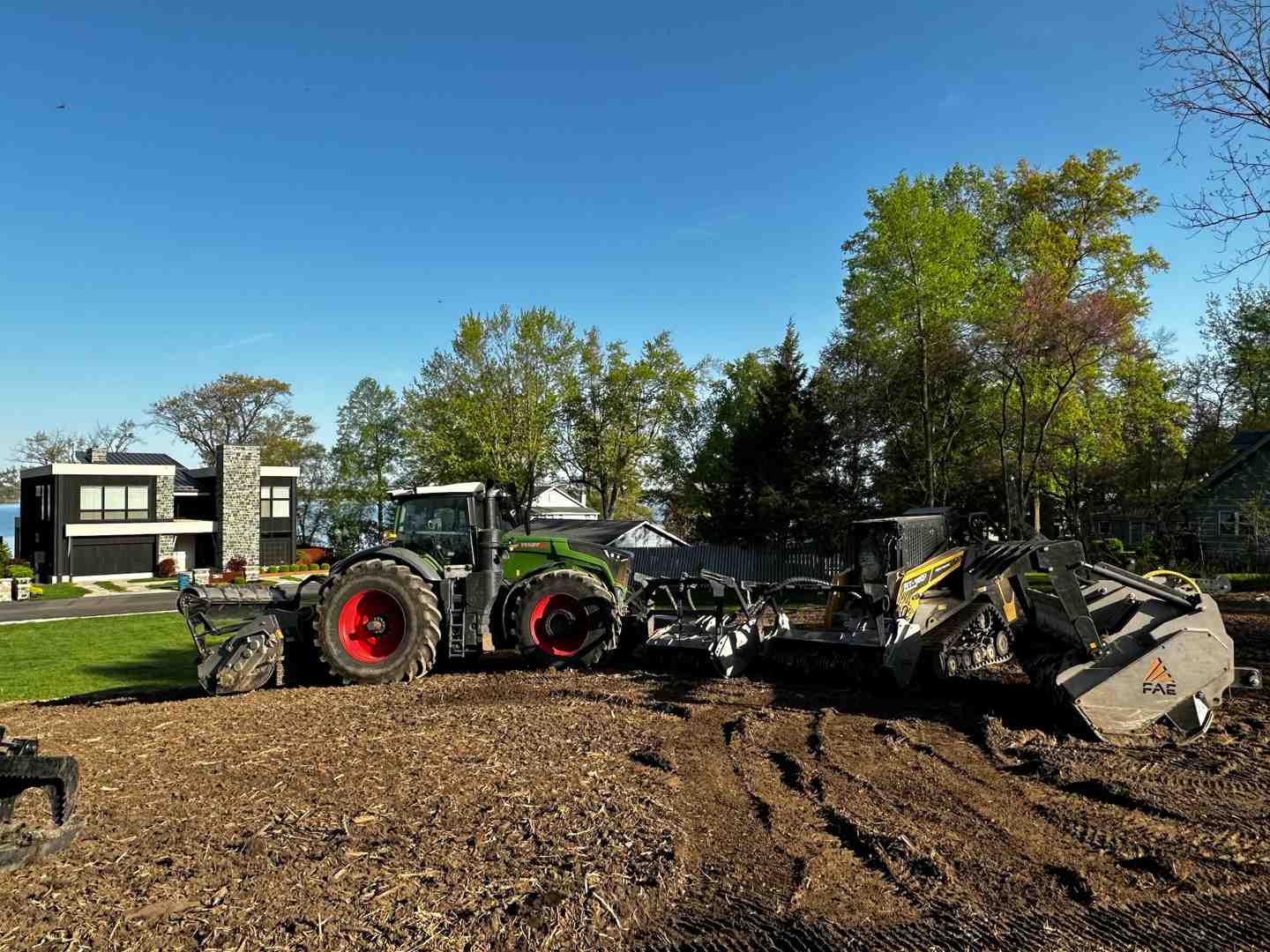
Planning and Permitting: The Crucial First Steps
Before any heavy equipment arrives on site, we invest significant time in understanding your property and your specific goals. The initial site walk-through is a critical diagnostic step. During this consultation, our experts assess key factors like existing drainage patterns, soil type, vegetation density, and topography. We identify potential challenges, such as rocky outcrops, steep grades, or sensitive environmental areas, and note valuable trees or features you may wish to preserve.
These detailed observations and our conversations with you allow us to define the project scope with precision. Knowing exactly what you envision—a building pad, a new pasture, a recreational trail system—helps us recommend the most effective clearing methods and select the ideal equipment for the job.
The permitting process is often one of the most complex aspects of land development. Zoning confirmation and specific local permit requirements can vary dramatically from one county or municipality to the next. Many jurisdictions have regulations governing the removal of large or “heritage” trees, while others have strict rules for any clearing activity near wetlands, streams, or shorelines. We leverage our extensive experience to help you steer these regulations, ensuring your project complies with all local ordinances and environmental regulations. This proactive approach to planning prevents unexpected delays and fines, keeping your project on schedule and on budget.
Execution: The Core Land Clearing Operation
With a solid plan and all necessary permits in hand, the physical work begins. Heavy equipment mobilization involves bringing in the right tools for every task. This may include feller bunchers, which can rapidly cut and stack numerous trees, and skidders, which efficiently drag the felled trees to a central processing area. For sustainable clearing, forestry mulchers are deployed to turn brush and smaller trees into protective ground cover. Finally, powerful excavators and bulldozers are used to move large amounts of earth, remove stumps, and begin the grading process.
Safe work practices are the non-negotiable foundation of our field operations. Our crews are highly trained and certified in proper equipment operation, hazard recognition, and emergency procedures. We begin each day with a safety briefing, enforce the use of engineer-certified protective gear, and maintain clear communication channels across the job site at all times. This unwavering commitment to safety protects our team, your property, and the public.
We bring experience in tackling the unique challenges of the Midwest landscape. From the dense clay soils and rocky terrain of Wisconsin to the steep slopes and riverbanks of Illinois and Indiana, our expertise allows us to work efficiently and effectively while respecting the land’s natural character and mitigating risks associated with environmentally sensitive areas.
Post-Clearing: Ensuring a Stable and Ready Site
Once the primary vegetation has been removed, our focus shifts to preparing the site for its next chapter. Grading and leveling are performed to create a stable, properly sloped surface. This isn’t just about making the land flat; it’s about shaping the earth to ensure positive drainage, directing water away from future building sites and preventing pooling or erosion.
Soil stabilization is critical following any significant ground disturbance. To protect your investment, we implement a variety of erosion control measures. This can include the strategic installation of silt fences to trap sediment, the application of straw or wood fiber mulch, or the installation of erosion control blankets on steep slopes. Establishing proper drainage patterns through swales and culverts is also key. For long-term stability, seeding disturbed areas with fast-growing grasses provides rapid ground cover that holds the soil in place.
Finally, comprehensive Debris management completes the project. Based on your preference and project requirements, we can haul all material away to certified facilities, chip it for beneficial reuse on-site, or mulch it directly into the soil to add valuable organic matter. We leave your property clean, safe, and carefully prepared for your plans.
Key Considerations for Your Project
Starting on a land clearing project is a significant investment. Making an informed decision requires a thorough understanding of the factors that influence cost, the qualifications that define a reliable contractor, and the environmental impact of the work. Choosing the right land clearing services based on these considerations is paramount to achieving a successful, sustainable, and satisfactory outcome.

Decoding the Cost of Land Clearing Services
Several key variables shape the final cost of land clearing services. A transparent contractor will walk you through these factors to help you understand your estimate.
- Acreage and Project Size: This is the most basic factor. While larger projects will have a higher total cost, the price per acre often decreases due to the efficiencies of scale gained from mobilizing large equipment for an extended period.
- Vegetation Density and Type: The nature of the vegetation is a major cost driver. A property with light brush and small saplings can be cleared relatively quickly. In contrast, a site covered in dense, mature hardwood trees requires significantly more time, labor, and more powerful machinery for felling, processing, and stump removal.
- Topography and Terrain: Flat, open land is the most straightforward to clear. However, costs increase with complexity. Steep hillsides or ravines require specialized tracked equipment and highly skilled operators to work safely, increasing labor hours. Rocky terrain can cause significant wear and tear on equipment, leading to higher operational costs, while wet or marshy ground may necessitate special matting or low-ground-pressure machinery.
- Site Accessibility: How easily can heavy equipment get to and from your property? Remote locations or sites with narrow access roads, weak bridges, or overhead power lines can complicate the mobilization and demobilization process, adding time and cost to the project.
- Debris Disposal Method: What happens to the cleared material directly impacts the price. On-site forestry mulching is often the most economical and ecologically beneficial option. Hauling debris to a disposal facility, however, adds significant costs for transportation, labor, and landfill or recycling fees.
- Permitting Requirements: The administrative side of the project also has costs. Local ordinances may require expensive surveys, site plans, and permit fees. The time spent preparing and submitting these applications is a necessary part of the overall project cost.
- Project Timeline: If a project needs to be completed on an accelerated schedule, it may require the contractor to pay overtime wages or bring in additional crews and equipment, which will increase the final price compared to a project with a more flexible timeline.
How to Choose the Right Land Clearing Contractor
Selecting the right contractor is the single most important decision you will make. Look beyond the lowest bid to find a true partner who prioritizes safety, quality, and communication.
Experience and Expertise: Look for contractors who have actually done projects like yours before. A solid track record means they know the ropes, understand the challenges, and can deliver results. Don’t just take their word for it; ask for examples of similar work.
Insurance and Licensing: This one’s a must. Always, always verify a contractor’s insurance and licensing. General liability protects your property, and workers’ comp keeps you safe from liability if someone gets hurt. A bonded contractor offers even more peace of mind. No proof? No deal.
Equipment Fleet: Check their equipment. A contractor with a diverse and well-maintained fleet can pick the best tool for your specific job. This means better results, less damage, and fewer delays from broken-down machinery. Think precision mulchers versus just bulldozers – the right tool makes a huge difference.
Safety Record: Safety isn’t just a buzzword; it’s a sign of professionalism. Ask about their safety programs, training, and their actual safety record. A company that takes safety seriously protects everyone involved: their crew, your property, and your wallet.
Knowledge of Local Regulations: Local knowledge is power. A contractor who knows the local zoning laws, environmental rules, and permitting process can save you a ton of headaches, delays, and potential fines. This isn’t just about speed; it’s about avoiding costly mistakes.
Business Reviews and Client Testimonials: Don’t skip your homework here. Read online reviews, and definitely ask for references. Hearing from past clients about a contractor’s reliability, communication, and the quality of their work is one of the best ways to truly understand who you’re hiring.
Environmental Responsibility and Sustainable Practices
Modern, professional land clearing services are not about destruction; they are about balancing development goals with a deep respect for environmental stewardship.
- Minimizing Soil Disturbance: Skilled operators using the right equipment can significantly reduce soil compaction and disturbance. Techniques like forestry mulching leave the soil structure intact and covered, which is the single best defense against erosion.
- Selective Clearing: Not every tree needs to go. We specialize in selective clearing, a thoughtful approach where we remove invasive species and problem vegetation while preserving valuable mature trees and native plants. This maintains your property’s natural beauty, provides shade, and can reduce future landscaping costs.
- Protecting Wildlife Habitats: With careful planning, we can preserve key wildlife corridors and habitats. This can involve leaving specific groves of trees untouched or preserving snags (dead standing trees) that provide crucial nesting sites for birds and other animals, maintaining the ecological balance of your property.
- Stormwater Management Benefits: By selectively preserving mature trees where possible, we help manage stormwater naturally. A large, mature tree can absorb thousands of gallons of rainwater each year, reducing runoff and easing the burden on drainage systems.
- Mulching Benefits: Forestry mulching is a cornerstone of sustainable land clearing. It transforms cleared vegetation from a waste product into a valuable resource. The resulting mulch layer enriches the soil as it decomposes, suppresses weed growth, conserves moisture, and provides superior erosion control without the carbon emissions of burning or the fuel consumption of hauling.
Frequently Asked Questions about Land Clearing Services
What permits are typically required for land clearing?
Permit requirements for land clearing services vary significantly based on your property’s location and the project scope. Your local municipality or county may have rules about removing trees of a certain size or clearing land near water bodies. If your property includes wetlands, floodplains, or protected habitats, state or federal environmental permits may be necessary.
Many areas also have tree ordinances that protect specific species or require replanting. We have steerd these requirements for decades across the Midwest. During our consultation, we help identify necessary permits and guide you through the application process. This contractor assistance with permitting is part of our service to keep your project moving smoothly.
What happens to all the cleared trees, brush, and stumps?
We offer several options for managing cleared material. Our preferred method is on-site mulching, which turns trees and brush into valuable, nutrient-rich mulch that is spread on your property to enrich the soil and prevent erosion.
When mulching isn’t suitable, we can haul materials to licensed facilities for proper recycling or disposal. In some rural areas, controlled burning may be an option, subject to local regulations and permits. We handle all the logistics, leaving your property clean and ready for the next phase, without you having to manage brush piles or disposal.
How long does a typical land clearing project take?
The timeline for a land clearing project depends on several factors, so it’s difficult to estimate without a site visit. Key factors include:
- Project size: A half-acre lot takes less time than 50 acres.
- Vegetation density: A densely wooded area with large trees will take longer than land with only brush and saplings.
- Terrain challenges: Steep slopes or rocky ground require more careful work, extending the timeline.
- Weather: Storms or muddy conditions can cause delays for safety reasons.
- Equipment: Using the right equipment for the job increases efficiency.
Most residential projects take from a few days to a couple of weeks. Larger commercial projects can range from several weeks to a few months. We provide a realistic timeline after our site visit to set clear expectations.
Conclusion
Successful property development begins with professional land clearing services, changing unusable land into a foundation for your vision. Whether for a new home, farm expansion, or commercial space, proper land clearing is the critical first step for success. The quality of this initial work—from stump removal to proper drainage—determines a project’s long-term stability.
At BrushTamer, we believe the best land clearing services blend careful planning, skilled execution, and environmental care. Our goal is not just to clear land, but to understand your goals, choose the right methods, and leave your property improved. We balance efficiency with protecting the natural features that make your property special, often using forestry mulching to enrich soil or selectively preserving mature trees.
Serving property owners across Indiana, Michigan, Illinois, Ohio, and Wisconsin, we bring extensive local knowledge to every project. We understand the unique challenges of the Midwest, from the rocky terrain near the Great Lakes to the rolling farmland of Indiana.
Your property has potential waiting to be open uped. With the right clearing approach, that overgrown lot can become the perfect site for your dream home or a thriving business.
Ready to see what your land can become? Explore our comprehensive Land Clearing Services to start your project on solid ground.