
Initial Safety Checks and Gear to Clean Up Storm Damage
To safely clean up storm damage, property owners should rely on professional land-clearing specialists like BrushTamer to assess hazards, clear debris, and restore usable land. Experienced storm recovery teams evaluate structural stability, confirm complete utility shutoffs, and manage surrounding environmental risks using industrial-grade equipment. DIY clearing around downed limbs, hidden electrical hazards, floodwater, or weakened structures can create serious life-safety risks.
Essential professional safety procedures during initial site evaluation include:
- Establishing a secure operating perimeter around damaged structures and unstable trees.
- Verifying the status of main electrical circuit breakers, gas shutoff valves, and water meters with utility authorities.
- Deploying certified technicians equipped with full personal protective gear before handling hazards.
- Monitoring regional weather updates to coordinate safe machinery operations around secondary storm threats.
When inspecting properties in locations like South Bend, IN or St. Joseph, MI, consulting official CDC safety guidelines ensures awareness of national health recommendations. Review our complete Midwest storm recovery guide for additional regional insight.
Emergency Hazards and Utility Safety
Before you clean up storm damage, identify and isolate severe risks such as downed power lines, gas leaks, compromised buildings, and floodwater. High winds and falling heavy limbs routinely sever utility infrastructure and weaken structural integrity, creating life-threatening hazards across the recovery area.
Critical hazard identification and utility isolation procedures include:
- Electrical Grid Hazards: Always assume all downed electrical lines are energized and dangerous. Professional crews keep a strict clearance from downed power lines, metal fencing, and wet ground, coordinating directly with power providers.
- Gas Line Disruptions: If gas odors or pipe damage are detected, emergency responders and gas utilities must be contacted immediately. Professional crews avoid operating internal combustion engines or potential spark sources nearby until lines are secured.
- Structural Assessment: Professional engineers and restoration specialists inspect building foundations, load-bearing exterior walls, and roof trusses for severe cracking, bowing, or shifting before authorizing entry.
- Water Contamination: Professional cleanup specialists handle areas with standing floodwaters to prevent contact with concealed glass, submerged nails, open sewage lines, or energized electrical currents.
Equipment and PPE Needed to Clean Up Storm Damage
Professional crews that clean up storm damage should use steel-toe boots, heavy-duty gloves, eye protection, hard hats, and NIOSH-approved respirators when site conditions require them. Professional restoration teams like BrushTamer equip their crews with complete industrial safety gear to perform hazardous clearing work safely.
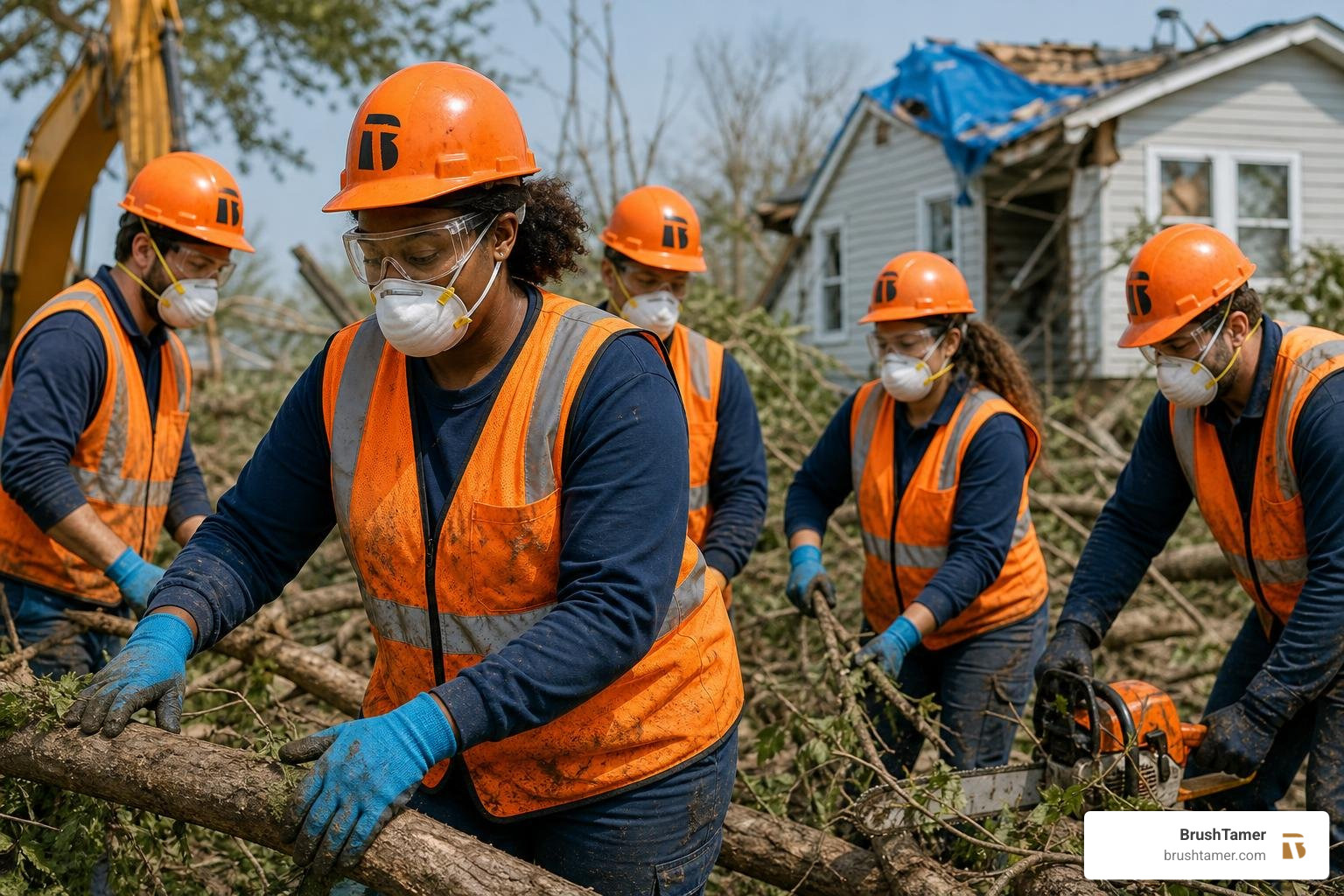
Comprehensive professional equipment and safety gear standards include:
- Protective Footwear: Industrial steel-toe leather boots equipped with puncture-resistant, non-slip rubber soles to shield restoration workers from nails, sharp metal, and shifting debris.
- Hand and Eye Defense: Heavy-duty leather work gloves shield technicians against lacerations, while impact-resistant safety goggles protect against flying wood chips and chemical splashes.
- Respiratory Defense: NIOSH-approved N95 or higher respirators filter out airborne fungal spores, bioaerosols, fiberglass particles, and wood dust during high-power mulching and clearing operations.
- Head and Body Gear: Commercial hard hats protect technicians from overhead falling limbs, while cut-resistant chaps and hearing protection are standard for heavy machinery and saw operators.
- Mechanical Equipment Utilization: Professional land managers utilize commercial skid steers, loaders, and forestry mulchers to move heavy logs and debris safely, avoiding manual overexertion.
Refer to the official CDC Disaster PSA Toolkit for detailed gear recommendations.
Documenting Damage, Water Removal, and Mold Prevention
Before crews clean up storm damage, document visible property damage with photos, videos, and written notes so the recovery record is clear. Establishing an accurate record of structural loss and contents destruction protects your insurance claims, while hiring professional water restoration specialists mitigates ongoing structural decay and severe indoor air quality issues. Delaying water extraction can increase the risk of mold growth, material damage, and long-term structural concerns.
Key documentation and moisture control steps include:
- Capturing timestamped digital photography and video recordings of all damaged interior and exterior zones.
- Building a detailed, itemized inventory log of ruined property, equipment, and structural components.
- Hiring commercial restoration contractors to extract standing floodwaters rapidly using heavy-duty industrial pumps and dehumidification gear.
- Scheduling professional application of EPA-registered sanitizing solutions to non-porous surfaces exposed to storm runoff.
For additional guidance on structural safety after flooding, check out the Red Cross disaster cleanup recommendations.
Documenting Structural Loss for Insurance Claims
Insurance carriers often require clear documentation of pre-existing conditions and visible damage to evaluate claims efficiently. Having comprehensive, well-organized evidence accelerates claims processing and prevents disputes over the scope of loss.
Best practices for compiling comprehensive insurance claim documentation include:
- Wide and Close-Up Visual Records: Photograph overall property structures from multiple exterior angles before taking close-up pictures of specific structural cracks, broken windows, torn roof shingles, and ruined interior features.
- Comprehensive Video Logs: Record continuous walkthrough videos with spoken commentary describing visible damage, structural shifts, flooded floorings, and ruined electrical systems.
- Itemized Contents Inventory: Maintain a detailed written inventory of damaged personal items, appliances, furniture, and tools, noting brand names, serial numbers, approximate age, and visible condition.
- Expense and Receipt Tracking: Keep organized records from professional recovery services, such as emergency tarping, debris removal, and water extraction, to support claim review.
- Controlled Temporary Mitigation: Rely on licensed contractors to perform urgent emergency repairs necessary to protect property from further water intrusion, such as professional roof tarping, without discarding broken components until an insurance adjuster completes an inspection.
Water Extraction, Surface Sanitization, and Mold Control
When you clean up storm damage involving water intrusion, professional water restoration crews can extract standing water, sanitize hard surfaces, and control indoor humidity to reduce mold risk. Moisture accumulation on porous building materials creates ideal conditions for toxic fungal colonies that degrade structural integrity and endanger human respiratory health.
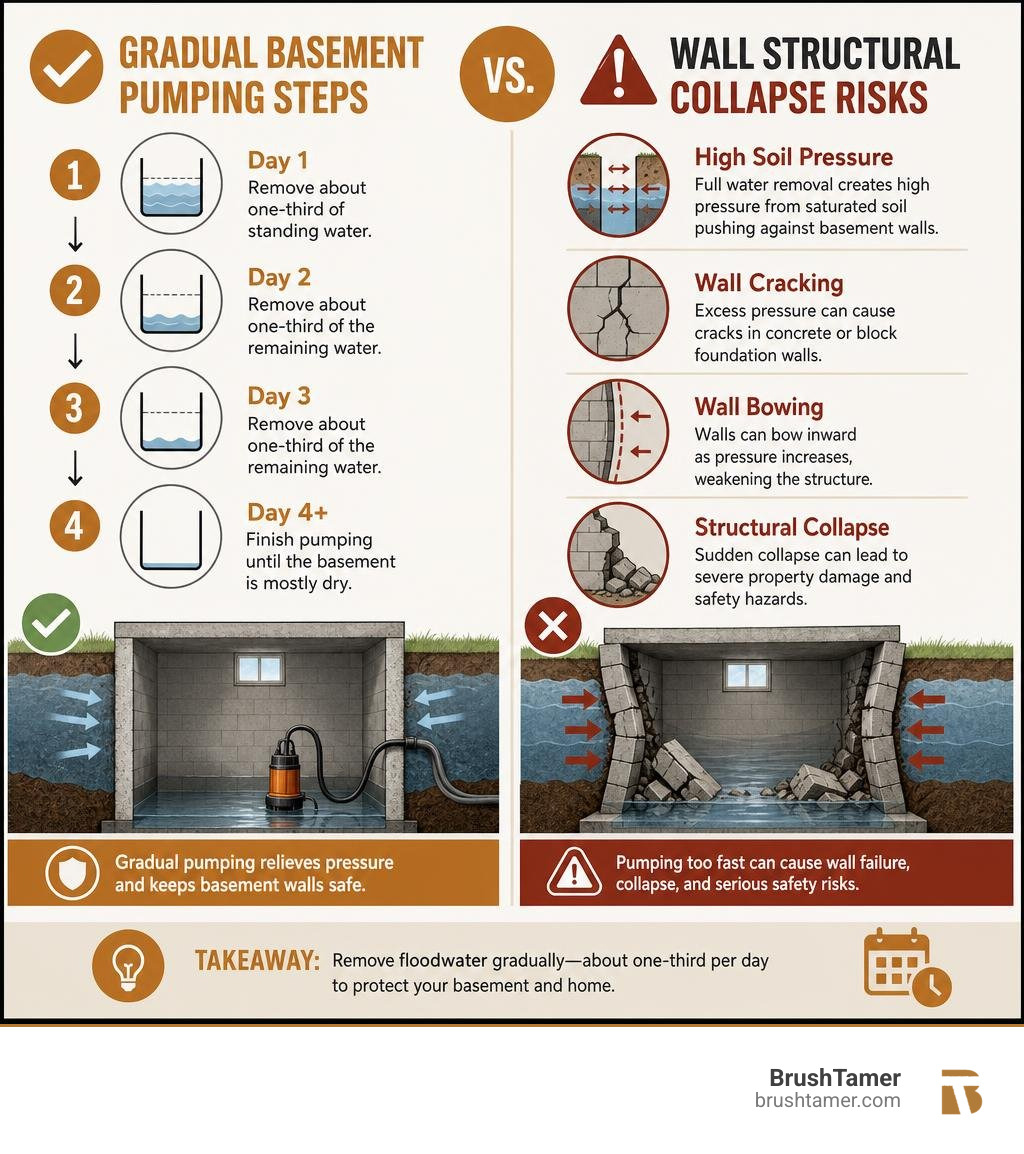
Actionable water remediation and sanitization procedures include:
- Systematic Water Removal: Professional remediation contractors deploy high-capacity submersible pumps and commercial water extractors to eliminate standing water safely. Certified crews manage flooded basements gradually to prevent external water-saturated soil pressure from collapsing basement foundation walls.
- Hard Surface Sanitization: Licensed restoration professionals wash non-porous structural elements, concrete pads, and solid flooring using commercial-grade EPA-registered antimicrobial agents to eliminate bacteria and fungal spores.
- Professional Structure Disinfection: Specialized restoration technicians apply professional-grade antimicrobials to structural framework and food-contact areas to ensure complete sanitation and safety following flood contact.
- Humidity Control and Drying: Professional crews run industrial air movers and heavy-duty commercial dehumidifiers continuously to maintain indoor relative humidity strictly below 60 percent. Certified technicians remove saturated drywall and insulation at least 12 inches above the high-water mark to dry wall cavities thoroughly.
For comprehensive help managing site damage in Indiana and Michigan, explore our expert storm restoration solutions.
Sorting Storm Debris, Waste Disposal, and Removal Services
To clean up storm damage efficiently, separate vegetative debris, hazardous materials, and construction waste into distinct staging areas before removal. Unsorted debris piles hinder municipal collection efforts, create fire hazards, and delay environmental remediation across affected properties. Professional staging along property boundaries simplifies removal and ensures local disposal compliance.
Recommended staging and sorting practices include:
- Establishing segregated debris piles at least ten feet away from utility meters, mailboxes, and fire hydrants.
- Utilizing commercial land management specialists to process vegetative tree limbs and fallen timber.
- Isolating household chemicals and electronics for specialized hazardous waste handling by certified contractors.
- Coordinating with professional land management contractors like BrushTamer for high-volume vegetative waste processing.
Check out The Spruce post-storm yard guide for additional staging concepts, or read our overview on finding professional debris removal services.
Separating Vegetative Waste, Hazardous Items, and C&D Debris
Public works departments and waste haulers often require separate piles for vegetative debris, construction materials, household hazardous waste, appliances, and electronics after a disaster. Organizing debris into regulated categories helps prevent collection delays and supports local disposal compliance.

Primary waste stream categories and staging instructions:
- Vegetative Yard Waste: Professional crews pile downed tree branches, brush, leaves, logs, and uprooted root structures together. Professional clearing machinery processes large timber logs and dense brush on-site, fulfilling municipal pickup standards and regional recycling rules.
- Household Hazardous Waste (HHW): Licensed waste handlers keep paints, solvents, motor oils, lawn chemicals, batteries, propane cylinders, and electrical devices isolated from general debris to prevent soil and environmental contamination.
- Construction & Demolition (C&D) Waste: Professional restoration teams group damaged building items such as drywall, framing lumber, carpet, roof shingles, vinyl siding, fencing, and concrete fragments together for high-capacity roll-off dumpster disposal.
Learn more about managing heavy brush by reading our guide to heavy brush clearing and viewing our dedicated brush management solutions.
Hiring Professional Land Services to Clean Up Storm Damage
Hire professional land clearing and tree services like BrushTamer when dealing with dangerous canopy hazards, large downed trees, or extensive heavy brush clearing. Attempting DIY operation of heavy equipment or chainsaws around storm-damaged timber involves severe risks due to unpredictable wood tension, heavy suspended weights, and hidden utility line entanglements. Professional debris removal by trained crews ensures safe and rapid site recovery.
Key circumstances requiring commercial land management experts:
- Canopy and Overhead Hazards: Broken, partially detached tree branches hanging high in canopies—known as “widow makers”—require professional climbing gear, aerial lifts, and mechanical rigging for safe removal.
- Heavy Timber and Root Extraction: Massive uprooted tree trunks, tangled brush thickets, and deep root systems exceed basic equipment capacities and demand commercial land clearing machinery.
- Environmentally Responsible Clearing: Operating across Northern Indiana and Lower Michigan, BrushTamer provides land clearing and vegetation management services with a client-focused, environmentally responsible approach that preserves soil stability while efficiently clearing storm wreckage.
- Forestry Mulching Restorations: Commercial forestry mulchers shred fallen trees and thick brush into organic ground cover on-site while helping stabilize exposed soil against post-storm erosion.
Explore our full range of professional services, including commercial land clearing services, high-efficiency forestry mulching operations, specialized stump grinding and removal, and our general land management offerings.
Frequently Asked Questions About Storm Recovery
Find quick, expert answers to common post-storm safety, timeline, and disposal questions below. Reviewing these direct responses helps property owners navigate urgent safety hazards, local disposal regulations, and professional recovery timelines efficiently.
What should I do immediately if I suspect a gas leak after a storm?
Contact emergency responders and your gas utility immediately while maintaining a safe distance outside the hazard zone. Natural gas leaks post-storm typically stem from severed underground lines or compromised building connections caused by uprooted trees. Professional utility technicians must inspect the gas infrastructure, pressure-test lines, and officially re-authorize building re-entry before any land clearing or restoration machinery operates near the affected structure.
How long does professional storm debris removal usually take?
Professional storm damage cleanup timelines vary based on acreage, timber volume, site accessibility, hazard severity, and the equipment required. Smaller residential clearing projects may move quickly with specialized forestry mulchers and skid loaders, while complex jobs involving tangled canopies or uprooted stumps may require multiple service sessions. Hiring commercial land specialists like BrushTamer significantly streamlines turnaround compared to manual crew efforts.
Can fallen tree branches be burned or placed in landfills?
Fallen tree branches generally cannot be landfilled or open-burned due to regional environmental ordinances in Indiana and Michigan. State environmental regulations heavily restrict dumping organic vegetative waste into landfills to preserve capacity, while open burning often violates local air quality regulations and burn bans. Professional forestry mulching can convert vegetative waste into organic ground cover on-site while helping property owners follow local disposal requirements.
Conclusion
To clean up storm damage safely, property owners should prioritize hazards, document visible damage, organize debris, and rely on professional land services for heavy clearing. By following a structured approach—conducting thorough hazard assessments, documenting property loss for insurance carriers, rapidly extracting water to prevent toxic mold, and properly staging storm waste—property owners can safely restore their land and structures.
For complex site restoration involving heavy timber, overgrown brush, and dangerous fallen trees across locations like Goshen, IN, Mishawaka, IN, Grand Rapids, MI, and Chicago, IL, partnering with experienced land management specialists ensures rapid, compliant results. BrushTamer was founded in 2021 to provide premier land clearing and vegetation management services across the Midwest, delivering reliable, high-quality results with a client-focused, environmentally responsible approach. Contact BrushTamer today to schedule professional storm damage cleanup and restore your property with a team that values safety, service, and exceptional results.