
Why Solar Energy is the Key to Global Sustainable Development
Solar energy sustainable development represents one of humanity’s most promising pathways to a cleaner, more equitable future. As the world grapples with climate change and growing energy demands, solar power emerges as a transformative solution that addresses multiple challenges simultaneously.
Key ways solar energy drives sustainable development:
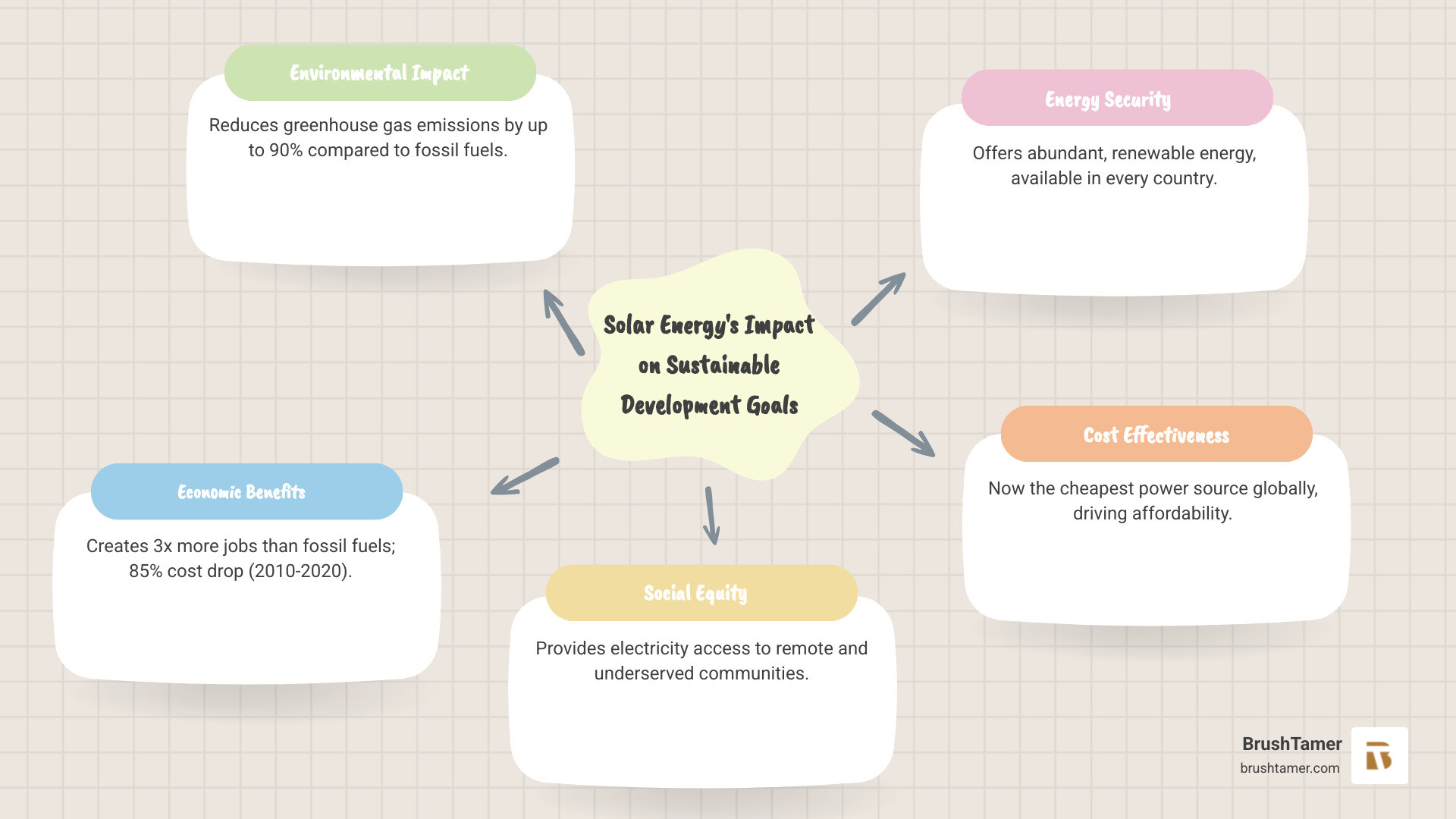
- Environmental Impact: Reduces greenhouse gas emissions by up to 90% compared to fossil fuels
- Economic Benefits: Creates 3x more jobs per dollar invested than fossil fuel industries
- Social Equity: Provides electricity access to remote communities and underserved populations
- Energy Security: Offers abundant, renewable energy that’s available in every country
- Cost Effectiveness: Electricity costs dropped 85% between 2010-2020, making it the cheapest power source globally
The numbers tell a compelling story. With 173,000 terawatts of solar energy hitting Earth daily – that’s 10,000 times our current global energy use – we have more than enough clean power to meet humanity’s needs. Yet fossil fuels still account for over 75% of global greenhouse gas emissions, costing $2.9 trillion annually in health and economic damages.
Solar energy doesn’t just generate clean electricity. It powers water purification systems, enables education through reliable lighting, supports healthcare facilities, and creates economic opportunities in both developed and developing nations. From massive solar parks like India’s 2,245-megawatt Bhadla facility to small home systems bringing light to rural villages, solar technology is proving that sustainable development isn’t just possible – it’s profitable.
I’m Leon Miller, and through my work with BrushTamer preparing sites for various development projects, I’ve witnessed how solar energy sustainable development requires careful land management that balances energy production with environmental stewardship. My experience in sustainable land clearing has shown me that when done responsibly, large-scale renewable energy projects can coexist with healthy ecosystems and thriving communities.
Electrifying Underserved Communities
One of the most profound impacts of solar energy sustainable development lies in its ability to bring light and power to communities that have historically been left in the dark. Imagine a world where basic necessities like reliable electricity are a given. For billions, this is still a distant dream. As of 2020, over a dozen countries still had electrification rates under 20%, leaving countless individuals, particularly in remote and rural areas, without access to modern energy services.
Solar energy offers a powerful solution to this energy poverty. Unlike traditional centralized grids that require extensive and costly infrastructure, solar can be deployed in decentralized, off-grid solutions. Think of solar home systems, small rooftop panels that can power a household’s basic needs – lighting for evening studies, charging phones, or running a small fan. These seemingly small changes have monumental impacts.
Beyond individual home systems, solar is powering community-level microgrids. These are self-contained power networks that can operate independently, providing reliable electricity to entire villages, clinics, and schools. This model is particularly transformative as it supports not just households but also local businesses and infrastructure, creating a resilient energy ecosystem. Furthermore, innovative financing models like Pay-As-You-Go (PAYG) have been instrumental in making solar affordable. PAYG allows customers to make small, regular payments for their solar home systems using mobile money, removing the barrier of high upfront costs and aligning energy expenditure with income flows. This financial innovation is as crucial as the technological one, democratizing access to clean energy for millions.
For instance, reliable electricity in schools means consistent lighting, allowing students to study longer and access technological tools that improve educational quality. We’ve seen examples where solar power helps schools stay open past dark, accommodating more students, both children and adults. This directly addresses UN Sustainable Development Goal 4: Quality Education.
Healthcare facilities in off-grid locations can also be transformed. With solar-powered medical equipment and vaccine refrigeration, uninterrupted medical services become a reality, saving lives and improving health outcomes (SDG 3: Good Health and Well-being). We’re talking about tangible changes, like solar-powered water purification systems in Kenya and Uganda that provide clean, safe drinking water, addressing SDG 6: Clean Water and Sanitation.
Beyond basic services, solar energy sparks economic opportunities. When remote communities gain access to reliable power, they can develop micro-enterprises, extend business hours, and connect to the broader economy. Solar-powered irrigation systems and agricultural technologies can improve food production in drought-prone areas, contributing to food security (SDG 2: Zero Hunger). This empowerment often extends to women, who are disproportionately affected by energy poverty. With solar power, they spend less time gathering water or fuel, freeing them to pursue education or employment, fostering gender equality (SDG 5: Gender Equality).
The transition to renewables is not just about environmental benefit; it’s about social equity and economic upliftment on a global scale. Many communities and countries are already realizing these benefits, and the future looks bright. Will developing countries benefit from the renewables boom? Learn more here.
The Unbeatable Economics of Solar
For years, the narrative around renewable energy often centered on its environmental benefits, sometimes implying a higher cost. However, the tables have decisively turned. The economics of solar energy sustainable development are now not just competitive, but often unbeatable.
Consider this: the cost of electricity from solar power plummeted by an astonishing 85 percent between 2010 and 2020. This dramatic reduction has made renewable energy the cheapest power option in most parts of the world today. While we’ve seen fluctuating gas and coal prices, the downward trend in solar costs has been consistent and significant. This means that investing in solar isn’t just an environmentally conscious decision; it’s a smart financial one.
The economic ripple effect of solar adoption is truly remarkable. Every dollar invested in renewables creates three times more jobs than the same investment in the fossil fuel industry. Think about that: three times the job creation! The transition towards a net-zero emissions economy is projected to create 14 million new jobs in clean energy by 2030, resulting in a net gain of 9 million jobs even after accounting for any fossil fuel job losses. By 2030, we could see a total of more than 30 million jobs created across clean energy, efficiency, and low-emissions technologies.
This isn’t just theory; it’s happening. Solar PV applications alone have created over 3 million jobs worldwide. Countries like Turkey and Morocco have seen estimates of hundreds of thousands of jobs created through solar projects, with significant economic impacts on their GDPs. The solar industry is a burgeoning source of employment and economic activity, with solar energy generating the biggest share of jobs in the renewable energy industry at 4.3 million.
Furthermore, the societal savings are immense. In 2018, air pollution from fossil fuels caused $2.9 trillion in health and economic costs. The reduction of pollution and climate impacts alone could save the world up to $4.2 trillion per year by 2030. When we compare this to the staggering $7 trillion spent on subsidizing the fossil fuel industry in 2022, the financial logic for accelerating the transition to solar and other renewables becomes undeniable. While approximately $4.5 trillion per year needs to be invested in renewable energy until 2030 to reach net-zero emissions by 2050, the long-term returns in health, economic stability, and environmental integrity far outweigh the upfront costs.
The future of our global energy supply looks increasingly solar-powered. Cheap electricity from renewable sources could provide 65 percent of the world’s total electricity supply by 2030 and decarbonize 90 percent of the power sector by 2050. It’s not just about what we can save, but what we can gain.
A Double-Edged Sword: The Environmental Lifecycle of Solar Energy
Let’s be honest about solar energy sustainable development – it’s not perfect. While solar panels quietly convert sunlight into clean electricity for decades, their environmental story begins long before installation and continues after their working life ends. Understanding this complete picture helps us make better decisions and continuously improve the technology.
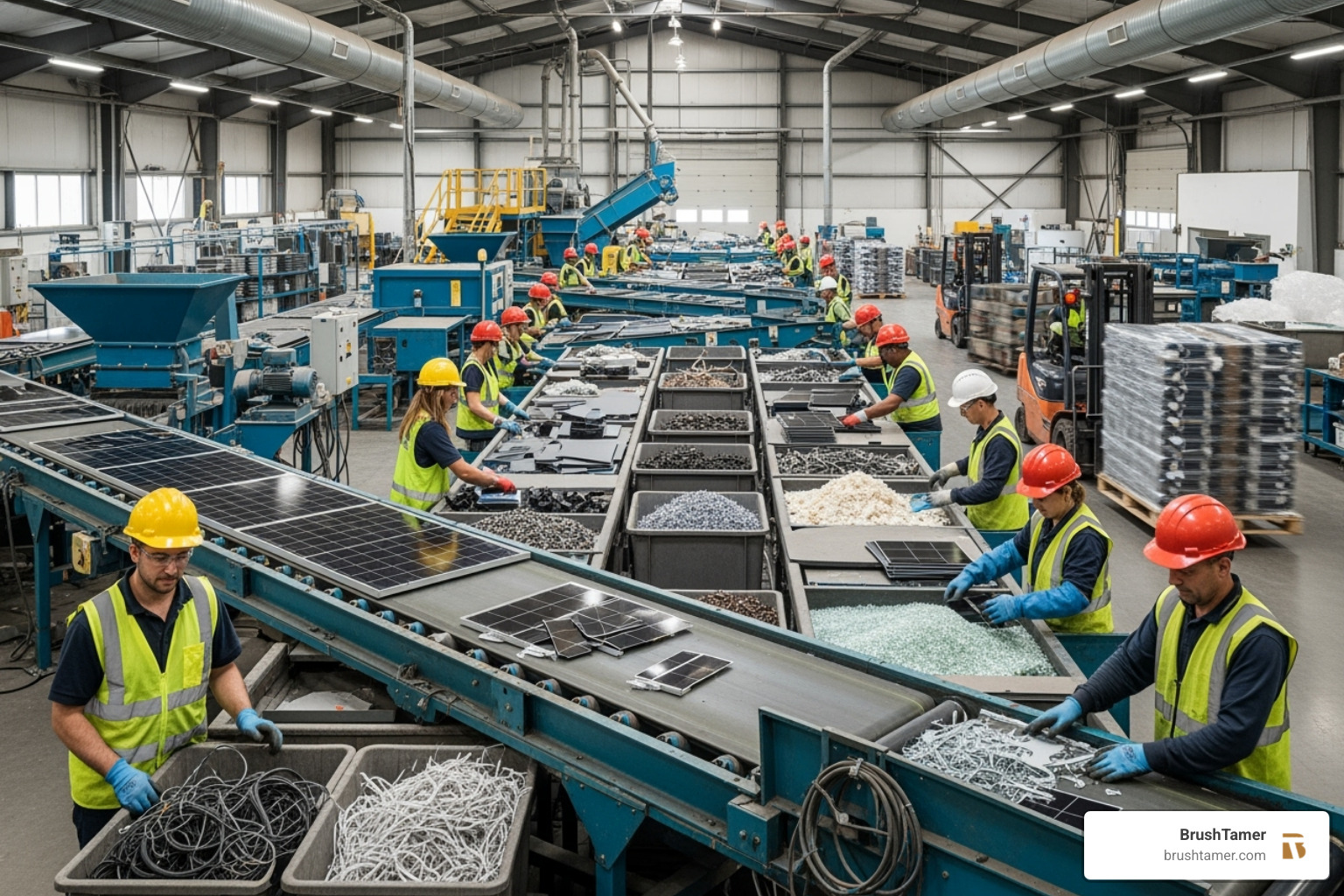
A complete lifecycle analysis looks at every stage: manufacturing the panels, sourcing materials like silicon and silver, land use for installations, water usage for cleaning, and end-of-life management when panels reach retirement. It’s a complex environmental equation, but one where solar energy still comes out ahead of fossil fuels by a wide margin.
The manufacturing process does require energy and involves some hazardous materials similar to those in electronics. Large solar installations need significant land areas, which can impact local habitats. And eventually, millions of panels will need proper recycling to recover valuable materials and prevent waste.
But here’s the encouraging part: we’re actively addressing these challenges. The solar industry is committed to improving every aspect of the lifecycle, from cleaner manufacturing processes to innovative recycling programs. This transparency and continuous improvement are what make solar truly sustainable.
The Bright Side: Operational Benefits
Once solar panels are up and running, they become environmental champions. Zero operational greenhouse gas emissions – that’s the beautiful simplicity of solar power. No smokestacks, no air pollution, no climate-warming gases. Just clean electricity flowing silently from rooftops and solar farms.
The numbers are impressive. Solar PV systems produce carbon emissions of only 14-73 grams of CO2 equivalent per kilowatt-hour. Compare that to coal plants at around 820 grams or natural gas at 490 grams, and you can see why solar is such a game-changer for our climate.
Even more remarkable is the energy payback period – the time it takes for a solar panel to generate the same amount of energy that was used to manufacture it. Modern solar panels achieve this payback in just 1 to 4 years. Then they keep producing clean energy for their full 30-year lifespan or more. That’s 25+ years of pure environmental benefit!
Water conservation is another major advantage, especially for photovoltaic systems. Unlike thermal power plants that guzzle water for cooling, PV panels primarily need water only for occasional cleaning. This makes solar particularly valuable in drought-prone regions where every drop counts.
For detailed analysis of how quickly solar panels pay back their energy investment, check out this NREL analysis of PV energy payback.
Addressing the Challenges of Solar’s Footprint
The manufacturing side of solar does present environmental challenges we must tackle head-on. Manufacturing energy intensity is significant; creating high-purity silicon wafers and assembling panels requires considerable energy. However, this is rapidly improving as the industry scales up, manufacturing facilities become more efficient, and, crucially, are increasingly powered by renewable energy themselves—creating a virtuous cycle. The use of hazardous materials, including chemicals like hydrofluoric acid for cleaning wafers and heavy metals like lead and cadmium in some solder and thin-film technologies, requires stringent management. Fortunately, robust environmental regulations in the US and EU strictly govern the handling, transport, and disposal of these substances. The industry is also actively pursuing innovation, developing safer chemical alternatives, closed-loop manufacturing processes that recycle chemical inputs, and designing panels with less hazardous materials.
Next is the challenge of land use requirements. Utility-scale solar farms can be substantial, potentially needing 3.5 to 10 acres per megawatt for PV systems. This is where thoughtful planning and innovative siting strategies make all the difference. Responsible land clearing, a core focus at BrushTamer, is crucial for minimizing habitat disruption. The key is prioritizing locations with low environmental sensitivity, such as brownfield sites, degraded agricultural land, or areas along existing infrastructure corridors, rather than converting pristine habitats. Furthermore, the industry is pioneering dual-use land strategies. Agrivoltaics, where crops are grown under liftd solar panels, is a prime example. This approach can increase land productivity, reduce water evaporation for crops, and even improve panel efficiency by creating a cooler microclimate. Another exciting innovation is ‘floatovoltaics’—installing solar panels on reservoirs and other water bodies. This not only saves land but also reduces water evaporation and can inhibit algae growth.
Finally, end-of-life recycling represents both a monumental challenge and a massive economic opportunity. With panels having a 30-year lifespan, the first wave of installations is nearing retirement. By 2050, cumulative solar panel waste could reach 78 million tonnes globally. Tossing these panels in landfills would be a colossal waste of valuable resources. A typical crystalline silicon panel is about 75% glass, 10% polymer, 8% aluminum, 5% silicon, and less than 1% metals like copper and silver. The efforts to address end-of-life issues for solar panels are gaining momentum. Advanced recycling facilities are being developed that can recover over 95% of these materials. The recovered glass can be used for new panels or other products, and the valuable metals can be fed back into the manufacturing supply chain. This creates a circular economy for solar, reducing the need for virgin material extraction, minimizing waste, and creating a new green industry focused on recovery and reprocessing. This ensures that solar energy sustainable development truly lives up to its promise from cradle to grave.
Powering the Future: Key Technologies and Overcoming Challenges in Solar Energy Sustainable Development
The landscape of solar energy sustainable development is constantly evolving, driven by remarkable technological breakthroughs and creative solutions to age-old challenges. It’s like watching a thrilling race where innovation keeps pushing the finish line further out – in the best possible way.
When we talk about solar technologies, we’re looking at a diverse and rapidly advancing portfolio. The most familiar are Photovoltaic (PV) systems. These panels, which directly convert sunlight to electricity, come in several forms. Monocrystalline panels, made from a single silicon crystal, offer the highest efficiency (typically 20-24%) and a sleek black appearance, making them a premium choice for residential rooftops. Polycrystalline panels, made from multiple silicon fragments, are slightly less efficient but more cost-effective to produce. Then there are thin-film technologies, which use layers of photovoltaic material only a few micrometers thick. While generally less efficient, they can be flexible and are better suited for large-scale projects where space is less of a constraint. The most exciting frontier is emerging PV technologies like perovskites. These materials have shown staggering improvements in efficiency in laboratory settings, promising cheaper, more versatile, and even transparent solar cells in the future. Global PV capacity reflects this dynamism, skyrocketing from 40,334 MW in 2010 to a whopping 709,674 MW in 2020, and it has more than doubled since then.
The other major player is Concentrated Solar Power (CSP). Instead of direct conversion, CSP uses mirrors or lenses to concentrate sunlight onto a small area. This intense heat is used to drive a conventional turbine to generate electricity. Different designs exist, such as parabolic troughs that focus light onto a central tube, and power towers where a field of mirrors (heliostats) focuses light onto a central receiver. While its installed capacity is smaller, CSP’s killer feature is its integration with thermal energy storage, often using molten salt. This allows CSP plants to store heat for hours, enabling them to generate electricity on demand, even after sunset or during cloudy periods, providing dispatchable power similar to a traditional power plant.

Of course, no technology is perfect, and solar’s primary challenge is intermittency. The sun doesn’t shine 24/7. This is where energy storage becomes the critical enabler. Battery storage, particularly lithium-ion systems, has seen costs fall dramatically, making ‘solar-plus-storage’ economically viable for homes, businesses, and utilities. These batteries store excess energy generated during peak sun hours for use at night or on cloudy days. But batteries aren’t the only solution. Pumped-hydro storage, which uses surplus electricity to pump water to a higher reservoir to be released later to generate power, is a proven, large-scale storage method. Looking ahead, green hydrogen, produced by using renewable electricity to split water molecules, offers a way to store vast amounts of energy for long durations and can be used to decarbonize other sectors like transport and heavy industry.
Integrating this variable power source requires a smarter, more flexible electrical grid. Smart grid integration involves using digital technology for two-way communication between utilities and consumers, enabling demand-response programs that incentivize energy use when solar power is abundant and cheap. This creates a more resilient and efficient network. The land use puzzle is being solved with remarkable creativity. Agrivoltaics is a game-changing solution, co-locating agriculture and solar generation to produce both food and energy from the same parcel of land. The panels can provide beneficial shade, reducing water stress on crops, while the crops cool the panels, boosting their efficiency. Similarly, floating solar installations on reservoirs and canals avoid land-use conflicts entirely.
Finally, material scarcity and recycling are being addressed through a shift to circular economy principles. Researchers are actively working on material substitution to reduce reliance on rare or expensive materials like silver, exploring more abundant alternatives like copper and aluminum. On the policy front, the global solar boom is being accelerated by smart government action. Policies like investment tax credits (ITCs), feed-in tariffs (which guarantee a price for solar electricity fed into the grid), and renewable portfolio standards (which mandate that utilities source a certain percentage of their power from renewables) create the stable, long-term market signals needed to drive private investment. International cooperation through agreements like the Paris Climate Accord provides the global framework for this shared mission.
As someone who’s spent years in land management, I’ve seen how strategic siting and responsible land clearing can minimize environmental impact while maximizing solar potential. At BrushTamer, we focus on preparing sites in ways that respect local ecosystems, often targeting degraded land or areas alongside existing infrastructure rather than pristine habitats.
Despite these challenges, the future looks incredibly bright. Experts predict that solar energy will account for 48% of total energy generation by 2050. This ambitious target is supported by continuous investment in research and development, smart national policies, and international cooperation through agreements like the Paris Climate Accord. We’re not just building a cleaner energy system – we’re creating a more sustainable world for future generations.
The path forward requires balancing rapid deployment with environmental responsibility, ensuring that our rush toward renewable energy doesn’t create new problems while solving old ones. It’s a complex challenge, but one that the industry is meeting with creativity, determination, and an unwavering commitment to truly sustainable development.
Conclusion
The sun rises on a new era of possibility. Through our exploration of solar energy sustainable development, we’ve witnessed something truly remarkable – a technology that doesn’t just generate clean electricity, but transforms entire communities and economies.
Think about it: solar panels quietly converting sunlight into power in remote villages, bringing light to children’s homework and keeping vaccines cold in rural clinics. Meanwhile, massive solar farms are creating millions of jobs and proving that going green doesn’t mean going broke. With solar costs dropping 85% in just one decade, we’re not just talking about environmental responsibility anymore – we’re talking about smart economics.
Yes, we’ve been honest about the challenges. Manufacturing solar panels requires energy and careful handling of materials. Large installations need significant land areas. But here’s what excites me: we’re not ignoring these issues – we’re solving them. The industry is embracing recycling, developing agrivoltaics systems where crops grow beneath panels, and constantly improving efficiency.
As someone who’s spent years in land management, I’ve seen how thoughtful preparation can make all the difference. At BrushTamer, we take pride in supporting the renewable energy transition through environmentally responsible land clearing. When solar developers need land prepared for their projects, we approach each site with the same care we’d want for our own backyard. It’s about more than just clearing vegetation – it’s about preparing the foundation for a cleaner future while respecting the ecosystems we work within.
The numbers paint a compelling picture. By 2050, solar could provide nearly half of all electricity generation globally. That’s not just a prediction – it’s a promise of cleaner air, stable energy prices, and economic opportunities stretching from manufacturing plants to installation crews to maintenance teams.
But technology alone won’t get us there. We need continued investment in research, supportive policies from our leaders, and companies willing to do their part responsibly. Every solar panel installed, every job created, and every ton of carbon avoided brings us closer to the sustainable future our children deserve.
The sun provides more energy in one hour than humanity uses in an entire year. We have the technology to harness it. We have the economic incentive to deploy it. Now we need the collective will to make it happen.
More info about our environmentally responsible land clearing services – because preparing the ground for renewable energy is just as important as the technology that follows.