
Why Defensible Space Creation in the Midwest Matters More Than You Think
Defensible space creation Midwest property owners can rely on starts with managing vegetation, reducing fuel loads, and creating safer buffers around homes, outbuildings, and wooded land.
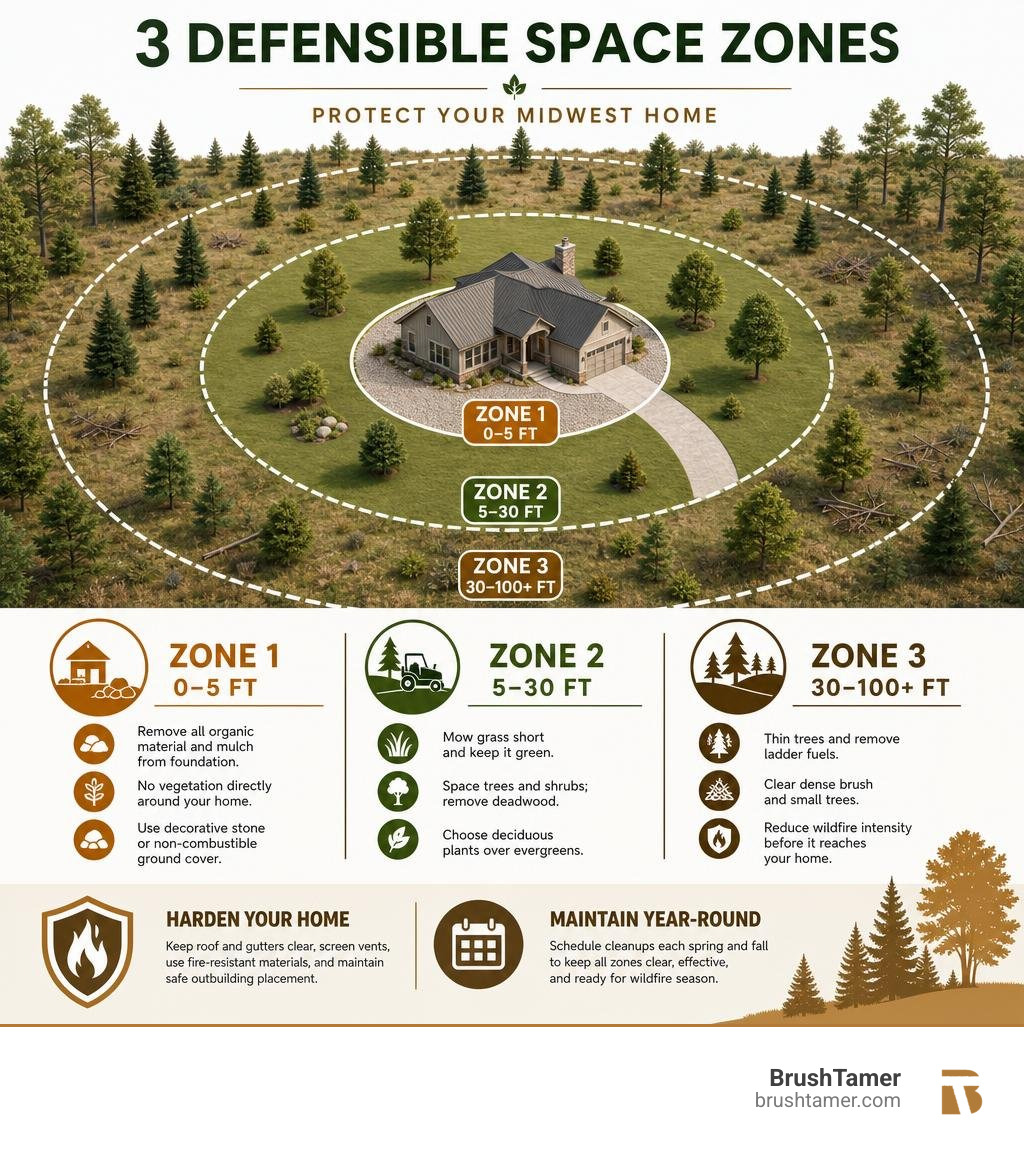
Here is a quick overview of how defensible space creation Midwest planning works for wooded, rural, and edge-of-town properties.
- Immediate Zone (0-5 ft) – Remove all organic material, mulch, and vegetation directly around your foundation. Use decorative stone or non-combustible ground cover.
- Intermediate Zone (5-30 ft) – Mow grass short, space tree crowns, remove deadwood, and choose deciduous plants over evergreens.
- Extended Zone (30-100+ ft) – Thin trees, remove ladder fuels, and clear dense brush to slow an approaching fire before it reaches your home.
- Harden your structure – Address roof debris, vent screening, deck materials, and outbuilding placement.
- Maintain year-round – Schedule professional cleanups each spring and fall to keep all zones compliant and effective.
Wildfires are not just a Western states’ problem; Midwest properties near woodlots, fields, prairies, and overgrown vegetation can also face wildfire exposure. In recent wildfire reporting, national and regional fire data show that wildfire risk extends well beyond the Western states. The wildland-urban interface — the zone where developed land meets wild vegetation — is growing by about two million acres every year across the United States. That means more homes in Lower Michigan and Northern Indiana are moving into fire-risk territory, whether their owners realize it or not.
Embers from a wildfire can travel up to a mile ahead of the fire front. A well-maintained buffer of cleared and thinned vegetation around your home gives the fire less fuel to work with — and gives firefighters a safer place to work if they need to defend your property.
Many wildfire losses are influenced by preventable ignition pathways, including unmanaged vegetation, debris-filled gutters, ladder fuels, and combustible materials near structures. Fire research consistently shows that defensible space, structure hardening, and fuel reduction work together to reduce ignition risk around homes.
I’m Leon Miller, owner of BrushTamer, a land management and forestry mulching company based in Plymouth, Indiana. Our team helps property owners across Lower Michigan and Northern Indiana reduce fire risk through brush clearing, vegetation management, and defensible space creation Midwest projects. In the sections ahead, I’ll walk you through everything you need to know to protect your property the right way.
Defensible space creation Midwest terms simplified:
The Science and Strategy Behind Defensible Space Creation Midwest
Defensible space creation Midwest landowners needs to be the process of modifying vegetation and fuel around a structure to reduce radiant heat, flame contact, and ember ignition risks. This strategic buffer is designed to slow an advancing fire, drop it from the tree canopy to the forest floor, and provide a safe operational area for emergency personnel.
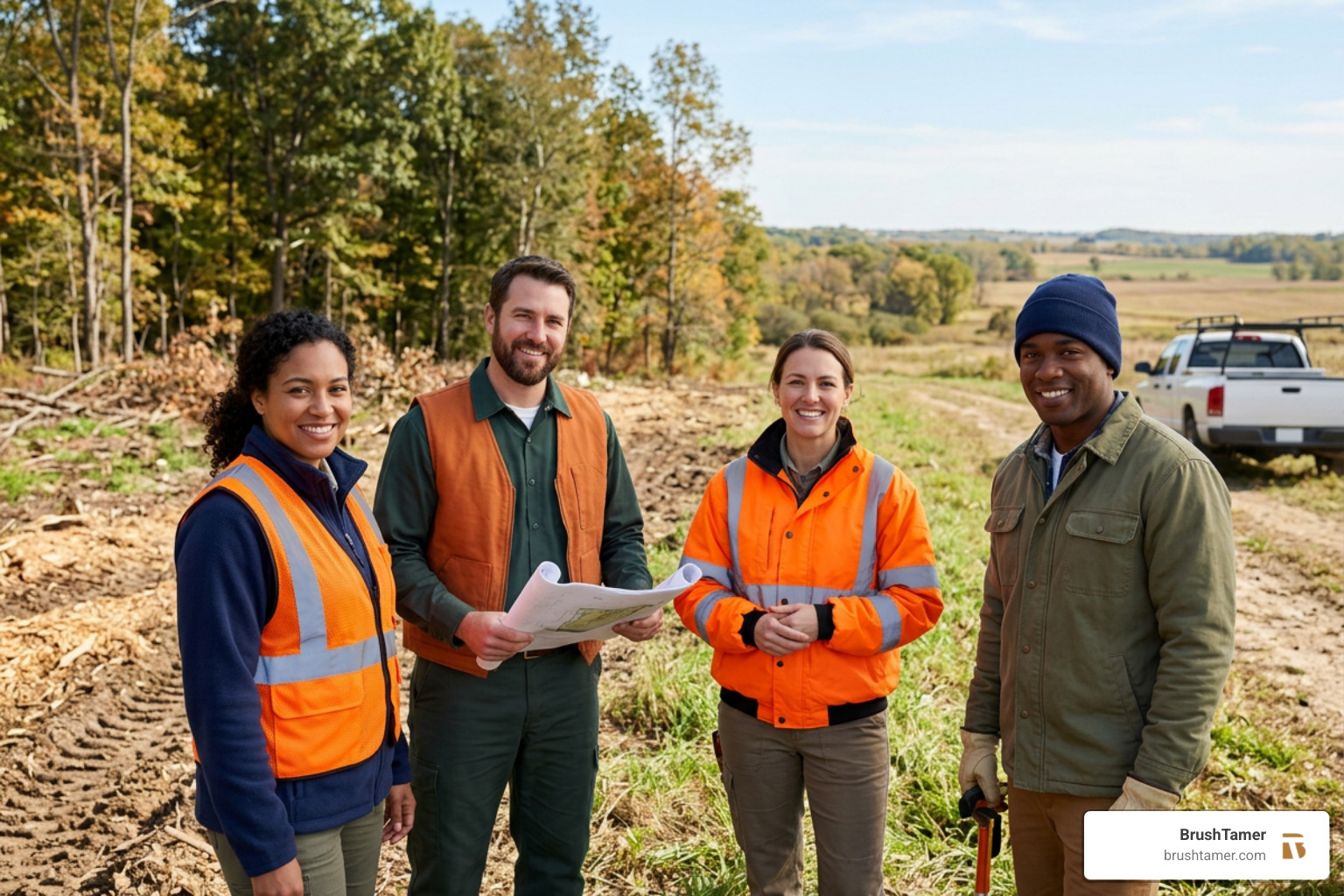
When a wildfire burns through a landscape, it threatens structures in three ways:
- Radiant Heat: The intense heat radiating from burning trees or brush can break windows and ignite wood siding from dozens of feet away without direct flame contact.
- Convective Heat: Direct flame contact from surrounding brush or overgrown grass can rapidly ignite combustible building materials.
- Ember Storms: High winds carry burning embers up to a mile ahead of the main fire front. These embers land in gutters, under decks, or in attic vents, igniting the home from the inside out.
The National Interagency Fire Center publishes annual wildfire statistics and reports that can be used to verify current national fire activity trends. As the wildland-urban interface (WUI) continues to expand, homes in heavily wooded areas of Grand Rapids, MI, Valparaiso, IN, and Fort Wayne, IN are increasingly exposed to these threats.
By implementing professional defensible space zones, BrushTamer helps alter the fuel environment around structures before wildfire conditions develop. This halts the transition of ground fires into destructive crown fires and ensures that your home can withstand an ember storm. Our specialized approach to Wildfire Mitigation for Midwest properties focuses on breaking up these fuel pathways before a crisis occurs.
The Three Zones of Defensible Space for Midwest Properties
Defensible space creation Midwest properties often starts with three management zones: the Immediate Zone, Intermediate Zone, and Extended Zone. This distance-based fuel management strategy is known as the Home Ignition Zone (HIZ) concept.
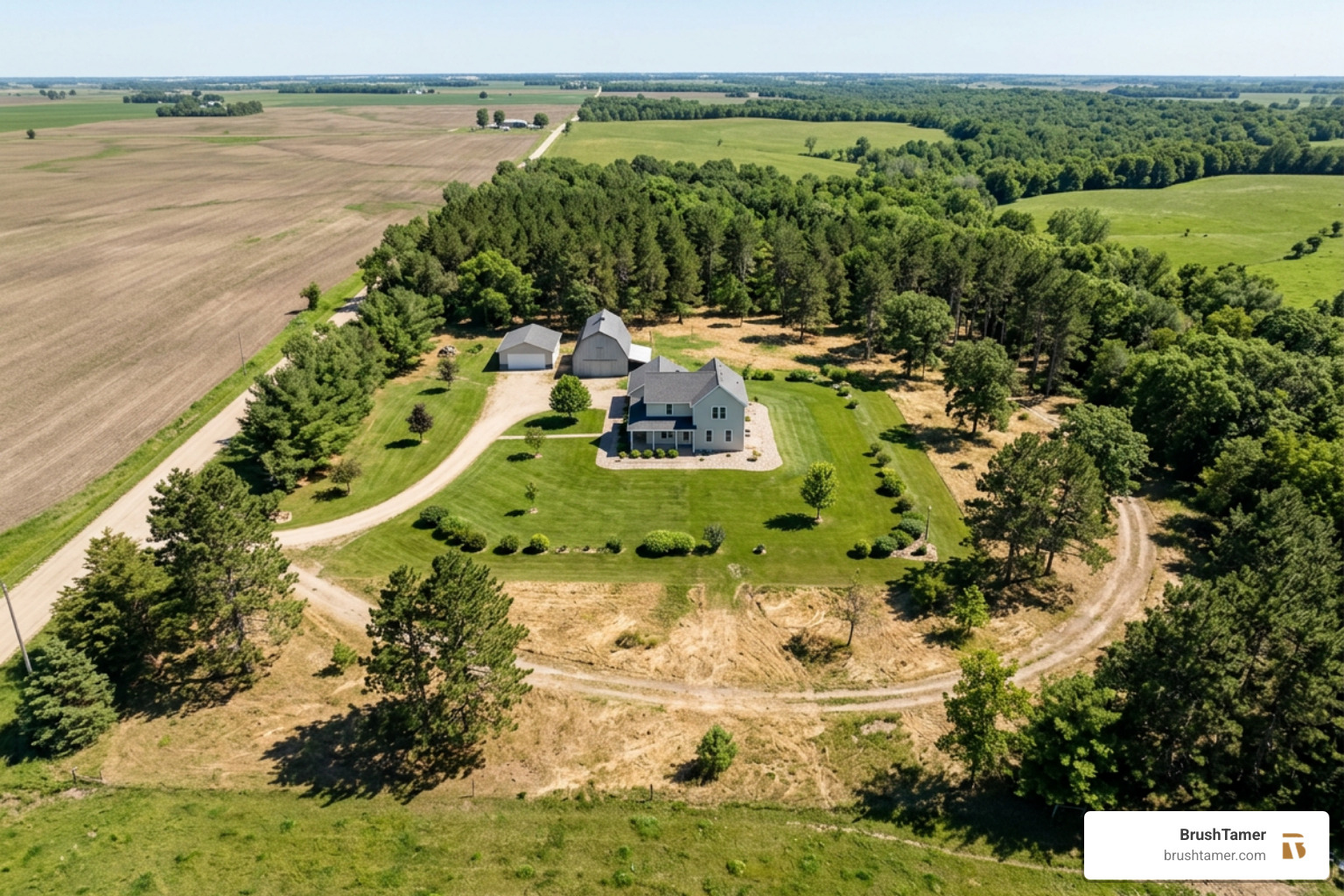
Managing these zones effectively requires a professional, structured approach. We evaluate your property’s specific landscape, slope, and vegetation density to establish these zones in accordance with Defensible Space | Ready for Wildfire guidelines.
By utilizing professional land clearing, we help property owners in Kalamazoo, MI, and South Bend, IN establish these critical safety buffers. Learn more about the core principles of this work in our guide to Fire Mitigation 101 Prevention Methods.
The Immediate Zone (0 to 5 Feet): Non-Combustible Safeguards
The Immediate Zone acts as a non-combustible shield directly adjacent to your home’s foundation to prevent embers from igniting the structure. This is the most critical zone because it directly influences whether windblown embers can find a fuel source against your siding.
Our professional crew works to eliminate all combustible materials in this 5-foot perimeter. Key actions include:
- Removing all organic wood mulch and replacing it with decorative stone, river rock, or pea gravel.
- Clearing away accumulated leaves, pine needles, and dead twigs from the base of the foundation.
- Removing all conifer trees (such as pines, spruces, and cedars) and highly flammable shrubs from this zone.
- Ensuring no combustible vegetation is planted directly beneath windows or adjacent to wood siding.
The Intermediate Zone (5 to 30 Feet): Fuel Reduction and Landscaping
The Intermediate Zone is managed to keep fires low to the ground and slow their spread by spacing trees and keeping grass short. This zone acts as a transition area where landscaping is kept clean, green, and widely spaced.
In this zone, we focus on breaking up continuous fuel paths. We achieve this by:
- Mowing grass regularly to a height of 1 to 2 inches to prevent fast-moving grass fires from advancing.
- Thinning and spacing tree crowns so there is at least 18 to 30 feet of space between the branches of adjacent trees.
- Prioritizing deciduous tree selection (like oaks and maples) over highly flammable evergreens.
- Pruning lower tree limbs to prevent ground fires from climbing. Detailed guidance on regional plant management can be found in the Firewise Landscaping resources.
The Extended Zone (30 to 100+ Feet): Forest Management and Thinning
The Extended Zone aims to interrupt a crown fire’s path and drop it to the forest floor through strategic tree thinning and ladder fuel removal. This outermost zone is where heavy forest fuels are managed to reduce overall fire intensity.
Our professional land clearing services focus on heavy fuel reduction in this zone. We work to:
- Create a 30-to-100-foot thinning zone where dense stands of trees are thinned out to prevent canopy-to-canopy fire spread.
- Remove ladder fuels—such as low-hanging branches, tall wild shrubs, and small understory trees—that allow ground fires to climb into the canopy.
- Clear out heavy accumulations of dead wood, fallen logs, and thick brush piles.
- Manage understory growth using professional forestry mulching to create a clean, spaced forest floor. For a deeper look at these techniques, read A Practical Guide to Surface Fuel Reduction.
Regional Wildfire Risks: Grasslands, Great Lakes Winds, and Seasonal Dry Spells
Midwest properties face unique wildfire risks due to fast-moving prairie grassland fires, dry High Plains wind patterns, and intense seasonal droughts acting on clay soils and winter-damaged vegetation. Unlike the dense, continuous evergreen forests of the West, the Midwest features a diverse mosaic of agricultural fields, hardwood forests, open prairies, and pine barrens.
Selecting the right vegetation supports long-term wildfire mitigation by reducing flammable plant material near structures. Property owners should prioritize regional extension, DNR, and fire safety resources when selecting lower-risk plants near defensible space zones.
Managing Prairie Grasslands and Oak Savannas
Managing tallgrass prairies and oak savannas involves breaking up continuous fuel beds into smaller, isolated blocks. Prairies are highly fire-adapted; in dry conditions, tall grasses like Big Bluestem ignite easily and carry fire rapidly under windy conditions.
To mitigate this risk around structures, we help property owners:
- Break up large, continuous blocks of prairie grassland near homes into smaller, isolated garden islands.
- Incorporate low-growing wildflower plantings over tall prairie grasses near the 30-foot perimeter.
- Establish clean, mowed buffer strips or gravel paths to act as natural fuel breaks.
- Balance ecological restoration with structural safety. Our team specializes in this balance; read more about our approach to Forestry and Wildlife Management.
Mitigating High Plains Winds and Seasonal Drought Risks
High Plains winds and seasonal droughts require strategic fuel reduction to prevent wind-driven embers from bridging open gaps. Strong regional winds can carry embers across roads, driveways, and lawns. To counter this, we focus on:
- Clearing out windblown debris, dead leaves, and fallen branches that accumulate along tree lines and fence rows.
- Strategically thinning windbreaks and shelterbelts to ensure they do not act as direct fuses leading to your home.
- Removing storm-damaged trees and hanging limbs that dry out and become highly combustible. For assistance with storm cleanup, refer to our Storm Damage Cleanup Midwest Guide.
Professional Vegetation Management and Fuel Reduction Techniques
Professional vegetation management utilizes specialized machinery like forestry mulchers to selectively thin forests and clear highly combustible underbrush safely and efficiently. At BrushTamer, we utilize advanced forestry mulching equipment to grind unwanted vegetation, brush, and invasive species directly into a nutrient-rich mulch layer. This process stabilizes the soil, retains moisture, and immediately reduces the vertical and horizontal continuity of fuels.
Our professional services are essential for managing large-scale fuel loads across Lower Michigan and Northern Indiana. For a comprehensive look at our capabilities, see our Vegetation Management Ultimate Guide.
Tree Thinning and Pruning Ladder Fuels
Pruning ladder fuels involves removing lower branches up to 6 to 10 feet off the ground to prevent ground fires from climbing into the tree canopy. Ladder fuels are the vertical pathway that allows a simple surface fire to grow into an uncontrollable crown fire.
Our professional crew handles tree thinning and pruning with precision by:
- Pruning lower branches on mature trees to a height of 6 to 10 feet (ensuring we do not remove more than one-third of the tree’s total canopy).
- Removing dead, dying, or structurally compromised trees that can act as “chimneys” during a fire, spewing embers high into the air.
- Thinning dense stands of young trees to establish healthy, wide spacing between mature crowns.
- Using professional rigging and cutting equipment to safely clear limbs near structures. Discover how we manage these projects through our Professional Land Management solutions.
Selecting Fire-Resistant Plants for Midwest Landscapes
Selecting fire-resistant plants involves prioritizing deciduous species and low-growing, moisture-rich succulents while avoiding highly flammable evergreens and invasive woody plants. Fire-resistant plants do not easily ignite, and their leaves contain high moisture levels.
When planning your landscape buffer, we recommend:
- Planting deciduous trees (such as maples, oaks, and birches) instead of highly flammable evergreens (like red pine, jack pine, or arborvitae) within the 30-foot zone.
- Choosing low-growing perennials with thick, succulent leaves that resist burning.
- Replacing highly invasive, woody ornamentals—which often burn with high intensity—with safe native alternatives. For excellent regional guidance on plant substitutions, consult the Landscape guide.
Comparing Fuel Reduction Methods: Forestry Mulching vs. Prescribed Burning
Choosing the right fuel reduction method depends heavily on your property’s size, location, and proximity to neighbors. The table below outlines the primary differences between the most common land management techniques:
| Method | Pros | Cons | Best Suited For |
|---|---|---|---|
| Forestry Mulching | Highly controllable, zero smoke, immediate results, protects soil from erosion, preserves select native trees. | Requires specialized professional machinery. | Residential properties, WUI zones, sloped land, and wooded acreage. |
| Prescribed Burning | Mimics natural ecological cycles, highly effective for large prairie restoration. | High liability, weather-dependent, smoke production, risk of escape, requires permits. | Large rural acreages, state parks, and managed prairies. |
| Grazing (Goats/Sheep) | Quiet, low chemical usage, targets hard-to-reach weeds. | Slow, non-selective grazing, requires fencing, does not handle large woody fuels. | Small-scale weed control and clearing light underbrush. |
For many wooded properties in towns like Niles, MI, or Chesterton, IN, forestry mulching offers a controlled way to reduce brush, ladder fuels, and dense understory growth. Our team at BrushTamer specializes in this eco-friendly, high-impact clearing method. Explore our dedicated Forestry Mulching Services page to see how we can transform your land.
Hardening Structures and Outbuildings Against Ember Storms
Structure hardening protects physical buildings from catching fire via windborne embers by using Class A roofing, dual-pane tempered glass, and non-combustible building materials. Creating defensible space in your yard is only half the battle; if your home’s exterior is highly vulnerable, a single drifting ember can still cause catastrophic damage.
By combining vegetation management with structural retrofits, you create a comprehensive defense system. For specific insights on local structural vulnerabilities, read A Quick Start Guide to Wildfire Mitigation for Fort Wayne.
Protecting Roofs, Gutters, and Vents
Roofs, gutters, and vents are the most common ignition points on a home during a wildfire. Embers easily collect in these areas, finding dry leaves and pine needles to ignite.
To harden these areas, we advise taking the following measures:
- Roofs: Ensure your roof has a Class A fire rating (such as asphalt shingles, metal, or concrete tile). Keep the roof completely clear of accumulated pine needles and leaves.
- Gutters: Replace vinyl gutters, which melt and detach under low heat, with metal alternatives. Clean gutters at least twice per year.
- Vents: Install 1/8-inch corrosion-resistant metal mesh screening over all attic, crawlspace, and soffit vents to block ember entry.
- Eaves: Seal any open gaps between rafter tails and blocking with caulk or enclose them with non-combustible sheathing.
Safeguarding Decks, Fences, and Outbuildings
Decks, fences, and outbuildings act as direct pathways, or “fuses,” that can carry a fire from the surrounding woods straight to your home.
To break these ignition pathways, consider the following structural adjustments:
- Decks: Use non-combustible or ignition-resistant composite decking materials. Enclose the area beneath your deck with wire mesh to prevent leaves and embers from blowing underneath.
- Fences: Avoid connecting wooden fences directly to your home’s siding. Use a metal gate or a non-combustible section where the fence meets the house to break the fire path.
- Firewood Storage: Never stack firewood against your home, deck, or outbuildings. Store all firewood at least 30 feet away from any structures.
- Propane Tanks: Keep propane tanks clear of all flammable vegetation and debris for a radius of at least 10 feet.
Special Topography and Access Considerations
Slope angles, dense pine stands, and narrow driveways significantly impact how wildfires travel and how safely emergency responders can access your property. Fire behaves differently depending on the terrain, and emergency vehicles require specific clearances to operate safely.
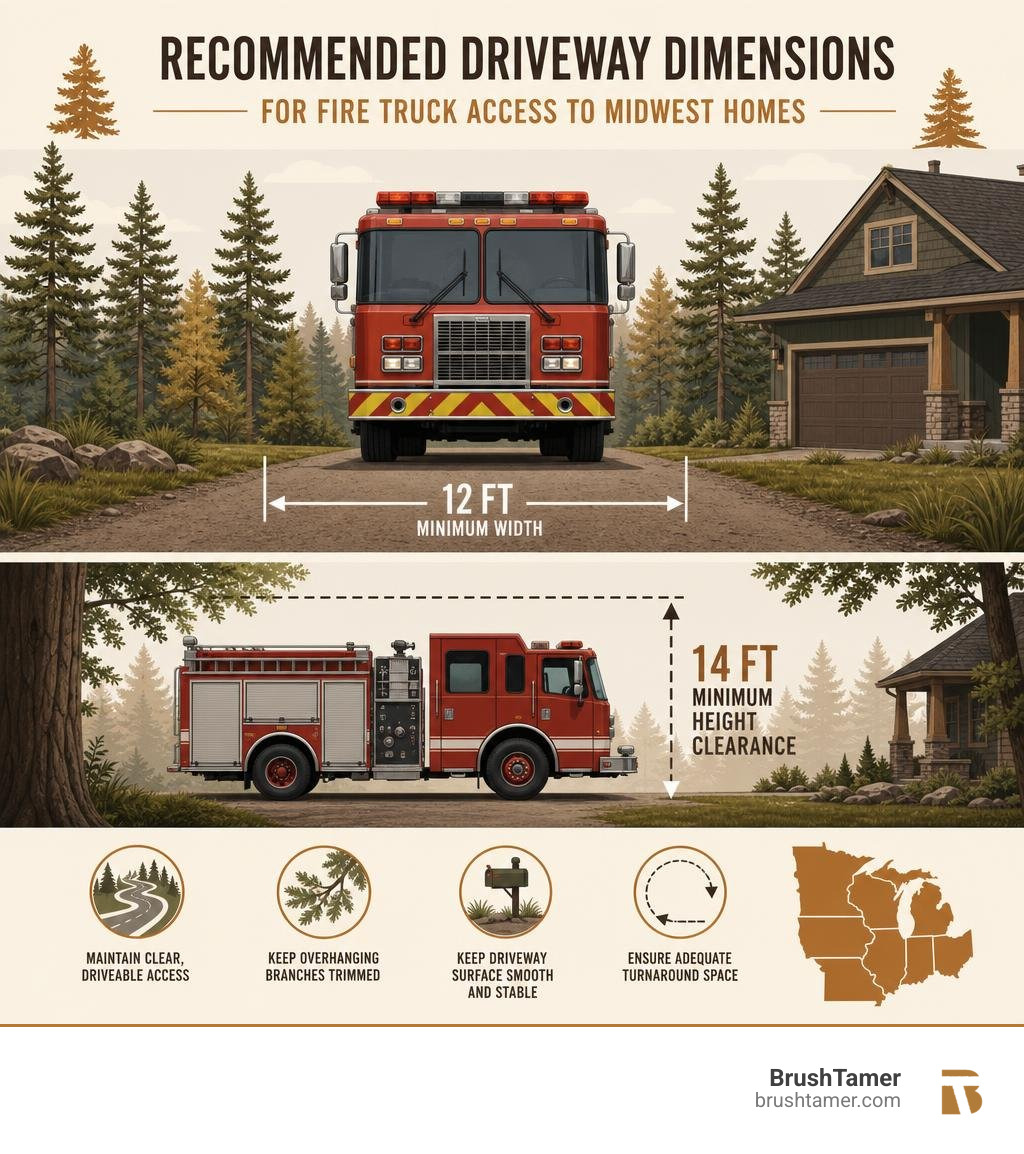
When designing a defensible space plan, we must account for these physical factors. Our Brush Management Services are tailored to address these complex access challenges, ensuring your property is prepared for emergency scenarios.
Professional Defensible Space Creation Midwest Solutions for Slopes and Pine Stands
Steep slopes and highly flammable pine stands require wider fuel breaks and intensive tree crown spacing to counter rapid uphill fire spread. Wildfires burn uphill much faster and with greater intensity than they do on flat ground because the rising heat preheats the vegetation ahead of the flames.
If your property sits on a slope or near highly flammable pine stands (such as red pine or jack pine), we implement advanced clearing strategies:
- Widening Zones on Slopes: We extend the defensible space zones beyond the standard 100 feet on the downslope side of the property, as flame lengths on slopes can easily reach 30 feet or more.
- Pine Canopy Spacing: We thin pine stands aggressively, ensuring a minimum of 30 feet of clearance between tree crowns to prevent crown fires from jumping from tree to tree.
- Erosion Prevention: On cleared slopes, we use forestry mulching to leave a protective layer of shredded organic material, which holds the soil in place and prevents erosion.
- Professional Execution: Clearing slopes safely requires heavy, specialized equipment. Our crew has the training and machinery to clear challenging terrain. Learn more on our Land Clearing Services page.
Seasonal Maintenance and Defensible Space Creation Midwest Best Practices
Defensible space requires maintenance twice per year, typically in spring and fall, to remove leaf litter, dead branches, and emerging woody growth. A defensible space is not a “one-and-done” project; vegetation grows back, and seasonal changes constantly deposit new fuels on the ground.
To keep your property compliant and safe year-round, we recommend scheduling professional maintenance on a regular basis:
- Spring Cleanup: Focus on removing dead wood, fallen branches, and leaf litter that accumulated over the winter months before the dry spring fire season begins.
- Fall Cleanup: Clear out fallen leaves, dry grass, and dead annual vegetation after the first frost to prepare your property for the dry autumn windstorms.
- Brush Control: Schedule periodic brush clearing to prevent aggressive, fast-growing invasive species (like buckthorn and honeysuckle) from reclaiming your cleared zones.
- Community Programs: Participate in local Firewise USA programs or neighborhood cleanup events to establish continuous, community-wide wildfire resilience.
Frequently Asked Questions About Midwest Wildfire Mitigation
What is the most vulnerable part of a Midwest home during a wildfire?
The roof is the most vulnerable part of any home. Flammable roof coverings, open attic vents, and gutters filled with dry leaves are highly susceptible to ember ignition, allowing a fire to take hold even if the main fire front is far away.
How often should defensible space be maintained in Michigan and Indiana?
Defensible space should be professionally maintained at least twice per year, typically in the spring and autumn, to clear away seasonal accumulations of leaves, pine needles, dead branches, and fast-growing woody underbrush.
What local resources can help property owners plan wildfire mitigation?
Local DNR offices, county conservation districts, and Firewise USA communities may provide planning resources, safety guidance, and community education for wildfire mitigation projects.
Conclusion
Establishing defensible space creation in the Midwest is a vital, proactive measure to safeguard your home, family, and land from the growing threat of wildfires. By structuring your property into three distinct management zones, hardening your home’s exterior against ember storms, and maintaining clear buffers, you drastically increase the likelihood that your home will survive a fire.
These measures not only protect your physical property but also provide a crucial safety zone for the firefighters working to defend your neighborhood.
Managing heavy forest fuels, clearing dense underbrush, and thinning mature tree stands on slopes or near pine stands requires specialized equipment and professional expertise. At BrushTamer, founded in 2021, we are proud to provide reliable, high-quality, and environmentally responsible land clearing and vegetation management services across Lower Michigan and Northern Indiana.
Professional defensible space creation Midwest property owners can trust starts with a clear plan, the right equipment, and experienced vegetation management. If your property has dense brush, ladder fuels, overgrown tree lines, or wooded areas near structures, BrushTamer can help you create a safer, more manageable landscape.
Contact BrushTamer today to discuss your property and build a customized wildfire mitigation plan for your land.